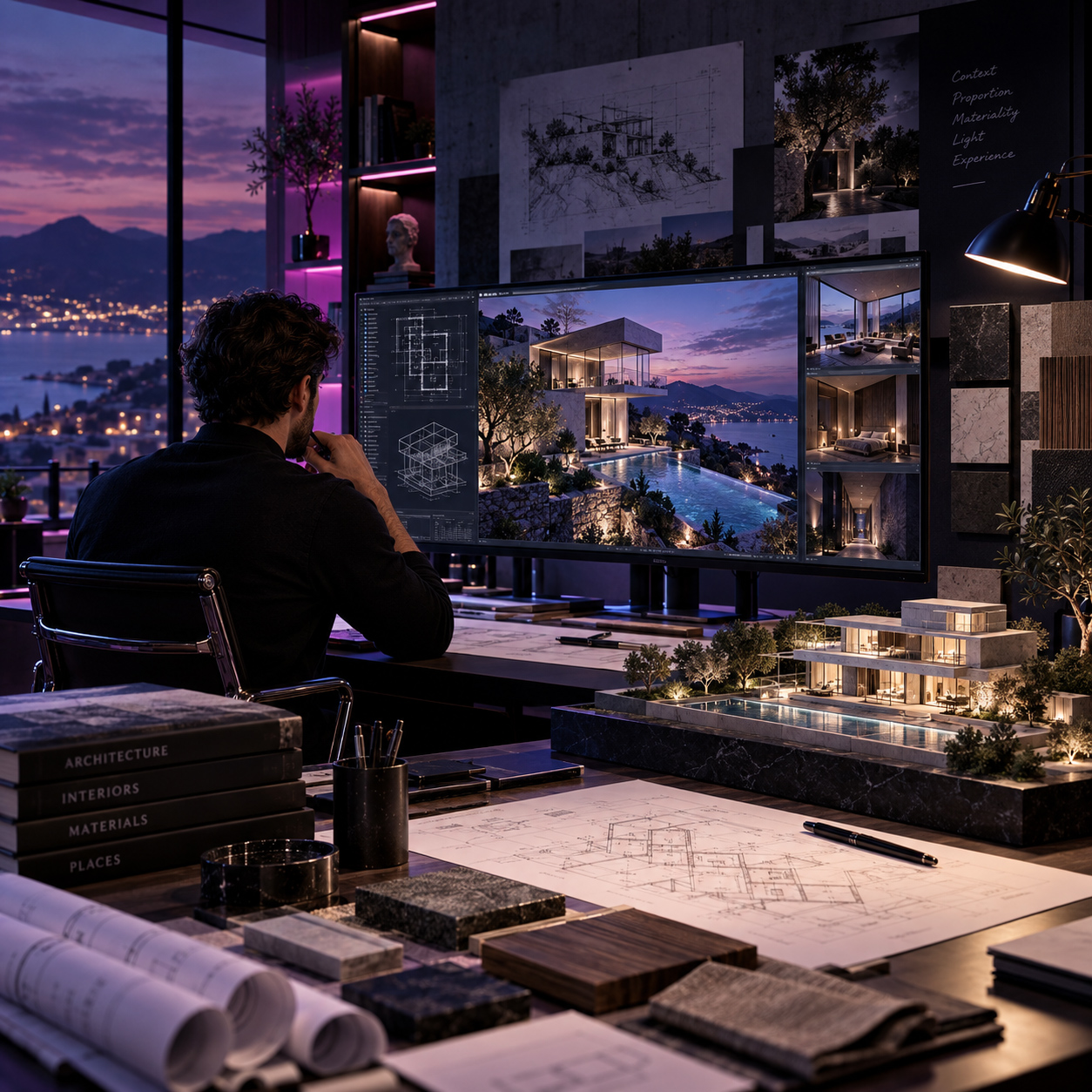
THE NF EDITORIAL SERVICE FORMAT™
Architecture explored as a spatial discipline—from concept and planning to material decisions, experience, execution, and long-term value.

WHERE CONTEXT, USE, PROPORTION, MATERIAL, AND DETAIL BECOME ONE SPATIAL IDEA

TRANSFORM ARCHITECTURAL VISION INTO SPACES BUILT AROUND PURPOSE, CONTEXT, AND LASTING VALUE

FROM CONCEPT DEVELOPMENT AND SPATIAL PLANNING TO INTERIOR SYSTEMS, 3D VISUALIZATION, TECHNICAL DOCUMENTATION, AND COORDINATED PROJECT DELIVERY.

NF Creative Studio develops professional Architectural Design, Interior Design, Spatial Planning, 3D Architectural Visualization, and Project Documentation for residential, commercial, hospitality, public, and complex spatial environments—connecting creative direction with the practical requirements that allow an architectural idea to become a coherent project.

Architecture does not begin with a style. It begins with a site, a purpose, a set of constraints, and the people who will eventually inhabit the space. Infinity Design Studio develops architectural solutions by first understanding those conditions—then translating them into clear spatial relationships, deliberate proportions, circulation, material decisions, light, and functional organization.

Our work can connect Architectural Concept Development, Interior Architecture, Spatial Planning, 3D Architectural Visualization, Technical Documentation, and Project Coordination within one carefully resolved design direction. Each discipline has a different responsibility, but all of them serve the same objective: making the project more coherent before individual decisions become permanent.

Whether the brief involves a private residence, commercial environment, hospitality space, interior transformation, adaptation, or a more complex architectural program, the design is developed around how the place must perform, what it should communicate, how its parts relate to one another, and what should still feel right years after completion.

A BEAUTIFUL SPACE CAN ATTRACT ATTENTION.
A RESOLVED SPACE CONTINUES TO WORK AFTER THE FIRST IMPRESSION IS GONE.

Purple line icon of modern buildings representing the Architecture service.

One Architectural Direction.
Multiple Layers Of Spatial Resolution.
Architecture Developed With Purpose At Every Scale.

Site, Program, Movement, Material, Light, Detail, And Technical Resolution—Considered As Parts Of The Same Place, Not Separate Design Exercises.

Proud Clients

ARCHITECTURAL THINKING · SPATIAL RESOLUTION · TECHNICAL RESPONSIBILITY

Strong Architecture Is Not One Good Idea. It Is A Sequence Of Decisions That Continue To Hold Together.

A PLACE SHOULD WORK IN PLAN, SECTION, MATERIAL, LIGHT, MOVEMENT, CONSTRUCTION, AND DAILY USE—NOT ONLY IN THE FINAL IMAGE.

Architecture becomes convincing when its decisions remain connected. The relationship between site, program, proportion, circulation, structure, material, light, interior experience, and technical feasibility determines whether a project merely looks resolved or actually is resolved.

At Infinity Design Studio, architectural development is treated as an evolving process of testing, coordinating, refining, and making spatial decisions increasingly precise. Early concepts are not protected simply because they look attractive; they are challenged against use, scale, context, construction logic, visual character, and the realities that will eventually define the built environment.

This allows design ambition and practical responsibility to develop together. A strong architectural direction should survive the transition from first sketch to spatial organization, visualization, documentation, material definition, coordination, and ultimately the way people experience the completed place.

Why Clients Choose Infinity Design Studio

What Gives A Project Architectural Integrity

How The Architectural Idea Is Developed

The value of multidisciplinary architectural work is not that more disciplines can be placed around the same project. It is that each discipline can test and strengthen the others. Visualization can expose a weak proportion. Interior development can reveal an unresolved circulation problem. Technical coordination can challenge an elegant idea that cannot yet be built convincingly. Context can completely change what initially appeared to be the obvious formal response.

That continuous exchange is what allows an architectural concept to mature instead of simply becoming more detailed.

THE BEST ARCHITECTURAL DECISIONS DO NOT COMPETE FOR ATTENTION. THEY REINFORCE ONE ANOTHER UNTIL THE SPACE FEELS INEVITABLE.

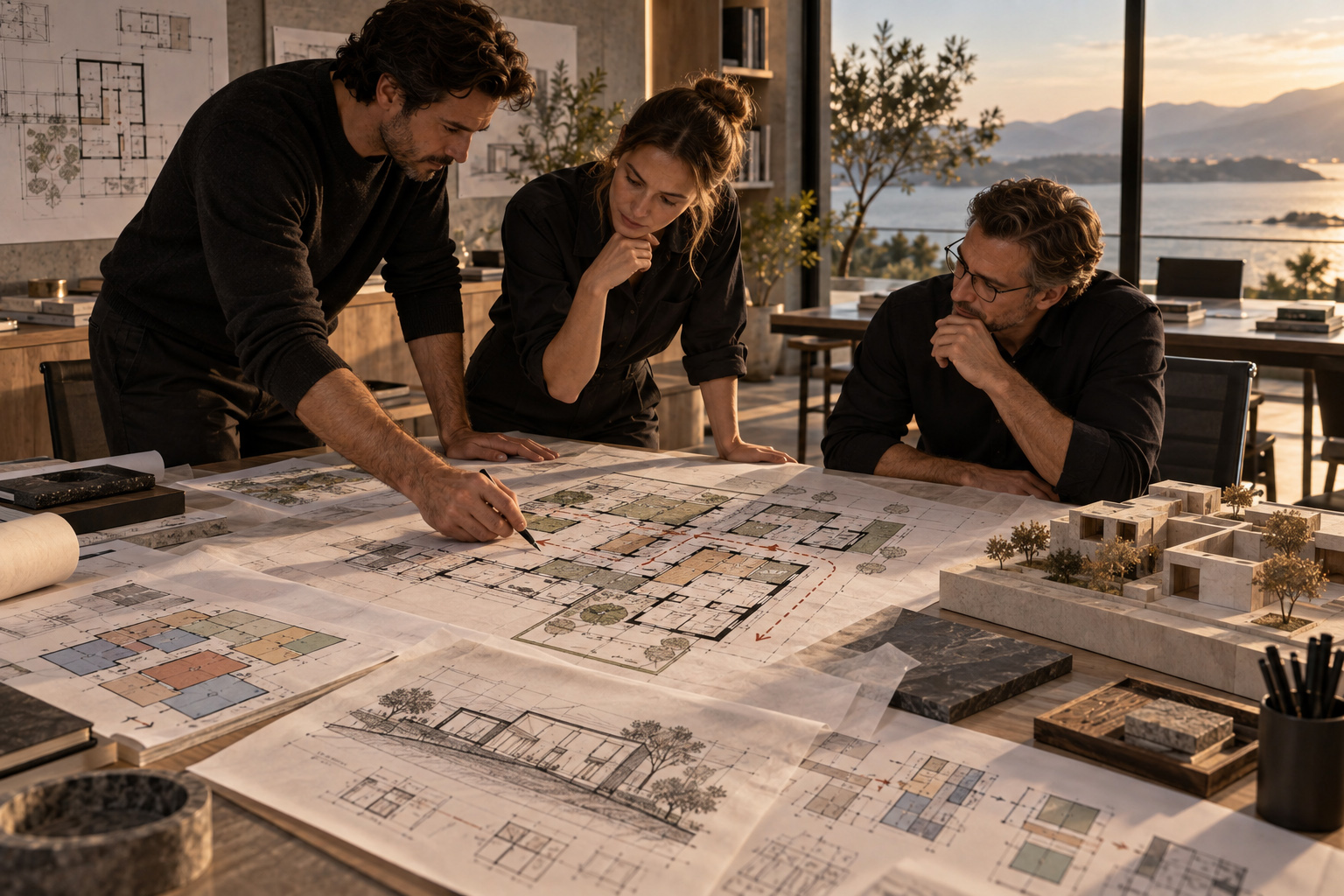
Architect developing architectural concepts by hand across detailed sketches, plans, and physical scale models in a professional design studio.

EARLY ARCHITECTURAL THINKING · CONCEPT DEVELOPMENT · SPATIAL INTENT

Before Architecture Becomes Form, It Must First Become A Clear Spatial Idea.

The earliest architectural decisions are rarely about appearance alone. Program relationships, circulation, orientation, proportion, privacy, access, views, daylight, hierarchy, and the way people will eventually inhabit the space all begin influencing the project before its final form has been defined. Sketches, plan studies, physical models, and early spatial tests are therefore not preliminary decoration—they are tools for discovering what the architecture actually needs to become.

This is the stage where ideas are still flexible enough to be challenged without carrying the cost of later change. Alternative organizations can be compared, conflicting requirements can be exposed, spatial relationships can be strengthened, and unnecessary gestures can be removed before they become embedded in the project. The objective is not to arrive at a visually impressive concept as quickly as possible, but to establish a coherent architectural direction in which form grows from purpose, context, movement, and real conditions.

When that underlying logic is resolved carefully, every later stage begins from a stronger position. Visualization can communicate something already spatially considered, technical development can build on clearer relationships, and material or structural decisions gain a more meaningful framework in which to operate. The concept stops being an abstract first idea and becomes the spatial foundation that gives the entire project direction, discipline, and a reason for every major decision that follows.

WHEN PROGRAM, MOVEMENT, CONTEXT, PROPORTION, ORIENTATION, AND HUMAN USE ARE RESOLVED BEFORE FORM IS ALLOWED TO DOMINATE,
EARLY ARCHITECTURAL THINKING STOPS BEING A COLLECTION OF PRELIMINARY SKETCHES AND BECOMES THE PROJECT’S SPATIAL FOUNDATION—BUILT TO GIVE EVERY LATER DESIGN, VISUALIZATION, TECHNICAL, AND MATERIAL DECISION A CLEARER PURPOSE, STRONGER LOGIC, AND MORE COHERENT ARCHITECTURAL DIRECTION.

COMPLETE ARCHITECTURE SERVICES · CONCEPT · SPACE · VISUALIZATION · TECHNICAL RESOLUTION

Architecture & Spatial Development

A STRONG DIGITAL PRODUCT PRESENCE DOES MORE THAN ATTRACT ATTENTION. IT ORGANIZES VALUE, BUILDS CONFIDENCE, AND MAKES THE NEXT DECISION EASIER.

We develop architectural projects around context, program, movement, proportion, materiality, light, and technical reality—connecting the first spatial idea with the decisions required to make it coherent, understandable, and capable of moving toward realization.

CLEAR SPATIAL LOGIC. TECHNICALLY RESOLVED ARCHITECTURE.

01 — Architectural Concept Development & Schematic Design

Strong architecture begins by defining what the project must accomplish before deciding what it should look like. Site conditions, program, movement, scale, and spatial relationships are established early so that the architectural direction grows from real project logic and remains coherent through later development.

02 — Residential Architecture, Interior Architecture & Spatial Development

Homes are experienced through everyday moments, making residential design different from designing for appearance alone. We develop residential environments around privacy, movement, comfort, orientation, storage, light, material character, and the changing realities of everyday life.

03 — 3D Architectural Visualization & Spatial Communication

Visualization becomes valuable when it helps test architecture before expensive decisions become permanent. 3D studies are used not simply to create persuasive images, but to evaluate scale, proportion, materials, light, viewpoints, and spatial relationships while the project can still evolve through continued development.

04 — Commercial, Hospitality & Experience-Led Spatial Design Environments

Commercial environments must resolve more than aesthetics. They must connect operations, circulation, identity, customer experience, durability, atmosphere, and business purpose within spaces that work convincingly for both the people using them and the organizations behind them through every stage of the complete spatial experience.

05 — Urban Planning, Development Strategy & Larger-Scale Spatial Thinking

Certain projects cannot be understood at the scale of a single room or building. They require a broader reading of land use, access, density, movement, public and private space, landscape, infrastructure, surrounding context, and future development potential across complex development conditions.

06 — Technical Documentation, Design Coordination & Execution Readiness

Architectural quality can disappear quickly when the transition from design intent to technical information is poorly controlled. Documentation and coordination are developed to keep dimensions, materials, details, spatial relationships, and approved architectural decisions aligned as the project advances.

FROM THE FIRST SPATIAL IDEA TO THE FINAL DOCUMENTED PROJECT, EVERY ARCHITECTURAL DECISION IS DEVELOPED TO KEEP PURPOSE, SPACE, MATERIAL, DETAIL, AND TECHNICAL REALITY WORKING AS ONE.

Architectural concept development, spatial planning, interior architecture, visualization, technical documentation, and design coordination are strongest when they are developed as connected stages of one coherent architectural process.

Gradient quotation mark icon in purple and turquoise.

ARCHITECTURE EARNS ITS VALUE WHEN THE IDEA STILL HOLDS — IN PLAN, IN SECTION, IN MATERIAL, IN DETAIL, AND IN THE WAY THE SPACE IS FINALLY LIVED.

Architects reviewing topographic maps, building plans, and digital references on a rocky site overlooking a coastal landscape during early project planning.

SITE READING · CONTEXT ANALYSIS · REAL-WORLD DESIGN INPUT

Architecture Becomes Stronger When The Site Is Understood Before The Solution Is Defined.

Every meaningful architectural response begins with a careful reading of the place in which it will exist. Topography, access, views, sun exposure, climate, orientation, neighboring structures, vegetation, infrastructure, and existing constraints all shape the logic of the project long before form is resolved. The site is not an empty surface waiting for architecture—it is the first source of information that reveals what the project must respond to.

This stage transforms location from background into active design intelligence. It helps guide decisions about placement, movement, grading, openings, privacy, massing, and the relationship between built form and landscape. When the site is studied with discipline, architecture becomes less arbitrary and more grounded—allowing the project to grow from real environmental, spatial, and functional conditions rather than from abstract visual intention alone.

Strong site analysis also protects the project from avoidable mistakes later in the process. It reveals where opportunities can be strengthened, where limitations must be respected, and how the design can create a more natural fit between use, context, and construction reality. The result is architecture that does not merely occupy the land, but develops a clearer reason for belonging to it.

WHEN THE SITE IS UNDERSTOOD FIRST,
ARCHITECTURE STOPS IMPOSING ITSELF ON THE PLACE AND BEGINS TO EMERGE FROM REAL CONDITIONS, CLEARER JUDGMENT, AND A STRONGER SPATIAL RESPONSE.

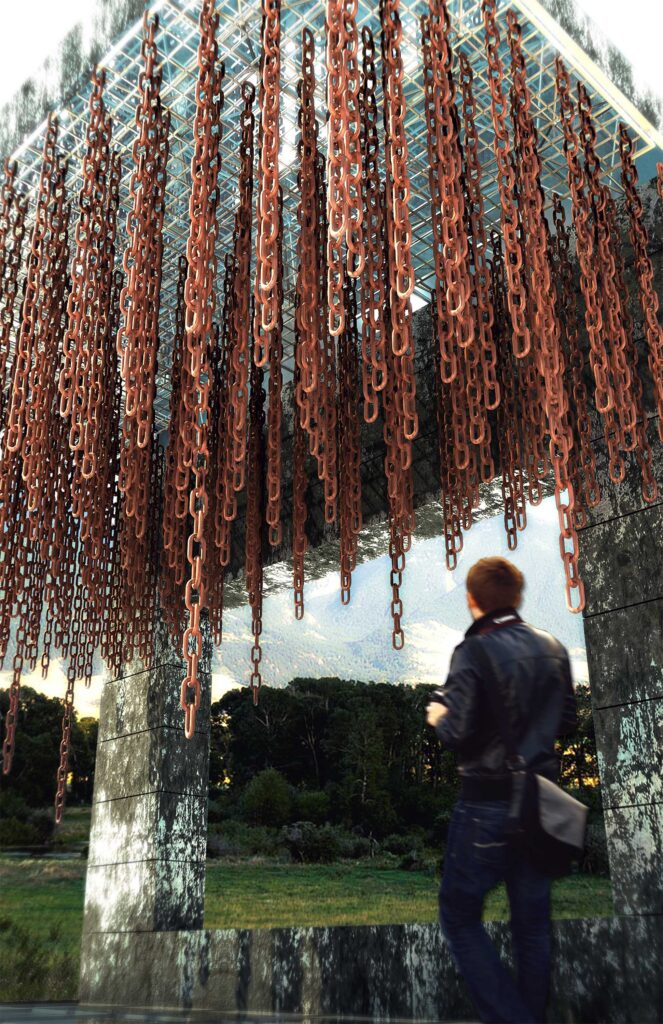
PROJECT EVIDENCE · MUSIC OF THE CHAINS · AWARD-WINNING MEMORIAL DESIGN

Architecture As Memory.
An Award-Winning Memorial Designed To Be Heard, Felt, And Remembered.

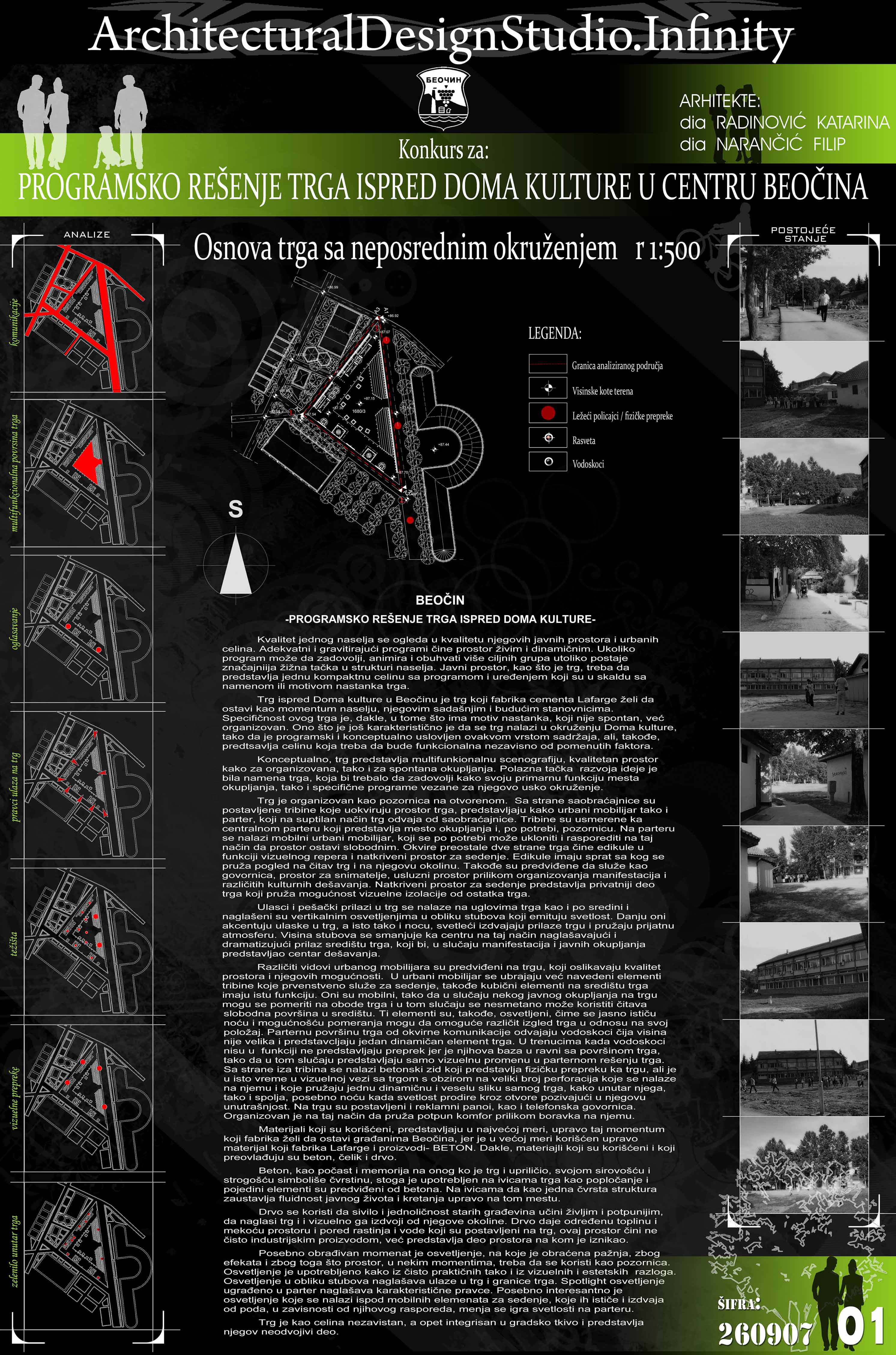
Music of the Chains is an award-winning conceptual memorial designed by Filip Narančić and Katarina Radinović for the Manifestations of Memory competition organized by the University of North Carolina at Charlotte – School of Architecture. Selected from 98 international submissions, the project transforms memorialization into an immersive experience shaped through sound, movement, symbolism, and human interaction.

The design uses suspended chains, a cantilevered form, changing density, and tactile participation to express the movement from oppression toward liberation. Visitors move beneath the installation, hear the chains respond to wind and touch, and become part of a narrative connected to the history of African American music.

Following the competition win, the team was invited to the United States for a one-month residency, presenting the project at universities and symposiums while further developing the proposal through site planning, technical drawings, construction details, and architectural visualization.

WHEN ARCHITECTURE CAN BE HEARD, TOUCHED, AND OCCUPIED, MEMORY STOPS BEING DISTANT AND BECOMES A SHARED SPATIAL EXPERIENCE.

Visitor standing beneath a monumental architectural installation formed by suspended rusted chains and a structural frame.

ARCHITECTURAL THINKING · REAL CONDITIONS · SPATIAL EXPERIENCE · BUILT RESPONSIBILITY

Architecture Reveals Its True Quality In Everything That Happens Between The First Idea And The Life Of The Finished Place.

Architecture is experienced as a finished space, but its quality is determined through a much longer sequence of decisions. Site, program, movement, proportion, material, light, technical resolution, coordination, construction, and everyday use all influence whether an architectural idea remains coherent once it leaves the drawing board.

The ten contexts below follow that progression without reducing Architecture to a collection of final images. They move from first spatial intent and existing conditions through functional organization, human experience, visualization, material development, documentation, professional coordination, construction reality, and the completed environment itself. Each stage asks a different question, but every answer must continue supporting the same architectural logic.

A convincing concept can attract attention. A strong plan can organize use. A visualization can make an idea understandable. A material choice can establish character. Technical documentation can protect precision. Site coordination can preserve intent when real conditions begin to challenge it. And ultimately, the built environment must make all of those decisions feel natural to the people who occupy it.

That is where architectural value becomes visible—not because every decision demands attention, but because the relationships between them remain resolved enough for the space to function clearly, feel deliberate, withstand practical reality, and continue making sense long after the project is completed.

THE FIRST IDEA MAY DEFINE THE DIRECTION.
THE REAL ARCHITECTURE EMERGES WHEN CONTEXT, USE, SPACE, MATERIAL, TECHNICAL DISCIPLINE, CONSTRUCTION, AND HUMAN EXPERIENCE CONTINUE TO SUPPORT THAT IDEA ALL THE WAY INTO THE FINISHED PLACE.

WHY STRONG ARCHITECTURE REQUIRES MORE THAN A GOOD FIRST IMPRESSION

A Beautiful Concept Is Only The Beginning Of A Resolved Architectural Project

THE REAL TEST OF ARCHITECTURE COMES LATER—WHEN SPACE, MOVEMENT, PROPORTION, MATERIAL, DETAIL, AND TECHNICAL REALITY MUST CONTINUE TO SUPPORT THE SAME IDEA.

Architecture can make a powerful first impression and still remain unresolved beneath the surface. An attractive composition, convincing rendering, or distinctive formal gesture does not automatically answer the harder questions of how the space functions, how people move through it, how dimensions relate, how materials meet, how technical requirements are coordinated, or how the original design intention survives the transition toward realization.

At Infinity Design Studio, those questions are not postponed until the project becomes difficult to change. They are treated as part of the architecture itself. Program, spatial organization, circulation, proportion, materiality, light, visualization, documentation, and technical coordination are developed in relationship to one another so that the project becomes progressively more resolved—not merely more detailed.

The objective is architecture with enough discipline to retain its character across different scales: from the first spatial decision to the junction, finish, drawing, visual study, and real environment people ultimately inhabit.

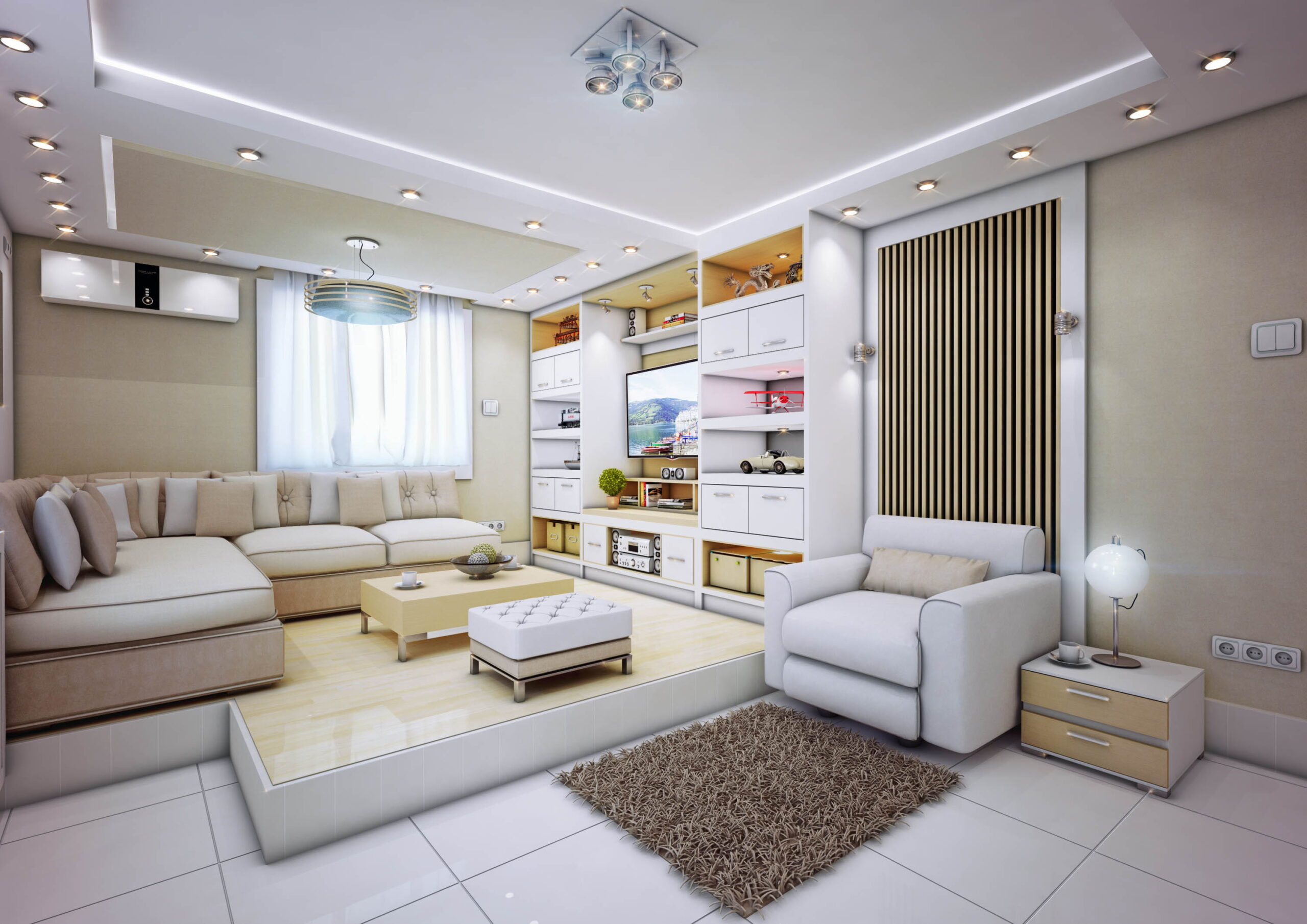
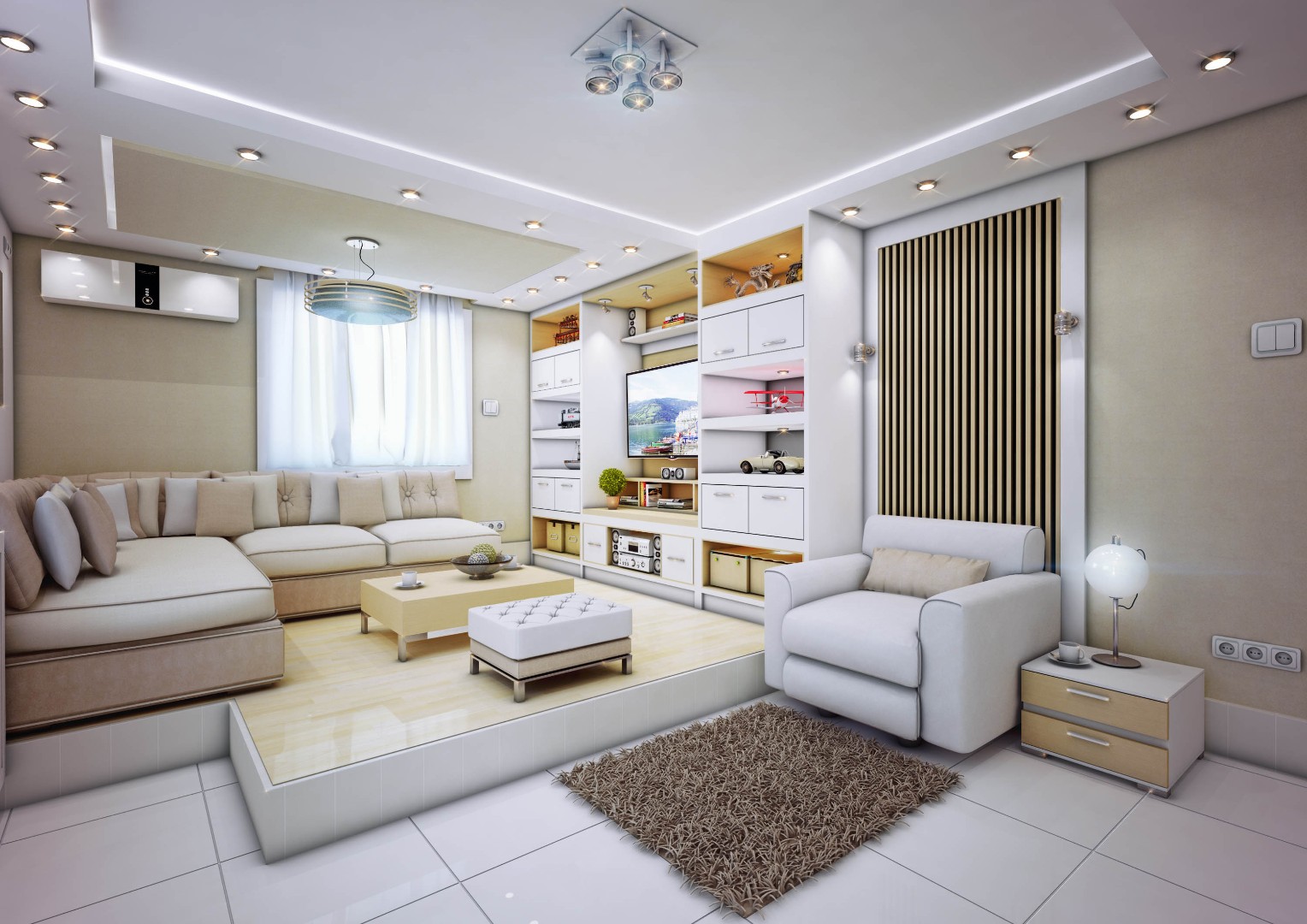
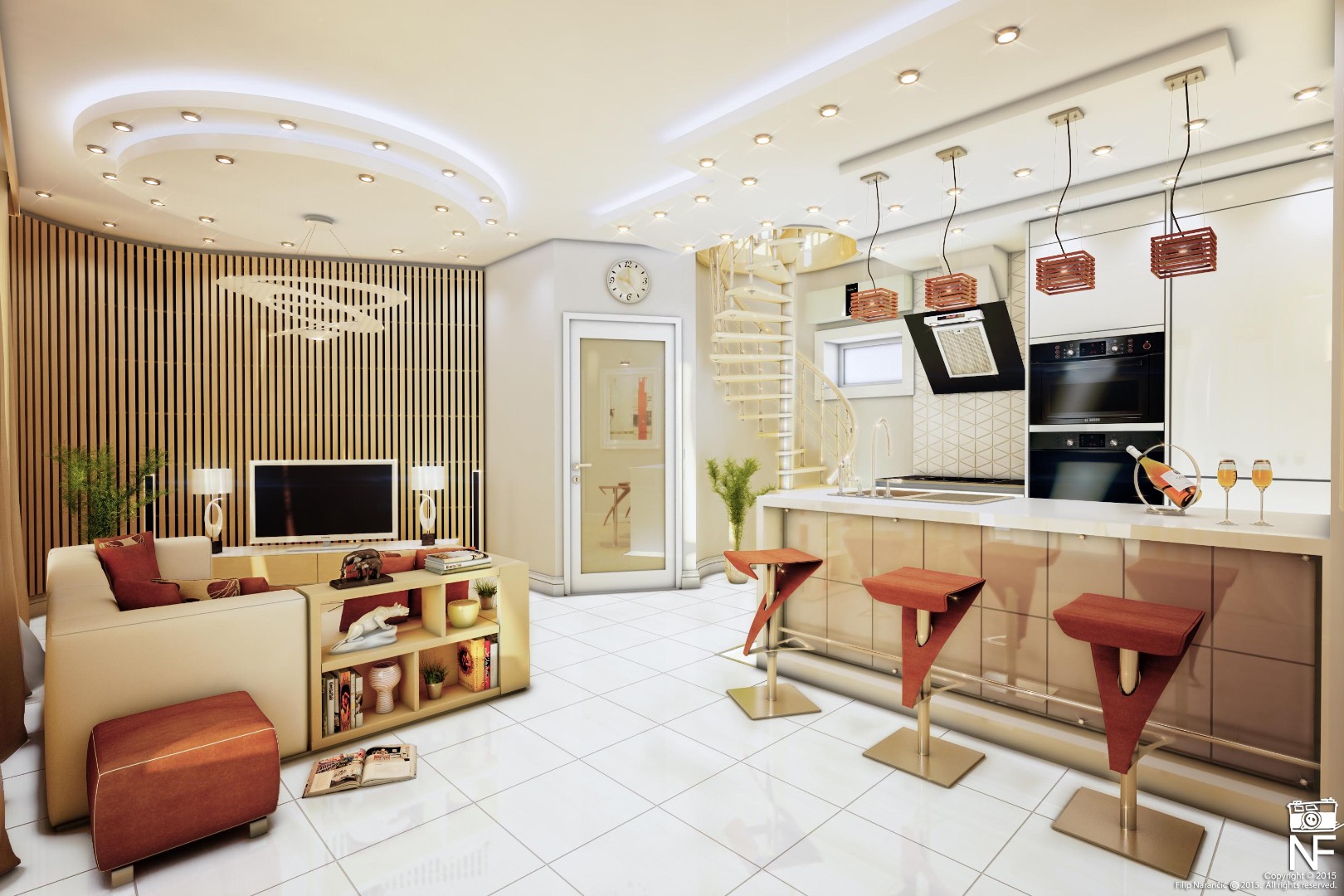
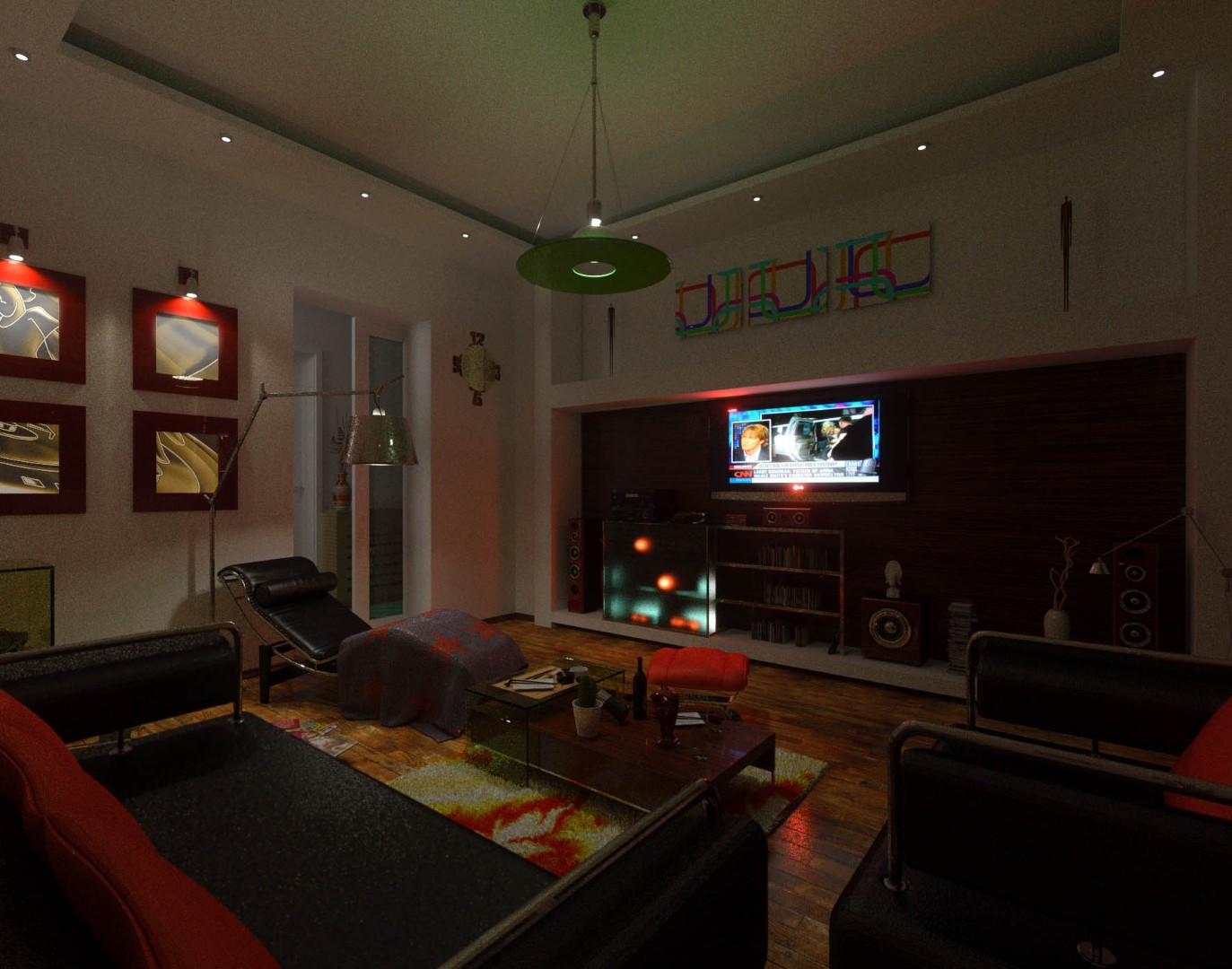
Residential living room architectural visualization showing custom built-in storage, layered lighting, integrated media wall, seating, and coordinated interior finishes.

FINISHED APPEARANCE · SPATIAL COHERENCE · ARCHITECTURAL RESOLUTION

A Space Can Look Complete Before The Architecture Behind It Is Truly Resolved.

A polished interior can create an immediate sense of completion, yet visual finish alone cannot confirm whether the program is properly organized, circulation feels natural, spatial relationships support real use, or technical and material decisions continue to protect the original idea. Those qualities become visible only when the space is examined beyond its first impression.

The real architectural test lies in the relationships underneath the surface—how individual rooms connect, how movement is structured, how proportions and transitions work together, and whether detailing strengthens rather than gradually weakens the larger spatial concept. The three conditions below identify where that coherence is most often lost.

A convincing image can show that a space looks resolved. Architectural discipline determines whether it actually is.

THREE POINTS WHERE ARCHITECTURAL QUALITY IS MOST OFTEN COMPROMISED

01 — THE BRIEF EXISTS, BUT THE SPATIAL PROGRAM IS NOT TRULY RESOLVED

A project can have the correct number of rooms, functions, or square meters and still fail to create a convincing place. The deeper issue is how those requirements relate: which activities belong together, where privacy changes, how movement is organized, what deserves spatial priority, where natural light matters, and how the architecture responds to actual patterns of use.

When these relationships remain underdeveloped, form begins compensating for problems that should have been solved spatially. The result may look deliberate while producing unnecessary circulation, weak adjacencies, compromised proportions, or spaces that do not support the life or activity they were designed to contain.

Professional Architectural Programming, Concept Development, Site Analysis, and Spatial Planning establish the project around real relationships rather than a collection of isolated requirements—giving later design decisions a stronger architectural foundation.

02 — INDIVIDUAL SPACES WORK, BUT THE ARCHITECTURE DOES NOT YET READ AS A WHOLE

Strong architecture depends on more than solving rooms one by one. Sequence, threshold, orientation, scale, volume, openings, visual axes, circulation, solid and void, interior–exterior relationships, and transitions between spaces determine whether the project feels coherent as people move through it.

A plan can be technically workable and still lack architectural order. An interior can contain premium materials and still feel spatially uncertain. A façade can be visually striking while having little relationship to what happens behind it. Quality begins to weaken whenever individual decisions stop reinforcing the same larger idea.

Through Architectural Design, Interior Architecture, Spatial Studies, and 3D Visualization, relationships can be tested before they become fixed—allowing proportion, movement, viewpoints, light, volume, and atmosphere to be evaluated as parts of one continuous spatial experience.

03 — THE CONCEPT IS STRONG, BUT DETAIL AND TECHNICAL DEVELOPMENT NO LONGER PROTECT IT

Many architectural ideas lose their quality not during concept design, but during the transition from intention to resolution. Material junctions, ceiling conditions, lighting integration, built-in elements, openings, finish transitions, dimensions, tolerances, technical systems, and documentation can either reinforce the original concept or gradually dismantle it.

This is where visual ambition must meet professional discipline. A project is not fully resolved because its principal image is convincing; it becomes resolved when decisions at smaller scales continue to serve the architecture rather than contradict it.

Carefully developed Technical Documentation, Material Definition, Design Coordination, Detailing, and Project-Specific Implementation Information help carry architectural intent forward with greater clarity, reducing ambiguity between what was imagined, what was communicated, and what is ultimately expected to be realized.

Architecture rarely loses quality because of one dramatic mistake. More often, it weakens through a sequence of smaller disconnects—between brief and plan, plan and section, interior and exterior, concept and material, visualization and documentation, detail and execution. Each disconnect may appear minor on its own; together they can fundamentally change the character and performance of the project.

Our role is to identify those relationships early enough for design decisions to strengthen one another. This is why architectural development cannot be reduced to creating an appealing concept and documenting it afterward. The project must remain architecturally coherent as information increases, constraints become more specific, and abstract ideas are translated into decisions that can actually shape space.

GREAT ARCHITECTURE DOES NOT SURVIVE BECAUSE THE FIRST IDEA WAS STRONG.
IT SURVIVES BECAUSE EVERY DECISION THAT FOLLOWS KNOWS WHAT THAT IDEA IS WORTH PROTECTING.

ARCHITECTURAL CONTEXTS · CLIENT TYPES · SPATIAL PROGRAMS · PROJECT APPLICATIONS

Different Projects Ask Different Questions. Our Architecture Services Are Built Around The Spatial, Technical, And Human Demands Behind Each One.

PRIVATE HOMES, MULTI-UNIT DEVELOPMENTS, COMMERCIAL ENVIRONMENTS, HOSPITALITY SPACES, RENOVATIONS, INTERIORS, AND PLANNING-LED PROJECTS EACH REQUIRE A DIFFERENT BALANCE OF FUNCTION, CONTEXT, PROPORTION, MATERIAL THINKING, TECHNICAL RESOLUTION, AND ARCHITECTURAL CHARACTER.

Architecture changes with the project because the conditions that shape space are never identical. A private residence must respond closely to patterns of everyday life, privacy, comfort, and personal priorities. A commercial or hospitality environment introduces operational flow, customer experience, brand expression, durability, and often a very different relationship between public and private space. Development-led work adds questions of repeatability, unit logic, project value, approvals, stakeholder communication, and long-term adaptability.

Infinity Design Studio structures each Architectural Design engagement around those real conditions rather than forcing projects into a predetermined stylistic or production formula. The starting point is the relationship between site, program, users, spatial hierarchy, circulation, scale, light, materiality, existing conditions, technical requirements, and intended use. From there, the architectural response can be developed with the level of concept work, interior resolution, visualization, documentation, coordination, and presentation support that the project actually requires.

This allows very different commissions to receive equally rigorous treatment without pretending they need the same solution. A renovation may depend on working intelligently with what already exists. A new residence may require careful organization of privacy, movement, orientation, and family life. A hospitality project may place greater emphasis on sequence, atmosphere, operational efficiency, and material experience. A development project may need a clearer relationship between architectural identity, repetition, flexibility, approval requirements, and the way the proposition is communicated to multiple stakeholders.

Our role is therefore not simply to apply architecture to different sectors. It is to understand what each type of project is asking the architecture to accomplish, which decisions carry the greatest consequence, and how creative ambition can remain aligned with functional responsibility, technical clarity, and the experience of the people who will ultimately use the space.

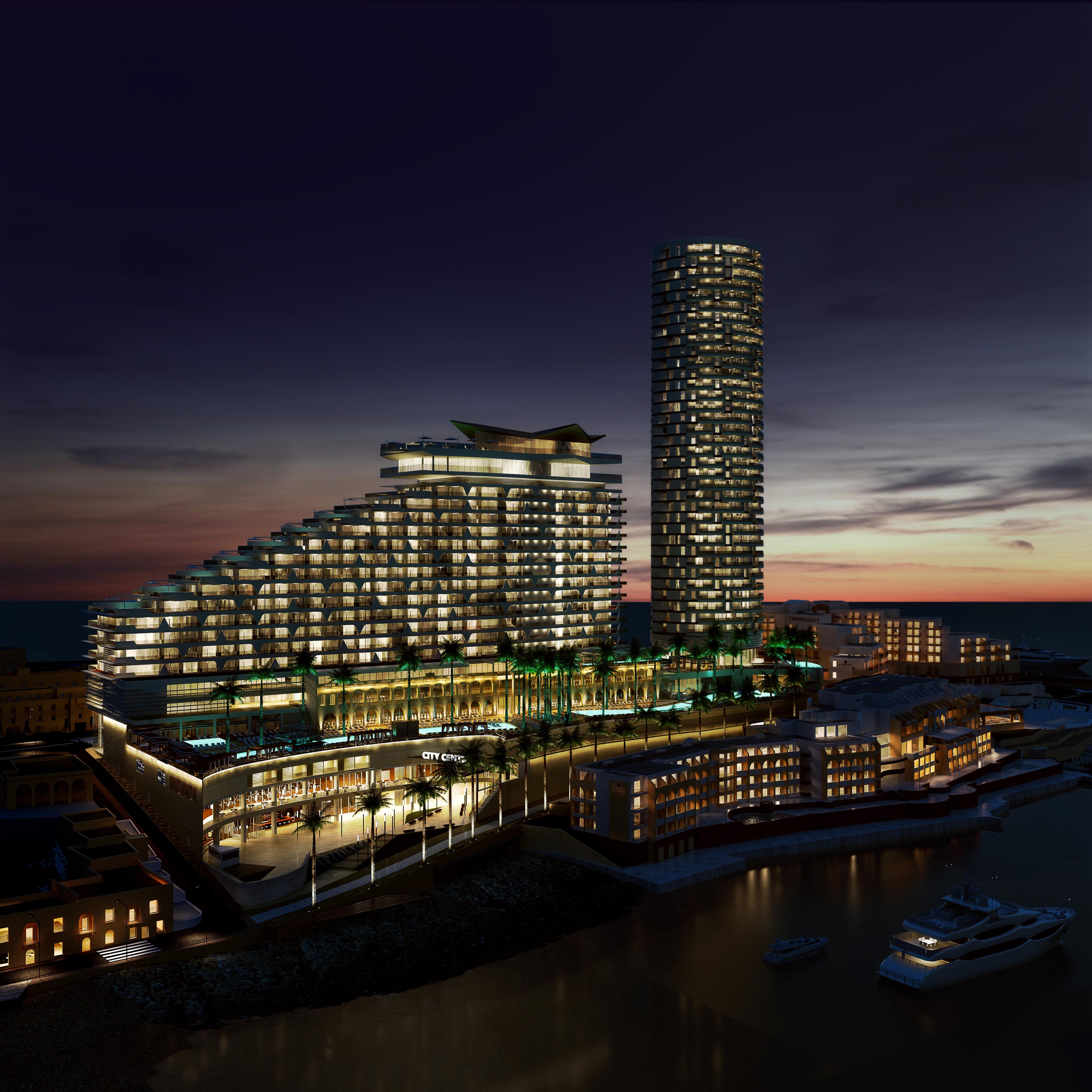
Night architectural visualization of a large waterfront mixed-use development with a stepped residential complex, high-rise tower, illuminated public areas, marina, and surrounding urban buildings.

THE PROJECT TYPE MAY CHANGE.
THE STANDARD DOES NOT:
EVERY SPACE SHOULD BE PURPOSEFUL, COHERENT, TECHNICALLY CONSIDERED, AND ARCHITECTURALLY WORTH THE DECISIONS INVESTED IN IT.

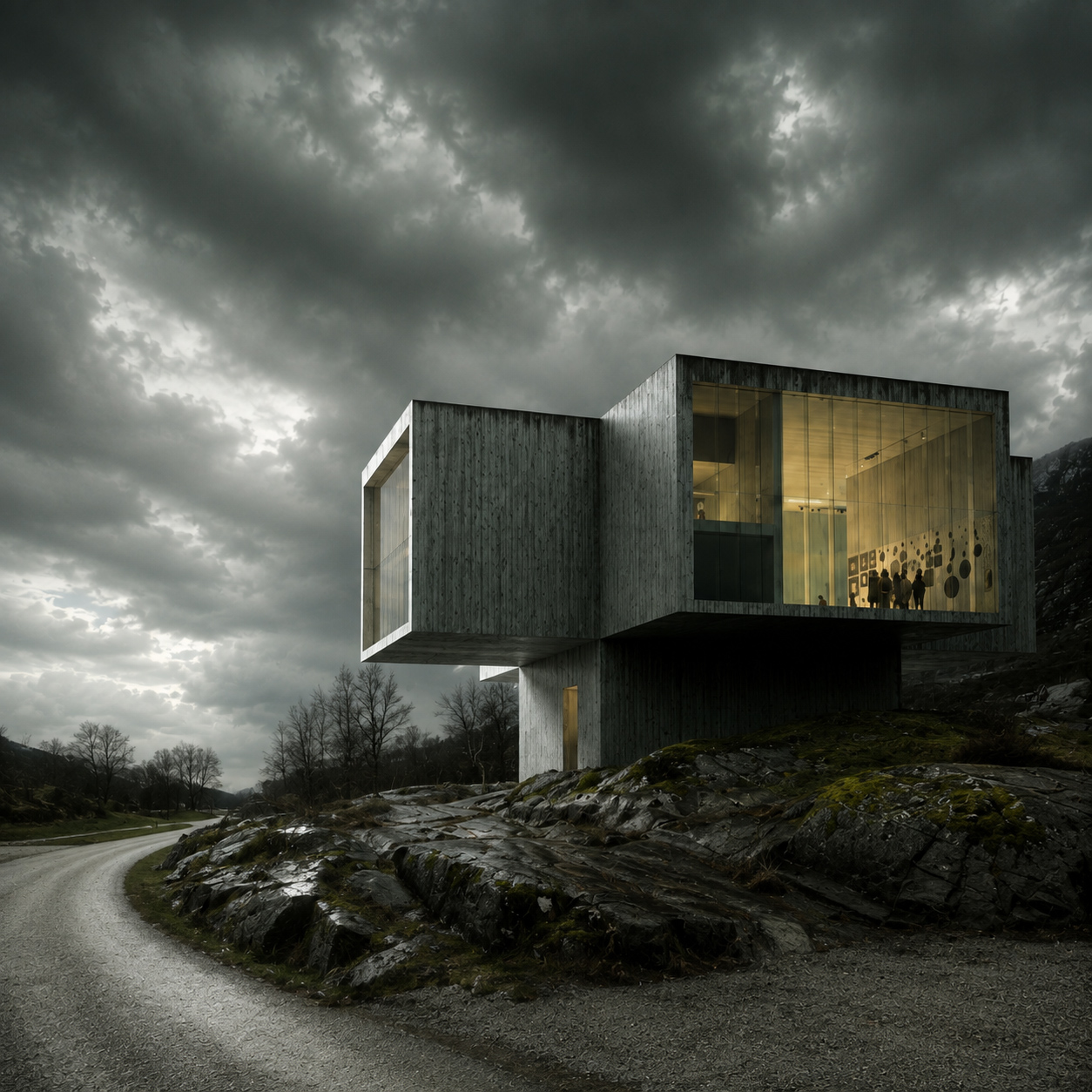
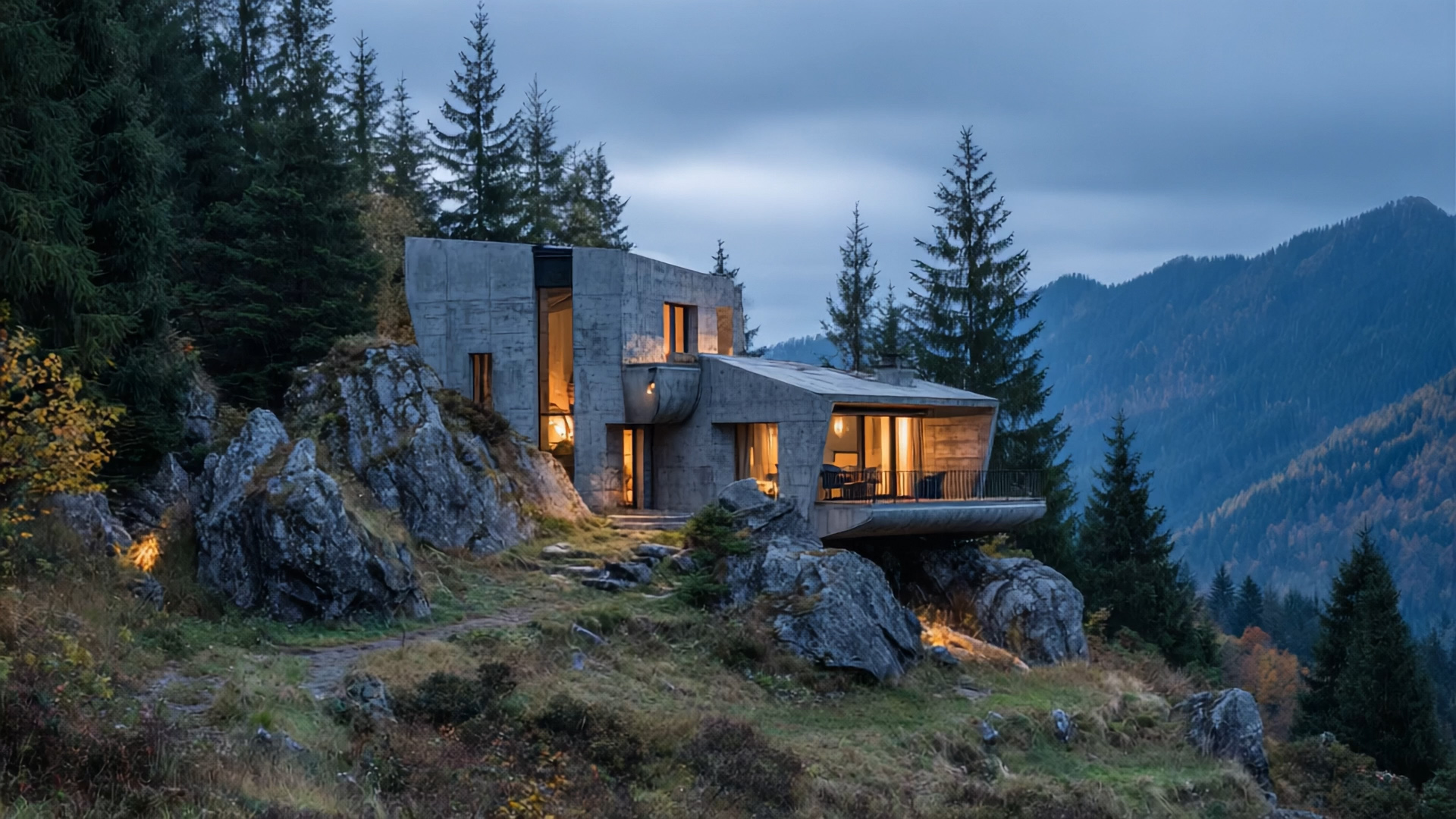
Architectural visualization of a modern concrete house in a rocky landscape under dramatic clouds, with a lit interior and a curving road leading toward the building.

BUILT CONTEXT · SPATIAL ATMOSPHERE · ARCHITECTURE IN RELATION TO PLACE

Beyond The Building — When Architecture Becomes Part Of The Landscape It Occupies.

A building is never experienced as an isolated object. Approach, terrain, orientation, weather, natural light, surrounding views, material character, and the relationship between interior and exterior all influence how architecture is perceived long before someone enters the space.

The strongest architectural responses do not simply occupy a site—they establish a deliberate relationship with it. Form, mass, openings, circulation, landscape, and atmosphere begin to work together so the building feels grounded in its surroundings rather than placed upon them. What appears visually powerful from a distance must remain equally convincing through movement, arrival, occupation, and everyday use.

Architecture defines the building. Context determines whether it truly belongs.

ARCHITECTURE BEYOND THE CORE DESIGN SCOPE

Where the project benefits from a broader level of support, the architectural engagement can extend into Professional Photography, 3D Architectural Visualization, Animation, Technical Presentation, Real Estate Communication, Development Materials, and other Built-Environment visual systems that help the design become easier to explain, evaluate, present, and carry forward.

These disciplines are introduced only where they strengthen the architecture itself—whether by clarifying spatial intent before construction, supporting stakeholder or investor communication, documenting completed environments, presenting a development more convincingly, or creating a stronger connection between architectural thinking, technical information, visual evidence, and the way the project is ultimately experienced and understood.

DIFFERENT SPACES DEMAND DIFFERENT PRIORITIES.
EVERY PROJECT RECEIVES THE SAME STANDARD OF ARCHITECTURAL CLARITY, SPATIAL INTELLIGENCE, TECHNICAL PRECISION, AND PROFESSIONAL EXECUTION.

Gradient quotation mark icon in purple and turquoise.

ARCHITECTURE TURNS PURPOSE, SPACE, STRUCTURE, AND ATMOSPHERE INTO ENVIRONMENTS PEOPLE CAN USE, FEEL, AND REMEMBER.

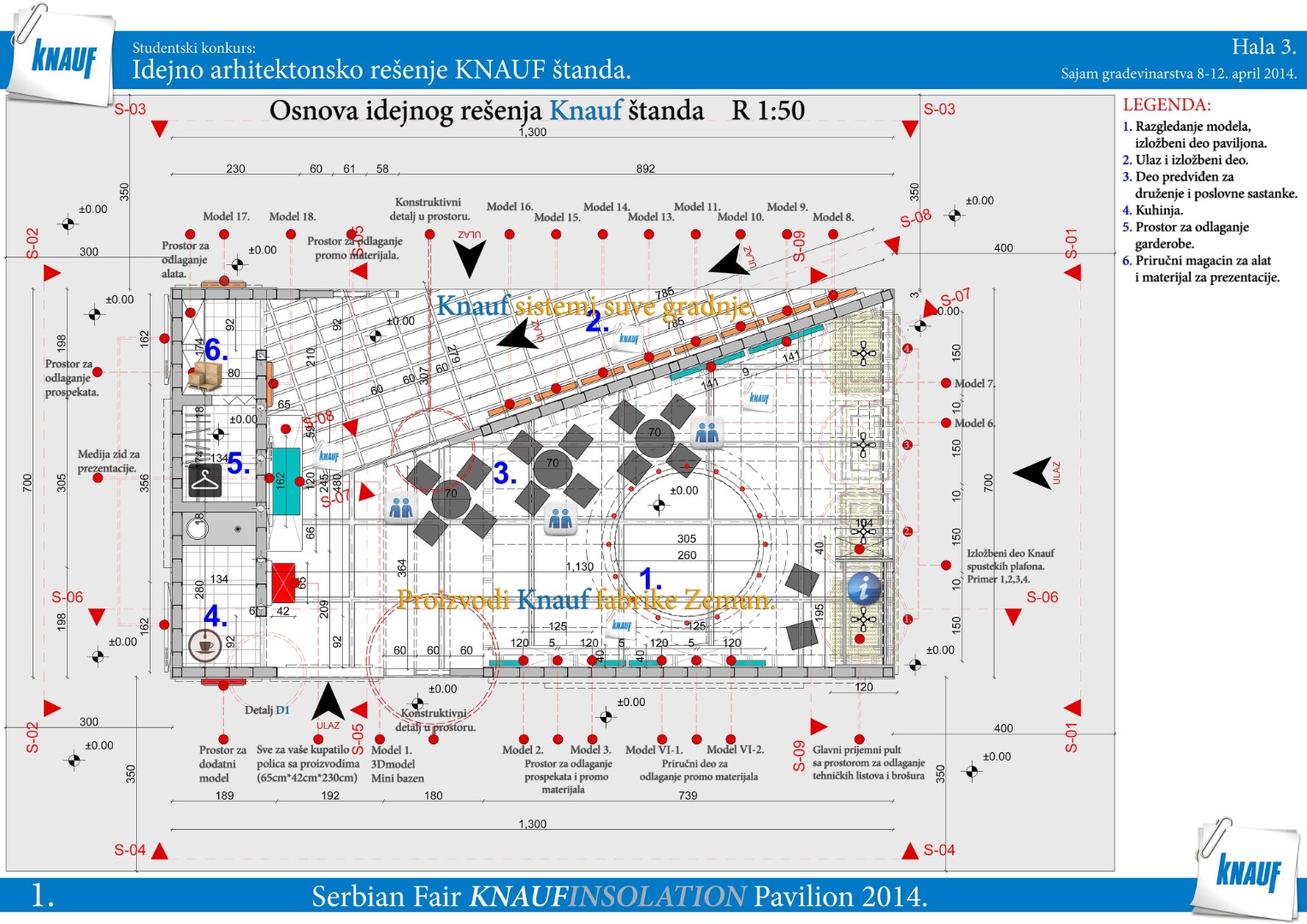
Architectural team reviewing detailed floor plans, spatial layouts, and a physical scale model during a collaborative design coordination meeting.

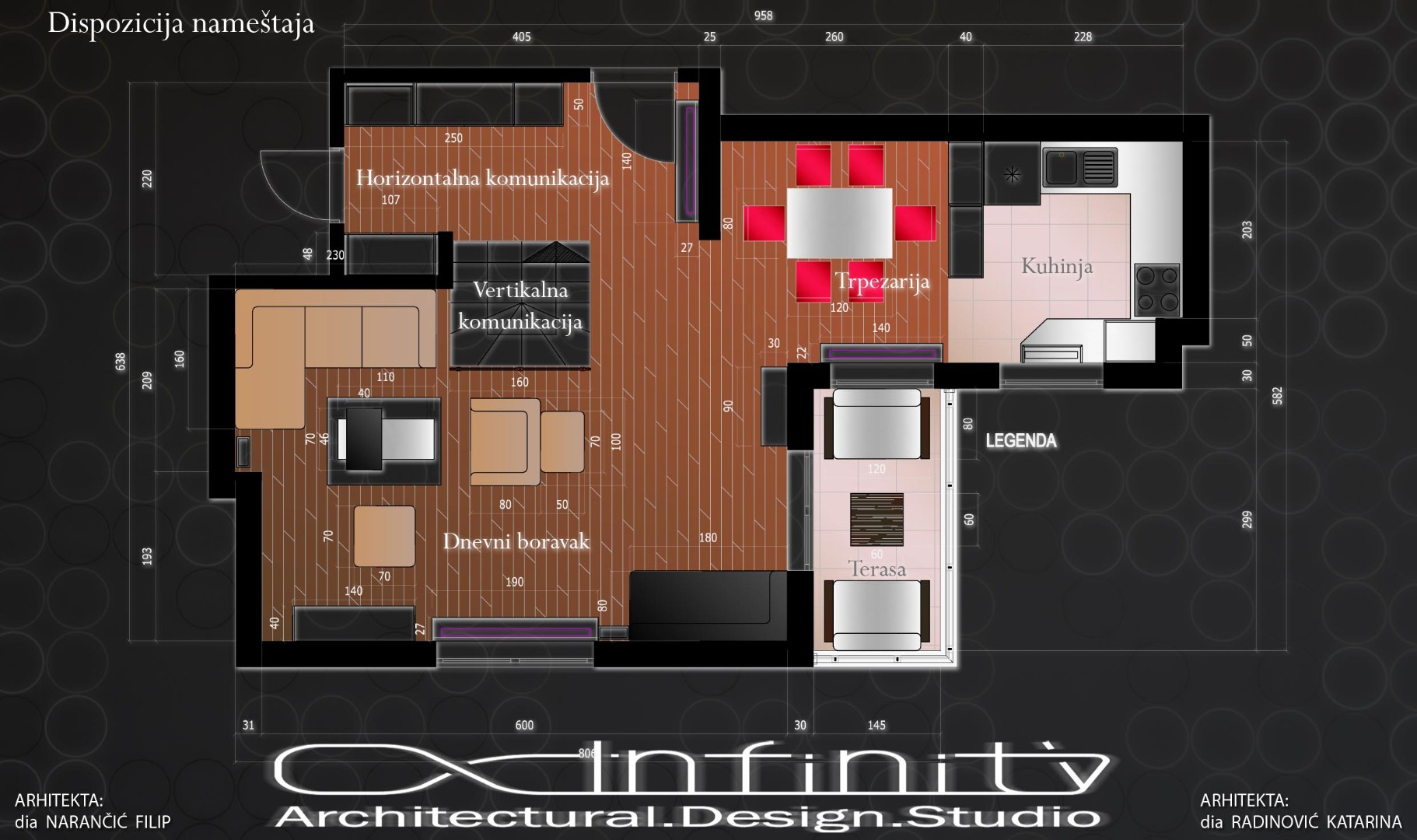
SPATIAL ORGANIZATION · PROGRAM LOGIC · FUNCTIONAL RESOLUTION

Good Architecture Organizes Life Before It Defines The Final Form.

Strong architecture does not begin with surface expression. It begins by resolving how rooms relate, how movement unfolds, where privacy is protected, where openness is needed, and how everyday life will actually move through the space. Before material character, atmosphere, or exterior image are fully developed, the project must establish a plan logic in which use, proportion, sequence, and human comfort work together with clarity.

At this stage, architecture turns from abstract intention into functional order. Spatial organization tests how public and private zones are balanced, how circulation avoids friction, how service and living areas support one another, and how individual decisions contribute to the coherence of the whole. The objective is not simply to make the plan look rational, but to create a structure in which the project begins to operate as a meaningful environment rather than a collection of separate rooms.

When this underlying order is resolved carefully, every later design decision becomes stronger. Material development gains direction, technical coordination becomes more precise, visualization communicates something already grounded in reality, and the final form carries greater credibility because it grows from use instead of imposition. The result is architecture that feels clearer to inhabit, easier to understand, and more capable of supporting life with long-term discipline and purpose.

WHEN PROGRAM, CIRCULATION, HIERARCHY, PRIVACY, OPENNESS, AND EVERYDAY USE ARE RESOLVED BEFORE FORM IS ALLOWED TO DOMINATE,
SPATIAL ORGANIZATION STOPS BEING A TECHNICAL ARRANGEMENT OF ROOMS AND BECOMES THE ARCHITECTURAL LOGIC THAT GIVES THE ENTIRE PROJECT GREATER CLARITY, STRONGER FUNCTIONAL COHERENCE, HIGHER HUMAN COMFORT, AND A MORE DISCIPLINED FOUNDATION FOR EVERY MATERIAL, VISUAL, AND TECHNICAL DECISION THAT FOLLOWS.

THE NF EDITORIAL JOURNAL FORMAT™
Architecture explored as a connected discipline—from spatial intent and material decisions to circulation, materiality, everyday use, and the human experience of the built environment across real-world conditions.

WHERE ARCHITECTURAL IDEAS MEET DAILY LIFE

A Strong Architectural Idea Must Survive Everyday Use.
That Is Where Its Real Quality Appears.

Beauty May Attract Attention First—But Clarity, Function, Comfort, And Spatial Intelligence Are What Allow Architecture To Endure.

A project does not become meaningful simply because it begins with a strong concept. It becomes meaningful when that idea continues to perform through Architectural Design, Spatial Planning, circulation, proportion, storage, material selection, natural light, functional relationships, and the practical realities of everyday use. The strength of architecture is ultimately tested in the moments that follow presentation—when people begin to move through the space, understand its organization, interact with its details, and experience how comfortably the environment supports real life over time.

This is where Interior Architecture, Residential Architecture, spatial functionality, materiality, and human-centered design become inseparable from the original architectural idea. A resolved project should feel coherent from the larger spatial composition down to individual transitions, built-in elements, lighting conditions, surfaces, and points of interaction. When these decisions are developed as parts of one architectural system, the result becomes more than a visually convincing environment. It becomes a space that can be inhabited intuitively, experienced naturally, and valued long after the first impression has passed.

SEE HOW ARCHITECTURAL THINKING TRANSLATES FROM CONCEPT TO EVERYDAY SPATIAL EXPERIENCE.

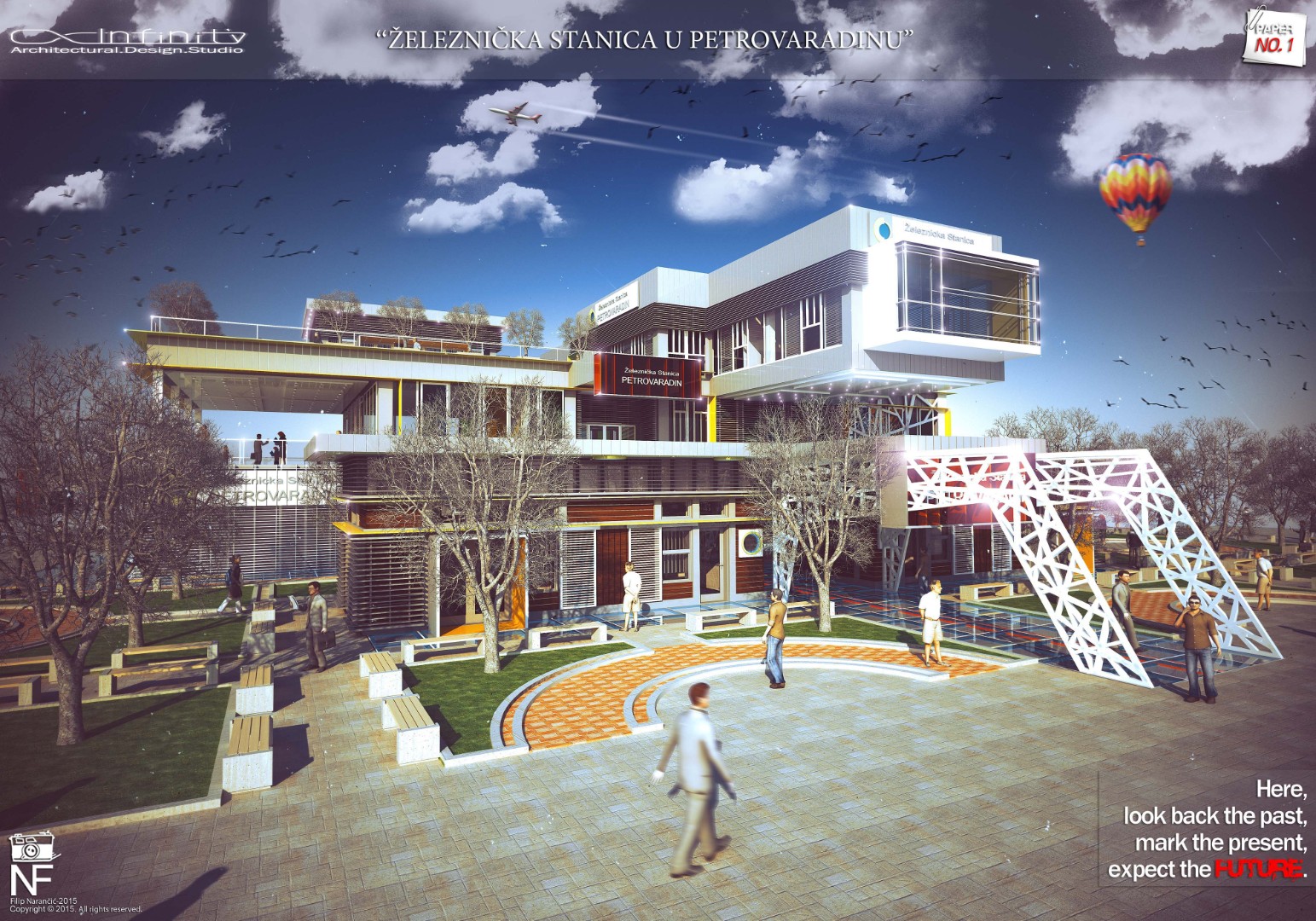
Architectural team reviewing circulation, platform access, and spatial relationships inside Petrovaradin Railway Station, connecting professional architectural practice with everyday use and lived spatial performance.

EDITORIAL CONTEXT · SPATIAL EXPERIENCE · ARCHITECTURAL DECISION-MAKING

When Space Begins To Work — Reading Architecture Through Everyday Use.

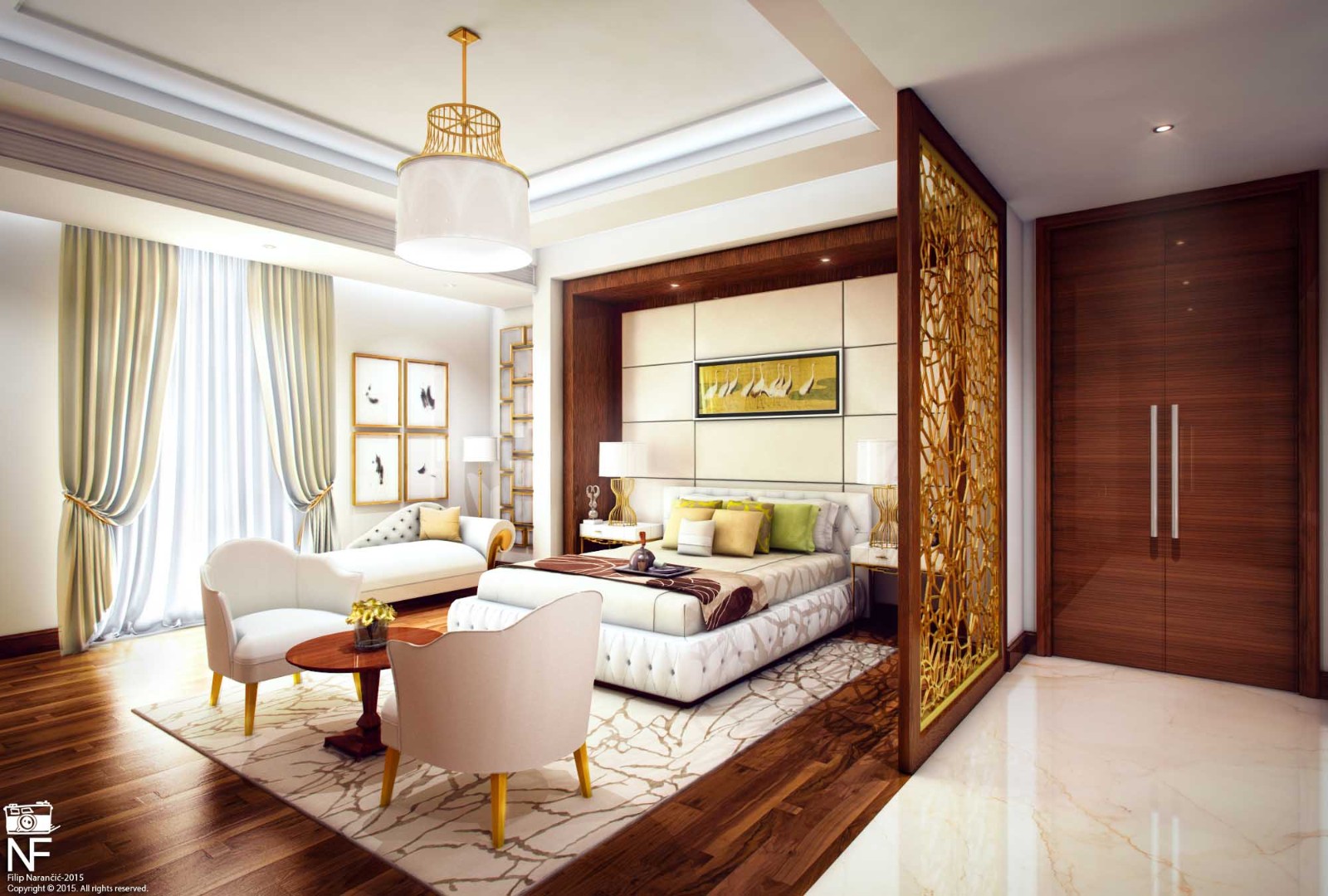
A finished interior may appear resolved at first glance, but its architectural quality is revealed through use. Circulation, storage, clearances, proportion, built-in elements, lighting, material transitions, accessibility, and points of everyday interaction determine whether a space continues to feel coherent once people begin moving through it, placing objects, opening doors, reaching, pausing, and living within its boundaries.

The strongest architectural environments make these decisions feel almost effortless. Function does not compete with atmosphere, storage does not interrupt spatial clarity, and practical requirements become part of the composition rather than additions made after the design is complete. What appears visually calm is often the result of many carefully coordinated decisions working together beneath the surface.

Architecture defines the space. Everyday use reveals whether the thinking behind it truly holds together.

COMPLETE ARCHITECTURE SERVICES • FROM CONCEPT DEVELOPMENT TO EXECUTION-READY SPATIAL SOLUTIONS

Complete Architecture Services Built Around How Spaces Function, Feel, And Endure

ARCHITECTURAL CONCEPT DEVELOPMENT, SPATIAL PLANNING, INTERIOR DESIGN, 3D VISUALIZATION, TECHNICAL DOCUMENTATION, AND PROJECT-READY COORDINATION—CONNECTED THROUGH ONE PROFESSIONAL DESIGN PROCESS.

Every Architecture project requires more than an attractive idea. Strong architectural work depends on clear spatial logic, functional organization, technical understanding, visual discipline, and a development process that supports the real purpose of the space.

Infinity Design Studio develops Architecture, Interior Design, Urban Planning, 3D Visualization, and Technical Documentation as connected professional services—combining concept thinking, space planning, visual communication, and execution-aware design into one coordinated workflow.

From private residences and interior transformations to commercial spaces, hospitality concepts, planning-stage developments, and presentation-ready architectural proposals, every service is shaped around how people will use, experience, and move through the environment.

THE SCALE OF THE PROJECT MAY CHANGE.
THE STANDARD OF SPATIAL CLARITY, TECHNICAL PRECISION, AND PROFESSIONAL ARCHITECTURAL DELIVERY DOES NOT.

01 — Architectural Concept Development & Schematic Design

Strong architecture begins by defining what the project must accomplish before deciding what it should look like. This stage establishes the conceptual and spatial foundation through site understanding, program relationships, circulation, scale, massing, and early architectural direction—giving later decisions a clear logic to develop from.

02 — Residential Architecture, Interior Design & Spatial Planning

Homes are experienced through everyday moments, making residential design different from designing for appearance alone. We develop residential environments around privacy, movement, comfort, orientation, storage, light, material character, and the changing realities of everyday life.

03 — 3D Architectural Visualization & Design Presentation

Visualization becomes most valuable when it helps test architecture before expensive decisions become permanent. We use 3D not simply to create persuasive imagery, but to evaluate proportion, material behavior, light, viewpoints, spatial relationships, and the overall coherence of the developing design.

04 — Commercial, Hospitality & Experience-Led Spatial Design Environments

Commercial environments must resolve more than aesthetics. They must connect operations, circulation, identity, customer experience, durability, atmosphere, and business purpose within spaces that work convincingly for both the people using them and the organizations behind them through every stage of the complete spatial experience.

05 — Urban Planning, Development Support & Feasibility Thinking

Certain projects cannot be understood at the scale of a single room or building. Development and planning work requires a broader view of land use, access, density, movement, public-private relationships, landscape, infrastructure, context, and future adaptability before individual architectural elements can be resolved responsibly.

06 — Technical Documentation, Design Coordination & Execution Readiness

Architectural quality can disappear quickly when the transition from design intent to technical information is poorly controlled. This stage develops the documentation and coordination needed to keep dimensions, materials, details, spatial relationships, and approved architectural decisions aligned as the project moves closer to realization.

Our Architecture Service is built for projects where spatial intelligence, functional clarity, technical discipline, visual quality, and long-term usability directly shape the final value of the environment.

FROM THE FIRST CONCEPT TO THE FINAL DOCUMENTED SPATIAL SOLUTION, EVERY DECISION IS DEVELOPED TO HELP THE PROJECT FUNCTION BETTER, COMMUNICATE MORE CLEARLY, AND LAST WITH GREATER INTEGRITY.

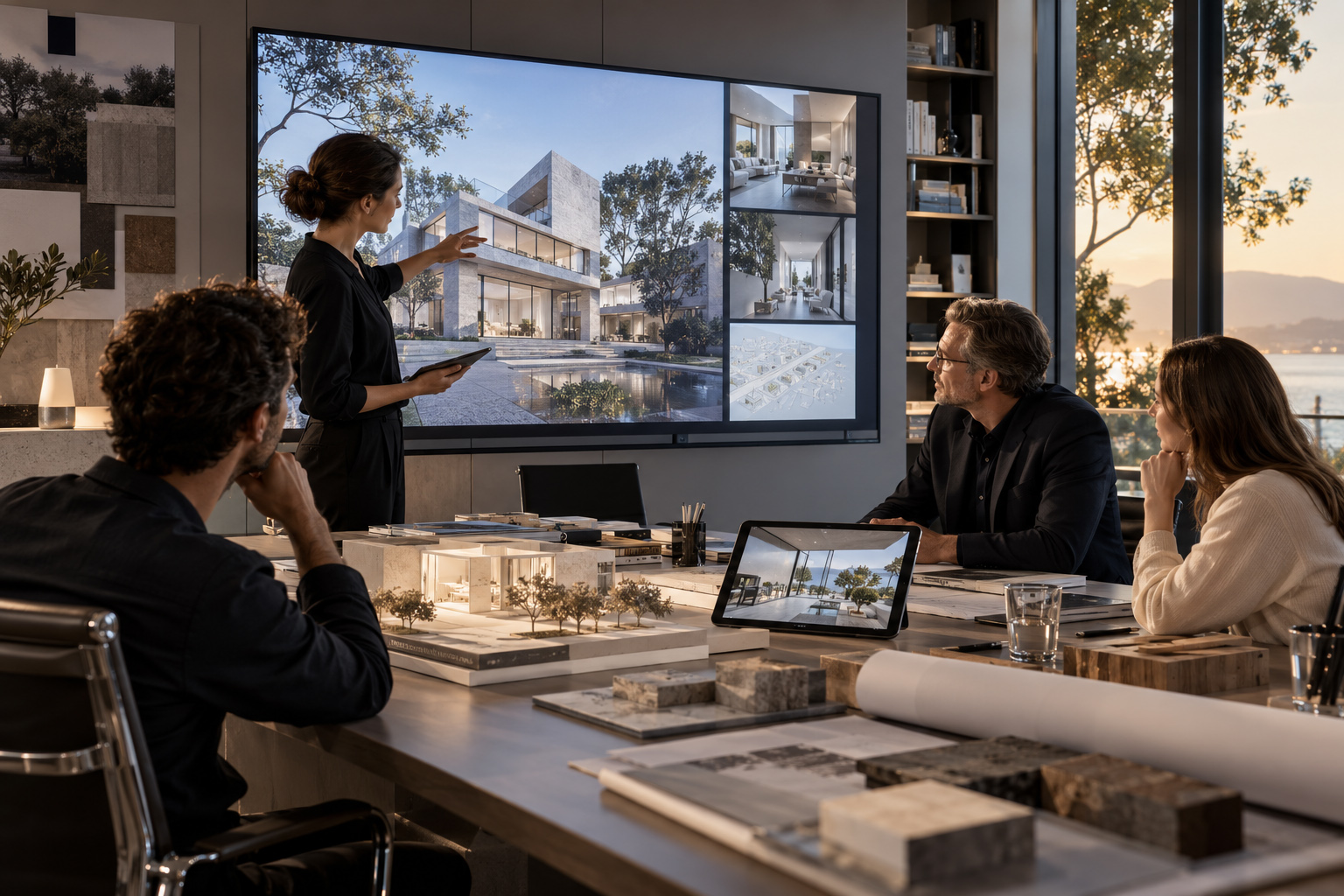
Architect presenting a contemporary residential project to clients using large design visualizations, interior views, and a physical architectural model.

3D VISUALIZATION · SPATIAL TESTING · CLIENT PRESENTATION

Visualization Turns Architectural Intent Into Something That Can Be Tested, Understood, And Decided.

Architectural visualization becomes most valuable when it does more than present an attractive image. It creates a way to examine proportion, spatial relationships, material direction, light, atmosphere, and key viewpoints before physical decisions become expensive to revise. Instead of asking clients, collaborators, or stakeholders to interpret the project only through plans, sections, and technical drawings, visualization translates architectural intent into a form that can be read more intuitively, questioned more precisely, and discussed with greater clarity.

At this stage, the project begins to function as a spatial proposition rather than a set of abstract instructions. Exterior perspectives, interior studies, sequence views, environmental mood, and presentation-ready compositions help reveal how the architecture may actually be experienced—how it sits in context, how spaces relate, what the atmosphere communicates, and where refinement is still needed. The objective is not to create polished imagery for its own sake, but to build a more reliable basis for evaluation, comparison, feedback, and aligned decision-making before the project advances further.

When visualization is integrated with discipline, it strengthens far more than presentation quality alone. It helps technical development begin from a clearer position, allows client communication to become more efficient, and reduces uncertainty by making spatial consequences easier to see before they are built. The result is that architectural intent becomes more communicable, more testable, and more confidently defensible—allowing the project to move from concept toward approval and execution with stronger logic, greater shared understanding, and more controlled progress.

WHEN PROPORTION, SPATIAL RELATIONSHIPS, MATERIAL DIRECTION, LIGHT, ATMOSPHERE, AND KEY VIEWPOINTS CAN BE TESTED BEFORE TECHNICAL AND PHYSICAL DECISIONS BECOME COSTLY TO REVISE,
ARCHITECTURAL VISUALIZATION STOPS BEING A PRESENTATION IMAGE ALONE AND BECOMES A DECISION-MAKING INSTRUMENT—HELPING THE PROJECT COMMUNICATE MORE CLEARLY, REFINE MORE INTELLIGENTLY, ALIGN CLIENT UNDERSTANDING MORE PRECISELY, AND MOVE FORWARD WITH STRONGER CONFIDENCE, BETTER SPATIAL CONTROL, AND MORE CREDIBLE ARCHITECTURAL DIRECTION.

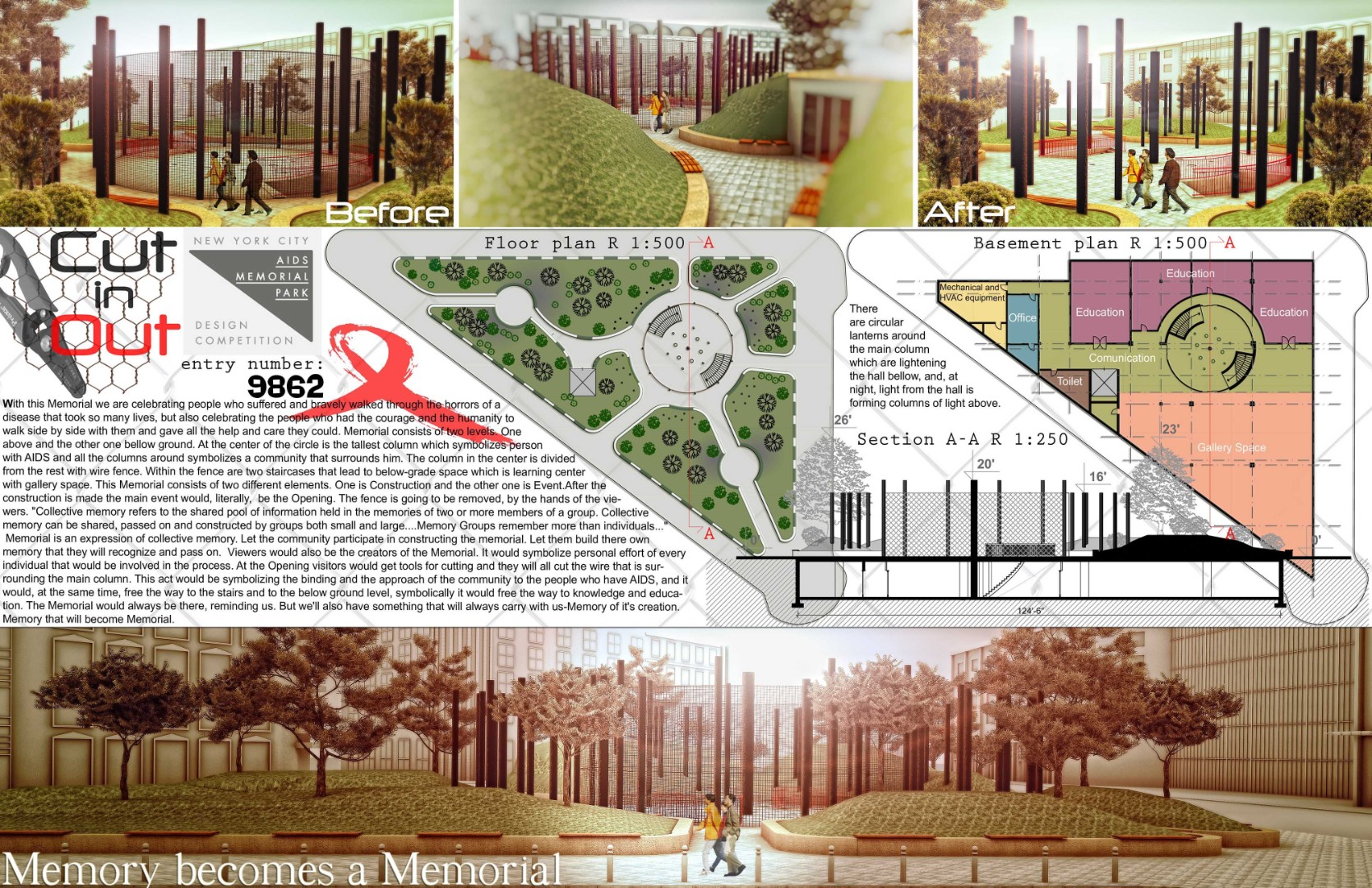
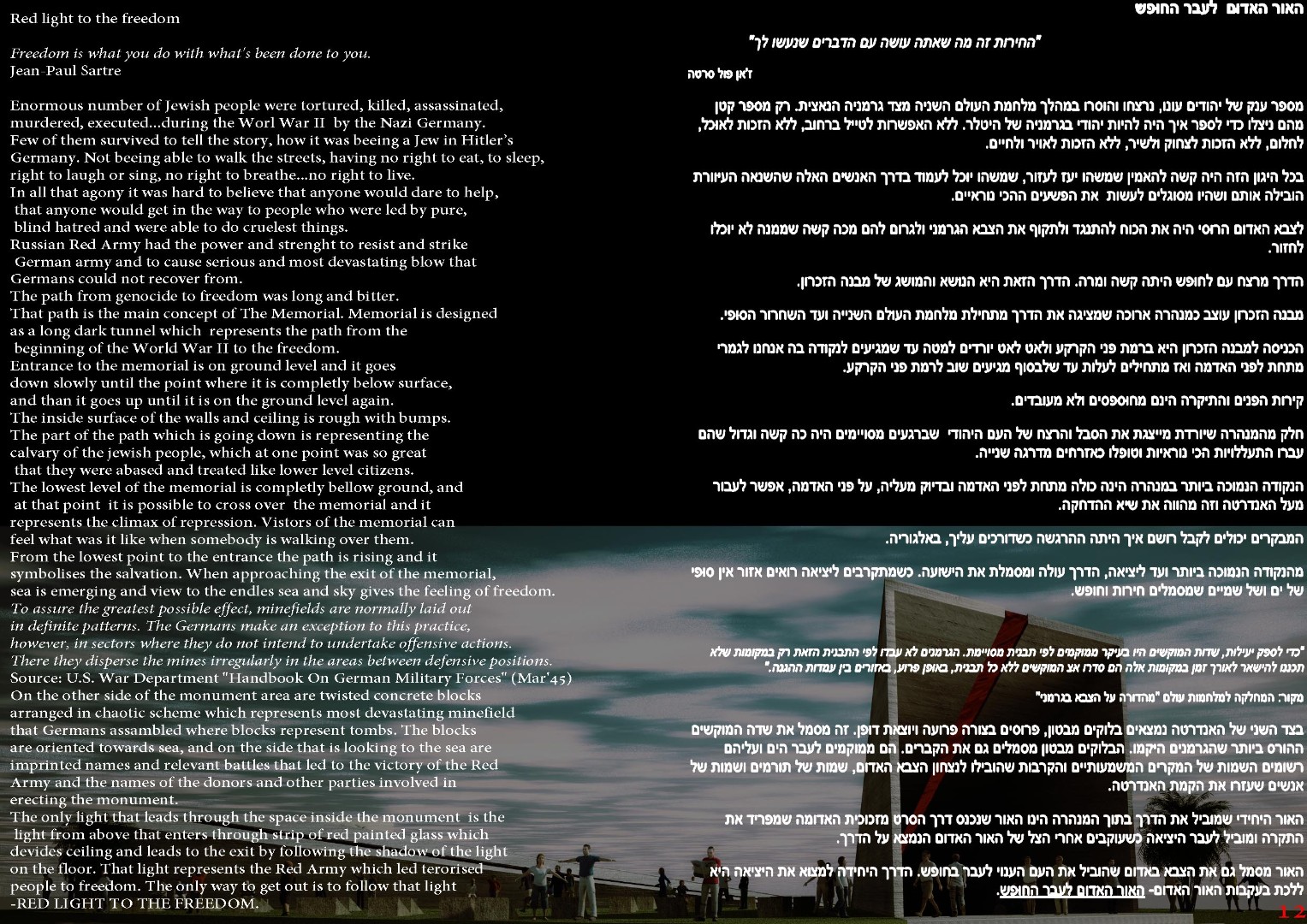
See how we shaped memorial spaces and won prestigious awards through architecture

Our award-winning memorial work demonstrates how architecture can transform cultural memory, symbolism, movement, material, sound, and human interaction into a spatial experience with lasting meaning. From the first conceptual idea to architectural development, visualization, technical resolution, and presentation, each decision is shaped to protect the strength of the narrative while giving it a clear, credible, and buildable architectural form.

Explore how research, spatial thinking, experimentation, and disciplined design development came together in projects recognized beyond the studio—not simply for how they looked, but for the ideas, experiences, and architectural reasoning they were able to communicate.

SELECTED ARCHITECTURE WORK · BUILT SPACES · INTERIORS · SPATIAL STUDIES

Architecture Reveals Its Quality Through The Way Each Project Responds.
Every Condition Demands Its Own Architectural Answer.

PRIVATE HOMES, INTERIOR TRANSFORMATIONS, CULTURAL CONCEPTS, AND SPATIAL STUDIES—EACH DEVELOPED THROUGH A DISTINCT ARCHITECTURAL LOGIC.

DESIGN IS NOT REPEATED FROM PROJECT TO PROJECT. THE DISCIPLINE BEHIND THE DECISIONS IS.

These selected projects demonstrate how site, program, proportion, circulation, material character, interior experience, visualization, and technical thinking come together differently depending on what the architecture is required to achieve. Each commission begins with its own constraints, opportunities, users, and spatial priorities rather than with a predetermined aesthetic formula.

Some projects demand highly personal residential environments shaped around everyday routines and privacy. Others require a stronger relationship between cultural meaning, spatial narrative, hospitality experience, interior identity, or development potential. The architectural response changes accordingly—allowing concept, function, atmosphere, and technical resolution to develop around the specific conditions of the project.

Across the work, the objective remains consistent: to create architecture that is spatially coherent, visually deliberate, functionally credible, and strong enough to retain its character as the project moves from idea toward real use.

THE ARCHITECTURAL EXPRESSION CHANGES WITH THE PROJECT.
THE COMMITMENT TO SPATIAL CLARITY, MATERIAL INTENT, TECHNICAL RESOLUTION, AND HUMAN EXPERIENCE DOES NOT.

WHERE SPATIAL INTENT, HUMAN EXPERIENCE, AND TECHNICAL DISCIPLINE BECOME ONE ARCHITECTURAL POSITION

Our Architecture Design Philosophy

“Architecture Becomes Meaningful When Every Decision—From The First Line To The Final Detail—Strengthens The Way A Place Is Understood, Used, And Experienced.”

At Infinity Design Studio, architecture is not approached as an exercise in form-making or visual effect. It begins with context, program, proportion, movement, orientation, material behavior, light, existing conditions, and the realities of how people will inhabit the space. These elements establish the logic from which architectural character should emerge rather than being applied afterward as decoration.

We believe the strongest projects are those in which concept and responsibility remain inseparable. A compelling spatial idea must continue to make sense when tested through plans, sections, circulation, dimensions, interior relationships, visualization, materials, technical documentation, consultant input, and eventual implementation. Each stage should clarify the architecture rather than gradually dilute the original intention.

Our role is therefore to protect the relationship between design ambition and spatial usefulness, atmosphere and construction logic, individuality and context, detail and the larger composition. The objective is not to create spaces that demand attention for a moment, but environments whose proportions, sequences, materials, and functional relationships continue to feel deliberate long after the first impression has passed.

FORM MAY DEFINE THE SILHOUETTE.
PURPOSE GIVES THE SPACE MEANING. TECHNICAL DISCIPLINE ALLOWS THE ARCHITECTURE TO ENDURE.

ARCHITECTURE SERVICES · PROJECT SCOPE · TECHNICAL RESPONSIBILITY · PROFESSIONAL COLLABORATION

What Clients Should Understand Before An Architectural Idea Becomes A Project Commitment

From Early Concept And Spatial Planning To Visualization, Technical Documentation, Coordination, And Delivery—Every Stage Requires Clear Responsibilities, Informed Approvals, And Project-Specific Scope.

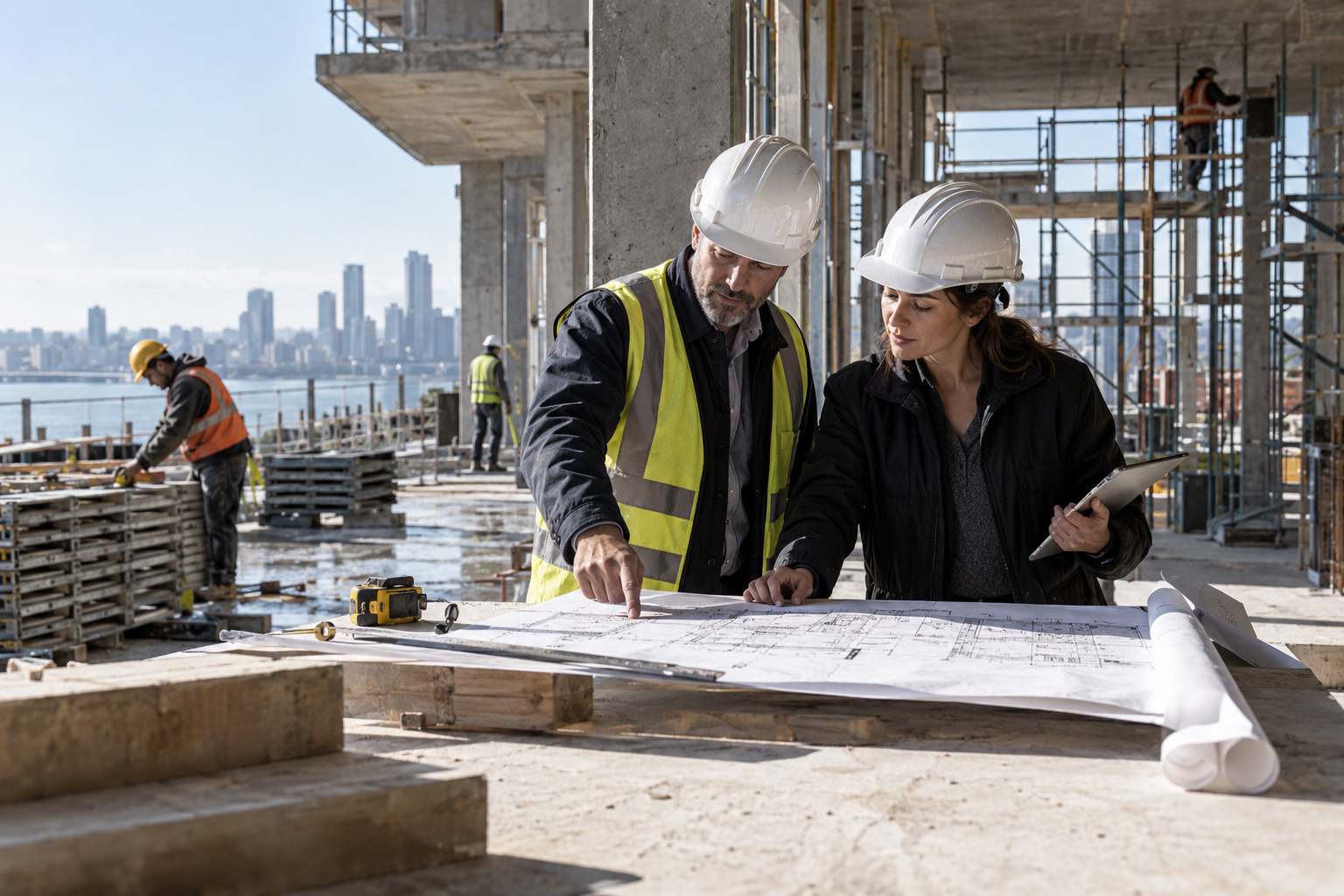
Architecture is cumulative. Decisions made during briefing, site analysis, programming, spatial organization, concept development, visualization, documentation, and coordination directly influence what becomes possible later. For that reason, a professional architectural engagement should establish what the project requires, which stage is being commissioned, what information is available, who is responsible for specialist disciplines, and what the agreed deliverables must accomplish before production becomes complex.

Infinity Design Studio structures each engagement around the real conditions of the commission rather than a universal template. Depending on the project, our role may involve Architectural Concept Development, Spatial Planning, Interior Architecture, 3D Architectural Visualization, Technical Documentation, Renovation & Adaptation, Urban Planning support, Material Direction, Design Coordination, or construction-stage involvement where specifically agreed.

The purpose of this FAQ is to remove ambiguity before important architectural decisions are made—so that scope, responsibilities, revisions, technical dependencies, approvals, ownership, collaboration, and delivery expectations remain clear throughout the project.

CLEAR ARCHITECTURAL SCOPE, DEFINED PROFESSIONAL RESPONSIBILITIES, INFORMED APPROVALS, AND TRANSPARENT PROJECT CONDITIONS — ESTABLISHED BEFORE DESIGN DECISIONS BECOME DIFFICULT OR EXPENSIVE TO REVERSE.

Purple speech bubble with a white question mark representing helpful information and frequently asked questions.

Everything You Need To Know Before The First Drawing Becomes A Commitment.

Clear Scope. Informed Decisions. Professional Architectural Collaboration.

What Makes Infinity Design Studio Different From A Conventional Architecture Or Interior Design Studio?Most Asked

Our approach begins with the conditions that must shape the architecture—not with a predetermined visual style.

Before form is developed, we examine the relationship between site, program, users, circulation, proportion, context, existing conditions, material character, light, technical requirements, and intended use. This creates a stronger foundation for decisions that must later survive visualization, documentation, coordination, and real-world implementation.

Depending on the project, our role can connect:

  • Architectural Concept Development
  • Spatial Planning & Programming
  • Interior Architecture
  • 3D Architectural Visualization
  • Material & Design Development
  • Technical Documentation
  • Renovation & Adaptation
  • Urban & Development-Oriented Spatial Thinking
  • Presentation & Built-Environment Communication
  • Design Coordination & Project Support


The objective is not to make every project look like Infinity Design Studio. It is to develop an architectural response that belongs to that site, that brief, that use, and that particular set of constraints and opportunities.

Our Architecture Services can support a broad range of spatial commissions, including private residences, apartments, renovations, interior transformations, commercial spaces, offices, retail environments, hospitality projects, wellness and lifestyle environments, residential developments, multi-unit projects, public-facing spaces, planning-led concepts, and selected larger Built-Environment projects.

The appropriate scope depends less on the project label and more on its actual requirements.

A small renovation may demand considerable spatial and technical precision, while a larger early-stage development may initially require only concept direction, planning logic, feasibility-oriented thinking, and architectural visualization.

Before accepting an engagement, we therefore evaluate the project stage, complexity, available information, technical dependencies, jurisdiction, schedule, required disciplines, and level of professional responsibility involved.

A strong project begins with reliable information.

Depending on the commission, we may request:

  • project brief and intended use;
  • site address and available survey information;
  • existing drawings or measured documentation;
  • photographs and videos of existing conditions;
  • property, planning, zoning, or regulatory information already available;
  • room, area, or program requirements;
  • household, operational, or user needs;
  • accessibility requirements where applicable;
  • reference material and aesthetic preferences;
  • known structural or technical limitations;
  • available consultant information;
  • target budget or investment framework;
  • expected project stage and timeline;
  • intended approval, construction, presentation, or development use.


Where information is incomplete, the project can sometimes begin with an agreed preliminary phase focused on brief clarification, existing-condition review, feasibility, or concept definition.

The accuracy of client-supplied dimensions, ownership information, technical data, surveys, regulatory information, and third-party documentation remains important because later architectural decisions may depend directly on them.

The exact process depends on the commission, but professional architectural work normally progresses through clearly defined stages rather than one continuous design exercise.

A typical engagement may include:

01 — Brief, Site & Project Understanding
Clarifying objectives, users, constraints, available documentation, spatial requirements, and project priorities.

02 — Architectural Direction
Establishing the central idea, program relationships, planning logic, circulation, massing, and spatial principles.

03 — Design Development
Refining proportion, room relationships, openings, materials, lighting intent, interior elements, and architectural character.

04 — Visualization & Spatial Testing
Using plans, sections, 3D studies, and selected visualizations to evaluate decisions before they become difficult or expensive to reverse.

05 — Technical Development & Documentation
Preparing the agreed level of drawings, details, schedules, specifications, and coordinated architectural information.

06 — Review & Approval
Structured client review at defined project stages.

07 — Coordination / Implementation Support
Where included, working with consultants, contractors, suppliers, or project stakeholders to protect the approved architectural direction.

08 — Final Delivery
Professional handover of the deliverables defined by the agreed scope.

Not every project requires every stage. The Service Agreement defines exactly which stages and responsibilities are included.

There is no responsible universal timeline for architectural work.

Duration depends on project scale, stage, site complexity, renovation conditions, number of spaces, stakeholder structure, required drawings, visualization depth, consultant coordination, regulatory requirements, revision rounds, client approval speed, and whether construction-stage support is included.

A focused concept or interior-planning engagement can move significantly faster than a commission involving multiple project stages, detailed technical development, authorities, consultants, several units, or extensive visualization.

Before activation, we establish the expected production framework for the approved scope.

The schedule assumes that required information, decisions, consultant input, approvals, access, and payments are provided according to the agreed project sequence. Delays outside the studio’s control may therefore affect later milestones and reserved production periods.

Yes.

3D Architectural Visualization can be integrated into the design process where it provides meaningful value.

We use visualization not only to produce attractive final images, but to examine architecture itself. Depending on scope, 3D studies can help evaluate:

  • spatial proportions;
  • ceiling heights and volumes;
  • circulation;
  • viewpoints;
  • openings;
  • natural and artificial light;
  • material relationships;
  • furniture scale;
  • façade composition;
  • interior atmosphere;
  • unresolved transitions between elements.


This allows important decisions to be tested before they become physical commitments.

A visualization represents the approved design information available at that stage. Final construction may differ because of material availability, contractor decisions, engineering requirements, tolerances, site conditions, regulatory changes, product substitutions, or later client modifications.

Yes, where technical documentation is included within the approved engagement.

The level of documentation depends on the project stage and may include appropriate combinations of plans, sections, elevations, reflected ceiling information, floor and wall layouts, material intent, furniture or built-in coordination, selected details, schedules, dimensions, presentation drawings, and other project-specific architectural information.

A concept package, design-development package, tender-oriented package, permit-related package, and execution-oriented package are not the same professional scope.

Before production begins, the required documentation level must therefore be identified clearly.

Where local law requires documents to be prepared, signed, stamped, verified, or submitted by a locally licensed architect, engineer, architect of record, or other authorized professional, those responsibilities are handled according to the applicable jurisdiction and are not assumed automatically unless specifically included in writing.

This depends on the location of the project and the agreed professional scope.

Architecture is regulated differently across countries, municipalities, planning authorities, building departments, and project types. Where appropriate, Infinity Design Studio can develop architectural information with known planning or regulatory requirements in mind and can coordinate with local architects, engineers, consultants, authorities, or client-appointed specialists where those relationships form part of the engagement.

However, no design studio can responsibly guarantee the decision of a planning authority, building department, heritage body, fire authority, utility provider, review board, or other regulatory institution.

Where statutory submission requires a locally licensed or registered professional, the appropriate architect of record, engineer, or authorized consultant must participate according to local law.

Any such external professional responsibility is defined before the relevant stage begins.

Yes.

For projects where the interior experience is inseparable from the architecture, our work can extend into Interior Architecture, Spatial Planning, Built-In Elements, Material Direction, Lighting Intent, Furniture Relationships, Surface Development, Color, Detailing, and the coordination of key interior components.

The level of involvement is project-specific.

Some engagements require only architectural planning with a clear interior direction. Others require a much deeper development of rooms, materials, lighting, custom elements, furniture relationships, visualization, and technical information.

The purpose is not to decorate an already resolved plan. It is to ensure that space, function, materiality, proportion, atmosphere, and everyday use remain connected.

Selected Urban Planning, development-oriented, and larger-scale spatial projects can be supported where the commission aligns with our professional scope and available project team.

Such work may involve early-stage thinking around land use, access, movement, public and private relationships, density, spatial hierarchy, development structure, landscape connections, massing, architectural identity, visualization, and presentation.

Larger projects often require collaboration with specialist planners, traffic consultants, infrastructure engineers, environmental specialists, surveyors, legal advisers, authorities, or locally licensed professionals.

Infinity Design Studio’s responsibility is therefore defined according to the actual project phase rather than assumed as comprehensive responsibility for every planning discipline.

These services can be included where appropriate, but they must be defined separately from architectural design and documentation.

Depending on the engagement, construction-stage involvement may include scheduled site review, clarification of design intent, selected detail review, material assessment, contractor communication, consultant coordination, and comparison of visible work with approved architectural information.

Construction supervision does not automatically mean continuous site presence, responsibility for contractor workmanship, construction means and methods, site safety, scheduling, procurement, cost control, engineering certification, or legal obligations assigned to the contractor or statutory site professionals.

Where formal statutory supervision is required by local law, the legally authorized professional must carry that responsibility.

The Service Agreement defines exactly what level of construction-stage involvement is included.

Not automatically.

Architecture frequently depends on specialist disciplines such as:

  • structural engineering;
  • mechanical systems;
  • electrical systems;
  • plumbing;
  • fire protection;
  • acoustics;
  • lighting engineering;
  • landscape architecture;
  • geotechnical services;
  • surveying;
  • energy analysis;
  • sustainability certification;
  • quantity surveying / cost consulting;
  • accessibility consulting;
  • planning consulting;
  • regulatory specialists.


Where specialist input is required, those services may be provided by client-appointed consultants, studio-recommended specialists, or separately contracted professional partners, depending on the project.

Their fees and professional responsibilities remain separate unless expressly included within the approved architectural proposal.

Yes.

Many architectural projects are inherently collaborative.

Infinity Design Studio can work alongside local architects, architects of record, engineers, contractors, developers, interior specialists, manufacturers, suppliers, planning consultants, visualization teams, and other professional stakeholders where responsibilities are clearly defined.

The objective is to preserve the architectural direction while allowing each specialist to contribute within their own professional responsibility.

Where coordination requirements become substantially greater than originally anticipated—because of additional consultants, repeated workshops, changing technical information, extensive contractor queries, or newly introduced documentation—the additional coordination may require an approved scope extension.

A revision refines work that already belongs to the approved direction and agreed project scope.

Reasonable revisions may include adjustments to:

  • room relationships;
  • dimensions;
  • selected layouts;
  • openings;
  • material direction;
  • furniture arrangements;
  • architectural details;
  • selected visualization elements;
  • presentation;
  • agreed design components already included within the commissioned stage.


A Change Of Scope occurs when the project itself materially changes.

Examples may include:

  • additional floors, units, buildings, rooms, or project areas;
  • substantial changes to the brief;
  • a new design direction after approval;
  • newly introduced functions;
  • major changes to structural assumptions;
  • replacement of approved layouts;
  • new visualization packages;
  • additional documentation stages;
  • new authority requirements;
  • extensive redesign caused by budget or site changes;
  • newly introduced consultant requirements;
  • major changes after technical development has begun.


A new architectural direction is not another revision of the previous direction.

Where the request changes cost, schedule, resources, or previously approved work, the additional scope is confirmed before production continues.

Architecture develops on the basis of information available and approved at each stage.

If new surveys, dimensions, structural information, planning restrictions, consultant requirements, product selections, client priorities, site discoveries, or statutory conditions appear after work has already been approved, previous architectural decisions may need to be reconsidered.

The resulting redesign, redrawing, re-rendering, re-coordination, or documentation changes are evaluated according to their actual impact.

This distinction is important because it separates correction of studio work from new work created by changed project information or requirements.

Material changes are therefore documented and, where necessary, treated as additional scope before substantial rework begins.

We can provide professional architectural design, defined documentation, coordination, visualization, and project support within the scope entrusted to us.

We cannot responsibly guarantee outcomes controlled by other parties.

Final planning approval, permit approval, contractor pricing, material availability, construction cost, construction workmanship, supplier performance, consultant decisions, site conditions, authority requirements, procurement, and construction schedules depend on multiple external variables.

Similarly, preliminary cost assumptions should never be confused with a contractor quotation or independent quantity-surveyor assessment unless that specialist service is specifically included.

Our responsibility is to develop the architecture with appropriate clarity, technical awareness, coordination, and professional discipline for the agreed project stage—not to promise outcomes controlled by authorities, contractors, suppliers, consultants, or market conditions.

Yes, depending on the required professional role.

Concept design, interior architecture, architectural visualization, design development, presentation, advisory work, and selected documentation can often be delivered internationally.

However, building regulation, professional licensing, statutory submissions, and construction supervision vary by jurisdiction.

Where local law requires a registered local architect, architect of record, licensed engineer, planning consultant, or other authorized professional, that specialist must participate in the project.

For international commissions, responsibilities are therefore established early so that creative and technical collaboration remains clear while all statutory obligations stay with the legally appropriate parties.

Final delivery and usage rights follow the approved Service Agreement, project scope, and the site’s Copyright & Intellectual Property framework.

Depending on the engagement, the client may receive approved final architectural drawings, presentation material, technical documents, final visualizations, schedules, selected editable deliverables, and other project-specific assets required for the agreed use.

Delivery does not automatically include every underlying production resource.

Items such as unused concepts, rejected directions, internal studies, raw working files, editable 3D scenes, proprietary templates, studio methodologies, internal systems, working libraries, or third-party licensed assets may remain outside the transfer unless expressly agreed.

Third-party resources remain subject to their original licensing conditions.

Where source files or expanded rights are important to the project, they should be defined before final handover.

Yes, where continued involvement is useful and agreed.

Follow-up support may include additional visualization, design clarification, new project phases, further technical development, consultant coordination, contractor questions, material review, additional units, redesign caused by changing requirements, later renovations, presentation material, or construction-stage assistance.

Completion of one project phase does not automatically create unlimited future support.

Ongoing involvement can be structured as:

  • an additional project phase;
  • approved supplementary scope;
  • scheduled consulting;
  • construction-stage support;
  • or a longer-term professional engagement.


This keeps responsibilities, availability, commercial terms, and production capacity clear for both sides.

GOOD ARCHITECTURE REQUIRES MORE THAN A STRONG IDEA.
IT REQUIRES CLEAR INFORMATION, DEFINED RESPONSIBILITIES, INFORMED APPROVALS, TECHNICAL COORDINATION, AND A PROFESSIONAL PROCESS CAPABLE OF PROTECTING THAT IDEA AS THE PROJECT BECOMES REAL.

Architect reviewing stone, wood, glass, metal, and textile samples alongside detail drawings and interior finish studies for a high-end residential project.

MATERIAL REVIEW · DETAIL LOGIC · ARCHITECTURAL CHARACTER

Material Decisions Shape How Architecture Feels, Performs, And Holds Its Character Over Time.

Architecture gains depth and credibility when material decisions are treated as part of the design logic rather than as a finishing layer added at the end. Surface quality, texture, tone, joinery, reflectivity, weight, and tactile character all influence how a space is perceived, experienced, and remembered. Long before the project is physically built, material review begins defining whether the architecture will feel calm or cold, restrained or expressive, durable or fragile—turning visual intention into something that can be judged through physical substance.

This stage is where abstraction begins to acquire architectural consequence. Through finish comparison, detail studies, junction testing, scale evaluation, and the coordination of material relationships, the project starts to determine how walls meet floors, how light behaves across surfaces, how texture supports atmosphere, and how individual selections contribute to a unified spatial language. The objective is not to collect beautiful samples, but to resolve whether the chosen materials actually strengthen the logic, identity, and experiential clarity of the architecture being designed.

When material thinking is developed with discipline, it protects the project from becoming visually persuasive but physically inconsistent. It allows character to be carried through construction with greater integrity, helps detail development move forward from a more informed basis, and gives the architecture a more credible relationship between concept and built reality. The result is that the space becomes more than an arrangement of finishes—it becomes a more coherent architectural environment in which material expression, technical intent, atmosphere, durability, and long-term quality work together as one connected design position.

WHEN SURFACE QUALITY, TEXTURE, TONE, JOINERY, TACTILE CHARACTER, AND MATERIAL RELATIONSHIPS ARE RESOLVED AS PART OF THE ARCHITECTURAL LOGIC RATHER THAN ADDED AFTERWARD AS DECORATIVE FINISHING,
MATERIAL REVIEW STOPS BEING A SIMPLE SELECTION EXERCISE AND BECOMES THE PROCESS THAT GIVES THE ARCHITECTURE GREATER CREDIBILITY, STRONGER ATMOSPHERIC CONSISTENCY, MORE COHERENT DETAIL DIRECTION, AND A PHYSICAL CHARACTER CAPABLE OF HOLDING ITS QUALITY, IDENTITY, AND DESIGN INTENT OVER TIME.

Contact Us Today!

Ready to move your architectural idea, site, interior, renovation, or development project toward a clearer and more professionally resolved direction?

Contact Infinity Design Studio to define the right Architecture Service for your project—from Architectural Concept Development, Spatial Planning, Interior Architecture, and 3D Visualization to Technical Documentation, Material Coordination, Renovation & Adaptation, Urban Planning, and multidisciplinary Built-Environment support tailored to the real requirements of the commission.

LET’S SHAPE AN ARCHITECTURAL DIRECTION THAT CONNECTS PURPOSE, SPACE, MATERIAL, TECHNICAL CLARITY, AND THE WAY THE PLACE WILL ACTUALLY BE EXPERIENCED.

THE TEAM BEHIND EVERY PROJECT
Led By The Founder & Creative Director

ONE MULTIDISCIPLINARY STUDIO.
ONE CONSISTENT STANDARD.

SHAPED THROUGH SPATIAL INTELLIGENCE, TECHNICAL DISCIPLINE, MATERIAL SENSITIVITY, AND ARCHITECTURAL PRECISION.

A strong Architecture project requires more than a compelling form or beautifully presented concept. It brings together site response, program, circulation, proportion, spatial hierarchy, structure, materiality, light, interior experience, technical documentation, visualization, and project coordination within one carefully resolved architectural direction.

Every engagement is personally directed to ensure that the central idea remains coherent as the project develops, that functional and technical decisions strengthen rather than dilute the architecture, and that each spatial, material, and construction-related choice contributes to an environment that is purposeful, buildable, distinctive, and capable of retaining its value over time.

One Direction. Spatially Resolved. Technically Grounded. Built To Endure.

Every project is guided through a coordinated combination of strategic thinking, creative direction, specialist expertise, and precise execution. Rather than separating ideas from delivery, our multidisciplinary structure keeps every decision connected—from the first conversation and central concept to the final professional outcome.

Across design, digital products, visual communication, architecture, photography, film, and editorial development, the discipline may change—but the responsibility remains the same: to understand the challenge, protect the integrity of the idea, and deliver work that is clear, considered, and built to create lasting value.

Different Expertise. Shared Direction. One Standard Of Excellence.

The Team Behind the Project:


Every Infinity Design Studio project is personally led and directed by Filip Narančić – Founder & Creative Director.

With a unique blend of creativity, strategy, and precision, Filip ensures that each project delivers premium quality, timeless design, and measurable impact.

Infinity Design Studio operates with a boutique approach, where every detail is carefully crafted, and each solution is tailored to the client’s vision and market demands.

By combining multidisciplinary expertise with hands-on leadership, the studio transforms every project into a distinctive brand experience.

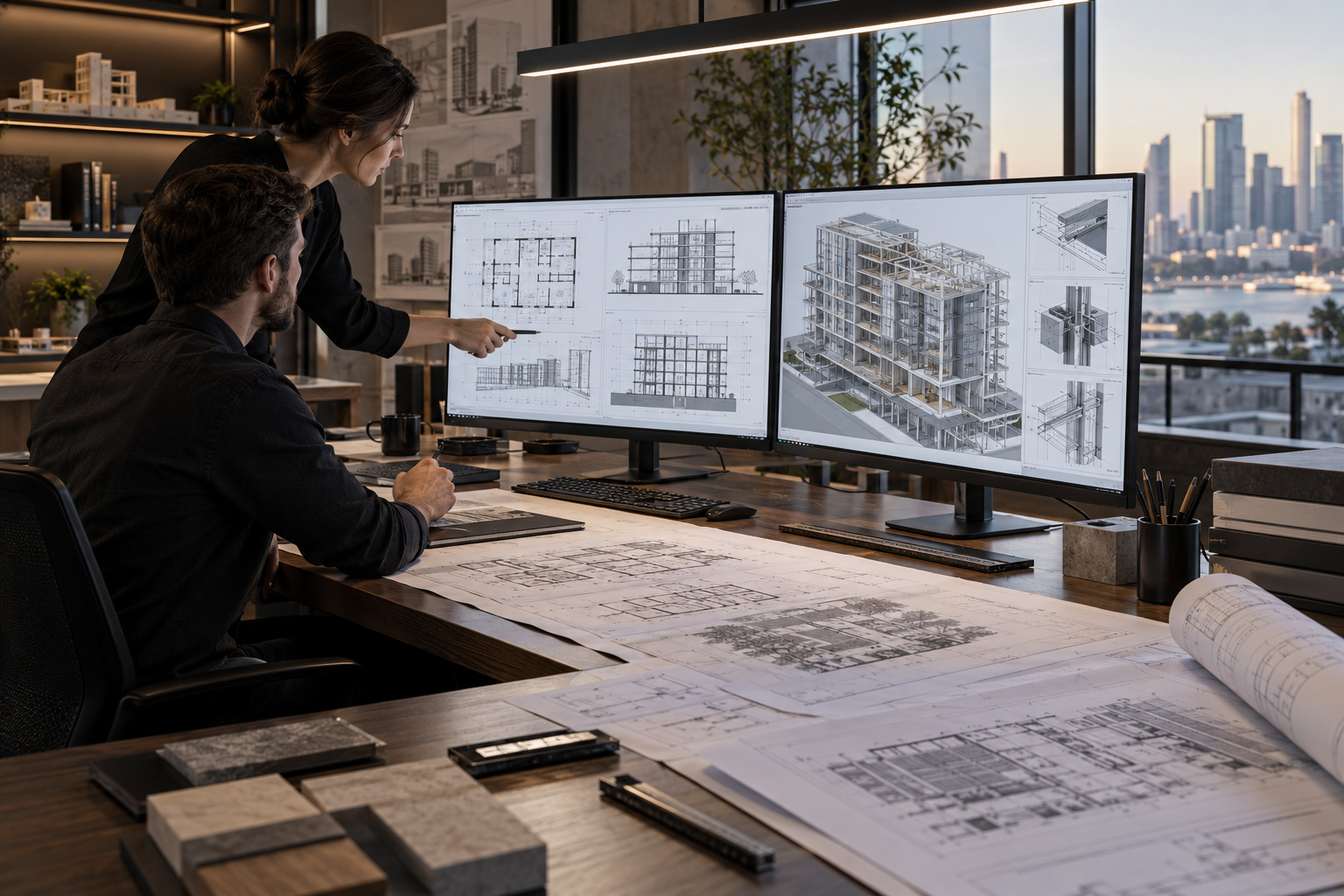
Architectural team reviewing technical plans, elevations, and a digital building model across dual monitors in a professional studio workspace.

TECHNICAL DOCUMENTATION · BIM / CAD DEVELOPMENT · EXECUTION READINESS

Architecture Becomes Buildable When Design Intent Is Translated Into Coordinated, Execution-Ready Information.

A strong architectural concept cannot remain dependent on interpretation once the project begins moving toward execution. Dimensions, structural relationships, material assemblies, openings, interfaces, levels, systems, tolerances, and construction logic all have to become explicit enough that different disciplines can work from the same architectural intent. Technical documentation is where the project stops relying on what the designer meant and begins defining clearly enough what must actually be built.

BIM and CAD development create the framework for that precision. Plans, sections, elevations, schedules, coordinated models, technical details, and interdisciplinary information are progressively resolved so conflicts can be identified before they become site problems and design decisions can survive the transition into construction. The objective is not to produce drawings for their own sake, but to convert architectural thinking into a coordinated body of information that architects, engineers, consultants, fabricators, contractors, and clients can interpret with the same level of clarity.

When that documentation is developed with discipline, execution becomes more predictable and the integrity of the design is far better protected. Technical questions can be answered from a stronger source, coordination becomes more controlled, revisions become traceable, and construction decisions remain connected to the spatial and material logic established earlier in the project. The drawings stop being a record of the design and become the operational language through which architectural intent is carried from the studio into physical reality.

WHEN DIMENSIONS, SYSTEMS, MATERIAL ASSEMBLIES, TECHNICAL RELATIONSHIPS, AND INTERDISCIPLINARY INFORMATION ARE RESOLVED WITH ENOUGH PRECISION TO SUPPORT REAL EXECUTION,
TECHNICAL DOCUMENTATION STOPS BEING A COLLECTION OF DRAWINGS AND BECOMES THE COORDINATED DELIVERY LANGUAGE OF THE PROJECT—BUILT TO PROTECT DESIGN INTENT, REDUCE IMPLEMENTATION UNCERTAINTY, SUPPORT PROFESSIONAL COLLABORATION, AND CARRY ARCHITECTURAL LOGIC INTO CONSTRUCTION WITH GREATER ACCURACY, CONTROL, AND EXECUTION READINESS.

COMPLETE ARCHITECTURE & SPATIAL DESIGN ENGAGEMENT

Professional Architecture Services
From Spatial Direction To Technical Resolution

FROM EARLY SITE UNDERSTANDING AND ARCHITECTURAL CONCEPT DEVELOPMENT TO INTERIOR RESOLUTION, VISUALIZATION, TECHNICAL DOCUMENTATION, COORDINATION, AND PROFESSIONAL PROJECT HANDOVER.

Every Architecture project enters the design process with a different combination of site conditions, program requirements, existing constraints, technical dependencies, decision-makers, and intended outcomes. For that reason, the professional engagement is structured around what the project genuinely requires—not around a predetermined collection of drawings or services.

Infinity Design Studio connects Architectural Design, Interior Architecture, Spatial Planning, 3D Architectural Visualization, Technical Documentation, Renovation & Adaptation, Development Planning, and Design Coordination within one project-specific framework. The scope can begin with an early architectural question, continue through spatial and material development, or extend into the documentation and coordination required to move an approved direction toward implementation.

The objective is not simply to produce individual deliverables. It is to maintain continuity between architectural intent, spatial organization, technical information, material decisions, presentation, and the responsibilities required at each project stage.

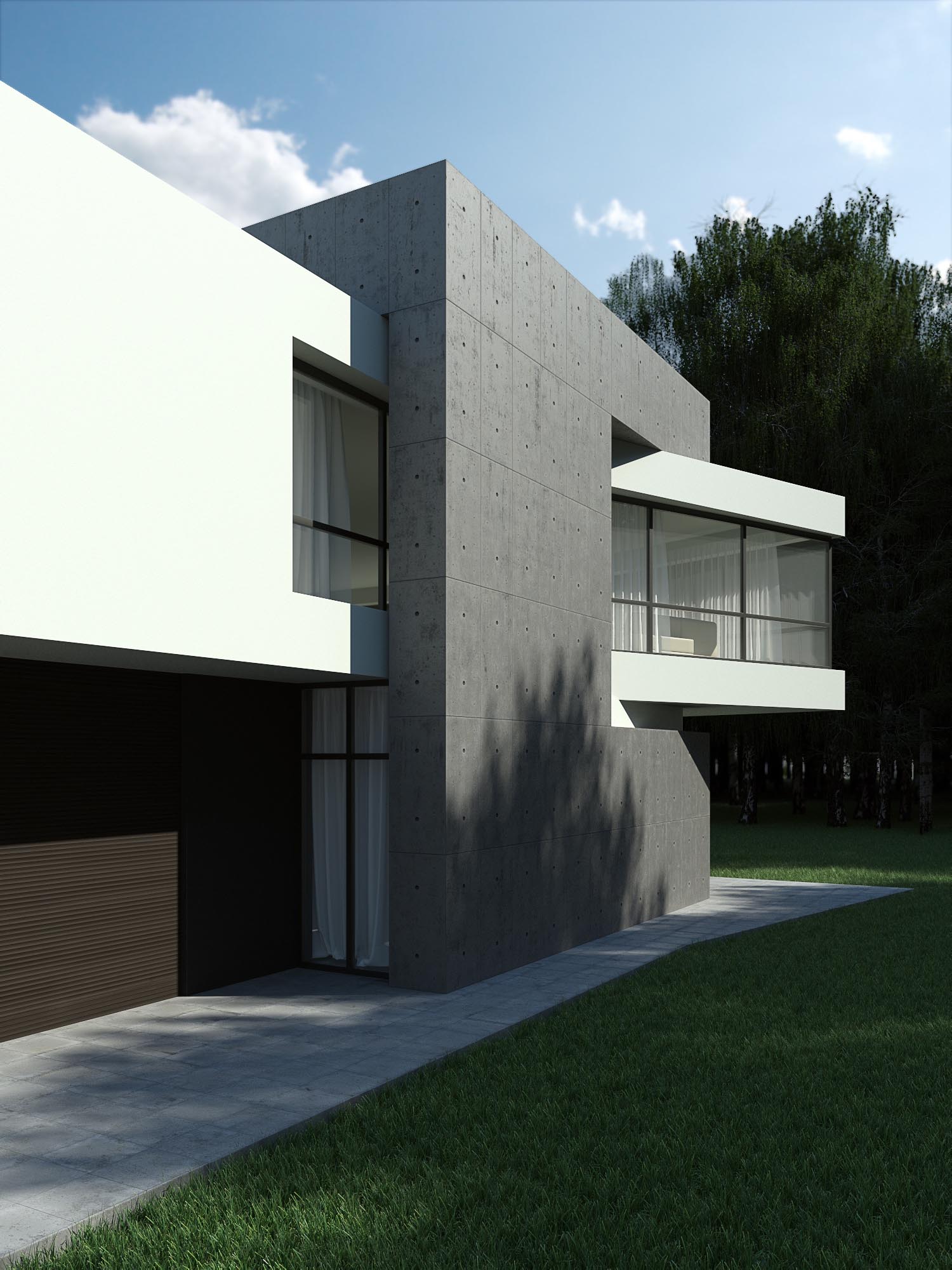
Modern residential architecture visualization showing a contemporary house with exposed concrete, white geometric volumes, large glazing, and landscaped surroundings.

CORE ARCHITECTURAL ENGAGEMENT

Architecture at this level is not defined by individual services, but by how concept, space, technical development, material decisions, and project requirements are connected into one coherent engagement from the earliest design stage onward.

Aerial architectural visualization of a large coastal mixed-use development with a stepped building, high-rise tower, waterfront amenities, marina, and surrounding urban context.

ADDITIONAL PROFESSIONAL SERVICES

Depending on the project stage, location, complexity, consultant structure, and agreed responsibilities, the architectural engagement can extend beyond the core design scope into additional forms of analysis, visualization, coordination, review, and implementation support.

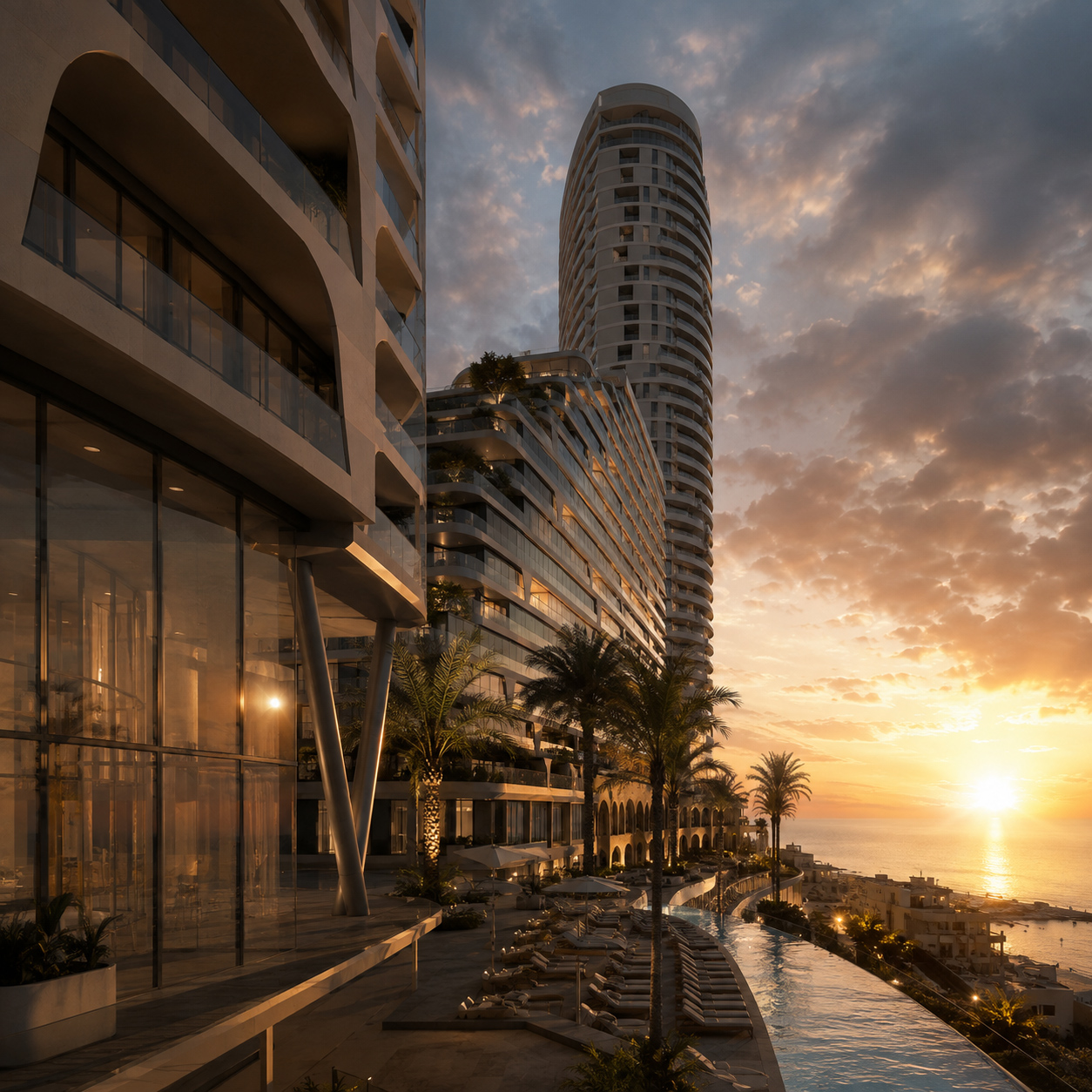
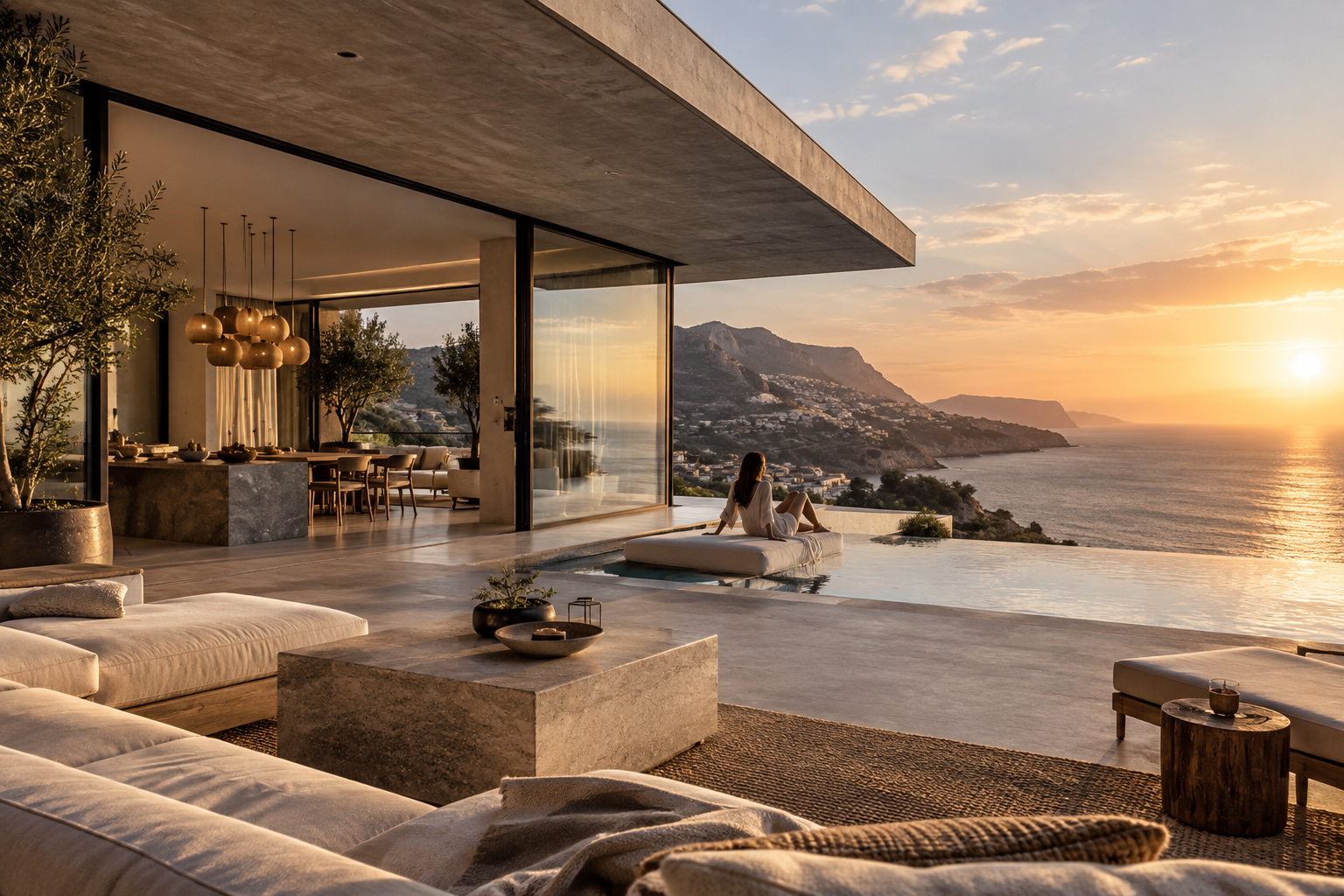
Sunset architectural visualization of a luxury coastal development with a high-rise tower, terraced residential volumes, landscaped terraces, palm trees, and an infinity pool overlooking the sea.

WHY CHOOSE INFINITY DESIGN STUDIO

We approach Architecture as a connected system of spatial, functional, material, visual, and technical decisions rather than a sequence of isolated design tasks. Every project is developed around its real conditions—site, program, circulation, proportion, orientation, existing context, intended use, technical requirements, and the people who will ultimately experience the space.

By connecting Architectural Design, Interior Architecture, Spatial Planning, 3D Visualization, Material Development, Technical Documentation, and Design Coordination, we protect continuity between the original idea and the increasingly detailed decisions that follow. A strong concept should not lose clarity when it becomes a plan, section, interior, material junction, technical drawing, or real environment.

Our goal is to create architecture that remains spatially coherent, technically grounded, purposeful, and recognizable from concept through development. Each engagement is structured to balance creative ambition with practical responsibility—so that design quality, functionality, buildability, communication, and long-term use strengthen one another rather than compete as the project moves toward realization.

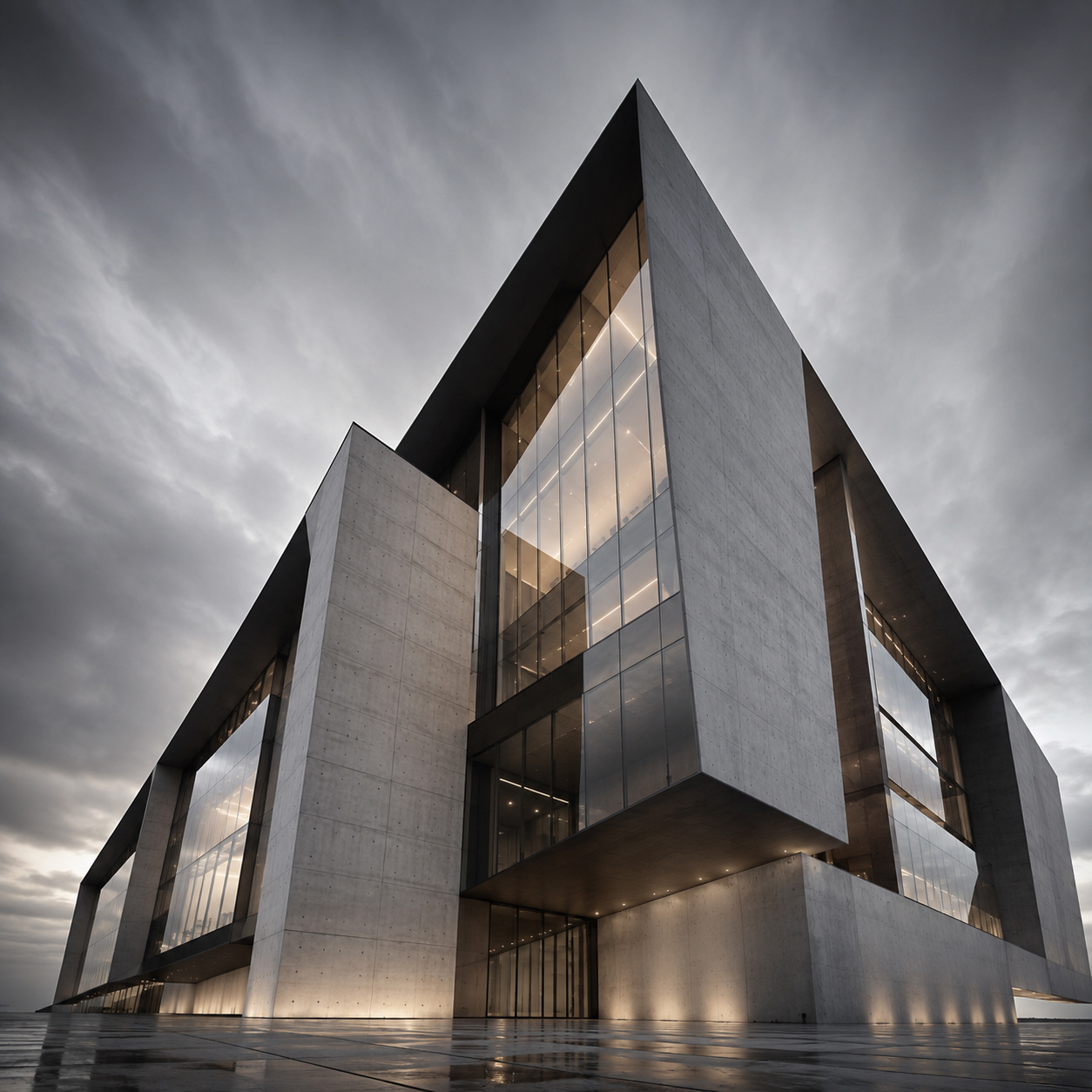
Dramatic architectural visualization of a monumental concrete and glass building presented without supporting plans, technical context, or project evidence.

OUR ARCHITECTURAL DELIVERY STANDARD

Architectural quality depends not only on what is designed, but on how decisions are approved, documented, coordinated, revised, and transferred from one project stage to the next. Our delivery structure is designed to keep the central architectural direction legible while responsibilities, technical information, and project requirements become progressively more detailed.

PROFESSIONAL RESPONSIBILITY AT EVERY SCALE

Architecture moves through increasingly consequential decisions. What begins as a relationship between site, program, movement, and form eventually reaches dimensions, materials, junctions, consultant information, documentation, approvals, and implementation conditions.

Our role is to ensure that each stage carries forward enough clarity to support the next—while making the boundaries of design responsibility, specialist input, client approvals, project changes, and technical coordination equally clear.

To us, professional architectural delivery means that the project does not become less coherent as it becomes more detailed. The deeper the project develops, the more precisely its original spatial logic should be understood and protected.

Contemporary concrete mountain house integrated into rocky terrain and forest landscape, with warm interior lighting and panoramic views.

The Architectural Idea Must Remain Legible From First Study To Final Handover—In Space, Drawing, Material, Detail, And Professional Responsibility.

Interior architectural visualization showing a contemporary living space with upholstered seating, natural wood, soft textiles, plants, and realistic daylight.

FROM PROJECT BRIEF TO RESOLVED ARCHITECTURAL DELIVERY

Purple line icon of modern buildings representing the Architecture service.

Our Architecture
Project Development Process

Every Stage Is Structured To Protect Spatial Intent, Technical Clarity, Informed Approvals, And The Continuity Of The Architectural Idea As The Project Becomes More Resolved.

Our Architecture Project Development Process is structured around a simple principle: important decisions should become clearer as the project advances—not more difficult to understand.

Each engagement begins by establishing the brief, site conditions, project responsibilities, required level of architectural development, and intended outcome. From there, the project moves through defined stages of analysis, concept development, spatial resolution, visualization, material thinking, technical coordination, documentation, and approval according to the actual scope.

Not every commission requires every possible architectural service. Planning procedures, specialist coordination, site involvement, visualization depth, technical documentation, and construction-phase support vary according to project type, location, complexity, regulatory requirements, consultant structure, and agreed professional responsibilities.

Initial Consultation, Project Fit & Brief Definition

We begin by understanding what is being designed, why it is needed, who will use it, what already exists, and what the project must ultimately achieve.

The initial discussion establishes the foundation for the professional engagement and identifies whether the available information is sufficient for architectural work to begin.

This stage may establish:

  • project type and intended use;
  • client objectives and priorities;
  • preliminary spatial requirements;
  • site or existing-property conditions;
  • anticipated project stage;
  • required architectural services;
  • known constraints and dependencies;
  • expected decision-makers and stakeholders;
  • preliminary timeline and delivery expectations.


The objective is not to design immediately. It is to make sure that the architectural problem itself has been correctly understood before a solution is developed.

Proposal, Scope, Agreement & 50% Advance

Once the project requirements are sufficiently clear, we define the professional scope, project stages, deliverables, responsibilities, revision structure, schedule, commercial terms, and known exclusions.

A formal proposal and Service Agreement establish what Infinity Design Studio is responsible for delivering and what information, approvals, consultants, or external services remain dependent on the client or third parties.

The project is formally activated following approval of the agreement and receipt of the agreed 50% advance payment, securing the scheduled design capacity and commencement of the approved architectural scope.

Any specialist engineering, authority fees, surveys, external consultants, permits, contractor services, or work outside the defined architectural engagement are identified separately where applicable.

Sketching icon representing concept development, drawing, creative exploration, and early-stage design ideas.

Site Information, Existing Conditions & Requirements Mapping

Before major architectural decisions are fixed, the available project information is organized and assessed.

Depending on the commission, this may include:

  • site information;
  • existing plans and documentation;
  • dimensions and surveys;
  • orientation and access;
  • surrounding context;
  • photographs and reference material;
  • existing structural or spatial conditions;
  • planning information;
  • client program requirements;
  • technical constraints;
  • consultant information already available.


Where information is incomplete, assumptions and missing dependencies are identified before they begin influencing later design stages.

This creates a reliable base from which program, spatial organization, architectural concept, and technical development can proceed.

Program, Concept & Schematic Design

This is where the project begins to acquire its architectural logic.

We develop the relationships between program, movement, privacy, hierarchy, scale, orientation, massing, volume, openings, interior relationships, and overall spatial character before smaller decisions begin to dominate the project.

Depending on scope, this stage may include:

  • program organization;
  • zoning and functional relationships;
  • schematic plans;
  • circulation studies;
  • massing and volume;
  • spatial hierarchy;
  • key sections or elevations;
  • initial material direction;
  • conceptual interior relationships;
  • early architectural studies.


The objective is to establish one coherent architectural position capable of supporting deeper development, rather than progressing with a collection of individually attractive but disconnected decisions.

Spatial Development, 3D Studies & Design Review

Once the principal architectural direction is established, the project is tested at greater spatial and visual depth.

Plans and sections continue developing while 3D Architectural Visualization, spatial studies, interior views, exterior views, material testing, lighting conditions, and key viewpoints may be introduced where they improve evaluation and communication.

Visualization at this stage is not treated only as presentation.

It can help examine:

  • proportion and scale;
  • spatial sequence;
  • room relationships;
  • openings and views;
  • furniture and built-in relationships;
  • material behavior;
  • natural and artificial light;
  • interior–exterior continuity;
  • important visual axes;
  • unresolved architectural conditions.


Client review is focused on the approved design direction before the project moves into decisions that become progressively more expensive or difficult to reverse.

Blueprint icon representing technical drawings, plans, design documentation, and project development.

Developed Design, Materials & Technical Coordination

After the primary spatial direction is approved, the architecture moves into a more resolved level of development.

At this stage, dimensions, materials, finishes, built-in elements, lighting relationships, junctions, openings, selected details, technical dependencies, and consultant information begin to carry greater importance.

Depending on project scope, development may include:

  • refined plans and sections;
  • elevation development;
  • material and finish definition;
  • interior architectural development;
  • built-in elements;
  • lighting relationships;
  • key dimensional coordination;
  • architectural details;
  • specialist requirements affecting the design;
  • contractor or fabrication considerations where relevant.


The objective is to make sure that increased technical resolution strengthens the approved architectural idea rather than gradually replacing it with unrelated decisions.

Specialist, Planning & Project Coordination

WHERE REQUIRED

Certain projects require architectural work to interact with engineers, planners, specialist consultants, contractors, approval authorities, fabricators, developers, or other professional participants.

Where included within the agreed scope, Infinity Design Studio coordinates relevant architectural information so that external requirements can be understood in relation to the design.

This may involve:

  • structural information;
  • MEP requirements;
  • planning or zoning conditions;
  • fire or accessibility considerations;
  • contractor questions;
  • specialist systems;
  • development requirements;
  • fabrication information;
  • authority comments;
  • other project-specific dependencies.


This stage is deliberately scope-dependent.

Infinity Design Studio does not present specialist engineering, authority approval, or third-party responsibilities as automatic parts of the architectural service where they have not been specifically agreed.

Technical Documentation, QA & Final Approval

Once the relevant architectural decisions have reached the agreed level of resolution, the approved project information is prepared and reviewed for final delivery.

Depending on scope, the documentation may include:

  • architectural plans;
  • sections;
  • elevations;
  • dimensions;
  • material information;
  • schedules;
  • selected construction details;
  • interior architectural information;
  • visualization material;
  • presentation drawings;
  • project-specific technical information.


Before handover, the architectural package is reviewed for internal consistency, approved design intent, dimensional clarity, document organization, coordination requirements, and the level of resolution appropriate to the agreed project stage.

Final client approval confirms the completion of the contracted design stage before release of the corresponding final deliverables.

Final Handover, 50% Balance & Implementation Support

Following final approval, the remaining 50% balance is settled before release of the complete final project package according to the agreed commercial terms.

The handover may include approved:

  • architectural drawings;
  • technical documentation;
  • visualization material;
  • schedules;
  • presentation files;
  • agreed source or production files where included;
  • other project-specific deliverables defined within the engagement.


The purpose of handover is not simply to transfer files. It is to leave the next project stage with organized, understandable, appropriately resolved architectural information.

Where the engagement includes further involvement, site review, contractor clarification, implementation support, design coordination, or additional architectural development can continue under the agreed project scope or through a separately defined subsequent phase.

Long-Term Partnership

Infinity continues as your architectural and design partner, providing ongoing support and project evolution.

PROJECT STAGES CHANGE. THE CENTRAL ARCHITECTURAL RESPONSIBILITY DOES NOT.

As a project progresses, decisions move from broad spatial relationships toward increasingly specific material, dimensional, technical, and implementation conditions.

Our process is structured so that each approved stage gives the next one a stronger foundation, while project changes, external dependencies, professional responsibilities, and required approvals remain visible throughout development.

A Project Becomes Architecture Through The Quality Of The Decisions Connecting Its First Question To Its Final Resolution.


Architect and site professional reviewing technical construction drawings on an active building site while structural works continue in the background.

SITE COORDINATION · CONSTRUCTION REVIEW · PROFESSIONAL RESPONSIBILITY

Architecture Proves Its Integrity When Design Intent Survives The Reality Of Construction.

A completed drawing set does not guarantee a completed architectural idea. Once construction begins, the project enters an environment shaped by sequencing, tolerances, workmanship, material availability, contractor interpretation, technical conflicts, and conditions that cannot always be anticipated from the studio. This is where architecture is tested against reality—and where professional responsibility becomes critical to protecting the decisions that gave the project its meaning in the first place.

Site coordination and construction review create the connection between documented intent and physical execution. Drawings are checked against actual conditions, details are clarified, interfaces are reviewed, deviations are identified, and questions from contractors and consultants are resolved before small inconsistencies become permanent compromises. The objective is not to control construction from a distance, but to keep design logic, technical resolution, and built execution aligned while the project is still capable of being corrected.

When that involvement is handled with discipline, the architecture is far more likely to retain its spatial clarity, material character, and technical coherence as it becomes real. Decisions made months earlier remain traceable, site changes can be evaluated against the larger intent, and the built result carries forward more of what was originally designed rather than merely approximating it. Construction review therefore becomes the stage where architectural authorship is defended through accountability—ensuring that the project is not only conceived well, but carried into reality with the same seriousness, precision, and professional care.

WHEN DRAWINGS, DETAILS, MATERIALS, SITE CONDITIONS, CONTRACTOR EXECUTION, AND TECHNICAL DECISIONS ARE REVIEWED AGAINST THE ORIGINAL ARCHITECTURAL INTENT,
SITE COORDINATION STOPS BEING A REACTIVE CONSTRUCTION TASK AND BECOMES THE PROFESSIONAL SAFEGUARD THAT PROTECTS DESIGN INTEGRITY—BUILT TO IDENTIFY DEVIATIONS EARLY, RESOLVE REAL-WORLD CONFLICTS RESPONSIBLY, AND CARRY THE PROJECT FROM DOCUMENTED INTENTION INTO BUILT REALITY WITH GREATER ACCURACY, ACCOUNTABILITY, AND ARCHITECTURAL CONTROL.

THE POINT WHERE ARCHITECTURAL INTENT BECOMES LIVED REALITY

WHEN ARCHITECTURAL INTENT SURVIVES EVERY DECISION, A BUILDING BECOMES A COHERENT PLACE TO LIVE, WORK, MOVE, AND REMEMBER

THE REAL TEST OF ARCHITECTURE IS NOT WHETHER THE CONCEPT LOOKED CONVINCING AT THE BEGINNING. IT IS WHETHER SITE, PROPORTION, CIRCULATION, MATERIAL, LIGHT, DETAIL, AND TECHNICAL RESOLUTION STILL BELONG TO THE SAME IDEA WHEN THE PROJECT IS BUILT AND USED.

Architecture is shaped through hundreds of decisions made at different scales. Site orientation, program, circulation, proportion, structure, material, light, openings, junctions, technical systems, and construction information may be developed at different moments, but the finished space is experienced as one continuous whole.

This is why architectural quality cannot be protected only at the concept stage. As a project develops, every new layer introduces the possibility of fragmentation. Dimensions can weaken proportion. Technical requirements can disrupt spatial relationships. Material substitutions can alter atmosphere. Poor coordination can turn a clear architectural idea into a collection of compromises. The role of professional development is to ensure that necessary complexity does not dissolve the original spatial intelligence of the project.


Technical documentation, consultant coordination, material decisions, detailing, visualization, and implementation planning are therefore not administrative stages added after the design. They are part of the architecture itself. Each one determines whether form, function, movement, light, material behavior, construction logic, and human experience continue to reinforce one another when the project leaves the drawing environment.

The people who eventually inhabit a building will never experience its plans, diagrams, development meetings, or coordination files. They will experience how naturally they move through it, how clearly spaces relate, how daylight enters, how materials meet, how scale feels, how privacy and openness are balanced, and how comfortably the architecture supports everyday life. Those experiences are where years of architectural decisions become visible without needing explanation.

A strong project therefore does more than preserve an attractive concept. It maintains enough discipline throughout development for the architecture to remain legible, functional, materially coherent, technically credible, and spatially convincing after the presentation images are gone and the building begins to perform in the real world.

The lasting value of professional Architecture lies in that continuity—the ability of one architectural idea to remain recognizable through concept, development, documentation, coordination, construction decisions, and eventual occupation, without losing the qualities that gave the project purpose in the first place.

THE DRAWINGS MAY END AT HANDOVER. THE ARCHITECTURAL RESPONSIBILITY IS MEASURED BY WHAT CONTINUES TO WORK AFTERWARD—IN THE SPACE, IN ITS USE, AND IN THE QUALITY OF EVERYDAY EXPERIENCE.

Completed luxury coastal residence with open indoor-outdoor living, infinity pool, natural materials, and panoramic sea views at sunset.

FINISHED ARCHITECTURE · HUMAN EXPERIENCE · LIVED SPATIAL VALUE

Architecture Reaches Its Full Value When The Designed Space Becomes A Meaningful Part Of Everyday Life.

Architecture is not complete simply because construction has ended or because the finished environment photographs well. Its real test begins when people start living, moving, resting, gathering, working, and forming routines inside the space. Light, proportion, materiality, openness, privacy, comfort, acoustics, views, temperature, movement, and atmosphere stop being isolated design decisions and begin working together as one lived spatial experience.

This is where the entire architectural process is finally measured against reality. Concept development, site understanding, program organization, visualization, material decisions, technical resolution, and construction coordination must ultimately support a place that feels coherent not only on opening day, but through repeated everyday use. The strongest architecture does not continually demand attention from the people who inhabit it—it creates clarity, ease, character, and emotional resonance so naturally that the design becomes part of how life unfolds within the space.

When that relationship is achieved, the project gains a form of value that cannot be reduced to appearance alone. The architecture can continue supporting changing routines, strengthening connection to its setting, preserving spatial quality, and remaining relevant long after the novelty of completion has passed. The finished building stops being the final object of the design process and becomes its most important proof—demonstrating that architectural intent has successfully matured into enduring human experience, functional value, and a place capable of holding meaning over time.

WHEN LIGHT, PROPORTION, MATERIALITY, COMFORT, MOVEMENT, ATMOSPHERE, AND HUMAN USE CONTINUE TO WORK TOGETHER AFTER THE PROJECT HAS LEFT THE DRAWING BOARD AND ENTERED EVERYDAY LIFE,
FINISHED ARCHITECTURE STOPS BEING THE END OF THE DESIGN PROCESS AND BECOMES ITS MOST IMPORTANT MEASURE OF SUCCESS—A LIVED ENVIRONMENT BUILT TO SUPPORT REAL PEOPLE, PRESERVE SPATIAL QUALITY, DEEPEN ITS RELATIONSHIP WITH PLACE, AND CONTINUE CREATING FUNCTIONAL, EMOTIONAL, AND ARCHITECTURAL VALUE LONG AFTER COMPLETION.

Professional architecture workspace showing architectural plans, material samples, 3D model, and large display with luxury residential design visualization overlooking a coastal evening landscape.

BRING ARCHITECTURAL INTENT, TECHNICAL CLARITY, AND PROJECT DIRECTION INTO ONE RESOLVED SYSTEM

Bring Your Architectural Project Into Sharper Focus —
With The Spatial Clarity, Technical Discipline, And Design Resolution Needed To Move It Forward.

Whether the brief involves a private residence, interior transformation, commercial environment, hospitality project, renovation, development, or planning-led commission, Infinity Design Studio structures the engagement around the real conditions that will shape the architecture—site, program, movement, proportion, materiality, light, existing constraints, visualization needs, documentation depth, and intended project stage.

Every commission is developed to protect the relationship between architectural character and practical responsibility. The objective is to make each important decision progressively clearer—so that spatial logic remains coherent, technical requirements are understood, presentation communicates the design convincingly, and the project can advance without losing the qualities that made the original direction worth pursuing.

LET’S MOVE THE PROJECT FORWARD WITHOUT LOSING WHAT MAKES THE ARCHITECTURE WORTH BUILDING.

Trusted By Leading Brands

What Our Clients Say About Us?

Trusted by global brands and visionary entrepreneurs — hear what they say about working with Infinity Design Studio.

Tell Us What You’re Building.

Share what you already know—what you are creating, changing, improving, launching, or trying to solve. We’ll use that context to understand the project and determine the right next step.

You do not need a perfect brief to begin. Clear context is enough.


We’ll Review Your Enquiry And Get Back To You Within 24 Hours.

Personal Information
Start with the essentials so we know who we’re speaking with and how to reach you. The project itself becomes clearer in the next steps.
Project Details
Tell us what you’re working on, what needs to change, and what outcome you want the project to support. A perfect brief is not required—clear context is enough to begin.
Budget & Timeline
Share the investment range and timeline you currently have in mind. These details help us understand the scale, priorities, and most appropriate way to structure the engagement.
Final Note
Add anything that would help us understand the project more clearly—important context, existing links, constraints, collaborators, references, or questions you would like us to consider before we respond.

ARCHITECTURE PACKAGES · PROJECT STAGES · SPATIAL COMPLEXITY · PROFESSIONAL SCOPE

Architecture Packages Defined By Project Stage, Spatial Complexity, And The Level Of Resolution Your Project Actually Requires

Purple line icon of modern buildings representing the Architecture service.

Every Project Enters Architecture At A Different Point.
Every Stage Requires A Different Level Of Design Responsibility.
The Right Package Reflects How Far The Architecture Needs To Be Developed.

CONCEPT DIRECTION, SPATIAL PLANNING, INTERIOR ARCHITECTURE, 3D VISUALIZATION, TECHNICAL DOCUMENTATION, MATERIAL DEVELOPMENT, AND PROJECT COORDINATION—STRUCTURED ACCORDING TO THE REAL DEPTH OF THE COMMISSION.

An architectural project cannot be priced responsibly by floor area or visual ambition alone. Its real scope is shaped by project stage, site conditions, program complexity, number and type of spaces, existing documentation, renovation constraints, visualization requirements, technical depth, approval conditions, stakeholder structure, and the level of coordination expected from the studio.

Some clients need an early professional framework before committing to a larger investment: brief interpretation, feasibility-oriented thinking, concept direction, spatial organization, and selected visual studies that establish whether the project has a convincing architectural foundation. Others arrive with an approved direction and require deeper development through plans, sections, interior resolution, material thinking, architectural visualization, documentation, or coordinated presentation.

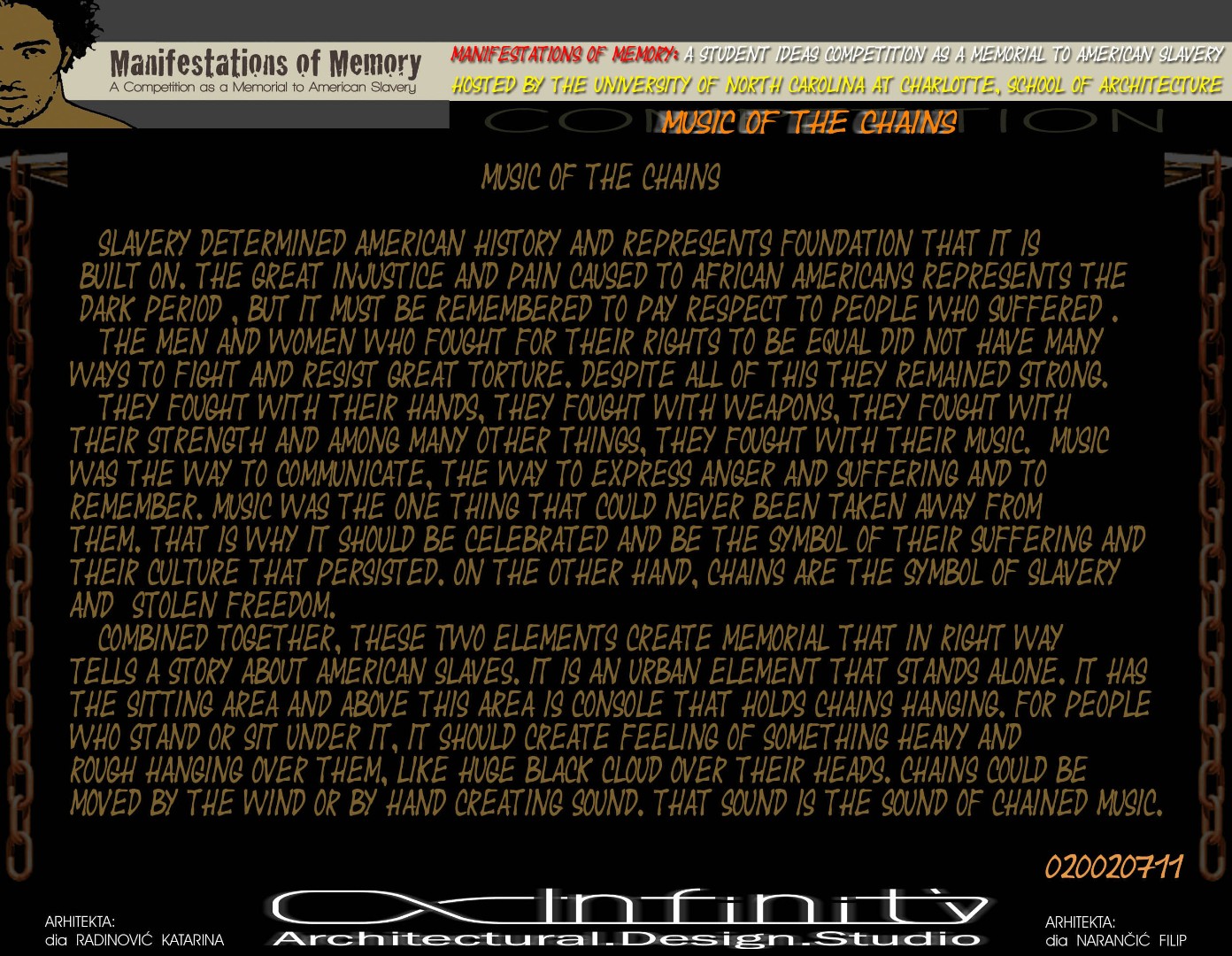
More advanced commissions may involve multiple units, larger spatial programs, complex interiors, hospitality or commercial environments, development-led projects, extensive visualization, planning support, detailed documentation, or multidisciplinary coordination across several stages. At that level, the architectural service becomes less about producing individual deliverables and more about maintaining coherence as the number of decisions, participants, dependencies, and technical requirements increases.

For that reason, each package represents a defined level of architectural involvement, not simply a larger quantity of drawings or renderings. The investment reflects how much analysis, design development, spatial testing, visualization, documentation, coordination, review, and professional responsibility the project requires before it can move confidently into its next stage.

Where photography, animation, advanced 3D production, specialist consultants, localization, external approvals, additional project phases, construction-stage involvement, or other requirements extend beyond the selected package, those elements are defined separately before the related work begins. This keeps the architectural scope clear, professionally manageable, commercially transparent, and appropriate to the actual needs of the commission.

THE PRICE SHOULD REFLECT THE RESPONSIBILITY CARRIED BY THE PROJECT — NOT AN ARBITRARY NUMBER OF DRAWINGS, ROOMS, OR VISUALS.

Magnifying glass highlighting a euro symbol on a purple pricing document.

Architecture Pricing Structured Around Real Project Development.
Concept, Visualization, Documentation, And Coordination Scaled To The Project Stage.
Professional Scope Defined Before Architectural Decisions Become Expensive To Reverse.

The Project Stage Defines The Responsibility. The Complexity Defines The Depth. The Agreed Scope Defines Exactly What The Architectural Engagement Must Deliver.

START PREMIUM

“A Professional Foundation For Your Project Vision.”

2.900 EUR / Project

Who this package is for:

Private clients or investors starting a new build, renovation, or fit-out who need a clear Architectural Concept, early-stage Feasibility Analysis, and confidence before making larger investments.

Includes:

Key Benefits:

Establishes a solid and validated Architectural Direction before larger investments.

Why this investment pays off:

Reduces risk and prevents costly rework by aligning vision, site realities, and regulations early.

Ideal for:

Apartments, houses, small retail projects, office fit-outs, and early-stage Architectural Planning.

Start with clarity and confidence.

→ Request your quote and unlock a feasible vision!

GROWTH PREMIUM

“Optimization That Convinces – Better Layouts, Better Approvals.”

6.500 EUR / Project

Who this package is for:

Clients ready to progress from concept to Schematic Design with persuasive visuals and planning-ready materials.

Includes:

Key Benefits:

Stronger design clarity for stakeholder buy-in and planning dialogue.

Why this investment pays off:

Combines spatial optimization and high-impact Architectural Visualization in one cohesive package.

Ideal for:

Residential buildings, boutique hospitality projects, offices, and planning-stage developments.

Accelerate approvals with compelling design evidence.

→ Choose this package and advance with confidence!

BRAND SYSTEM PACK

“Consistency Across Multi-Space Portfolios – A Design Language For Every Unit.”

9.800 EUR / Project

Who this package is for:

Developers or brands managing several units, floors, or locations seeking unified standards across all spaces.

Includes:

Key Benefits:

Builds a recognizable and scalable Architectural Identity across multiple sites.

Why this investment pays off:

One investment connects all project parts under a consistent, repeatable architectural system ready for roll-out.

Ideal for:

Multi-unit residential projects, retail chains, hospitality brands, and commercial portfolios.

Don’t deliver rooms—build a signature experience.

→ Invest in a system that delivers measurable results!

FULL LAUNCH SYSTEM PACK

“From Idea To Permit – Everything You Need For A Successful Start.”

12.500 EUR / Project

Who this package is for:

Clients launching a flagship project who require Permit Documentation, advanced Architectural Visualization, and presentation-ready materials.

Includes:

*Local authority requirements vary; we align documentation scope accordingly.

Key Benefits:

Covers the complete journey from concept development to permit submission.

Why this investment pays off:

Cuts months of iteration by uniting Architectural Design, visualization, and documentation into one coordinated package.

Ideal for:

New-build homes, boutique hotels, commercial interiors, hospitality projects, and showrooms.

Your project deserves a dream launch.

→ Start with a coordinated, permit-ready package!

ARCHITECTURAL SYSTEM PRESENCE

“A Landmark Identity That Elevates Brand And Place.”

19.500 EUR / Project

Who this package is for:

Established clients seeking a comprehensive Architectural Identity across all customer touchpoints—from façade to interior and presentation assets.

Includes:

Key Benefits:

Delivers a consistent and premium architectural presence both on-site and across media channels.

Why this investment pays off:

A single, coherent solution replaces multiple vendors and accelerates stakeholder alignment.

Ideal for:

Flagship retail environments, hospitality venues, corporate headquarters, and cultural spaces.

Create a place that defines your brand.

→ Invest in recognition without compromise!

CUSTOM ENTERPRISE ENGAGEMENT

“No Limits – Your Vision Inspires Everything We Create.”

Price: Upon request

Who this package is for:

Developers and international organizations requiring tailored, multi-phase solutions spanning Architecture, Interior Architecture, Urban Planning, and project supervision.

Includes:

Key Benefits:

Unlimited in scope, geography, and project complexity.

Why this investment pays off:

Enables enterprise-scale delivery without compromising quality, speed, compliance, or design excellence.

Ideal for:

Masterplans, multi-site developments, public realm projects, corporate campuses, and international roll-outs.

Never settle for templates.

→ Contact us and create a solution that exists only in your vision.

Subscribe to Our Newsletter

Selected studio updates, new work, editorial perspectives, and professional insights — delivered when there is something worth sharing.

Occasional updates from Infinity Design Studio × NF Creative Studio. You can request removal at any time.

Schedule a Call

Tell us a little about your project, what you would like to discuss, and when you would prefer to connect.

We’ll review your request and follow up to confirm a suitable time.