

COMMERCIAL VIDEOGRAPHY · CINEMATIC STORYTELLING · MOTION-LED BRAND COMMUNICATION
PROFESSIONAL VIDEOGRAPHY BUILT AROUND HOW YOUR BRAND NEEDS TO MOVE, COMMUNICATE, AND BE REMEMBERED.
FROM COMMERCIAL FILMS AND PRODUCT VIDEOS TO CORPORATE STORIES, SOCIAL CONTENT, EVENTS, AND DIGITAL CAMPAIGNS—EVERY SEQUENCE IS DEVELOPED AROUND PURPOSE, AUDIENCE, PLATFORM, PACING, SOUND, AND THE ACTION IT NEEDS TO CREATE.
Moving image communicates through more than individual frames. Sequence, timing, movement, performance, sound, atmosphere, pacing, and editorial structure work together to shape how a product, brand, person, place, or idea is understood—and whether the audience remains engaged long enough for the message to matter.
Different projects require different production logic. A product demonstration may depend on controlled lighting, precise movement, functional clarity, and close technical detail. A corporate film may require interviews, narrative structure, location planning, and credibility. Commercial campaigns, hospitality films, social content, event coverage, music-led work, and branded storytelling each place different demands on direction, production, camera language, sound, editing, and final delivery.
Infinity Design Studio develops each Videography engagement as a coordinated moving-image production system—connecting creative direction, treatment development, scripting, storyboards, shot planning, directing, camera movement, lighting, sound recording, performance or product staging, production logistics, editing, pacing, color grading, sound design, motion graphics, captions, platform adaptation, and multi-format asset preparation within one controlled workflow.
The objective is not simply to produce cinematic footage. It is to create video that supports the real communication purpose of the project—whether that means launching a product, explaining functionality, strengthening brand perception, documenting an experience, building campaign consistency, creating reusable social content, or developing a long-term library of motion assets that continues to perform across platforms and future communication needs.
WE DO NOT CREATE VIDEO ONLY TO LOOK CINEMATIC—
WE BUILD MOTION SYSTEMS THAT MAKE THE RIGHT PRODUCT, BRAND, PERSON, PLACE, OR STORY EASIER TO UNDERSTAND, FEEL, TRUST, REMEMBER, AND ACT ON.

One Videography Discipline.
Multiple Production Contexts.
A Professional Motion System Built Around What Your Project, Audience, And Platform Require.
From Initial Brief And Creative Direction To Pre-Production, Filming, Editing, Sound, Color, Final Delivery, And Long-Term Video Asset Development.
Proud Clients




























































A MULTIDISCIPLINARY VIDEOGRAPHY PARTNER
Why Serious Video Projects Need More Than Good Footage
THE STORY MAY CHANGE. THE STANDARD OF MOTION, SOUND, AND PRODUCTION CONTROL DOES NOT.
Professional Videography is not defined only by the camera, crew size, shooting location, or amount of footage captured. Strong moving-image work requires a coordinated understanding of purpose, audience, narrative, pacing, performance, platform, production conditions, technical requirements, and the action the finished video must ultimately create.
Infinity Design Studio brings creative direction, treatment development, scripting, storyboarding, shot planning, cinematography, lighting, sound recording, directing, camera movement, production coordination, editing, color grading, sound design, motion graphics, captions, versioning, and multi-format delivery together within one connected Videography service for brands, companies, products, campaigns, spaces, events, and digital platforms.
Why Clients Choose NF Creative Studio For Complete Videography Direction
- Strategy Before Production – Every engagement begins by defining the objective, audience, message, intended platforms, production requirements, and the role the video must perform before cameras begin recording—so creative and technical decisions grow from one clear direction rather than being invented during production.
-
One Connected Motion System – Creative direction, narrative structure, shot planning, cinematography, sound, performance, editing, pacing, color, motion graphics, and final delivery are developed together so that every sequence contributes to one coherent moving-image language with clear purpose. -
Technical Precision With Narrative Intent – Exposure, lighting, camera movement, frame rate, focus, sound quality, color, continuity, timing, transitions, and platform specifications are controlled deliberately across every sequence so that technical execution strengthens the story instead of distracting from it.
Beyond The Shoot — A Complete Professional Motion Production System
- Pre-Production & Production Development – Treatments, scripts, storyboards, shot lists, locations, talent, product staging, scheduling, lighting logic, sound requirements, camera movement, props, and production logistics can be structured before filming when the project requires a more complete production system.
-
Multi-Format Video Delivery – Final content can be prepared for websites, campaigns, social media, Amazon and e-commerce, presentations, events, internal communication, advertising, vertical and horizontal formats, short-form cut-downs, and other approved distribution environments. -
Post-Production, Versioning & Long-Term Use – Editing, pacing, color grading, sound design, motion graphics, subtitles, captions, aspect-ratio adaptation, campaign variants, additional cut-downs, archival organization, and future content extensions can be developed around the approved direction and evolving communication needs.
Our Videography Service is built for projects where motion, narrative, technical control, sound, brand consistency, and platform performance directly influence perception, engagement, credibility, and commercial value.
FROM FIRST CREATIVE DIRECTION TO FINAL DELIVERY, EVERY SEQUENCE IS DEVELOPED TO WORK AS PART OF ONE CONNECTED MOTION COMMUNICATION SYSTEM.
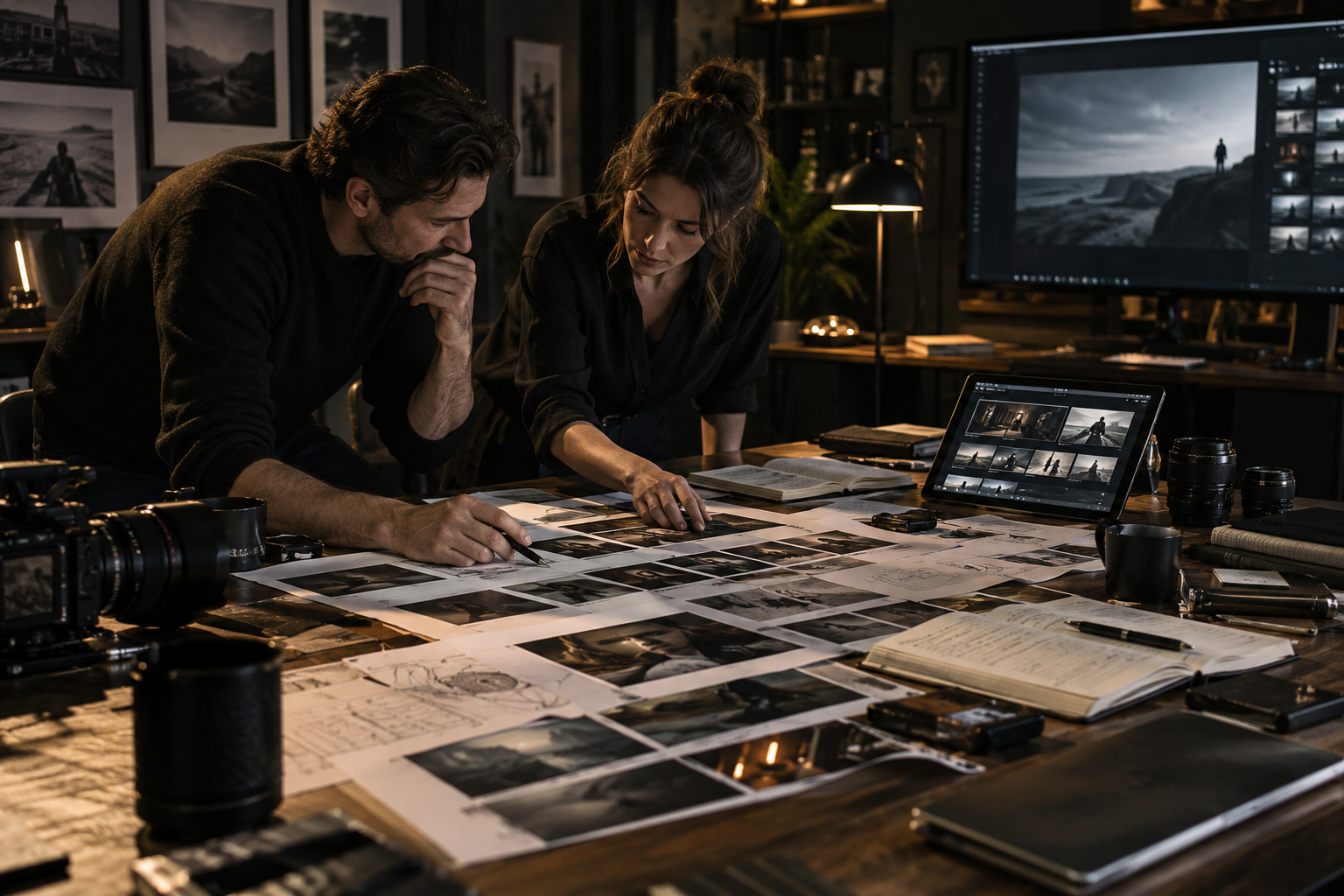
CREATIVE DIRECTION · TREATMENT DEVELOPMENT · STORYBOARD PLANNING
The Strongest Video Concepts Are Built Before The First Frame Is Recorded.
Professional Videography begins long before the first frame is recorded. Before a camera position is chosen or a production day is scheduled, the project must establish what the film is trying to communicate, which moments deserve emphasis, how the narrative should unfold, and what visual language can carry that intention consistently from one sequence to the next. Treatments, references, storyboards, shot structures, camera notes, and sequence planning turn an initial idea into something that can actually be produced with control.
This preparation is not administrative decoration around the creative process. It is where message, atmosphere, pacing, movement, composition, performance, and audience response begin to connect. Decisions made here determine whether production enters the set with a clear hierarchy of priorities or spends valuable time discovering the project while already filming it.
A strong pre-production foundation therefore does more than make the shoot efficient. It protects creative intent before real-world constraints, logistics, people, equipment, and time begin placing pressure on the idea. The more clearly the film is understood before production starts, the more confidently every later specialist can contribute without weakening the central direction.
WHEN CONCEPT, TREATMENT, STORYBOARD, AND SHOT LOGIC ARE DEVELOPED BEFORE PRODUCTION BEGINS,
VIDEOGRAPHY STOPS DEPENDING ON SPONTANEOUS COVERAGE AND BECOMES A DELIBERATE MOTION SYSTEM—BUILT TO PROTECT THE IDEA, GUIDE EXECUTION, AND CREATE A STRONGER FILM FROM THE VERY START.
FROM CREATIVE DIRECTION TO A CONNECTED MULTI-FORMAT VIDEOGRAPHY SYSTEM
A Strong Videography System Can Extend Far Beyond A Single Production.
WHEN CREATIVE DIRECTION, PRE-PRODUCTION, CINEMATOGRAPHY, LIGHTING, SOUND, PERFORMANCE, EDITING, FINISHING, DELIVERY, AND ASSET CONTINUITY ARE DEVELOPED AS ONE CONNECTED SYSTEM, VIDEOGRAPHY CAN SUPPORT FAR MORE THAN ONE FINISHED FILM.
Professional Videography should not be understood only as the moment a camera begins recording. Behind every resolved film sits a coordinated production foundation containing creative direction, narrative structure, pre-production planning, cinematography, lighting strategy, sound, performance direction, technical control, editing, finishing, and final delivery requirements.
When these elements are developed around the wider communication objective, the same production foundation can support far more than one isolated output. Depending on the approved scope, motion assets can extend across brand campaigns, product launches, e-commerce, Amazon, corporate communication, architecture, hospitality, advertising, websites, social platforms, presentations, events, internal communication, and long-term motion libraries.
Not every project requires every production layer. The objective is not to make Videography unnecessarily complex—it is to structure the production around what the audience must understand, how the story must unfold, what the subject must communicate, where the content will perform, and what the business needs from the footage after the original production is complete.
ONE CONNECTED VIDEOGRAPHY FOUNDATION. MULTIPLE MOTION OUTCOMES.
BUILT TO PRESERVE CREATIVE INTENT, NARRATIVE CLARITY, TECHNICAL CONTROL, BRAND CONSISTENCY, AND MOTION VALUE ACROSS EVERY SEQUENCE, FORMAT, PLATFORM, AND STAGE OF THE PROJECT.
- Creative Brief & Motion Direction
Defining What The Film Must Communicate Before Production Decisions Begin.
-
Every engagement starts by defining the objective, audience, subject, message, intended platforms, narrative character, production requirements, and communication priorities across the full creative, technical, and production process.
The objective is not simply to decide what should be filmed, but to establish why the film exists, what viewers must understand or feel, which visual and narrative decisions must remain consistent, and what role the finished motion content needs to perform.
- Pre-Production & Narrative Planning
Structuring The Story, Coverage, Logistics, And Production Logic Before The Camera Records.
-
Pre-production can include treatments, scripts, storyboards, shot lists, references, locations, talent, props, schedules, camera movement, sound requirements, lighting logic, and production coordination depending on the needs of the project.
These elements are not administrative preparation. They establish how separate shots will connect, what coverage is required, where production risk needs to be controlled, and how the creative direction can survive the transition from concept into real production.
- Camera Craft, Movement & Framing
Choosing What Must Be Seen, From Where, For How Long, And Through What Kind Of Movement.
-
Camera position, lens choice, framing, depth, focus, perspective, movement, stabilization, shot duration, and coverage determine how the subject is revealed and how attention moves through time.
A product, person, interview, building, event, or campaign may require completely different cinematographic logic. Every decision is shaped around clarity, scale, character, spatial understanding, emotional response, and the narrative role of each shot within the wider sequence and overall narrative structure.
- Lighting, Exposure & Color Foundation
Building The Technical Conditions That Shape Form, Atmosphere, Material, Depth, And Mood.
-
Lighting is developed around the subject, environment, surface behavior, desired atmosphere, tonal range, color relationships, camera requirements, and intended finishing direction.
Whether a production relies on controlled studio lighting, available light, mixed environments, practical sources, architectural illumination, or cinematic setups, the goal is to create repeatable visual quality and a coherent tonal world rather than accidental exposure and disconnected shots.
- Sound, Performance & On-Camera Direction
Coordinating Voice, Behavior, Timing, Interaction, And Sound So The Film Feels Intentional.
-
Videography involving people, dialogue, interviews, demonstrations, performance, or environmental sound requires more than visually correct footage. Voice, expression, eye line, movement, timing, interaction, microphone strategy, ambient sound, and performance continuity all influence credibility and meaning.
Direction is structured around the role each person or sound element must perform within the story, allowing the production to feel natural where spontaneity matters, controlled where precision matters, and coherent across multiple takes, scenes, and environments.
- Editing, Pacing & Narrative Construction
Turning Recorded Material Into A Controlled Sequence Of Information, Emotion, And Meaning.
-
Editing determines how raw footage becomes a film. Shot selection, sequence, rhythm, transitions, timing, continuity, performance choices, sound relationships, and structural emphasis determine what the audience notices, when they notice it, and how separate moments begin to operate as one experience.
The objective is not simply to shorten footage or assemble attractive shots. It is to build narrative clarity, emotional progression, communication hierarchy, and pacing appropriate to the subject, audience, platform, and final purpose of the production.
- Color, Sound Design, Motion Graphics & Final Finishing
Refining The Production Into One Coherent Visual And Sonic World Before Delivery.
-
Approved edits move through professional finishing that may include color grading, tonal balancing, audio cleanup, sound design, music integration, titles, captions, typography, motion graphics, visual refinement, compositing, and final quality control.
These layers are not decorative additions. They strengthen continuity, remove technical distractions, and clarify information, ensuring the finished production retains the visual character, sonic consistency, and communication precision established during creative direction and production across every approved sequence, format, platform, and delivery environment.
- Multi-Format Delivery & Long-Term Motion Asset Continuity
Preparing One Production To Continue Performing Across Platforms, Formats, Campaigns, And Future Use.
-
Final content can be prepared across 16:9, 9:16, 1:1, website motion, advertising formats, social cutdowns, e-commerce, Amazon, presentations, events, internal communication, captions, platform-specific versions, and other approved environments.
Where future development forms part of the engagement, master footage, selects, alternate sequences, reusable motion assets, and organized archives can support new campaigns, additional cutdowns, seasonal updates, new platforms, expanded content libraries, and future communication requirements without rebuilding the entire production logic from the beginning.
CREATIVE BRIEF → PRE-PRODUCTION → CINEMATOGRAPHY → SOUND & PERFORMANCE → EDITING → FINAL FINISHING → MULTI-FORMAT DELIVERY → LONG-TERM MOTION VALUE
ONE VIDEOGRAPHY PROJECT DOES NOT HAVE TO PRODUCE ONE ISOLATED FILM.
THE REAL VALUE OF A WELL-DEVELOPED VIDEOGRAPHY SYSTEM APPEARS WHEN CREATIVE DIRECTION, NARRATIVE STRUCTURE, TECHNICAL PRECISION, MOTION CONSISTENCY, AND ASSET CONTROL CAN CONTINUE ACROSS NEW FORMATS, CAMPAIGNS, CHANNELS, AND FUTURE COMMUNICATION NEEDS.
Some engagements require only one carefully resolved film. Others benefit from a broader moving-image system capable of supporting multiple stages of communication.
The scale may change—the principle does not: build the Videography around the real purpose of the project, then develop every required sequence, version, and format from that same controlled motion language.

GREAT VIDEOGRAPHY DOES NOT END WHEN THE FIRST FILM IS DELIVERED.
IT BUILDS A MOTION FOUNDATION STRONG ENOUGH TO KEEP THE STORY CLEAR, CONSISTENT, AND RECOGNIZABLE ACROSS NEW CAMPAIGNS, FORMATS, PLATFORMS, AUDIENCES, AND FUTURE TOUCHPOINTS.
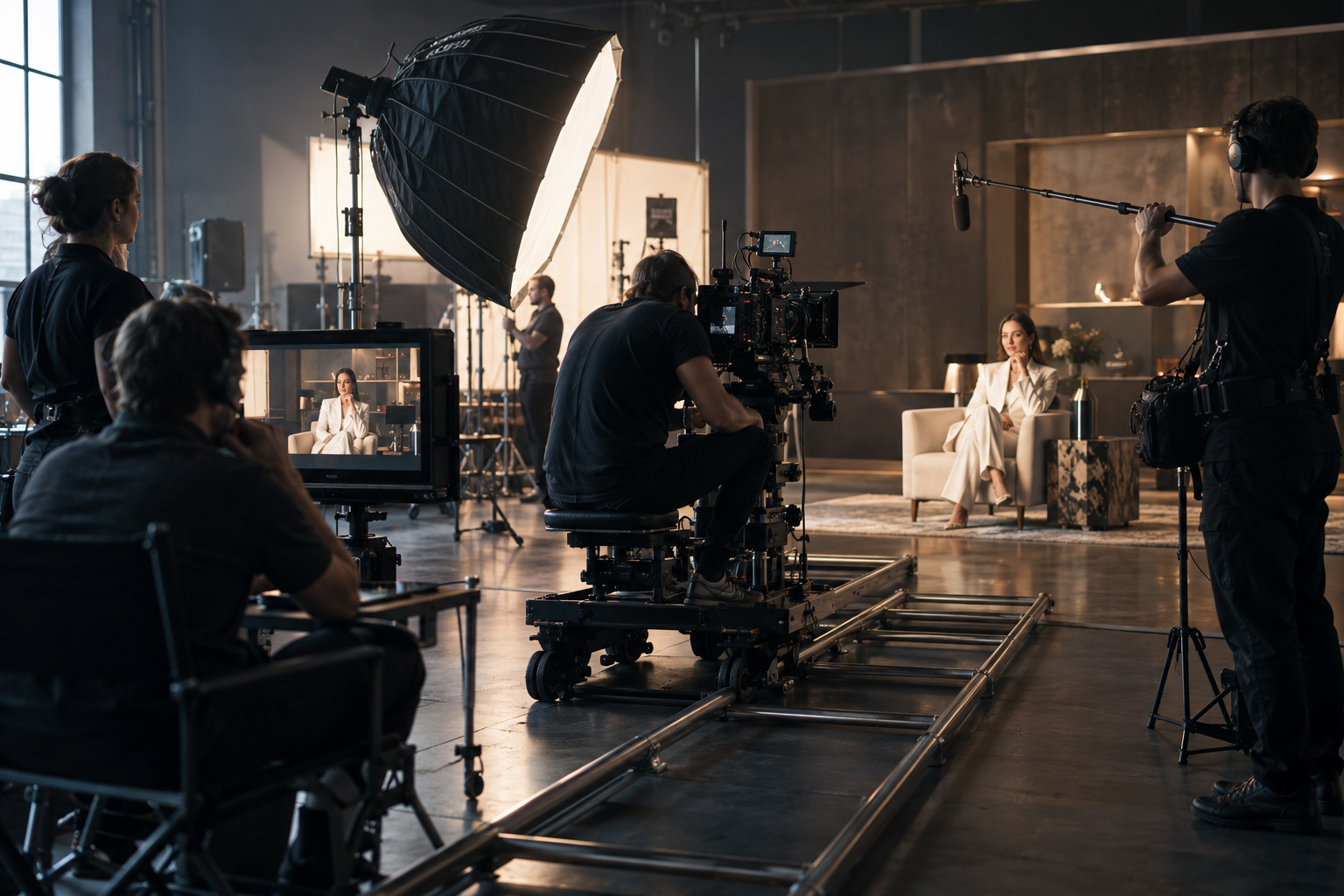
SET DIRECTION · LIGHTING CONTROL · PRODUCTION EXECUTION
A Strong Film Set Is Not Defined By Equipment Alone—But By How Every Element Works Together.
Once production begins, creative intention enters a completely different environment—one governed by people, timing, equipment, space, light, sound, performance, logistics, and decisions that must often be made immediately. Professional control means ensuring that camera placement, lighting structure, subject direction, audio capture, monitoring, crew coordination, and technical execution remain connected to the same visual and narrative objective even while the set is changing around them.
The camera may record the image, but it does not create the production by itself. Every successful frame is influenced by relationships: between light and material, movement and timing, performance and framing, sound and environment, technical limits and creative ambition. When those relationships are managed deliberately, the set stops functioning as a collection of separate tasks and becomes one coordinated production system.
That distinction matters across an entire film, not only in one impressive shot. Professional production creates repeatable conditions for quality, allowing different scenes, angles, performances, locations, and technical circumstances to remain part of one coherent visual world rather than a sequence of isolated successes.
WHEN LIGHT, CAMERA, SOUND, CREW COORDINATION, AND SUBJECT DIRECTION ARE CONTROLLED AS ONE PRODUCTION SYSTEM,
VIDEOGRAPHY MOVES BEYOND SIMPLE CAPTURE AND BECOMES A PROFESSIONAL EXECUTION FRAMEWORK—BUILT TO DELIVER CONSISTENCY, PRECISION, AND STRONGER VISUAL RESULTS UNDER REAL PRODUCTION CONDITIONS.
PROJECT EVIDENCE · BARB THE BUILDER® · MOTION-LED PRODUCT COMMUNICATION & E-COMMERCE VISUAL SYSTEM
From A Multi-Feature Safety Product To A Complete Motion-Led Commercial System Built For Demonstration, Context, And E-Commerce Use.
A MOTION-LED PRODUCT PRESENTATION DEVELOPED TO REVEAL FUNCTION, VERSATILITY, SAFETY FEATURES, EVERYDAY USE, AND BRAND CHARACTER—SUPPORTED BY PHOTOGRAPHY, INFOGRAPHICS, PACKAGING, AND AMAZON-FACING VISUAL ASSETS.
BARB THE BUILDER® was developed as far more than a conventional product presentation. The BodyGuard Backpack & Tactical Pen combine multiple functional systems—convertible carrying, RFID protection, integrated lighting, anti-theft features, organizational details, travel functionality, and personal-safety tools—which meant the communication challenge was not simply to make the products look premium. The audience had to understand what they do, how they work, how they transform, and where those functions become valuable in everyday use.
Video became a central part of that communication logic because several of the product’s most important benefits are inherently temporal. Transformation, interaction, access, movement, demonstration, illumination, and real-world use are easier to understand when they can unfold through sequence rather than being compressed into a single static frame. The motion direction therefore had to make function visible while preserving the product’s professional character, tactical positioning, and compatibility with the broader e-commerce identity.
The wider project connected that moving-image presentation with studio and lifestyle photography, Amazon hero imagery, technical infographics, packaging design, insert materials, brochures, and listing-focused visual communication. Rather than treating video, photography, design, and e-commerce assets as separate outputs, the project used them as complementary forms of evidence: motion demonstrated behavior and transformation; photography established detail, context, and visual consistency; infographics clarified features; and packaging and listing assets carried the same product logic into the buying environment.
That connected approach allowed one complex product family to remain visually coherent while different media performed different jobs. A buyer could see the backpack in context, understand its construction, follow the tote-to-backpack transformation, recognize its travel and safety functions, examine the Tactical Pen, and encounter the same visual language across the wider Amazon and e-commerce presentation. The strength of the system came not from repeating the same information everywhere, but from assigning the right type of proof to the right medium.
The result demonstrates what professional Videography contributes when a product cannot be fully understood through appearance alone. Motion gives function a timeline. It can reveal before and after, action and response, closed and open, carried and worn, inactive and illuminated—turning technical features into experiences the audience can actually follow. When that moving evidence is connected with photography, design, and commercial presentation, the product becomes easier to understand, compare, evaluate, and remember.
WHEN A PRODUCT HAS MULTIPLE FEATURES, TRANSFORMATIONS, AND REAL-WORLD USE CASES, VIDEO CAN REVEAL WHAT A SINGLE FRAME CANNOT.
IT SHOWS HOW THE PRODUCT MOVES, CHANGES, FUNCTIONS, AND FITS INTO REAL LIFE—WHILE THE WIDER VISUAL SYSTEM TURNS THAT MOTION INTO COHERENT COMMERCIAL EVIDENCE ACROSS AMAZON, E-COMMERCE, AND BRAND COMMUNICATION.

TEN VIDEO WORLDS · DISTINCT COMMUNICATION CONTEXTS · ONE PROFESSIONAL MOTION STANDARD
Different Stories. Different Audiences. Different Motion Languages.
One Professional Standard Behind Every Frame.
Professional Videography does not belong to one visual style, industry, production scale, or type of audience. A commercial brand film may need to build emotion, aspiration, and perception, while product and e-commerce content must communicate function, detail, use, and commercial value with much greater precision. Corporate storytelling depends on credibility and human expertise; hospitality must translate atmosphere into experience; architecture requires an understanding of space, movement, scale, and sequence. The subject changes—and with it, the way motion must communicate.
The same principle continues across fashion, beauty, food, sport, music, live experience, technology, and industrial environments. Each world places different demands on narrative structure, pacing, cinematography, movement, sound, visual rhythm, performance, detail, technical accuracy, and final distribution. A fashion film may depend on texture, persona, and controlled visual expression. Food and beverage content must make craft and sensory detail almost tangible. Sports content requires velocity and physical intensity, while technology and industrial communication must often make complex processes clearer, more credible, and easier to understand.
That is why these films should never be approached through one repeated production formula. The professional standard remains consistent, but the creative response must change with the communication problem. The objective is not to make every project look cinematic in the same way; it is to understand what the audience must feel, recognize, learn, trust, desire, or act upon—and then develop the moving-image language capable of achieving that purpose. From a refined brand atmosphere to the precision of an advanced technical process, every frame should belong to the world it represents while remaining intentional, controlled, and professionally resolved.
Ten very different contexts reveal one central principle: professional Videography becomes valuable when motion is shaped around what the subject, audience, platform, and communication objective genuinely require.
DIFFERENT STORIES. DIFFERENT ENVIRONMENTS. DIFFERENT MOTION RESPONSIBILITIES.
ONE PROFESSIONAL VIDEOGRAPHY STANDARD BUILT TO CREATE EMOTION, EXPLAIN FUNCTION, SHAPE PERCEPTION, COMMUNICATE EXPERIENCE, AND MAKE EVERY MOVING IMAGE PERFORM WITH PURPOSE ACROSS THE WORLD IT ENTERS.
FROM CREATIVE INTENT TO COMMERCIAL IMPACT · BUILT FOR PURPOSE, DIRECTION, AND LONG-TERM USE
Professional Videography Turns Creative Intent Into Motion That Communicates With Purpose, Directs Attention, And Creates Lasting Value Beyond The Final Cut.
BEFORE CINEMATOGRAPHY, CAMERA MOVEMENT, LIGHTING, SOUND, PERFORMANCE, OR EDITING CAN CREATE REAL VALUE, THE FILM MUST HAVE A CLEAR PURPOSE—WHAT IT NEEDS TO COMMUNICATE, WHO IT NEEDS TO REACH, HOW THE STORY SHOULD UNFOLD, AND WHERE THE FINISHED MOTION MUST ULTIMATELY PERFORM.
A film can be beautifully lit, technically precise, visually cinematic, and still fail to perform its real communication role. Professional Videography begins before the camera records. It begins with understanding what must be communicated, who needs to understand or experience it, how attention should move through the story, and what the finished production ultimately needs to accomplish.
Without that foundation, individual shots may look strong while the wider film remains inconsistent. Important information may arrive too late, camera movement may add style without meaning, sound may compete with the message, pacing may weaken emotional impact, and footage created for one output may become difficult to adapt across campaigns, e-commerce, websites, social platforms, presentations, advertising, internal communication, or future brand applications.
A professionally directed Videography project connects creative intent, narrative structure, pre-production, cinematography, lighting, sound, performance, production control, editing, finishing, and delivery requirements before those decisions become disconnected. The objective is not simply to produce attractive moving images. It is to create motion content whose visual, sonic, and narrative character supports the real purpose of the project.
Professional Videography becomes significantly more valuable when every shot, sound, transition, and sequence is developed as part of a larger communication system—not as an isolated production result.
THREE CRITICAL GAPS THAT PREVENT PROFESSIONAL VIDEOGRAPHY FROM DELIVERING ITS FULL NARRATIVE AND COMMERCIAL VALUE
01 — THE FILM HAS NO CLEAR MESSAGE
A video production can begin with a subject, camera, location, equipment, references, and even a shot list while still lacking a precise reason for what the finished film must accomplish. Without defined audience, message, intended use, narrative priorities, platform context, and communication objectives, creative decisions become driven primarily by visual appeal rather than purpose.
Professional Videography direction establishes that purpose before production begins. It determines what needs emphasis, what must remain secondary, how information should unfold, what the audience should understand or feel, and how the finished motion content must function across the environments where viewers will actually encounter it.
02 — CREATIVE, TECHNICAL, AND NARRATIVE DECISIONS ARE SEPARATE
Cinematography, camera movement, lighting, sound, performance, art direction, pacing, editing, color, graphics, and finishing can all be individually competent while still producing a fragmented film when they are developed independently.
A coordinated Videography system brings those decisions into one controlled motion direction. Technical precision supports creative intent, cinematography supports narrative hierarchy, sound strengthens atmosphere and meaning, performance direction protects credibility, and editing controls timing and progression—allowing every element to feel like part of the same professional moving-image language.
03 — THE VALUE ENDS WITH THE FINAL FILM
Strong motion content often loses value when it is delivered only as one fixed master film. Different platforms later require new durations, aspect ratios, cutdowns, captions, openings, endings, campaign adaptations, social versions, product sequences, presentation formats, or additional motion assets.
When Videography is developed with multi-format delivery, asset continuity, versioning, brand consistency, organized source material, and future use in mind, the original production becomes far more useful. The same motion foundation can continue supporting websites, campaigns, e-commerce, Amazon, advertising, social media, presentations, events, internal communication, product launches, and future content development without rebuilding the production language from zero.
The problem is rarely that a subject cannot be filmed beautifully. More often, the real challenge is ensuring that every creative, narrative, and technical decision contributes to what the film must communicate, where it must perform, and how long its value should continue.
Professional Videography creates that connection. It brings communication purpose, creative direction, narrative structure, production discipline, cinematography, sound, performance, post-production, and delivery logic into one coordinated system—allowing individual shots and sequences to operate as more than isolated footage.
When those elements remain connected, motion content becomes easier to understand, recognize, adapt, publish, reuse, extend, and remember. What begins as one production can become a durable motion asset supporting brand perception, commercial communication, campaigns, product presentation, and future growth.
POWERFUL VIDEOGRAPHY DOES MORE THAN RECORD WHAT HAPPENS IN FRONT OF THE CAMERA.
IT CONNECTS PURPOSE, STORY, MOVEMENT, SOUND, PERFORMANCE, EDITING, AND DELIVERY CLEARLY ENOUGH FOR EVERY SEQUENCE TO COMMUNICATE, PERFORM, AND REMAIN VALUABLE.
SUBJECT TYPES · NARRATIVE CONTEXTS · PRODUCTION REQUIREMENTS · COMMERCIAL ENVIRONMENTS
Different Subjects Demand Different Ways To Move, Unfold, And Be Experienced.
FROM PRODUCT DEMONSTRATION AND E-COMMERCE CONTENT TO PEOPLE, SPACES, CAMPAIGNS, HOSPITALITY, TECHNICAL ENVIRONMENTS, AND BRAND STORYTELLING—PROFESSIONAL VIDEOGRAPHY MUST ADAPT TO WHAT THE SUBJECT NEEDS TO REVEAL, HOW THE STORY NEEDS TO DEVELOP, AND WHAT THE AUDIENCE NEEDS TO EXPERIENCE.
Professional Videography does not serve the same purpose in every project. A technical product may require controlled demonstration, material detail, functional clarity, and precise sequencing. A hospitality environment may depend on atmosphere, movement through space, service rhythm, sound, and emotional character. Leadership content must communicate credibility and authority differently from a lifestyle campaign designed to create aspiration, energy, and cultural relevance.
The subject changes—but so do the camera movement, framing, lens logic, lighting strategy, performance direction, sound requirements, pacing, production conditions, editing structure, and final delivery system needed to represent it properly. What strengthens one film can weaken another when the same production formula is applied without understanding the communication problem first.
That is why our Videography Services are structured around the actual role the moving image must perform, rather than one predefined cinematic style. Subject type, audience, message, brand position, narrative complexity, intended platform, production environment, technical requirements, and long-term asset use all influence how the creative and production direction is developed.
Some projects require tightly controlled studio production. Others depend on real environments, people, movement, architecture, available light, dialogue, performance, location sound, or observational storytelling. Many require a combination—particularly when one production must support websites, campaigns, Amazon and e-commerce, advertising, social platforms, presentations, events, internal communication, and future brand applications.
The objective remains consistent: to create motion content that is not only visually resolved, but appropriate to the subject, credible within its context, narratively clear, technically controlled, strategically useful, and capable of supporting the wider communication system around it.
- Product, Packaging & Consumer Goods: Developing controlled product films, close-up motion detail, material behavior, functional demonstrations, and contextual storytelling designed to reveal form, construction, finish, use, and brand character with clarity and commercial intent.
-
E-Commerce, Retail & Amazon: Creating product videos, feature-focused motion assets, demonstration sequences, visual comparison content, and marketplace-ready communication designed to make products easier to understand, compare, trust, and evaluate across digital buying environments. -
Corporate, Leadership & Professional Teams: Producing executive communication, team videos, workplace storytelling, company presentations, and professional brand films structured to communicate credibility, expertise, culture, organizational character, and strategic clarity without relying on generic corporate footage. -
Architecture, Interiors & Real Estate: Translating buildings, interiors, spatial relationships, atmosphere, movement through space, and material presence into carefully controlled moving-image communication that preserves scale, geometry, light, detail, and the real experience of the environment. -
Hospitality, Food & Beverage: Combining atmosphere, service rhythm, product detail, preparation moments, environmental storytelling, and sensory visual cues to create films that communicate experience, quality, place, emotion, and the distinctive character behind the offering. -
Fashion, Beauty & Lifestyle: Directing movement, styling, expression, fabric or hair behavior, lighting, pacing, and environment into connected visual storytelling capable of building aspiration, identity, mood, relevance, and recognizable brand character. -
Industrial, Manufacturing & Technical Products: Filming equipment, materials, production environments, engineering features, specialist processes, and technical workflows with the clarity required to communicate construction, capability, precision, scale, reliability, and real-world performance. -
Advertising, Campaigns & Brand Storytelling: Building concept-driven films around campaign objectives, audience perception, visual hierarchy, direction, and multi-format usage so that individual shots, sequences, and supporting assets work together as one recognizable commercial narrative. -
Editorial, Cultural & Institutional Projects: Developing documentary, observational, interview-based, environmental, and editorial moving-image communication around the specific subject and context with enough visual depth, structure, credibility, and narrative meaning to inform, document, interpret, and preserve value. -
Events, Activations & Public-Facing Experiences: Capturing people, atmosphere, interactions, key moments, presentations, environments, and contextual detail while maintaining a coherent motion language that can support immediate communication, recap content, promotion, and long-term documentation after the event is over.
THE SUBJECT CHANGES. THE VISUAL RESPONSIBILITY CHANGES WITH IT.
PROFESSIONAL VIDEOGRAPHY ADAPTS THE CREATIVE AND TECHNICAL SYSTEM TO WHAT MUST BE REVEALED, HOW IT MUST BE EXPERIENCED, AND WHERE THE FINAL MOTION CONTENT MUST PERFORM.
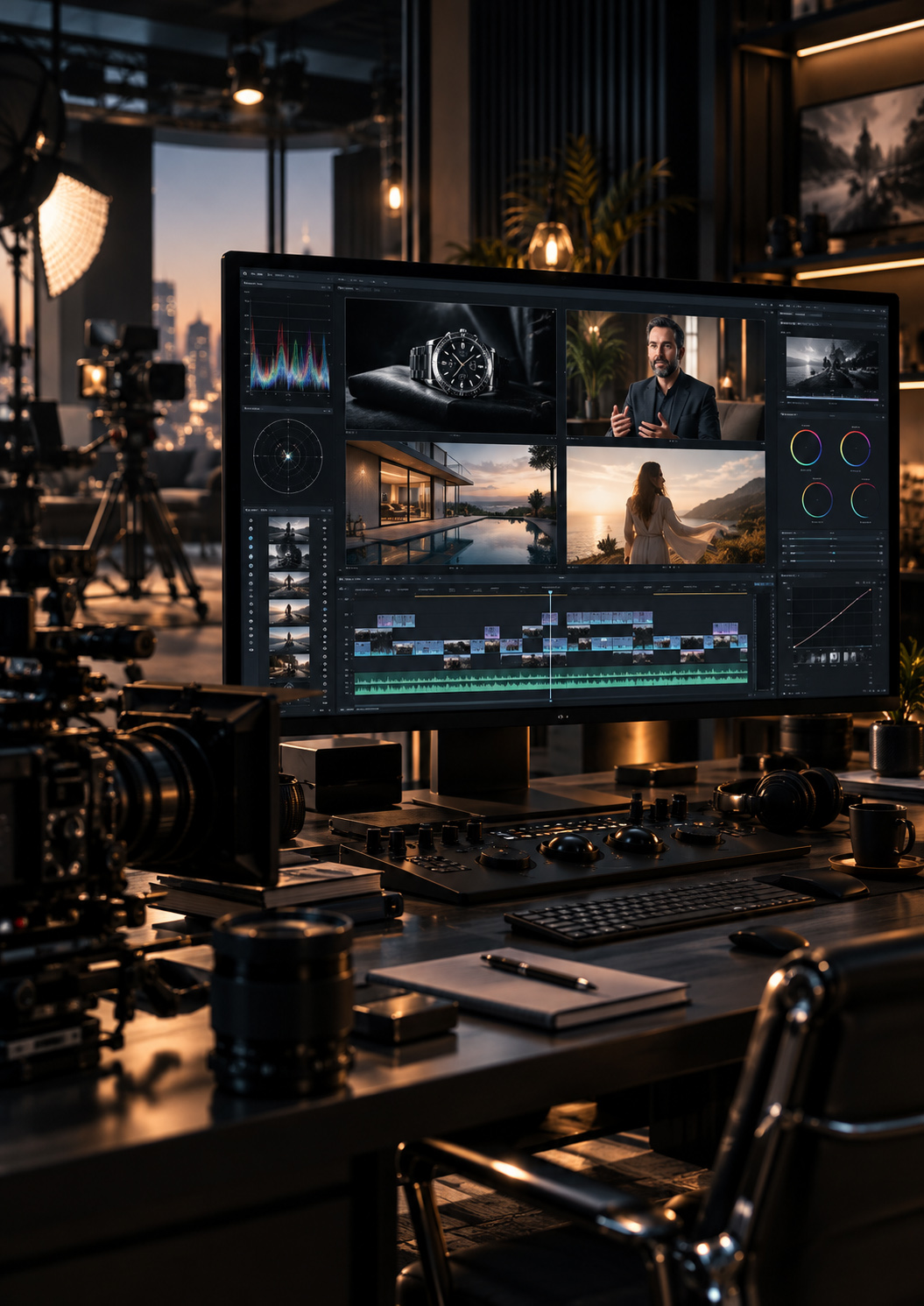
VISUAL DIRECTION · VIDEOGRAPHY CAPABILITY · CINEMATIC PRODUCTION · POST-PRODUCTION INTELLIGENCE
Videography Built Around How Different Subjects Need To Move, Connect, And Communicate.
A strong Videography system is not defined by a repeated visual style. It is defined by understanding what each subject needs to reveal, how the audience needs to experience it, and which combination of movement, framing, sound, atmosphere, pacing, and editorial structure will communicate that purpose most effectively. Product films, leadership content, architecture, lifestyle storytelling, and commercial campaigns may occupy visual worlds, but they all depend on creative direction and controlled production logic.
Cinematography, camera movement, lighting, performance, sound, editing, color, and post-production are treated as connected decisions rather than isolated technical stages. The objective is not to collect attractive footage, but to build a motion language in which each shot has a role and each editorial decision strengthens how the story is understood, felt, and remembered.
The value becomes greater when production extends beyond one final film. Structured footage can evolve into hero sequences, campaign edits, platform-specific versions, social cutdowns, website motion, commercial assets, presentations, e-commerce content, and future brand communication while preserving the creative character established at the beginning. This is where Videography becomes a scalable visual system capable of carrying one direction across different formats, audiences, and communication environments.
The subject determines the motion challenge. The production system determines how clearly, convincingly, and memorably that challenge becomes communication.
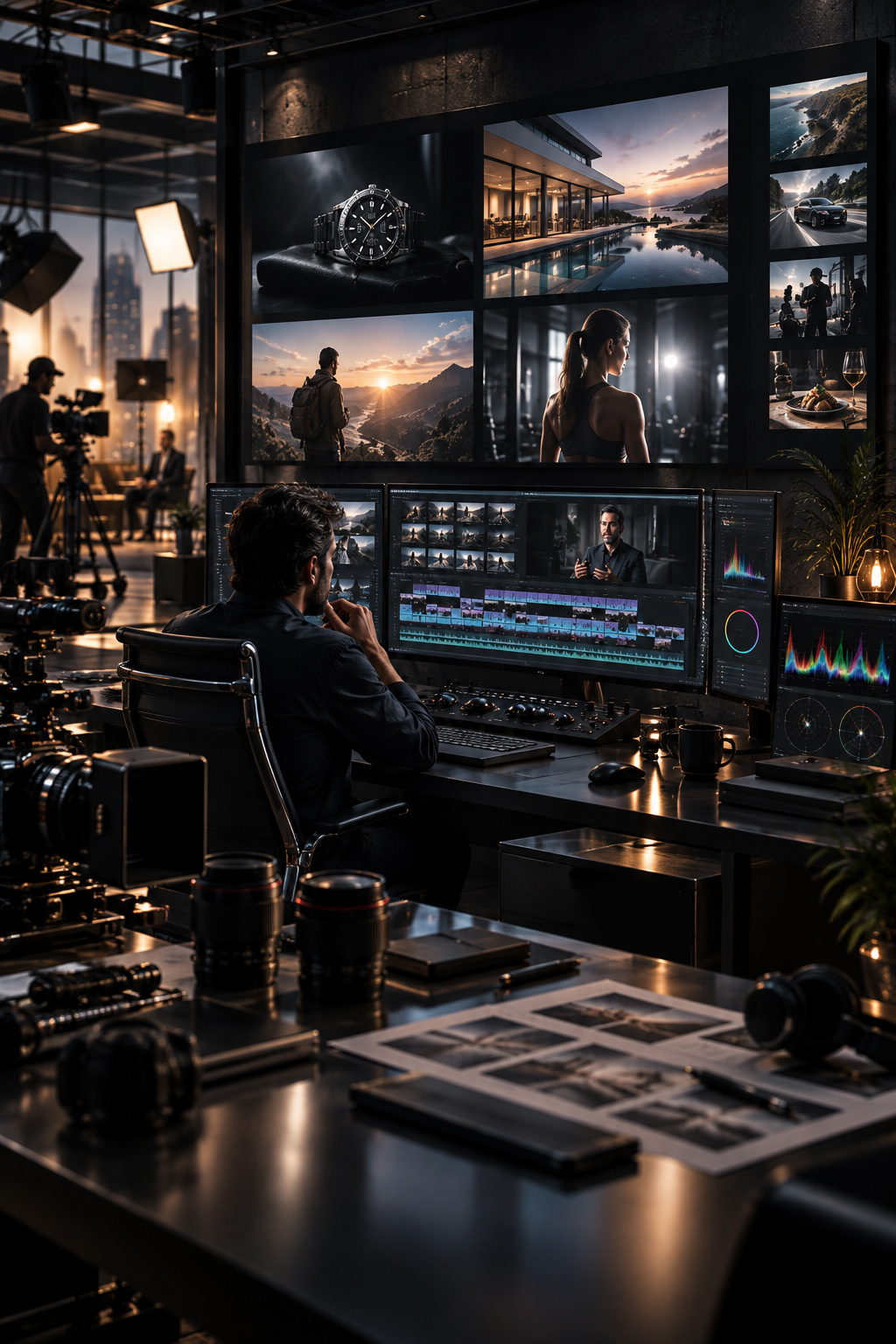
VIDEOGRAPHY APPLICATION · MULTI-SUBJECT PRODUCTION · EDITORIAL CONTROL · MOTION SYSTEM DEVELOPMENT
From Different Production Worlds To One Controlled Motion Language.
Professional Videography becomes most valuable when very different subjects can be developed through one disciplined creative and editorial framework without forcing them into one repetitive visual style. Product detail, leadership communication, architecture, lifestyle, hospitality, performance, and commercial storytelling may demand completely different cinematography, pacing, sound, atmosphere, and production conditions—but every film still needs a clear reason for how those decisions work together.
This visual represents that point of convergence. Production, cinematography, editorial selection, color, sound, sequencing, and final presentation are brought into one controlled environment where separate visual worlds can be evaluated, refined, and shaped according to their own communication purpose. The objective is not visual uniformity. It is professional consistency—the ability to preserve the character of each subject while maintaining clarity, technical discipline, narrative intention, and recognizable production quality across the wider body of work.
That distinction is what allows Videography to move confidently between industries, audiences, platforms, and production scales. A product may need precision. A person may need credibility. A space may need atmosphere and movement. A campaign may need emotion and memorability. The production system must recognize those differences, then build the right visual and narrative response around them rather than imposing the same cinematic formula everywhere.
DIFFERENT SUBJECTS SHOULD NEVER BE FORCED INTO THE SAME MOTION LANGUAGE.
THE REAL VALUE OF PROFESSIONAL VIDEOGRAPHY LIES IN KNOWING WHAT EACH STORY REQUIRES—THEN BUILDING THE CREATIVE, TECHNICAL, AND EDITORIAL SYSTEM CAPABLE OF MAKING THAT DIFFERENCE CLEAR, COHERENT, AND MEMORABLE.
SUBJECT-LED VIDEOGRAPHY · CREATIVE JUDGMENT · MOTION LANGUAGE · PROFESSIONAL CONSISTENCY
THE STRONGEST VIDEOGRAPHY DOES NOT FORCE EVERY STORY INTO THE SAME VISUAL LANGUAGE.
Professional Videography gains its real strength from judgment—the ability to recognize what a particular subject, audience, environment, and communication objective actually require before deciding how the film should look, move, sound, and unfold. Consistency does not mean repeating the same camera movement, lighting treatment, pacing, color, or editorial style from one production to the next.
A product may require precision and demonstration. Leadership communication may depend on restraint, authority, and credibility. Hospitality may need atmosphere and sensory progression. Architecture may depend on spatial movement and scale. Lifestyle or campaign work may require energy, performance, emotion, and cultural relevance. The production language changes because the communication responsibility changes.
What remains consistent is the standard behind those decisions: clear creative intent, controlled execution, narrative discipline, technical precision, editorial judgment, and an understanding of how the final audience needs to experience the subject. That is what allows radically different productions to belong to the same professional body of work without becoming visually repetitive or creatively interchangeable.
The result is not one recognizable filmmaking formula applied everywhere. It is something more valuable: a production approach capable of entering different industries, subjects, environments, and communication worlds while preserving the intelligence, control, and authorship behind the work.
ONE DISCIPLINE. DIFFERENT SUBJECTS. DIFFERENT MOTION LANGUAGES.
THE STANDARD REMAINS CONSISTENT NOT BECAUSE EVERY FILM LOOKS THE SAME, BUT BECAUSE EVERY CREATIVE, TECHNICAL, AND EDITORIAL DECISION IS BUILT AROUND WHAT THAT PARTICULAR STORY NEEDS TO BECOME CLEAR, CREDIBLE, DISTINCTIVE, AND MEMORABLE.
GREAT VIDEOGRAPHY IS NOT RECOGNIZED BY ONE REPEATED LOOK.
IT IS RECOGNIZED BY THE QUALITY OF THE DECISIONS BEHIND EVERY DIFFERENT FILM—AND BY THE ABILITY TO GIVE EACH STORY THE VISUAL, NARRATIVE, AND EMOTIONAL LANGUAGE IT ACTUALLY DESERVES.
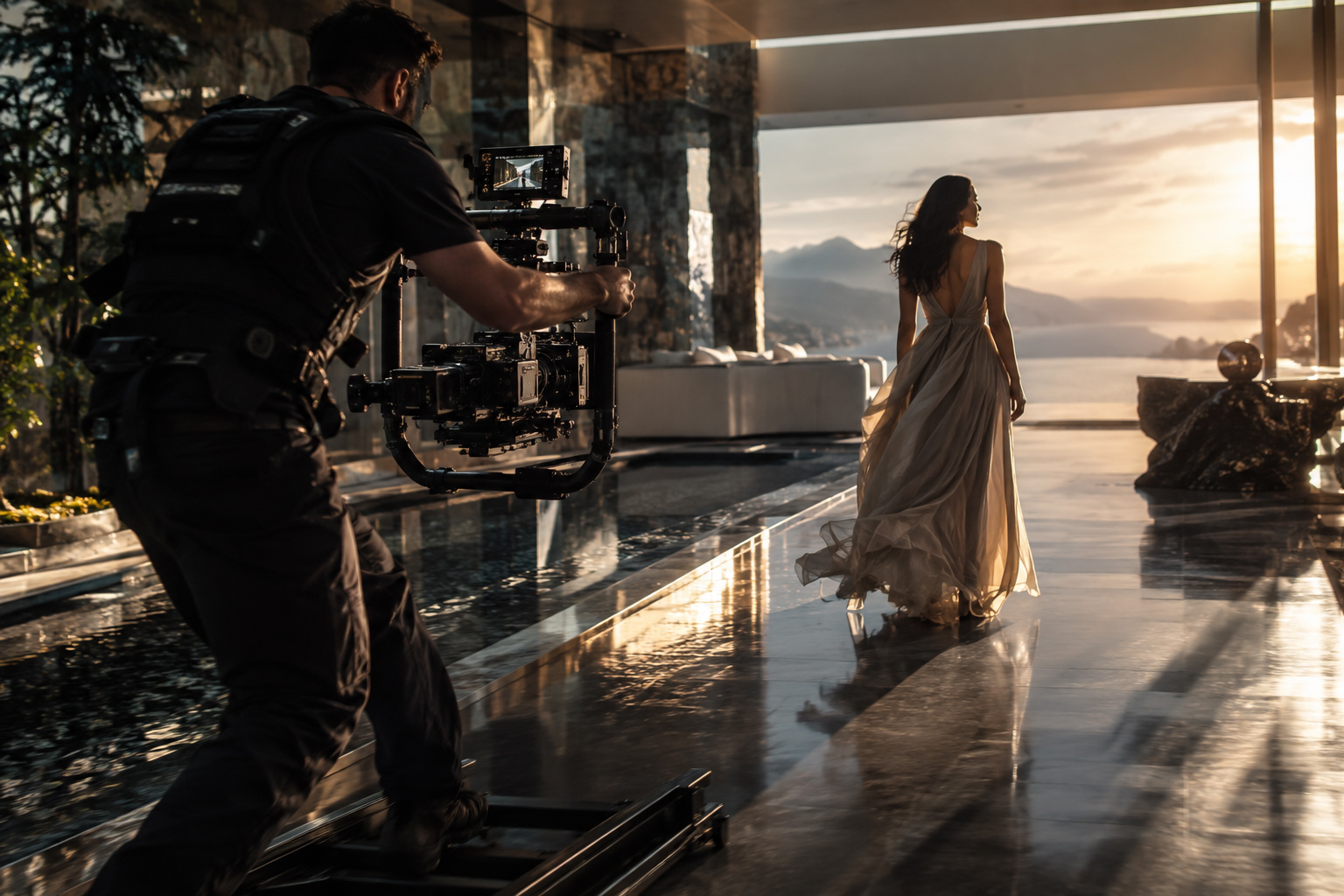
CINEMATOGRAPHY · CAMERA MOVEMENT · MOTION INTENT
The Camera Should Move With Purpose—Because Movement Is Part Of The Meaning.
Moving image introduces a dimension that still imagery cannot reproduce in the same way: the audience does not only observe composition—it travels through it. Camera movement determines how information is revealed, how distance and scale are perceived, when attention shifts, where tension develops, and whether the viewer feels like an observer, participant, witness, or visitor inside the scene. The path of the camera therefore becomes part of the meaning rather than simply part of the technique.
A slider move, tracking shot, controlled orbit, handheld passage, gimbal sequence, or slow push-in should never exist because motion looks cinematic on its own. Each movement must answer a visual or narrative reason: revealing a relationship, following an action, changing perspective, increasing intimacy, expanding scale, or directing attention toward something the audience needs to understand.
When cinematography is approached this way, movement becomes a form of visual grammar. Rhythm, direction, spatial depth, acceleration, stillness, and transition begin working together to shape the viewer’s experience across time—giving the film a motion language that feels intentional rather than mechanically impressive.
WHEN FRAMING, PERSPECTIVE, AND CAMERA MOVEMENT ARE DESIGNED TO SERVE THE STORY,
VIDEOGRAPHY GAINS A TRUE MOTION LANGUAGE—ONE THAT GUIDES ATTENTION, SHAPES EXPERIENCE, AND TURNS CAMERA MOVEMENT INTO A MEANINGFUL PART OF HOW THE FILM COMMUNICATES.
THREE VIDEOGRAPHY CONTEXTS · ONE PROFESSIONAL STANDARD
Different Videography Challenges Demand Different Creative, Narrative, And Technical Responses.
THE SUBJECT, STORY, AUDIENCE, PLATFORM, AND FINAL USE MAY CHANGE—BUT THE DISCIPLINE OF BUILDING MOTION WITH PURPOSE, CONTROL, CREDIBILITY, AND COMMUNICATION VALUE DOES NOT.
Professional Videography cannot be reduced to one universal production formula. A product film developed for e-commerce requires a different visual hierarchy, pacing, and information structure from a campaign built around people, just as a film designed to communicate architecture or hospitality must solve an entirely different relationship between movement, space, atmosphere, and experience. The camera may remain the same, but the communication objective, narrative structure, production conditions, sound logic, performance requirements, editing strategy, and final asset system can change completely.
NF Creative Studio approaches each engagement around the role the finished moving image must actually perform. Rather than forcing different subjects into one recognizable production style, we identify what must be understood, what must be experienced, where attention needs to move, how the story should unfold, and how the final video will be used—then structure the production system around those requirements.
01 — PRODUCT, E-COMMERCE & COMMERCIAL VIDEO
The Challenge
Products shown through video must communicate before the audience can physically touch, test, compare, or experience them. Material behavior, construction, function, interaction, scale, detail, transformation, packaging, use context, and perceived quality may all need to become understandable within a limited amount of screen time—often inside commercial environments where attention is brief and every unnecessary second creates friction.
A technically polished product film is therefore not enough. The production must establish what the product is, what makes it different, how it behaves, why specific details matter, and what the viewer should understand next. Movement, shot duration, camera distance, lighting, demonstration, sound, and editorial order must work together so that visual attraction never replaces product clarity.
The Videography Response
We structure product Videography around the information hierarchy the viewer actually needs. Controlled lighting reveals material and form; macro and close-range cinematography isolates relevant detail; camera movement introduces dimension and physical character; demonstrations clarify function and interaction; and editing determines when information appears, how long it remains visible, and how individual product moments build into one coherent commercial narrative.
Where required, the same production foundation can be developed into hero films, Amazon and e-commerce assets, product demonstrations, launch content, advertising versions, website motion, social cutdowns, retail communication, and wider campaign applications—allowing one controlled production to support multiple commercial roles without fragmenting the original visual direction.
FROM PHYSICAL PRODUCT TO CLEAR, CREDIBLE, AND COMMERCIALLY USEFUL MOTION EVIDENCE.
02 — PEOPLE, CAMPAIGNS & BRAND STORYTELLING
The Challenge
Videography involving people carries a different responsibility because perception develops through time. Expression, voice, posture, movement, wardrobe, environment, interaction, eye line, timing, sound, and performance continuity all influence how a person—and therefore the brand, organization, campaign, or story around them—is understood.
The challenge is rarely simply to make someone look good on camera. Leadership content may require authority without stiffness. Lifestyle films may require spontaneity without feeling uncontrolled. Interviews depend on clarity, credibility, and message discipline. Campaign work may depend on aspiration, emotion, rhythm, or a highly specific cultural tone. When direction is weak, moving-image content can quickly feel staged, inconsistent, performative, or disconnected from the identity it is meant to strengthen.
The Videography Response
We develop the production direction around character, audience perception, narrative role, brand position, performance requirements, and intended use. Casting or subject preparation, wardrobe, styling, location, lighting, camera movement, framing, performance direction, sound, pacing, and editorial structure are coordinated so that every production decision reinforces the same communication intention.
This allows leadership films, interviews, campaign content, lifestyle Videography, editorial motion, fashion and beauty productions, performance-based content, and wider brand storytelling to move beyond simple documentation and become part of a controlled moving-image language—capable of building recognition, credibility, atmosphere, emotional connection, narrative consistency, and long-term brand memory.
FROM A PERSON IN FRONT OF THE CAMERA TO A DIRECTED MOTION EXPRESSION OF CHARACTER, MESSAGE, POSITION, AND BRAND.
03 — ARCHITECTURE, HOSPITALITY & SPATIAL FILM
The Challenge
Spaces cannot be communicated effectively by treating them as static backgrounds. Architecture, interiors, hospitality, property, and designed environments are experienced through arrival, movement, transition, geometry, circulation, proportion, material relationships, natural and artificial light, atmosphere, scale, sound, and the changing relationship between detail and the wider environment.
Poor camera paths, uncontrolled perspective, inappropriate movement speed, weak transitions, unsuitable focal lengths, flat lighting, visual distractions, or filming at the wrong time of day can fundamentally change how a space is perceived. A video may technically document every room while completely missing how the environment is meant to be approached, navigated, inhabited, and emotionally experienced.
The Videography Response
Spatial Videography is developed around the logic of movement through the environment itself. Camera positions and trajectories are selected to explain hierarchy, connection, circulation, and scale; lens and stabilization choices protect spatial credibility; natural and controlled light are evaluated around material behavior and atmosphere; and transitions between wide environmental views, human-scale movement, and architectural detail are structured so that the finished film communicates both design intent and lived spatial experience.
The resulting motion work can support architectural portfolios, property marketing, hospitality communication, destination films, development presentations, investor and stakeholder communication, websites, campaigns, awards, launch materials, and long-term project documentation while preserving the spatial discipline and experiential quality the work deserves.
FROM BUILT ENVIRONMENT TO A CONTROLLED MOTION EXPERIENCE OF SCALE, MOVEMENT, MATERIAL, ATMOSPHERE, AND DESIGN INTENT.
DIFFERENT SUBJECTS. DIFFERENT PRODUCTION CONDITIONS. DIFFERENT NARRATIVE AND MOTION RESPONSIBILITIES.
ONE PROFESSIONAL VIDEOGRAPHY STANDARD FOR TURNING PRODUCTS, PEOPLE, AND SPACES INTO MOVING-IMAGE EXPERIENCES THAT ARE CLEAR, PURPOSEFUL, TECHNICALLY CONTROLLED, AND BUILT TO PERFORM WHERE IT MATTERS.
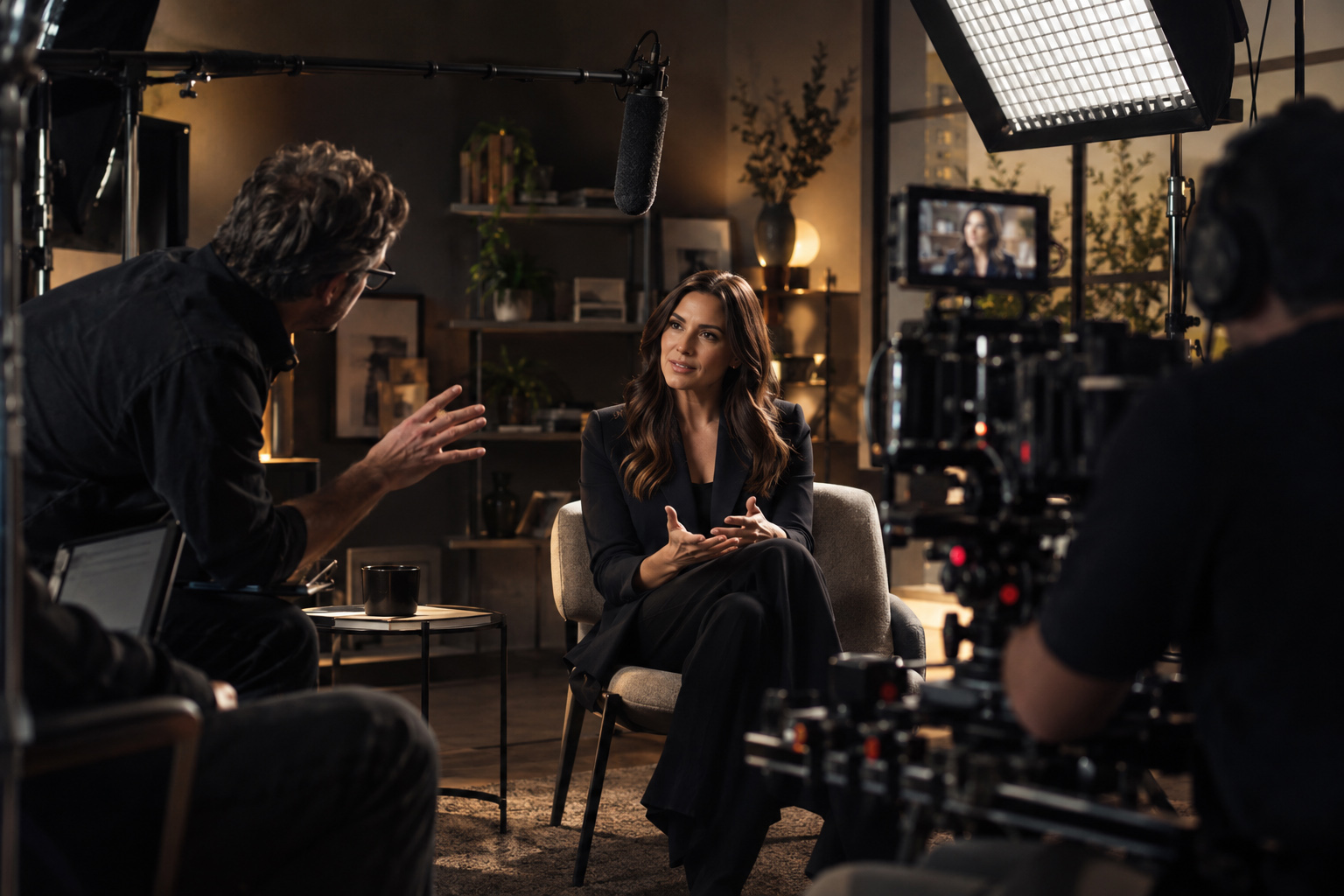
PERFORMANCE DIRECTION · HUMAN PRESENCE · STORY COMMUNICATION
A Person On Camera Becomes Valuable When Direction, Sound, And Performance Work Together.
People bring an entirely different responsibility into Videography because human presence cannot be controlled in the same way as an object or environment. A founder, spokesperson, expert, interview subject, performer, or talent enters the film with personality, body language, rhythm, confidence, hesitation, and emotional nuance. Direction must therefore create the conditions in which the person can remain credible and natural while still serving the communication purpose of the production.
The visual and sonic layers become inseparable here. Eye line, gesture, posture, movement, vocal cadence, pauses, framing, lens distance, lighting, room tone, microphone quality, and editorial timing all contribute to how that person is perceived. A technically perfect image can still feel unconvincing if performance, sound, and direction are not working toward the same emotional result.
Strong direction does not force every subject into a performance. It identifies what the scene needs and helps the person reach it with clarity. That is how human presence becomes narrative value—turning expertise into authority, personality into connection, and an on-camera moment into something the audience can genuinely trust, feel, and remember.
WHEN PERFORMANCE, SOUND, FRAMING, AND HUMAN DIRECTION ARE DEVELOPED TO SUPPORT THE MESSAGE,
VIDEOGRAPHY BECOMES MORE THAN VISUAL DOCUMENTATION—IT BECOMES A NARRATIVE COMMUNICATION TOOL CAPABLE OF TURNING PEOPLE, PRESENCE, AND EXPERTISE INTO A STRONGER STORY.
WHEN VIDEOGRAPHY MUST INFORM, PERSUADE, AND CONTINUE TO CREATE VALUE
Strong Videography Begins With The Shot—But Its Real Value Is Built Through Time, Movement, Sound, And Sequence.
A Professional Videography System Does More Than Produce Strong Individual Shots. It Connects Concept, Product, Performance, Movement, Atmosphere, Sound, Rhythm, And Purpose Into A Motion Language That Can Continue Working Across Different Audiences, Platforms, Formats, And Communication Needs.
Professional Videography is often judged by the finished film, but the most important decisions begin long before the final edit is delivered. Every effective sequence is shaped by what must be revealed, how attention should move, when information should enter, what deserves emphasis, how the subject should be experienced, and what the film ultimately needs to accomplish. Camera movement, lighting, sound, performance, timing, transitions, and editing are not isolated production choices—they determine how the audience reads the story as it unfolds.
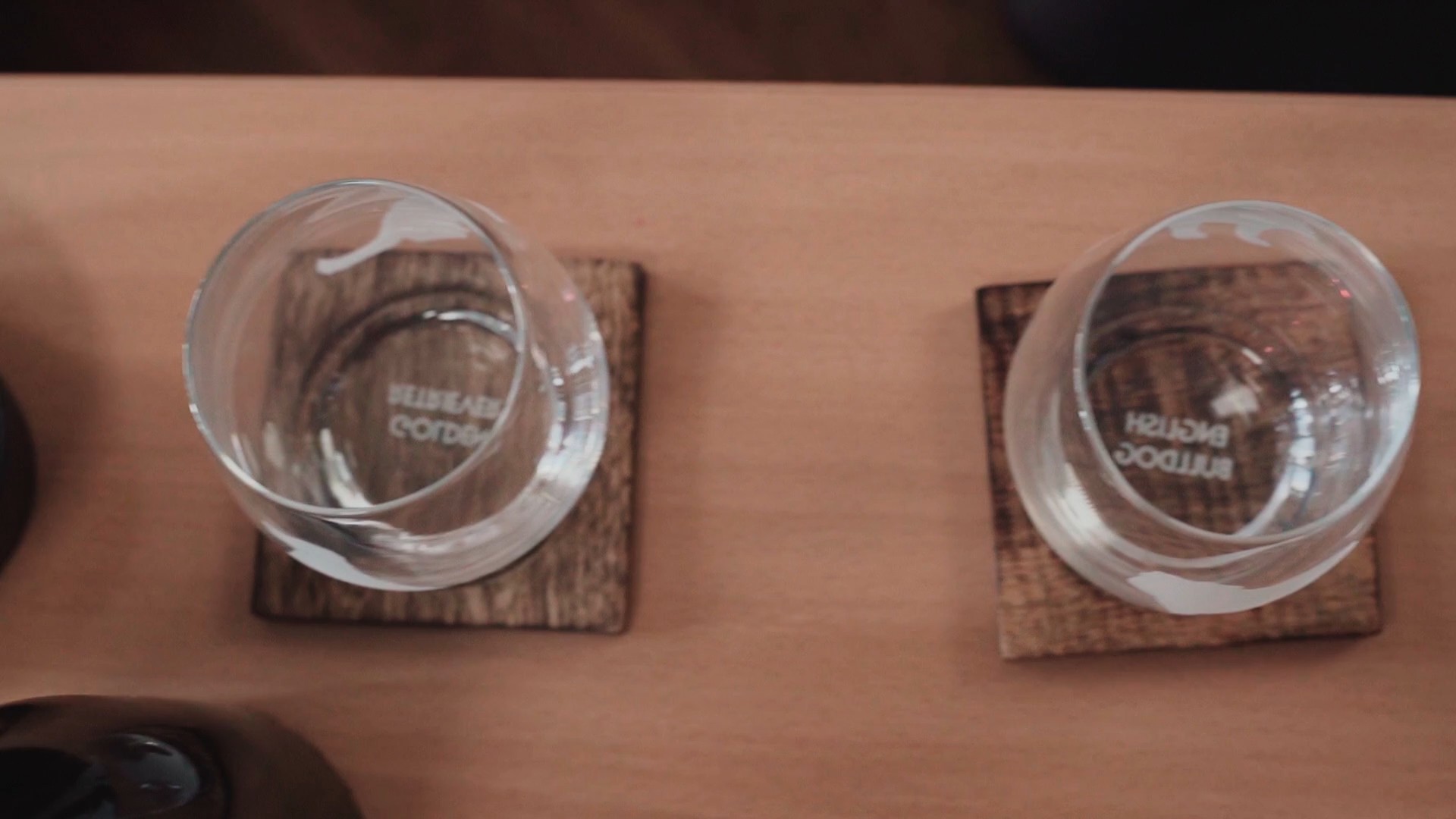
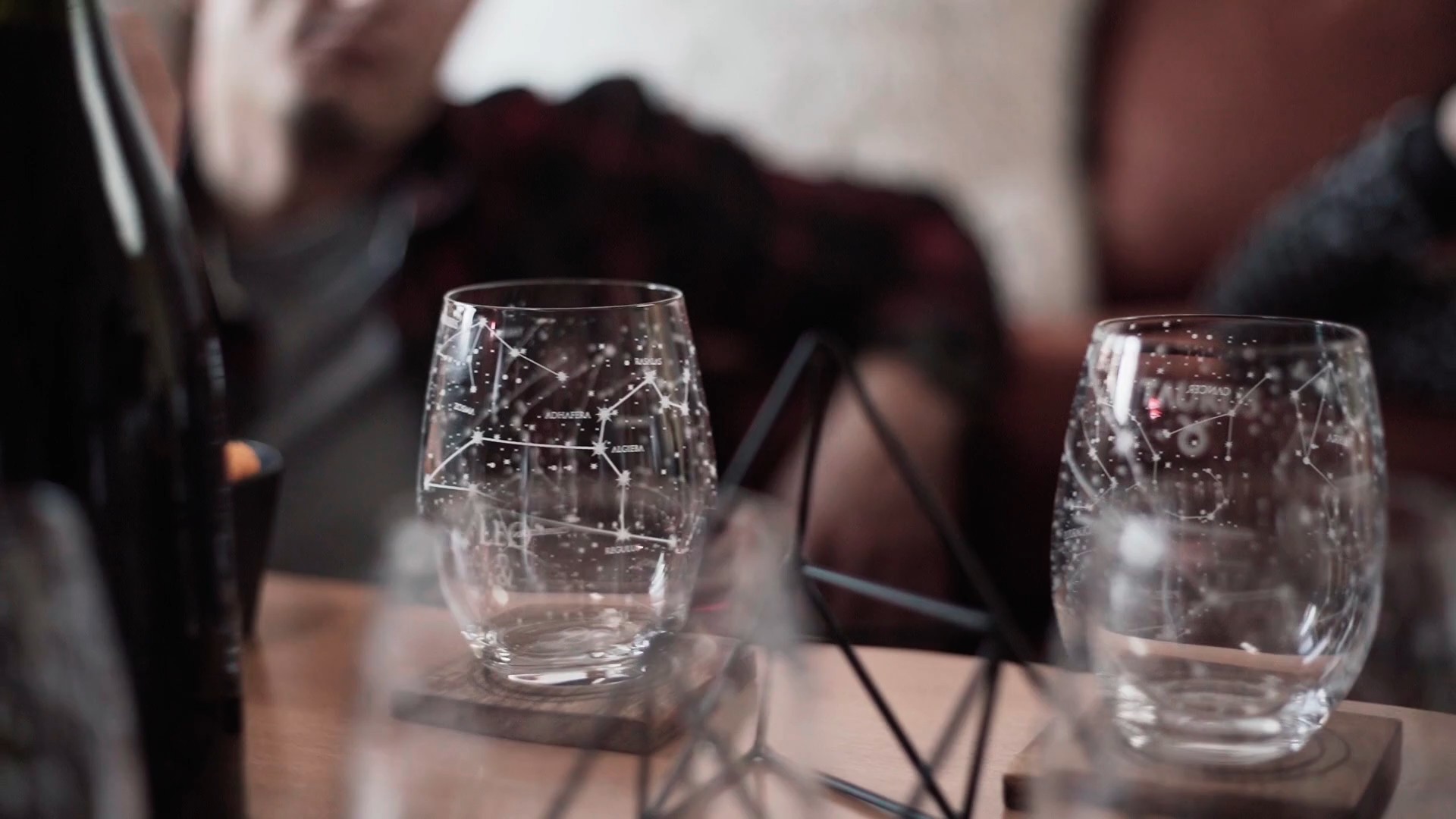
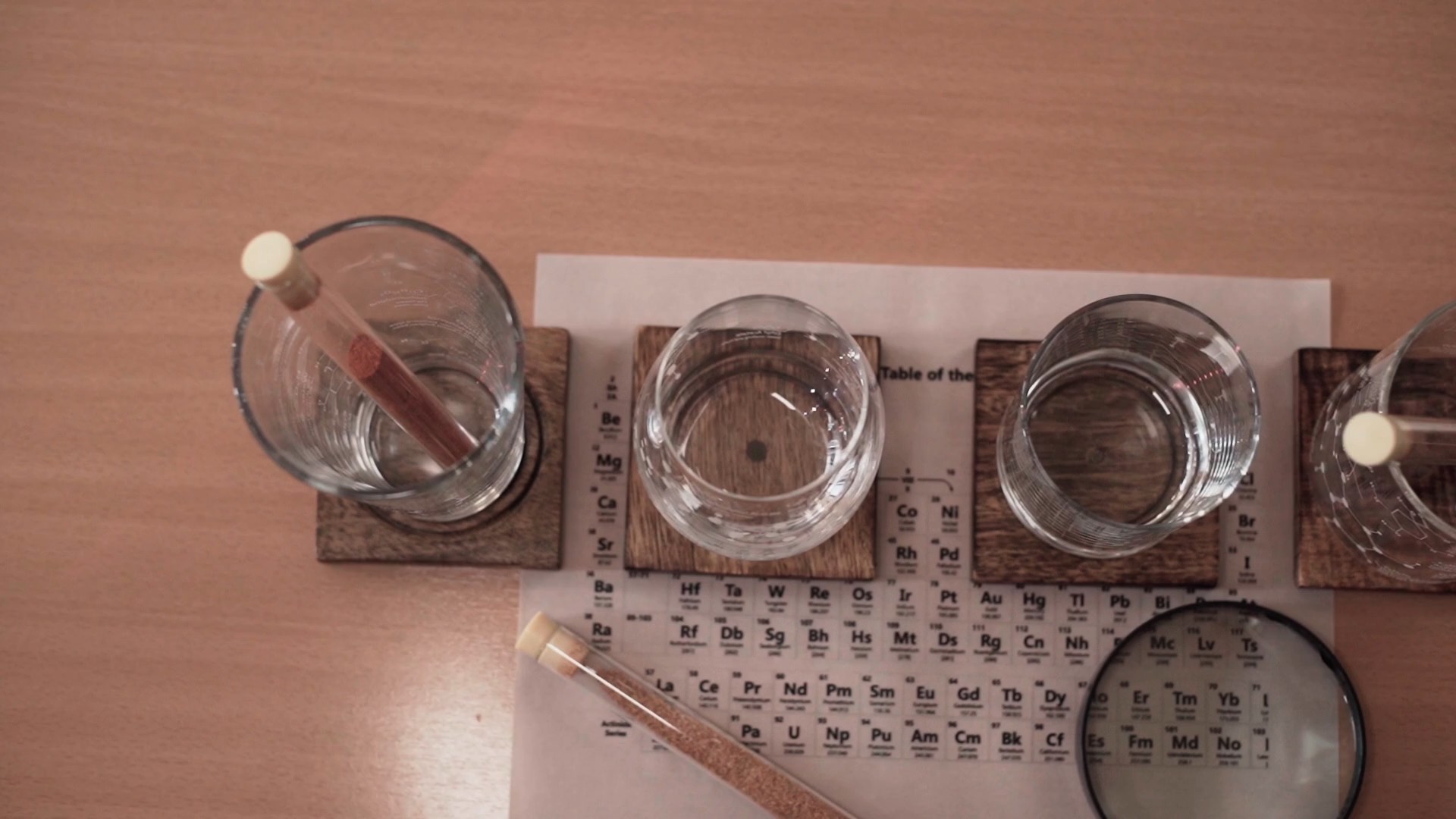
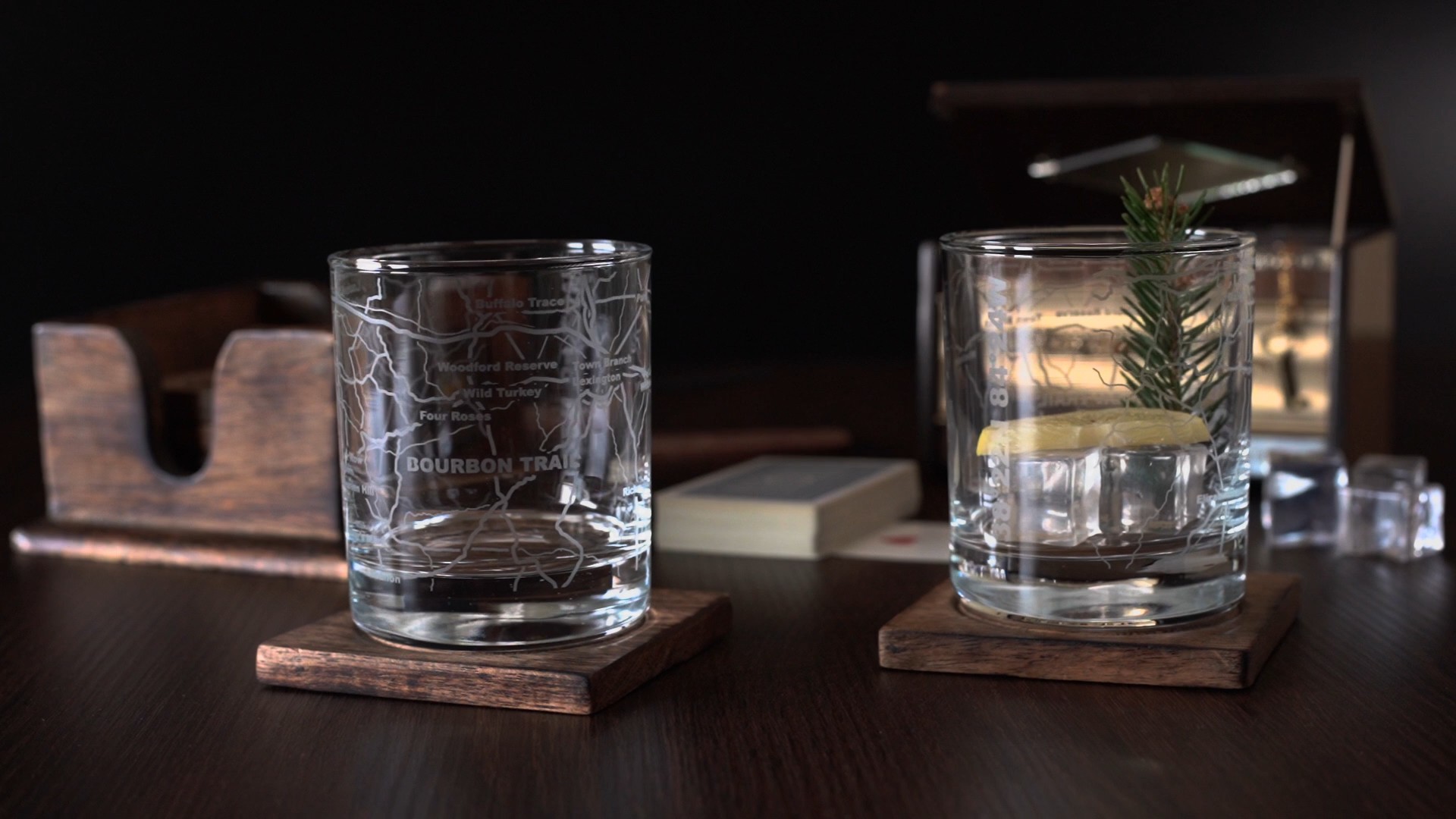
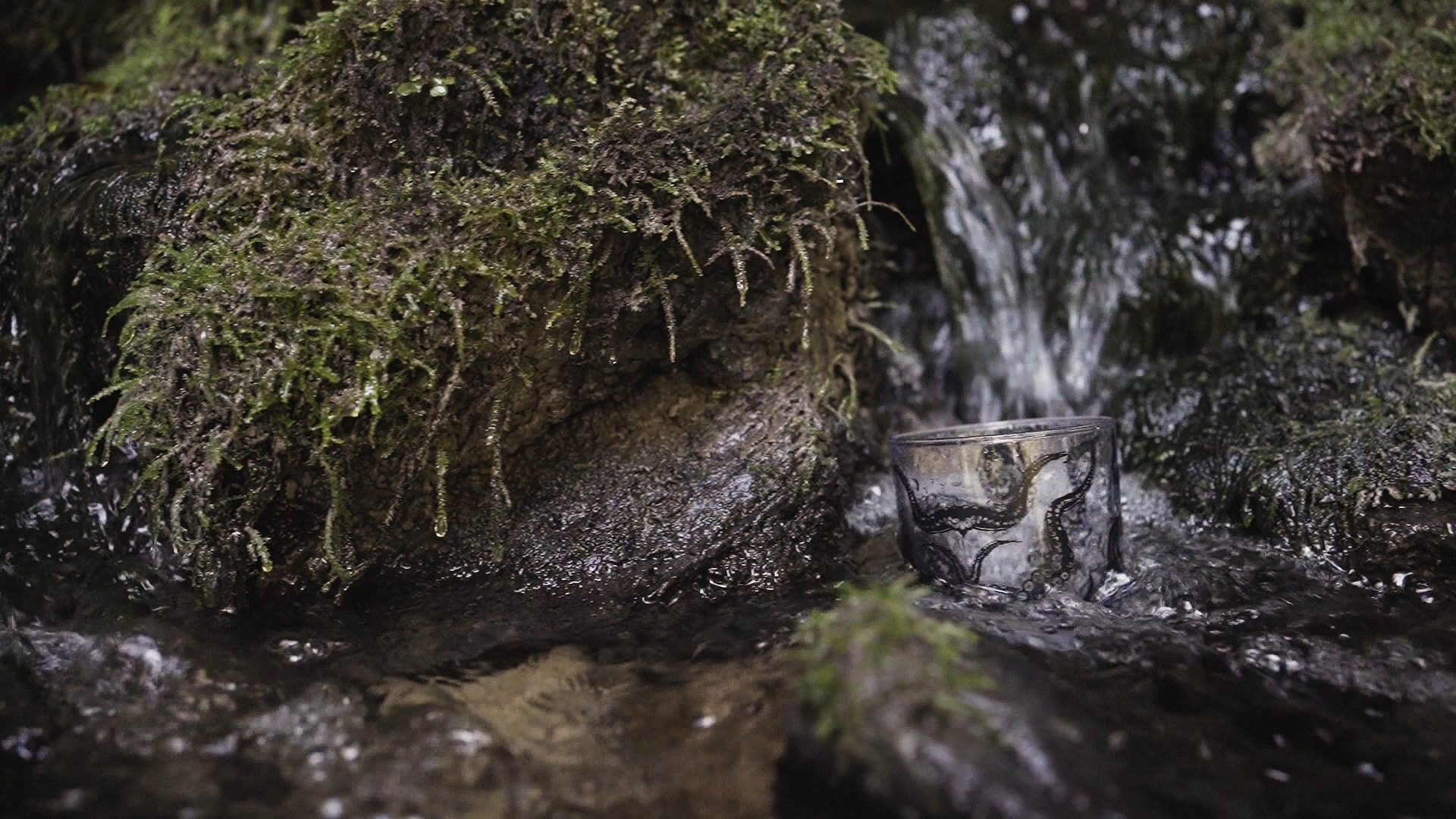
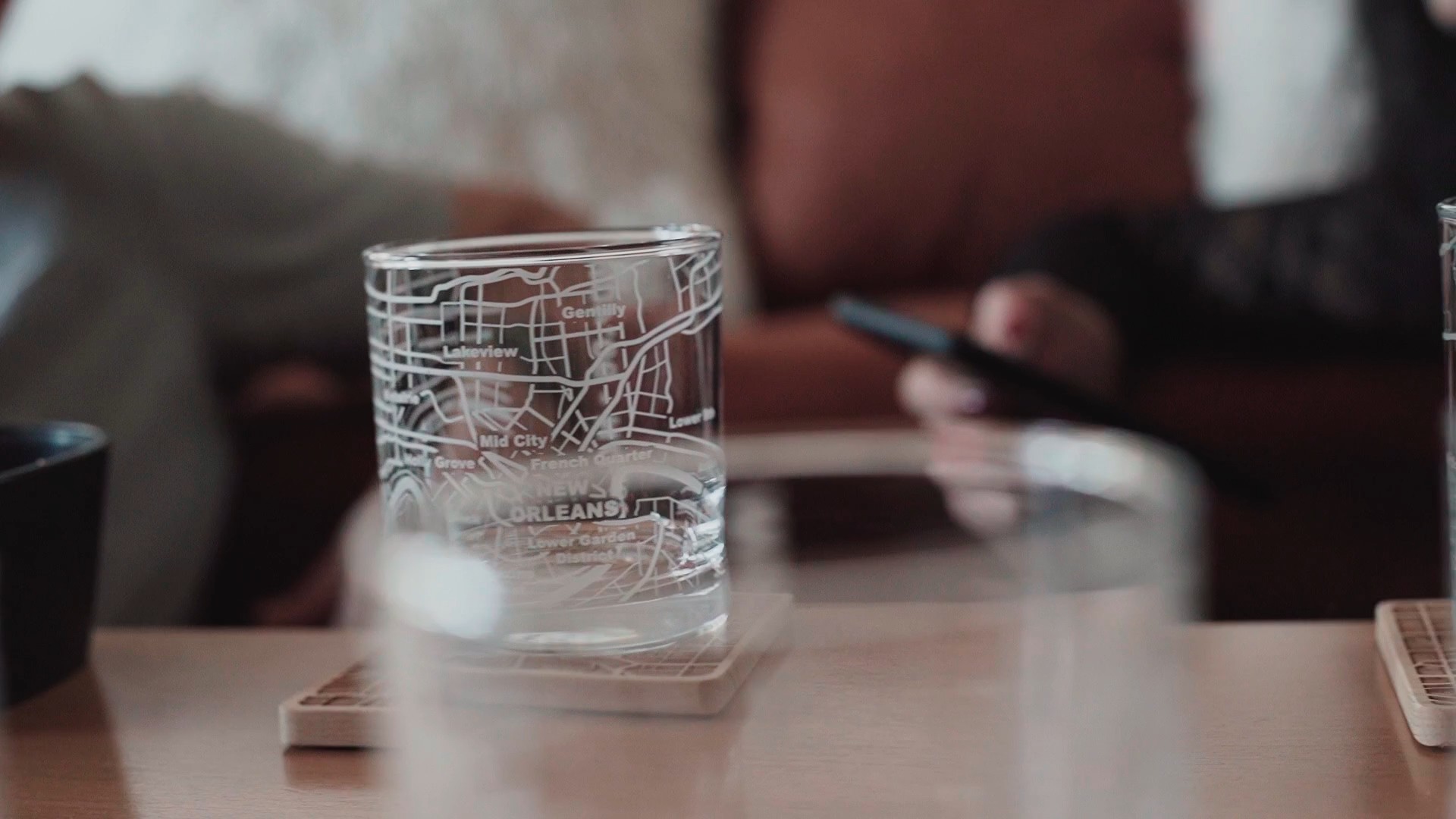
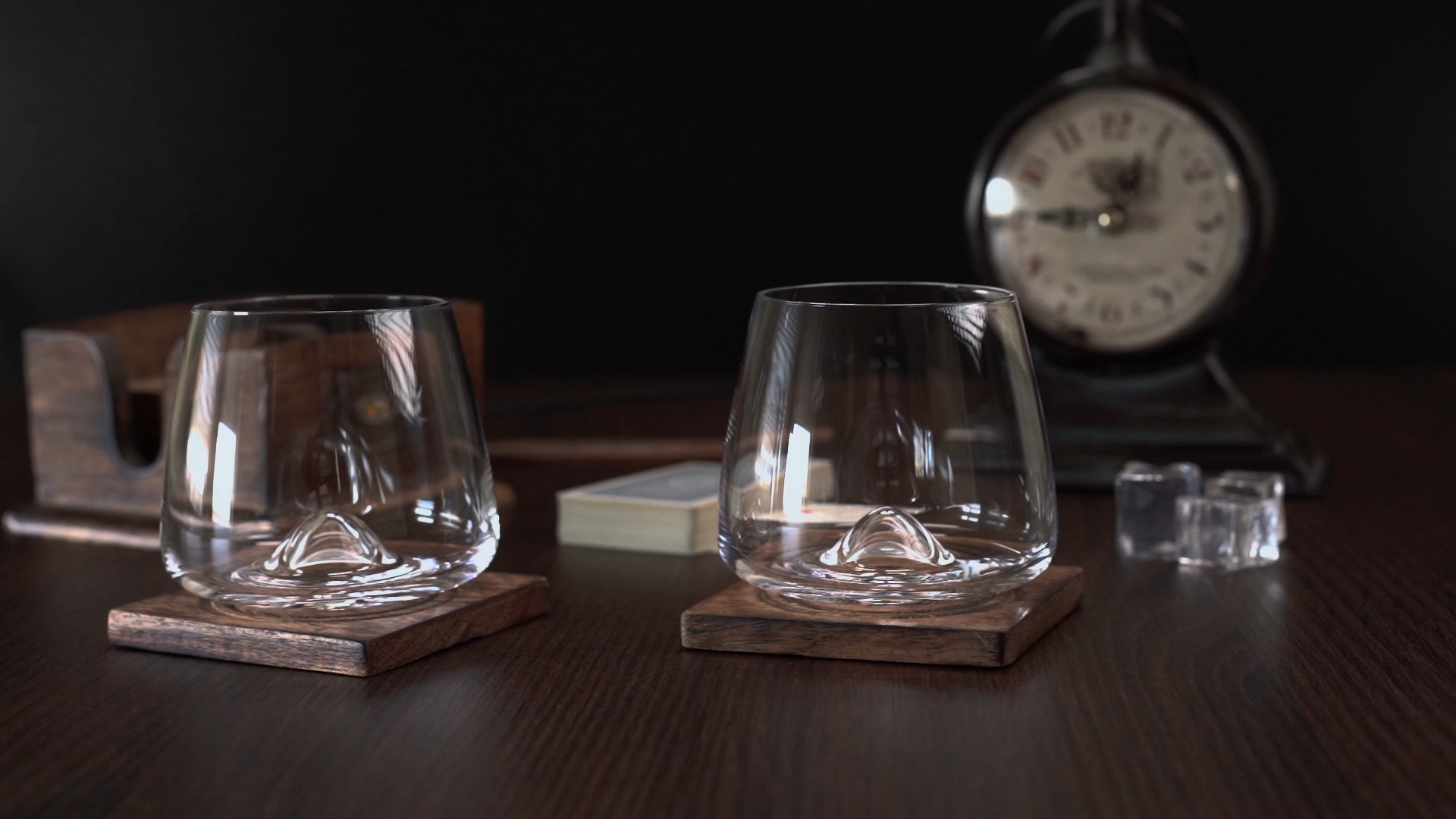
The Greenline Goods – “Cancer” Zodiac Glass project is a strong example of that thinking in practice. Developed as a cinematic product presentation for the Zodiac Collection, the film needed to communicate more than the physical form of an engraved glass. The visual direction combined celestial symbolism, controlled product detail, candlelight, reflective surfaces, atmospheric styling, slow movement, and carefully paced interaction to position the object as both a premium gift and a more personal expression of identity. The result depended not on one dramatic shot, but on how individual moments accumulated into a coherent mood and product story.
That distinction matters because video does not communicate through a single frame. Meaning is built through progression. One shot may reveal material quality, another may establish atmosphere, another may introduce interaction, while movement, sound, pacing, and editorial order determine how those moments relate to one another. In the Greenline Goods film, the engraved constellation, geometric styling, liquid movement, reflective light, and gradual product reveal work as parts of one connected visual system rather than as independent decorative images. This is where professional Videography begins to move beyond attractive footage and becomes deliberate communication.
The Journal extends that thinking beyond the finished production. It examines the creative, technical, and strategic decisions behind professional moving-image work—why some sequences hold attention while others feel disconnected, how camera movement changes perception, how pacing alters emotion, how sound reshapes meaning, how editing controls emphasis, and what separates polished footage from Videography that genuinely supports a larger communication objective.
THE STRONGEST VIDEOGRAPHY DOES NOT SIMPLY RECORD WHAT HAPPENS IN FRONT OF THE CAMERA. IT CONTROLS WHAT IS REVEALED, WHEN IT IS REVEALED, HOW IT IS EXPERIENCED, AND HOW SEPARATE MOMENTS BECOME ONE COHERENT STORY.
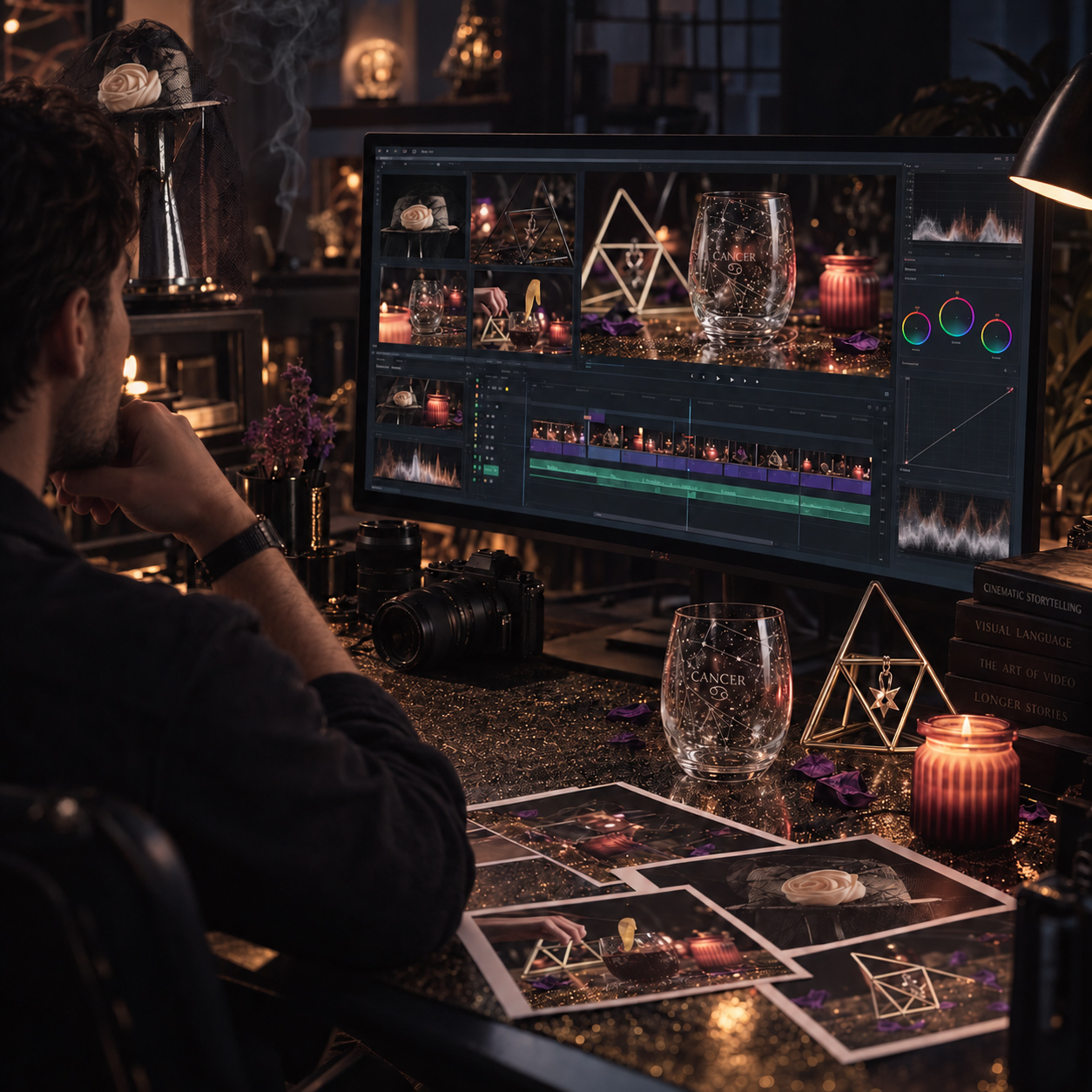
EDITORIAL CONTEXT · VIDEOGRAPHY ANALYSIS · MOTION DECISION-MAKING
Beyond The Shot — Understanding Why A Video Works.
A finished video may be experienced in seconds or minutes, but its effectiveness is built through a chain of decisions made before, during, and after production. Concept, camera movement, framing, performance, sound, timing, shot order, editing, color, graphics, and intended use determine not only how a film looks, but what the audience notices, understands, feels, and remembers.
The strongest moving-image work invites a deeper reading—revealing how motion directs attention, how sequence creates meaning, how pacing changes emotional response, how sound alters perception, and how individual shots become one coherent experience rather than a collection of visually attractive moments.
Videography captures movement. Critical understanding reveals the decisions that turn movement into meaning.
REAL PROJECT EVIDENCE · GREENLINE GOODS · ZODIAC COLLECTION
From Individual Frames To A Finished Motion Experience.
The final Greenline Goods film demonstrates how product detail, atmosphere, symbolism, movement, interaction, lighting, and editorial pacing can work together to give a relatively simple object a more distinctive emotional and commercial presence.
Rather than presenting the Cancer Zodiac Glass through a sequence of disconnected beauty shots, the production builds its character progressively—moving from visual atmosphere and symbolic context into product detail, interaction, liquid movement, and the finished experience. The video becomes the proof of the process described above: the value is not contained in one frame, but in the relationship between the frames.
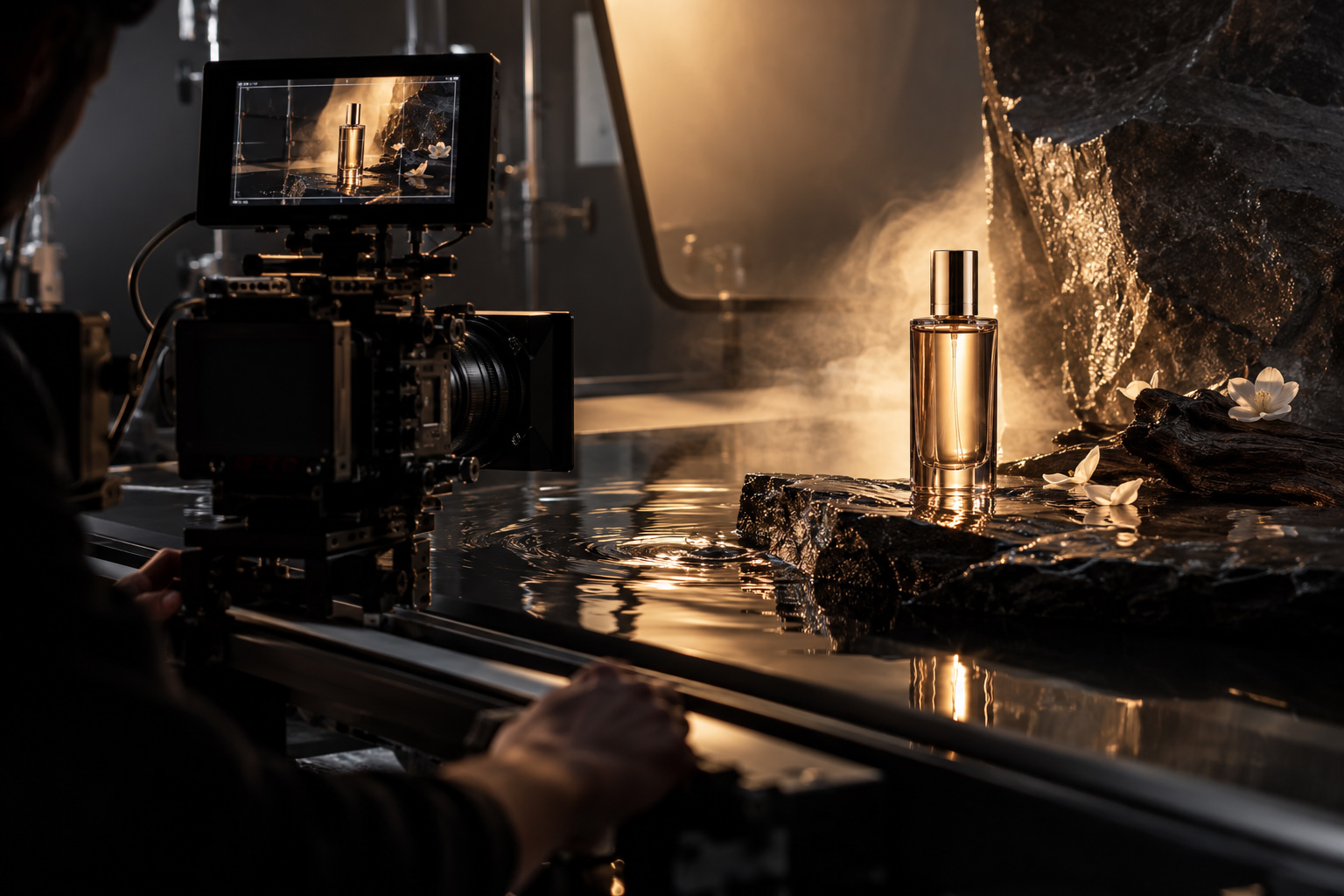
PRODUCT VIDEOGRAPHY · DEMONSTRATION · MOTION DETAIL
A Product Becomes More Persuasive When Motion Reveals What Still Images Cannot Fully Explain.
Product Videography becomes powerful when movement reveals information that a static image can only imply. A product can open, rotate, respond, transform, dispense, illuminate, flex, connect, interact with a hand, change material state, or demonstrate a sequence of use. Function, behavior, scale, tactility, and cause-and-effect become visible over time, allowing the audience to understand not only what the object looks like, but what it actually does.
That additional communication power demands tighter control, not less. Surface reflections, camera trajectory, macro focus, timing, product positioning, hand interaction, material behavior, lighting transitions, and motion speed all influence whether the viewer reads the product clearly or becomes distracted by the production around it. In premium product work, precision must remain almost invisible.
The strongest result balances attraction with explanation. A product film should create desire, but it should also reduce uncertainty and reveal value. Motion becomes commercially useful when it transforms visual appeal into understanding—helping audiences recognize features, experience quality, follow functionality, and connect the product’s physical behavior with the reason it deserves attention.
WHEN CAMERA MOTION, PRODUCT ACTION, DETAIL CONTROL, AND VISUAL TIMING ARE DEVELOPED WITH COMMERCIAL INTENT,
VIDEOGRAPHY TURNS PRODUCTS INTO CLEARER, STRONGER, AND MORE CONVINCING COMMUNICATION ASSETS—BUILT TO REVEAL FUNCTION, SUPPORT CONVERSION, AND INCREASE THE VALUE OF EVERY VISUAL INTERACTION.
PROFESSIONAL VIDEOGRAPHY SERVICES · FILM · MOTION · PEOPLE · PRODUCTS · PLACES · POST-PRODUCTION
Professional Videography Services Built Around What The Moving Image Needs To Communicate, Reveal, And Make People Experience
DIFFERENT STORIES REQUIRE DIFFERENT PRODUCTION LOGIC—BUT EVERY VIDEO ENGAGEMENT IS BUILT AROUND CREATIVE INTENT, NARRATIVE CLARITY, TECHNICAL CONTROL, AND REAL-WORLD USE.
Professional Videography is not a single production formula applied identically to every assignment. A product demonstration, commercial brand film, corporate story, hospitality experience, architectural sequence, live event, technical explainer, or editorial campaign may all use moving image—but the reason for movement, the role of sound, the production conditions, the narrative structure, and the way the audience experiences the final content can be fundamentally different.
NF Creative Studio approaches Videography as a complete moving-image communication system. Before deciding how something should be filmed, we define what the audience must understand, feel, remember, or act upon; where the content will be experienced; what production realities must be controlled; and how the footage may need to evolve through editing, sound, color, graphics, versioning, and multiple delivery formats.
THE SUBJECT, STORY, PLATFORM, AND SCALE MAY CHANGE. THE STANDARD OF CREATIVE DIRECTION, PRODUCTION CONTROL, NARRATIVE RESPONSIBILITY, AND PROFESSIONAL FINISHING DOES NOT.
01 — Commercial, Brand & Campaign Films
Commercial film carries more responsibility than attracting attention. It must translate brand character, positioning, campaign intention, audience psychology, visual identity, and commercial purpose into a sequence capable of creating recognition and influencing perception within a limited amount of time.
- Commercial & Promotional Films: Campaign-driven productions developed around brand positioning, audience response, narrative clarity, and a defined commercial objective rather than visual spectacle alone.
-
Brand Films & Visual Identity In Motion: Moving-image systems that translate brand character into cinematography, performance, pacing, sound, atmosphere, typography, and recurring motion language across brand touchpoints. -
Launch & Campaign Video: Hero films, launch sequences, campaign assets, and supporting cuts created to introduce products, services, destinations, initiatives, or new brand chapters with a coordinated visual direction. -
Advertising & Promotional Content: Professionally structured video for websites, digital campaigns, paid media, presentations, retail communication, and other approved promotional environments across key brand touchpoints. -
Multi-Asset Campaign Production: Productions planned to create master films, supporting sequences, shorter edits, campaign variations, and reusable motion material from one connected creative foundation.
02 — Product, E-Commerce & Demonstration Video
A product in motion can communicate information that one isolated image cannot. Use, sequence, transformation, scale, material behavior, interaction, and functional benefit can become visible over time—provided the production is structured around what the audience genuinely needs to understand.
- Product Demonstration Video: Controlled moving-image content that reveals function, interaction, operation, assembly, transformation, or physical behavior with clarity across different real-world commercial use cases.
-
Amazon & E-Commerce Video: Platform-aware product content developed around customer understanding, feature communication, conversion priorities, marketplace requirements, and practical product use. -
Premium Product Films: Cinematic product presentation using controlled lighting, camera movement, detail, material behavior, sound, and visual hierarchy to strengthen perceived quality and elevate commercial perception. -
Feature & Detail Sequences: Macro, close-range, material, mechanism, texture, and interaction footage designed to make important product differentiators visible and understandable across commercial viewing contexts. -
Product Launch Content Systems: Hero films, product sequences, short-form versions, demonstrations, e-commerce assets, and campaign adaptations developed from one coordinated production across commercial channels.
03 — Corporate, Leadership & Professional Communication
Professional organizations often need video to communicate something more difficult than a product: expertise, credibility, people, culture, process, leadership, responsibility, and institutional value. The strongest corporate work therefore feels human without losing authority and structured without becoming generic.
- Corporate & Company Films: Brand and organizational stories presenting people, capabilities, working environments, expertise, culture, and business value through professionally directed moving image.
-
Leadership, Founder & Executive Content: Directed video communication built around authority, credibility, personality, message discipline, and audience connection with an appropriate relationship between speaker and audience. -
Interviews & Expert Communication: Professionally structured interviews with controlled lighting, sound, framing, performance direction, editorial logic, and supporting visual material. -
Internal & Stakeholder Communication: Video for presentations, organizational communication, internal initiatives, recruitment, investor contexts, training, and other professional audiences. -
Workplace & Culture Storytelling: Documentary-informed content showing how people collaborate, make decisions, solve problems, and contribute to the organization behind the brand across everyday professional environments.
04 — Architecture, Hospitality, Property & Destination Films
Space is experienced through sequence. Moving image can communicate arrival, circulation, scale, changing light, transitions, atmosphere, human interaction, service, landscape, and the relationship between separate environments in ways that no single static viewpoint can reproduce.
- Architecture & Interior Films: Cinematic spatial storytelling structured around design intent, proportion, circulation, materials, light, atmosphere, and lived experience across complex spatial and hospitality contexts.
-
Property & Real Estate Video: Professional films for residential, commercial, hospitality, and development projects designed to communicate spatial value rather than simply document rooms through movement, scale, and experience. -
Hotel, Resort & Hospitality Films: Experience-led content connecting architecture, service, amenities, people, atmosphere, destination, and guest journey into one cohesive story. -
Restaurant, Venue & Destination Content: Moving-image communication designed to convey not only what a place looks like, but how it feels to arrive, move through it, interact, and stay. -
Aerial & Location Integration: Where appropriate, approved drone and elevated perspectives can be integrated with ground-based cinematography to communicate context, scale, geography, access, and environmental relationships.
05 — Editorial, Fashion, Beauty & Lifestyle Motion
Some productions are not built primarily around explanation. They communicate through persona, atmosphere, styling, gesture, movement, texture, rhythm, cultural context, and visual attitude. In these environments, creative direction becomes inseparable from the subject itself and must be shaped with greater visual sensitivity throughout.
- Editorial Video: Art-directed moving-image content developed around visual character, narrative mood, subject presence, cultural context, and intentional cinematic language across carefully defined editorial and brand environments.
-
Fashion & Beauty Films: Controlled productions combining styling, performance, fabric or hair movement, lighting, beauty detail, framing, and pacing into a coherent visual identity. -
Lifestyle Brand Content: Context-driven films that place products, people, or services inside believable environments while protecting aspiration, relevance, and brand atmosphere across authentic lifestyle and commercial contexts. -
Campaign Talent Direction: Professional guidance of movement, expression, interaction, eye line, timing, and performance so talent supports the communication intention rather than merely appearing on camera with clear purpose. -
Editorial Motion Assets: Hero sequences, atmospheric footage, cutdowns, social adaptations, website motion, and supporting visual material developed from a connected editorial production across multiple branded communication channels.
06 — Events, Documentary, Sports, Music & Live Experience
Live environments create a different production responsibility because important moments cannot simply be repeated until the shot is perfect. Coverage must anticipate action, protect sound and visual continuity, respond intelligently to changing conditions, and preserve the energy that made the event worth recording.
- Event & Conference Video: Structured coverage of conferences, launches, presentations, private events, corporate gatherings, and professional programs with attention to people, atmosphere, key moments, and communication priorities.
-
Documentary & Real-World Storytelling: Observational production combining real environments, interviews, contextual footage, and editorial structure to communicate authentic stories with clarity. -
Music & Performance Video: Moving-image work for musicians, performers, live sessions, creative productions, and performance-based content where sound, rhythm, atmosphere, visual expression, and performance energy must operate together. -
Sports & Performance Content: Dynamic production built around movement, effort, timing, speed, precision, training, competition, and the physical character of performance across demanding real-world competitive environments. -
Live Experience & Brand Activation Films: Coverage designed to preserve not only what occurred, but how the environment felt, how audiences responded, and how the experience represented the brand.
07 — Motion Graphics, Animation, Explainers & Technical Communication
Not every story is best explained through conventional filmed footage. Products, systems, processes, data, technology, industrial operations, and abstract ideas may require graphics, animation, demonstration, structured narration, or a hybrid visual language to become understandable.
- Explainer & Educational Video: Structured visual communication that translates processes, products, services, systems, or complex information into understandable sequences without oversimplifying the subject.
-
Motion Graphics & Animated Communication: Typography, diagrams, interface motion, data visualization, graphic transitions, titles, and animated brand elements developed to support meaning, clarify information, and strengthen communication rather than decoration. -
Industrial & Manufacturing Films: Professional documentation and storytelling around machinery, production environments, processes, engineering, quality control, specialist teams, and operational capability. -
Technology & Technical Product Video: Moving-image communication for advanced products, systems, platforms, equipment, or specialist services where credibility, technical clarity, operational logic, and informed understanding directly influence audience confidence. -
Training, Process & Instructional Content: Professionally structured video designed to explain procedures, workflows, demonstrations, maintenance, onboarding, internal knowledge, or specialist operations clearly and consistently.
08 — Production Support, Post-Production, Versioning & Delivery
Professional Videography does not stop when filming ends. The footage still has to become a controlled communication asset through editing, sound, color, graphics, review, versioning, technical preparation, and delivery logic appropriate to every approved use across multiple platforms and communication environments.
- Creative Direction & Pre-Production: Concept development, treatments, scripts, storyboards, shot planning, references, production structure, scheduling, and technical preparation developed before filming where required.
-
Editing & Narrative Construction: Footage selection, sequence design, pacing, rhythm, emphasis, transitions, and narrative organization used to determine what the audience sees, when they see it, and why it matters. -
Color, Sound & Finishing: Color grading, sound design, audio cleanup and balancing, visual refinement, titles, captions, graphics, and final finishing developed as part of one professional standard across every approved output. -
Platform Adaptation & Versioning: Horizontal, vertical, square, short-form, captioned, presentation, website, e-commerce, social, and campaign-specific versions created through intentional reframing and editorial adaptation—not careless cropping. -
Delivery, Archiving & Long-Term Motion Assets: Final exports, master files, approved versions, file organization, reusable footage structures, and future content extensions prepared according to the agreed production scope and intended use.
FROM COMMERCIAL FILMS AND PRODUCT STORIES TO PEOPLE, SPACES, LIVE EXPERIENCES, TECHNICAL COMMUNICATION, AND MULTI-PLATFORM CONTENT—OUR VIDEOGRAPHY SERVICES ARE BUILT TO CREATE MOTION THAT IS PURPOSEFUL, NARRATIVELY CONTROLLED, TECHNICALLY RESOLVED, AND READY TO PERFORM WHERE IT MATTERS.
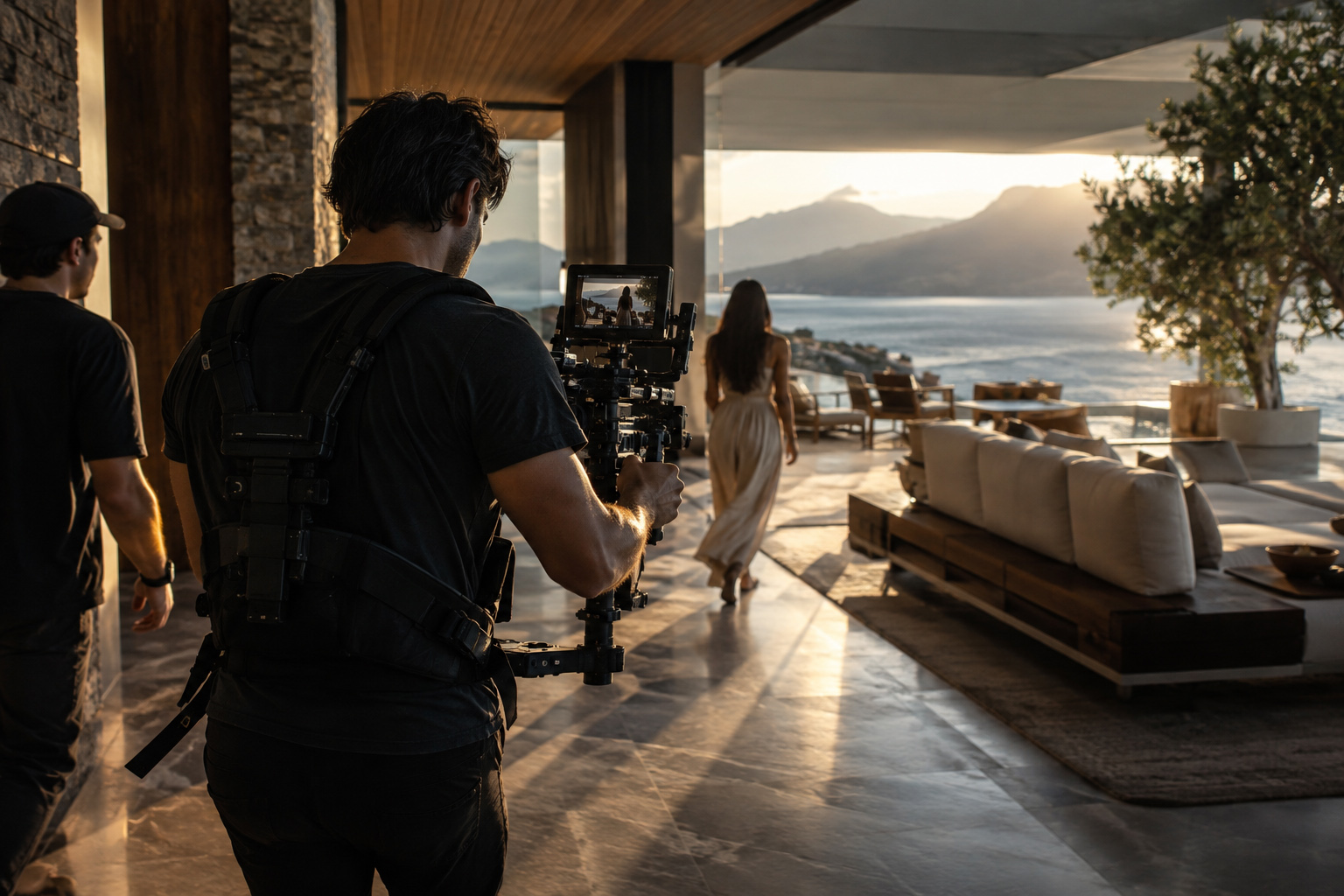
SPATIAL EXPERIENCE · ENVIRONMENTAL STORYTELLING · CINEMATIC MOVEMENT
A Space Is Not Only Seen Through Video—It Is Experienced Through Movement, Sequence, And Atmosphere.
A space is never experienced as one fixed composition. People approach it, enter it, turn through it, discover relationships between rooms, encounter changes in scale, light, material, sound, and view, and gradually understand how the environment has been organized. Videography can reproduce that progression in a way that allows architecture and atmosphere to unfold through time rather than remain frozen in one ideal viewpoint.
This becomes particularly valuable across architecture, hospitality, property, retail, workplace, and branded environments. Camera movement can reveal arrival sequences, circulation, transitions between intimacy and openness, the interaction of people with scale, and the changing character of natural or artificial light. The environment begins to communicate not only appearance, but how it behaves when occupied and experienced.
A strong spatial film therefore does more than tour a building. It constructs a controlled experience of place. By connecting movement, pace, human scale, environmental detail, and atmosphere, Videography can help an audience understand what it may actually feel like to arrive, move, stay, discover, and belong within that space.
WHEN MOVEMENT, SPATIAL SEQUENCE, SCALE, AND ATMOSPHERE ARE DEVELOPED AS ONE CONNECTED VISUAL EXPERIENCE,
VIDEOGRAPHY ALLOWS SPACE TO COMMUNICATE MORE FULLY—TURNING ENVIRONMENTS INTO EXPERIENCES THAT CAN BE UNDERSTOOD, FELT, AND REMEMBERED FAR BEYOND A SINGLE STATIC VIEW.
SELECTED VIDEOGRAPHY PROJECTS · REAL PRODUCTIONS · DISTINCT MOTION CONTEXTS
Selected Videography Work—Different Stories, Different Environments.
One Standard Of Motion Excellence.
PRODUCTS, PEOPLE, BRANDS, PLACES, EXPERIENCES, AND PROFESSIONAL STORIES ALL REQUIRE DIFFERENT VIDEO DECISIONS—BUT THE SAME STANDARD OF CREATIVE DIRECTION, PRODUCTION CONTROL, NARRATIVE CLARITY, AND PROFESSIONAL FINISHING.
A STRONG VIDEO PROJECT BEGINS WITH WHAT THE AUDIENCE MUST UNDERSTAND, FEEL, OR REMEMBER—NOT WITH A PREDEFINED CINEMATIC STYLE.
These selected projects show how professional Videography adapts to fundamentally different subjects, audiences, production conditions, communication objectives, and viewing environments. A product film may depend on controlled detail, material behavior, timing, demonstration, and precise visual hierarchy. A brand or human-centered story may require performance, atmosphere, emotion, credibility, and a completely different relationship between camera, sound, movement, and subject.
The motion language therefore changes with the assignment. Framing, camera movement, lens choice, lighting, performance direction, sound capture, pacing, editing structure, color, graphics, and final delivery are shaped around what the film must reveal, how the story should unfold through time, where the content will be experienced, and what the audience needs to understand without unnecessary visual noise. The strongest productions do not force unrelated stories into the same cinematic treatment simply to create a recognizable house style.
Across those differences, the professional responsibility remains consistent: to create moving-image work that is not only visually compelling, but credible, purposeful, technically controlled, narratively coherent, and commercially useful. Every selected project receives the production logic, storytelling structure, visual rhythm, technical preparation, and finishing appropriate to its real communication role—whether the final result must explain a product, establish trust, create desire, communicate expertise, preserve an experience, or carry a brand across multiple screens and formats.
DIFFERENT STORIES REQUIRE DIFFERENT MOTION RESPONSES.
THE STANDARD OF CREATIVE DIRECTION, CINEMATIC INTENT, TECHNICAL PRECISION, NARRATIVE CONTROL, AND PROFESSIONAL EXECUTION REMAINS CONSISTENT.
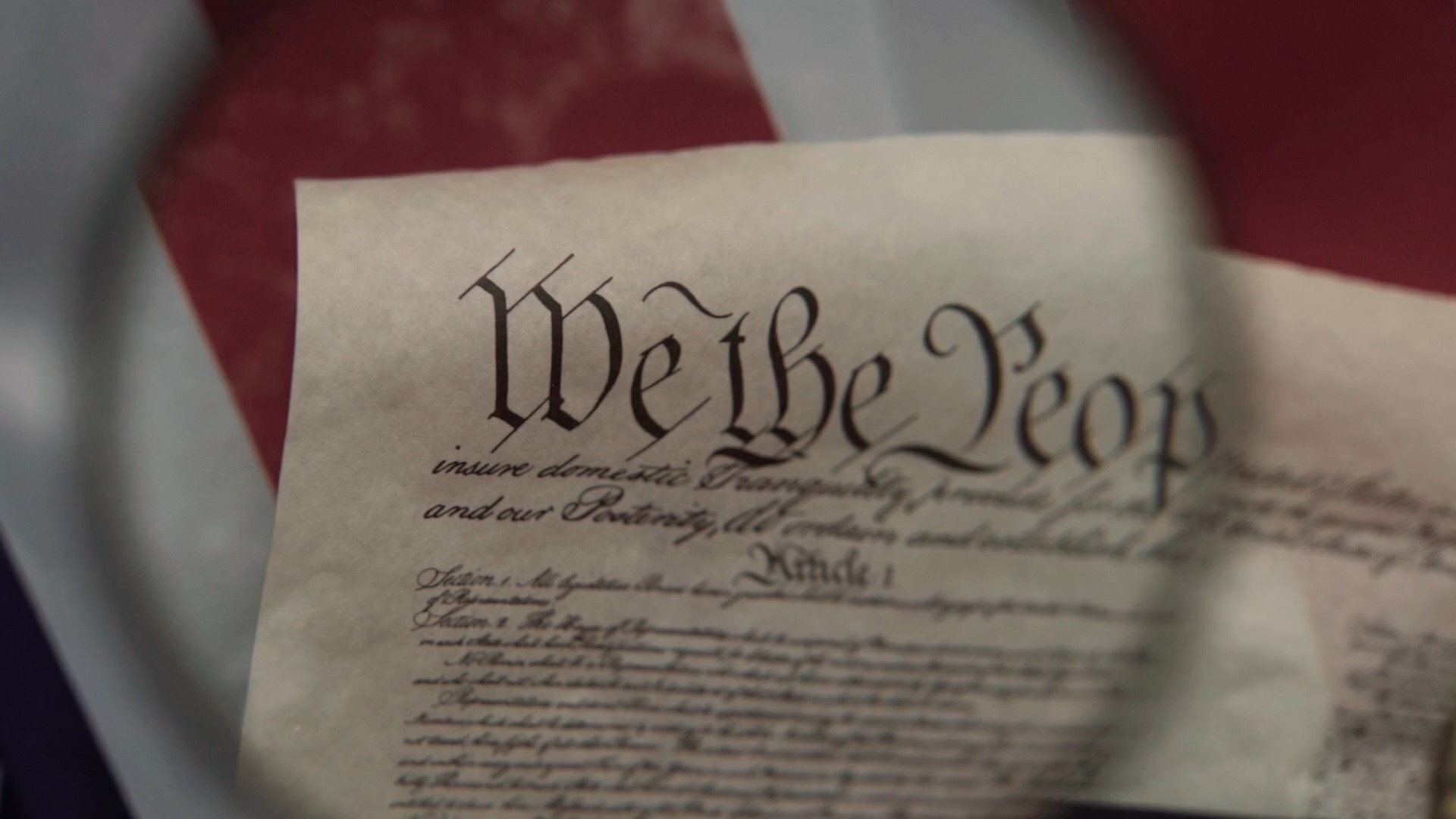
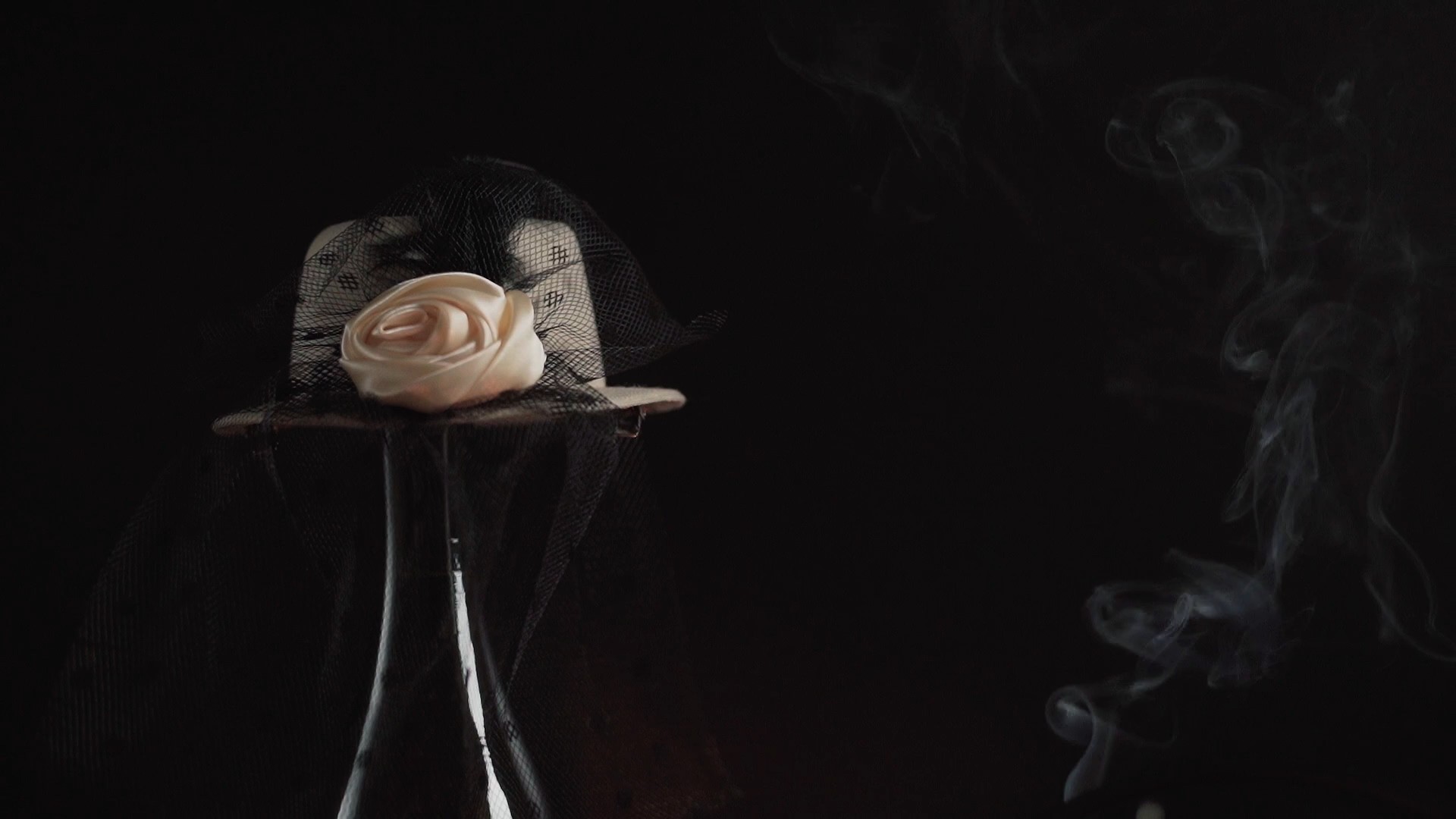
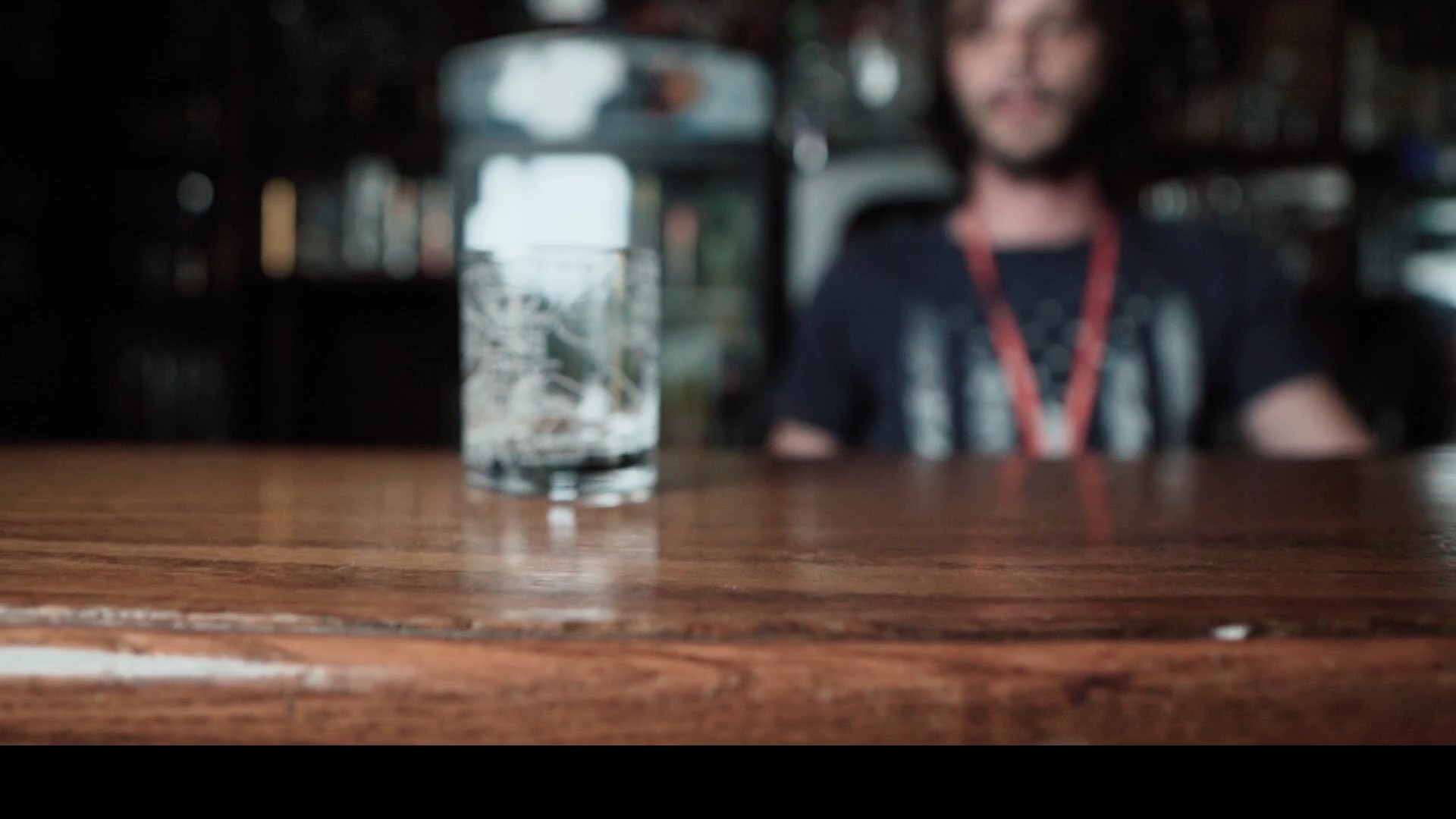



PURPOSE BEFORE MOTION · STORY BEFORE SPECTACLE · EVERY SECOND MUST HAVE A ROLE
Our Videography Philosophy
“The Strongest Video Does More Than Hold Attention. It Controls What The Audience Sees, When They See It, What They Feel, And Why The Story Remains With Them After The Film Ends.”
At NF Creative Studio, we approach professional Videography as communication unfolding through time—not simply a sequence of attractive moving images. Every project begins by understanding what the film must communicate, who needs to experience it, what deserves emphasis, how the audience should move through the story, and what should remain after the final frame disappears.
We connect creative direction, cinematography, camera movement, lighting, performance, sound, composition, pacing, editing, color, graphics, and platform behavior into one coherent motion language. None of those decisions exists independently. A movement may reveal information. A pause may create emphasis. Sound may establish credibility before the image explains anything. An edit may completely change how a moment is understood. Videography becomes powerful when those decisions reinforce one another rather than simply coexist.
Our role is not to impose one cinematic style on every production. A product demonstration may require clarity, control, and precise sequencing. A founder story may depend on authenticity, presence, and restraint. Hospitality may need atmosphere and sensory movement. Architecture may demand spatial progression and scale. Fashion can use rhythm, texture, and visual tension. Technical or industrial work may require complexity to become understandable. The visual language changes because the communication responsibility changes.
From a focused commercial film to a multi-format campaign, branded documentary, product production, hospitality story, architectural film, corporate communication, or long-term motion content system, the scale may change—but the standard of intention, narrative control, technical discipline, and professional finishing does not.
A VIDEO SHOULD NEVER MOVE SIMPLY BECAUSE MOTION IS AVAILABLE.
EVERY CAMERA MOVE, CUT, SOUND, PERFORMANCE, TRANSITION, AND SECOND OF SCREEN TIME SHOULD HELP THE AUDIENCE UNDERSTAND MORE, FEEL MORE, REMEMBER MORE, OR MOVE CLOSER TO THE ACTION THE FILM WAS CREATED TO SUPPORT.
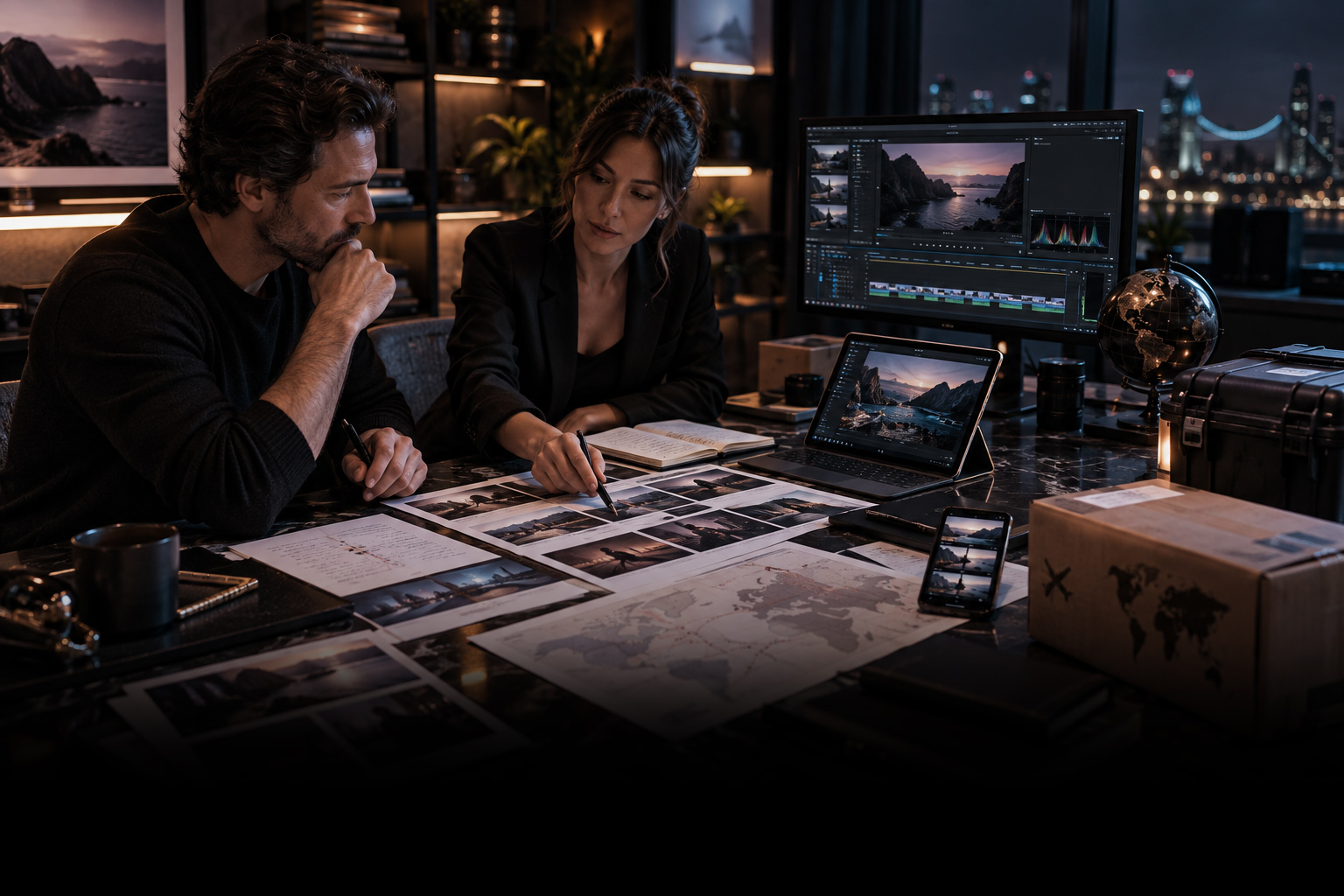
VIDEOGRAPHY SERVICES · CREATIVE DIRECTION · PRE-PRODUCTION · PRODUCTION · POST-PRODUCTION · DELIVERY
Professional Videography Built Around Clear Intent, Controlled Production, And Motion Content Ready For Real-World Use.
From First Brief To Final Delivery, Every Videography Engagement Is Structured Around Purpose, Narrative, Production Conditions, Platform Requirements, Usage Rights, And The Level Of Support The Project Actually Needs.
A professional Videography project involves far more than selecting a filming date and placing a camera in front of a subject. Depending on the assignment, the work may include creative direction, treatment development, scripting, storyboard and shot planning, location preparation, talent or product coordination, cinematography, lighting, sound capture, production management, editing, color grading, sound design, motion graphics, versioning, and final delivery across multiple formats and platforms.
NF Creative Studio structures each engagement around what the moving image genuinely needs to achieve, rather than forcing every project into the same production model. A focused interview, commercial product film, corporate story, hospitality campaign, architectural production, fashion film, technical explainer, or multi-location brand project may require completely different combinations of preparation, specialist involvement, equipment, logistics, post-production depth, usage rights, and final asset development.
The questions below clarify the practical decisions that matter before production begins—what we can create, how a production is prepared, where filming can take place, how direction and post-production are handled, what happens to footage and source files, how commercial usage and platform delivery work, how international products can be shipped for production, and how timelines, revisions, responsibilities, and collaboration are structured. The purpose is simple: remove avoidable uncertainty early so the creative process can remain focused once production starts.
THE CAMERA RECORDS THE MATERIAL. A PROFESSIONAL VIDEO PRODUCTION BUILDS EVERYTHING AROUND IT.
THE REAL STANDARD IS HOW CLEARLY INTENTION, PERFORMANCE, MOVEMENT, SOUND, EDITING, FINISHING, RIGHTS, AND DELIVERY ARE CONNECTED FROM THE FIRST PRODUCTION DECISION TO THE FINAL MOTION ASSET.

Everything You Need To Know Before We Start Building The Film Together.
Clear answers about creative direction, pre-production, filming, locations, post-production, revisions, usage rights, source material, platform delivery, international logistics, timelines, and collaboration before the production begins.
What Makes NF Creative Studio Different From A Standard Videographer Or Video Production Company? Most Asked
NF Creative Studio approaches Videography as a complete moving-image communication discipline, not simply as the act of recording footage. The work can begin with strategic context, creative direction, treatment development, narrative structure, scripting, storyboard logic, production planning, cinematography, sound, performance direction, and technical preparation before the first frame is captured.
Production and post-production are treated as parts of the same system. Camera movement, lighting, framing, audio, pacing, editing, color grading, graphics, captions, aspect ratios, and final delivery are developed around what the film needs to communicate, where it must perform, and what the audience should understand or feel.
This allows a project to remain focused when only one film is required, while also supporting broader systems containing master films, campaign variations, product sequences, platform-specific cutdowns, social assets, website motion, event content, and reusable brand footage.
The objective is not to make every project look cinematic in the same way. It is to create the right motion language for the subject, audience, brand, platform, and commercial purpose of the project.
What Types Of Video Content Do You Create? Most Asked
Our Videography work can cover a wide range of commercial, corporate, editorial, spatial, product, and brand communication requirements.
Depending on the project, this may include commercial and promotional films, product and e-commerce videos, brand campaigns, corporate and leadership stories, hospitality and destination content, architectural and property films, fashion and beauty motion, food and beverage content, sports and performance films, event and cultural coverage, interviews, professional explainers, technology and industrial communication, website motion, and short-form social content.
We do not force these different applications into one production formula. A product demonstration may depend on controlled detail, function, and macro movement, while a hospitality film may depend on atmosphere, service, spatial progression, and human experience. A technical or industrial film may require a completely different balance of explanation, credibility, process visibility, and specialist input.
The production structure is therefore built around what the subject needs to reveal and what the finished content must accomplish.
Do You Handle The Full Video Production Process From Idea To Final Delivery?Most Asked
Yes, when a complete production scope is required.
A full engagement can begin with project discovery, communication objectives, audience definition, creative direction, treatment development, scripting, storyboard planning, shot lists, locations, talent or contributors, production logistics, cinematography, lighting, sound capture, and on-set direction.
After filming, the project can continue through footage review, editing, narrative construction, pacing, sound design, audio refinement, color correction and grading, visual cleanup, motion graphics, titles, subtitles, captions, versioning, and platform-specific delivery.
Not every project requires every stage. Some clients may already have a developed concept, internal script, location, production team, or existing footage and require only selected specialist support.
The scope is defined around what is genuinely needed to move the project from its current state to a professionally resolved final result, rather than adding unnecessary production layers simply because they are available.
How Do You Prepare A Videography Project Before Filming Begins?Most Asked
Professional Videography begins before the production day.
Pre-production establishes what the film is for, who it needs to reach, what it must communicate, where it will be shown, what material must be captured, and which creative and technical conditions can influence the result.
Depending on complexity, preparation may include treatment development, reference research, scripting, storyboard sequences, shot lists, camera and lens logic, movement planning, lighting approach, sound requirements, location review, product preparation, talent coordination, wardrobe or styling, props, production scheduling, permissions, and delivery-format planning.
This stage also identifies dependencies that can become expensive if discovered too late: restricted locations, limited talent availability, products arriving late, platform-specific framing requirements, difficult audio environments, weather exposure, technical specifications, or the need for several aspect ratios from the same shoot.
Strong pre-production does not remove spontaneity. It creates enough structure for good decisions to happen deliberately when production begins.
Can You Provide Creative Direction, Styling, Makeup, Props, Or Additional Production Support?Most Asked
Yes, where the project requires a broader production system.
Creative development may include concept direction, treatments, narrative frameworks, scripts, storyboard sequences, shot development, visual references, performance direction, interview structure, and the relationship between image, movement, sound, and message.
Production support can also extend to talent coordination, styling, product staging, props, makeup or grooming, locations, specialist collaborators, lighting requirements, production design, sound support, and other resources appropriate to the approved scope.
These elements are not added automatically to every production. Their value depends on the subject and the communication objective. A controlled product film, executive interview, fashion campaign, architectural walkthrough, and documentary-style corporate story require very different levels of direction and production infrastructure.
Where third-party specialists, locations, talent, licenses, equipment, or suppliers are required, their availability, responsibilities, approvals, and additional costs are defined separately and transparently.
Can You Organize Video Productions On Location Or Outside Serbia?
Yes.
Videography does not have to take place in our immediate local environment. Production can be organized at client locations, offices, factories, hospitality properties, architectural sites, retail environments, events, outdoor locations, specialist facilities, or other approved production environments, including projects outside Serbia.
The appropriate structure depends on the location, scale, travel requirements, crew requirements, equipment, schedule, permissions, insurance, local production conditions, and whether specialist support needs to be sourced locally.
For international productions, some responsibilities may remain with the client or a local production partner—for example venue access, permits, location releases, local regulations, specialist safety requirements, talent releases, or production permissions.
Before confirming production outside Serbia, we define what travels, what can be sourced locally, who is responsible for each dependency, and how those decisions affect the schedule and investment.
Do You Offer Drone Filming As Part Of Your Videography Services?
Yes, where aerial footage has a genuine role in the project.
Drone filming can support architecture, property, hospitality, destinations, outdoor environments, events, industrial locations, construction, landscape, spatial storytelling, and broader establishing sequences where altitude and movement provide information that ground-level cinematography cannot.
Aerial footage is not added simply because it looks impressive. It should contribute to scale, orientation, context, movement, atmosphere, or narrative progression.
Drone operations are also dependent on location conditions, weather, airspace restrictions, safety requirements, permissions, local regulations, and the technical feasibility of the requested flight.
Where Drone Filming forms a meaningful specialist component rather than a small supporting sequence, it can also be structured through our dedicated Drone Filming service.
Do You Provide Professional Editing, Color Grading, Sound Design, Motion Graphics, And Post-Production?Most Asked
Yes. Post-production is treated as a core creative stage rather than a simple technical step after filming.
Editing determines selection, sequence, rhythm, pacing, emphasis, narrative progression, and the relationship between individual moments. The same captured footage can communicate very differently depending on how time and attention are structured.
Finishing can then include color correction, color grading, audio cleanup, sound design, music integration, mixing, visual cleanup, motion graphics, titles, subtitles, captions, compositing, graphics integration, format adaptation, and final quality control where included in scope.
The exact post-production depth depends on the project. A focused interview edit and a multi-format commercial campaign do not require the same editorial, sonic, graphic, or finishing complexity.
The objective is for editing, image, sound, graphics, and final delivery to feel like one resolved film rather than separate layers assembled at the end.
How Are Revisions And Additional Editing Requests Handled?
Revision rounds are defined according to the selected package or custom project scope.
A revision round is intended to refine the approved direction through clear, consolidated feedback on areas such as shot selection, pacing, sequence, timing, graphics, captions, color, audio balance, or other agreed elements.
Revisions should not be confused with unlimited reconstruction of the project. A request to replace the approved concept, create a substantially different narrative, introduce new deliverables, add footage that was not part of the production, or develop additional versions may constitute additional work.
For projects involving several stakeholders, we strongly recommend one consolidated feedback process. Conflicting comments received independently can create unnecessary editing cycles and compromise decision clarity.
If additional editing, versions, cutdowns, graphics, language adaptations, or other requirements emerge, they can usually be incorporated through an agreed extension of scope before the additional work begins.
Do You Optimize And Adapt Video For Websites, Social Media, E-Commerce, And Other Digital Platforms?Most Asked
Yes.
Modern Videography rarely ends with one master film. The same production may need to function across websites, landing pages, social platforms, Amazon and e-commerce environments, presentations, campaign media, event screens, digital advertising, internal communication, and other approved channels.
Professional adaptation is more than resizing a 16:9 master or cropping it into a vertical frame. Different platforms may require changes to composition, pacing, duration, caption placement, information hierarchy, safe zones, opening emphasis, sound strategy, or the point at which key information appears.
Where planned in advance, production itself can also be structured to protect flexibility for horizontal, vertical, square, short-form, cutdown, captioned, silent-autoplay, and other format requirements.
The objective is to preserve one creative direction while allowing each version to behave appropriately in the environment where the audience will actually experience it.
Are The Final Videos Delivered With Commercial Usage Rights?Most Asked
Usage rights are defined by the applicable proposal, package, license, or project agreement and depend on the material involved.
For commissioned original video work included in the final approved scope, the client receives the rights specified for the agreed intended use once the relevant payment and delivery conditions have been fulfilled.
However, not every component of a production is automatically owned outright by the client. Music, stock footage, fonts, voice-over, talent, locations, templates, plugins, licensed graphics, archival material, or other third-party assets may remain subject to separate licenses, territorial limits, platform restrictions, durations, or other usage conditions.
Similarly, final delivery rights do not automatically include unused material, rejected concepts, internal production methods, source project files, or every working asset created during production.
Where broader advertising, international, broadcast, paid-media, perpetual, or other specific rights are required, these should be identified before production or licensing decisions are finalized.
Do You Deliver RAW Footage, Original Camera Files, Or Editable Project Files?
RAW or original camera footage and editable project files are not automatically included simply because a final video has been commissioned.
Standard delivery is based on the finished assets and formats defined in the approved scope.
Original footage can represent a significantly larger technical and creative asset containing multiple takes, test material, incomplete sequences, audio files, production references, and content that was never intended for public release. Editable project files may also depend on licensed software, plugins, fonts, music, graphics, linked media, or third-party resources that cannot simply be transferred as part of a normal final delivery.
Where clients require original footage, organized archives, project files, or a structured handover for future internal or third-party editing, this can be discussed in advance and included where technically, contractually, and commercially appropriate.
The important distinction is simple: a finished film, production archive, and editable post-production project are three different deliverables.
How Are Final Video Files Prepared And Delivered?
Final delivery is structured around the approved use of the content.
Depending on scope, this may include master files, web-optimized versions, social formats, vertical and horizontal exports, presentation-ready files, captioned versions, subtitle files, compressed review copies, platform-specific cutdowns, thumbnails, or other agreed derivatives.
Resolution, frame rate, codec, aspect ratio, bitrate, audio configuration, color space, duration, captions, and file organization may differ according to the intended platform or technical requirement.
Where a platform, broadcaster, marketplace, developer, media buyer, event system, or other third party has mandatory specifications, those requirements should ideally be supplied before final export.
Professional delivery is not simply pressing Export. It means ensuring that the final asset is technically appropriate for the environment in which it is expected to perform.
How Long Does A Videography Project Take From Brief To Final Delivery?Most Asked
There is no single production timeline because duration of the final film is not a reliable measure of production complexity.
A highly controlled 30-second commercial may require more planning, production coordination, shooting time, specialist involvement, and post-production than a considerably longer but structurally simpler piece of content.
Timelines can be influenced by concept development, script approvals, locations, talent, products, travel, weather, permits, production days, footage volume, animation or graphics requirements, sound, color grading, stakeholder review, revision rounds, language versions, platform adaptations, and final approval.
For this reason, timing is defined against the actual production structure rather than against video duration alone.
Where a launch date, campaign deadline, event, publication date, or other fixed milestone exists, it should be identified at the beginning so that production, approvals, contingency time, and final delivery can be planned realistically around it.
How Is Videography Pricing Determined, And What Should I Prepare Before Requesting A Quote?Most Asked
Videography pricing is determined by the actual production responsibility behind the result—not simply by the number of minutes in the final film.
Investment can be affected by creative development, pre-production depth, shooting days, locations, travel, crew, equipment, lighting, sound, talent, styling, props, production design, permits, footage volume, editing complexity, color grading, sound design, graphics, animation, music or licensing, revision structure, number of final versions, aspect ratios, languages, and delivery requirements.
Before requesting a quotation, it is helpful to provide what is already known: the project objective, subject or product, intended audience, desired content, approximate locations, platforms, deadlines, existing brand materials, references, products or participants involved, and any known technical requirements.
You do not need to arrive with every answer.
A strong brief helps us identify what the production genuinely requires, what can remain simple, and where additional production depth will materially improve the outcome.
Can Products Be Shipped To Serbia For Videography And Content Production?Most Asked
Yes.
Clients outside Serbia may send suitable physical products to our studio or another approved production location for professional Videography, product demonstrations, commercial films, e-commerce content, campaign production, detail sequences, packaging presentation, Photography, and broader multi-format content development.
Depending on the project, this may include packaged consumer goods, cosmetics, beauty products, fashion and accessories, jewelry, electronics, tools, technical components, industrial products, sports equipment, household products, food or beverage packaging, promotional materials, prototypes, product samples, retail items, and other goods suitable for lawful international transport and production use.
Before shipment, we recommend confirming the product type, quantity, declared value, dimensions, country of origin, shipping method, intended production use, and whether the products must be returned, retained, forwarded, or otherwise handled after production.
Certain categories may require additional carrier, customs, safety, import, documentation, or specialist procedures. Where goods enter Serbia temporarily and are intended to leave again after production, an appropriate temporary-import procedure or other relevant customs arrangement may need to be considered.
Products should therefore never be dispatched internationally without first confirming the production and shipping plan with us.
Who Is Responsible For Customs Duties, Import VAT, Brokerage, Shipping, And Other International Charges?Most Asked
Unless explicitly included in a written project agreement, international shipping, customs duties, import VAT, brokerage fees, carrier charges, temporary-import costs, insurance, storage, return shipping, and other import or export expenses are not automatically included in the Videography production fee.
The sender or client is normally responsible for understanding and arranging the appropriate shipping and customs structure for the goods, including the declared value, classification, origin, intended use, and any charges or guarantees that may apply.
Where useful, we can coordinate information with the client, courier, freight forwarder, customs broker, or other relevant party so that the production requirements are understood. However, our creative production role should not be interpreted as automatically making the studio the importer of record, customs representative, tax adviser, or responsible party for obligations that were not expressly agreed.
For higher-value, unusual, regulated, time-sensitive, or temporary shipments, the customs and logistics structure should be confirmed before the goods leave the country of origin.
This protects both the production schedule and the products themselves.
What Documentation Should Accompany Products Sent From Abroad For Videography?
International production shipments should be supported by documentation that accurately describes what is being sent, its value, origin, ownership where relevant, and the real purpose of the shipment.
Depending on the goods, carrier, origin, value, and applicable customs procedure, documentation may include a commercial or pro forma invoice, packing list, detailed product descriptions, quantities, declared values, country of origin, tariff or classification information, sender and recipient details, serial numbers, temporary-import documentation, permits, certificates, insurance information, or other supporting documents.
For products intended only for a defined production purpose before being re-exported, additional temporary-import or return documentation may be relevant.
Products should never be intentionally misdescribed or artificially undervalued simply to reduce customs costs. Documentation should correspond to the real goods, real value, and real intended production use.
Because requirements vary between shipments, clients should confirm the necessary documentation with their courier, freight forwarder, customs broker, or competent customs authority before dispatch.
What Happens To Products After The Videography Or Content Production Is Complete?
What happens after production should be agreed before the products are shipped whenever possible.
Depending on the project, products may be returned to the client, shipped to another approved destination, retained temporarily for additional Photography or Videography, transferred into another production phase, collected through an arranged carrier, or handled according to another written instruction.
Where products are being returned internationally, the original customs or temporary-import structure may affect the documentation required for re-export. High-value, serialized, fragile, insured, regulated, perishable, or specialist items may also require particular packing, carrier, documentation, or handling arrangements.
The studio should not be expected to dispose of, permanently store, resell, transfer, or redirect client goods without clear authorization.
For valuable products, we strongly recommend defining return instructions, insurance expectations, packaging requirements, contact details, shipping account information, and the expected collection or dispatch window before production begins.
That way, the logistics after the final shot are as controlled as the production before it.
Are International Shipping And Customs Delays Included In The Videography Production Schedule?Most Asked
No.
International transport and customs clearance are controlled by independent carriers, brokers, customs authorities, and other external parties and therefore cannot be guaranteed within the studio’s production timetable.
The production schedule begins when the required products, materials, documentation, approvals, and other essential inputs are physically and legally available for use.
Delays caused by shipping, customs inspection, missing or inaccurate documentation, import restrictions, unpaid duties or taxes, carrier processing, temporary-import issues, damaged goods, lost shipments, or other circumstances outside the studio’s control may require production dates and final delivery milestones to be adjusted.
For campaigns, launches, seasonal content, events, marketplace deadlines, or other time-sensitive productions, products should therefore arrive with meaningful contingency time rather than immediately before the planned production date.
A technically available shooting date does not protect a campaign if the hero product is still sitting in customs.
Professional international production begins before the camera and before the shipment. Clear logistics, accurate documentation, realistic contingency time, and defined responsibility protect the creative process long before the first frame is recorded.
PROFESSIONAL VIDEOGRAPHY BECOMES EASIER TO PLAN, PRODUCE, APPROVE, DELIVER, AND EXTEND WHEN CREATIVE DIRECTION, PRODUCTION RESPONSIBILITIES, TECHNICAL REQUIREMENTS, USAGE RIGHTS, INTERNATIONAL LOGISTICS, AND FINAL DELIVERY EXPECTATIONS ARE CLEAR BEFORE THE CAMERA STARTS ROLLING.
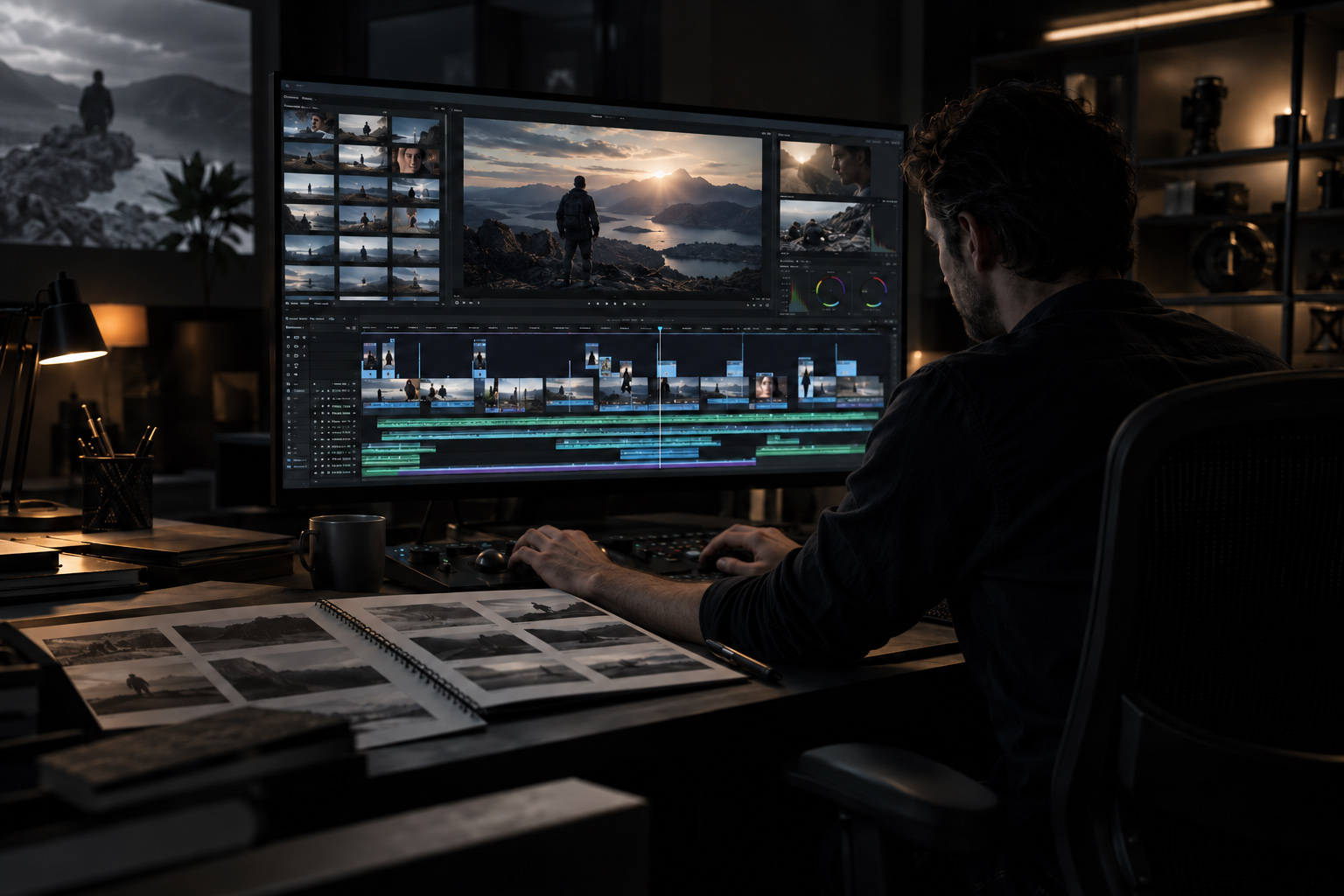
EDITORIAL STRUCTURE · SEQUENCE DESIGN · NARRATIVE CONSTRUCTION
Filming Creates Material. Editing Creates The Experience The Audience Will Actually Receive.
Production captures possibilities. Editing decides which of those possibilities will become the film. Once the shoot is complete, raw footage contains far more than the audience will ever see: alternate performances, repeated actions, transitional moments, details, pauses, reactions, environmental material, and visual information that may support several different narrative directions. The edit is where that abundance is converted into hierarchy.
Selection is only the beginning. Sequence, duration, rhythm, contrast, repetition, silence, transition, reaction, visual continuity, sound relationships, and the precise moment of a cut all affect how meaning is constructed. Moving a single shot earlier, allowing another to remain longer, or removing an attractive frame entirely can materially change how the audience understands the story.
This is why professional editing is closer to interpretation than assembly. The editor is not simply connecting recorded pieces; the editor is designing the audience’s experience of time. When that structure is resolved with discipline, footage becomes narrative, pacing becomes communication, and the film begins to feel inevitable rather than merely assembled.
WHEN SELECTION, SEQUENCE, PACING, AND VISUAL PRIORITY ARE SHAPED WITH EDITORIAL INTELLIGENCE,
VIDEOGRAPHY MOVES BEYOND RECORDED FOOTAGE AND BECOMES A CONSTRUCTED VIEWING EXPERIENCE—BUILT TO GUIDE ATTENTION, STRENGTHEN STORY, AND DELIVER A CLEARER COMMUNICATION RESULT.
Ready To Create Video That Communicates With Purpose And Performs Across Every Platform?
Ready to turn your next video project into a clear, controlled, and professionally developed motion asset? NF Creative Studio structures every Videography engagement around the objective, audience, narrative, production conditions, intended platforms, and final use—from focused filming assignments to complete commercial, corporate, product, hospitality, architectural, and multi-format video productions.
LET’S BUILD VIDEO THAT MOVES WITH INTENTION, COMMUNICATES WITH CLARITY, AND ARRIVES READY FOR THE PLATFORMS, AUDIENCES, AND PURPOSES IT NEEDS TO SERVE.
THE TEAM BEHIND EVERY PROJECT
Led By The Founder & Creative Director
ONE MULTIDISCIPLINARY STUDIO.
ONE CONSISTENT STANDARD.
BUILT THROUGH CREATIVE DIRECTION, PRODUCTION CONTROL, CINEMATIC LANGUAGE, AND PROFESSIONAL POST-PRODUCTION.
A strong Videography project requires more than a camera and technically clean footage. It brings together creative direction, narrative thinking, shot planning, cinematography, lighting, sound, subject and performance direction, production coordination, technical precision, editing, color grading, and professional finishing within one connected moving-image process.
Every engagement is personally directed to ensure that the purpose of the film remains clear, the story develops with intention, and every visual, technical, editorial, and sonic decision contributes to one coherent, credible, and professionally resolved motion experience.
One Project. Fully Directed. Precisely Produced. Built To Perform.
Every project is guided through a coordinated combination of strategic thinking, creative direction, specialist expertise, and precise execution. Rather than separating ideas from delivery, our multidisciplinary structure keeps every decision connected—from the first conversation and central concept to the final professional outcome.
Across design, digital products, visual communication, architecture, photography, film, and editorial development, the discipline may change—but the responsibility remains the same: to understand the challenge, protect the integrity of the idea, and deliver work that is clear, considered, and built to create lasting value.
One Project. Fully Directed. Precisely Produced. Built To Communicate And Perform.
The Team Behind the Project:
Every Infinity Design Studio project is personally led and directed by Filip Narančić – Founder & Creative Director.
With a unique blend of creativity, strategy, and precision, Filip ensures that each project delivers premium quality, timeless design, and measurable impact.
Infinity Design Studio operates with a boutique approach, where every detail is carefully crafted, and each solution is tailored to the client’s vision and market demands.
By combining multidisciplinary expertise with hands-on leadership, the studio transforms every project into a distinctive brand experience.

Filip Narančić
Founder & CEO – Infinity Design Studio

SPECIALIZED IN:

Short biography
Born on June 24, 1982, in Valjevo, Filip Narančić turned his passion for architecture and design into a thriving career. He graduated from the Faculty of Technical Sciences in Novi Sad, Department of Architecture and Urbanism. During his studies, he launched a pilot project that later evolved into today’s Infinity Design Studio.

Bogdan Vitezović
Senior Graphic Designer – Infinity Design Studio
Visual Communication & Corporate Branding Specialist
SPECIALIZED IN:
Short biography
Born on April 12, 1983, in Valjevo, Bogdan Vitezović discovered his passion for design in the early 1990s, captivated by the aesthetics of exotic car models. Instead of sketching fast four-wheelers, he chose the path of graphic design, where form, function, and emotion intersect.
He graduated in 2007 from FILUM – Faculty of Philology and Arts in Kragujevac, majoring in Graphic Design. Since 2008, Bogdan has worked in leading marketing and creative agencies, including Leo Burnett, Kreativa New Formula, and Popular Beograd.
Throughout his career, he has collaborated with some of the most prestigious regional and global brands, delivering impactful visual solutions for complex marketing systems.

Ana Suzić
Senior Graphic Designer – Infinity Design Studio
Packaging & Visual Communication Specialist
SPECIALIZED IN:
Short biography
With over 20 years of professional experience in visual communication and packaging design, Ana Suzić is a highly accomplished graphic designer whose work blends aesthetic precision with strategic functionality.
She began her formal education at the School of Design in Belgrade, where she built a solid foundation in art theory, composition, and visual aesthetics. She later graduated from Belgrade Polytechnic, specializing in graphic design, where she further developed her creative expression and technical mastery in modern design tools.
Throughout her career, Ana has led and contributed to numerous projects in branding, corporate identity, and especially packaging and print design, which remains her core expertise. She is known for her ability to turn each package into a visual experience that communicates brand values and captures consumer attention.

Darko Knežević
Senior Graphic Designer & 3D Modeler – Infinity Design Studio
SPECIALIZED IN:
Short biography
Born on October 8, 1983, in Kostolac, Darko Knežević has successfully merged his technical expertise and creative passion into a longstanding career as a graphic designer and 3D modeler.
Through numerous projects, he has developed a distinctive style that combines technical accuracy with visual sophistication, focusing on practical and innovative solutions. His experience spans across a wide range of visual and digital concepts, from graphic design to complex 3D modeling.

Nevena Knežević
Senior Graphic Designer & Product Creator
SPECIALIZED IN:
Short biography
Born on December 24, 1989, in Kostolac, Nevena Knežević has built a long-standing career as a graphic designer, where she skillfully blends creativity and technical precision.
Over the years, she has particularly stood out in the field of book cover design and visual content for social media, known for her authentic style that merges aesthetics and functionality.
Founder of Moj Planer Brand. As the founder of the Moj Planer brand, she combined her love for design and organization into a unique collection of products that inspire and motivate everyday life.

Marko Novaković
Senior Graphic Designer – Infinity Design Studio
Visual Identity & Communication Specialist
SPECIALIZED IN:
Short biography
Born on October 20, 1985, in Belgrade, Marko Novaković began his journey into design through graffiti art, where he explored color theory and typography as powerful tools of expression. His passion evolved through academic studies in Industrial Design at the Faculty of Arts and Design, where he refined both his creative language and technical expertise.
After graduation, he returned to graphic design, initially working as a freelancer on diverse projects, before transitioning into an in-house design role in the gaming industry. He gained extensive experience working with Popular Beograd Agency, where he contributed to the creation of high-end visual solutions for renowned global brands.

Boris Sakač
Senior 3D Modeler & Visualizer – Infinity Design Studio
SPECIALIZED IN:
Short biography
Born in 1979 in Novi Sad, Boris Sakač is a 3D modeling and visualization specialist with extensive experience in architecture, industrial design, and digital effects. His precision, technical expertise, and creative approach allow him to create realistic 3D representations of spaces, products, and video montages that impress clients and elevate every presentation.

Miloš Vojnović
Senior Photographer – Infinity Design Studio
Applied Photography Engineer & Global Visual Artist
SPECIALIZED IN:
Short biography
Born on January 7, 1985, Miloš Vojnović is a graduate engineer of applied photography with more than 20 years of professional experience behind the lens.
Based in Novi Sad, his career has taken him around the world – from luxury ocean liners to some of the most prestigious photographic locations across every continent. His journey through photography is a blend of global experience, technical excellence, and artistic sensibility.
Over the course of his career, Miloš worked onboard cruise ships first as a ship photographer, then as a photo artist in exclusive studios, and ultimately as a photo manager, where he led teams of photographers and ensured both artistic and commercial production standards.

Uroš Terzija
Senior Videographer & Drone Operator Specialist – Infinity Design Studio
Engineer of Audio and Video Technologies
SPECIALIZED IN:
Short biography
Born on September 7, 1994, in Gakovo, Uroš Terzija is an engineer of audio and video technologies with extensive experience in professional videography, drone filming, and visual production. Over the years, he has also worked on ocean liners, where he combined technical knowledge and creative expression, gaining invaluable experience working with people from diverse cultures and backgrounds.
Uroš is known for his ability to capture emotion and spatial atmosphere through movement, light, and rhythm. His body of work includes projects of all sizes – from small-scale artistic and commercial productions to large team-based realizations in technically demanding conditions.
His primary focus is videography, with a specialization in drone filming and aerial cinematography. In addition, he is actively involved in professional photography, which expands his visual language and allows him to explore new approaches to light, composition, and emotional storytelling.

Aleksandar Milošević
Photographer & Videographer – Infinity Design Studio
SPECIALIZED IN:
Short biography
Born on June 14, 1992, in Kragujevac, Aleksandar Milošević developed a passion for photography at the end of elementary school, and began experimenting with videography during high school. He studied at the Faculty of Media and Communications, majoring in Digital Arts.
During his university years, he entered the professional world, working on a variety of creative and commercial projects. This includes participation in TV commercials, film sets, fashion campaigns, editorials, events, and video productions for diverse purposes. His professional focus expanded to e-commerce, branding, and visual storytelling.

Nevena Milošević
Senior Architect & Project Manager – Infinity Design Studio
SPECIALIZED IN:
Short biography
Born on January 6, 1987, in Kragujevac, Nevena Milošević is a Master of Architecture with a rich and diverse professional background across various sectors of the industry. Her experience ranges from architectural design and on-site construction coordination, to interior design projects for hotels and residential complexes in the Middle East, as well as workplace consultancy and office space project management.
She spent three years working on the construction of Andrićgrad, a cultural and architectural complex in Višegrad, conceptualized by Emir Kusturica – the renowned Serbian and Yugoslav director, screenwriter, musician, builder, writer, and former university professor – where she actively participated in both the design and the coordination of the construction process.
This multifaceted engagement enriched her holistic understanding of architectural practice and sharpened her organizational and creative skill set.

Dragan Momčilov
Web & Mobile App Designer – Infinity Design Studio
Head of Web and Mobile Design
SPECIALIZED IN:
Short biography
Born in 1981 in Novi Sad, Dragan Momčilov is a visual design specialist with the philosophy that beauty adds value to every project. As a third-generation artist, Dragan blends creativity and technical skills to create unique visual solutions.

Ivan Gutić
Senior Web Developer & WordPress Expert – Infinity Design Studio
SPECIALIZED IN:
Short biography
Born 1979 in Novi Sad, Ivan Gutić is one of the leading WordPress development, maintenance, hosting, and technical support specialists. He has been professionally involved in music, while working with computers since early childhood — ever since their first appearance on the wider market. He has been seriously involved in website development since 2000, marking the start of his professional career in the digital world. His passion for technology and new challenges drives him to explore, learn, and develop advanced online presence solutions.

Jasminka Nedeljković
Chief Financial Officer – Infinity Design Studio
Founder & CEO – Trend Plus 2011 DOO Valjevo
Certified Financial and Tax Consultant
SPECIALIZED IN:
Short biography
Born on March 1, 1955, in Serbia, Jasminka Nedeljković graduated from the Faculty of Economics, University of Belgrade in 1986 and enrolled in the same program in 1983. With over 40 years of high-level financial experience in leading corporations and companies based in Belgrade, she has established herself as a top-tier financial expert, strategic advisor, and business consultant.
She is the Founder and Director of Trend Plus 2011 DOO Valjevo – a professional firm specialized in accounting, financial consulting, audit services, and tax advisory, serving both national and international clients.
Within Infinity Design Studio, Jasminka plays a crucial leadership role as the CFO and Head of Financial Strategy. Her precision, integrity, and ability to manage complex financial structures bring long-term security and confidence to all studio operations.
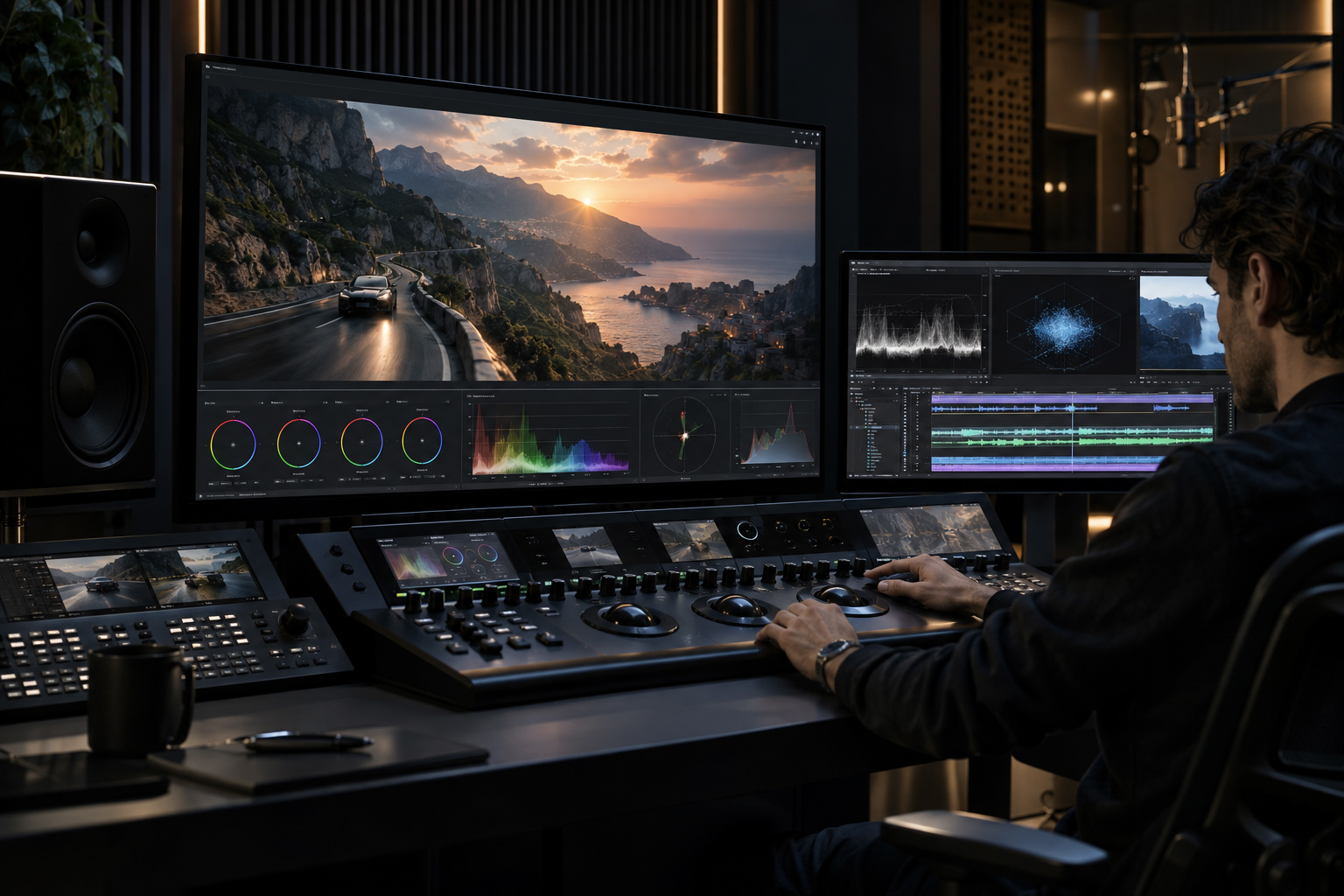
COLOR GRADING · SOUND DESIGN · FINAL FINISHING
A Finished Film Is Defined By More Than The Edit—It Is Completed Through Precision In Color, Sound, And Final Refinement.
A film can be structurally complete and still not feel finished. The final stage is where multiple technical and expressive layers are brought into alignment—color, contrast, skin tone, exposure continuity, sound balance, ambience, music, dialogue clarity, graphics, titles, captions, cleanup, compositing, and final mastering. These decisions do not simply decorate the edit; they determine how confidently the finished work holds together.
Color can establish visual continuity between material captured under very different conditions, but it can also shape temperature, atmosphere, emphasis, and emotional character. Sound can create distance, intimacy, tension, impact, or realism long before the viewer consciously notices it. Motion graphics and titles can clarify information, while careful cleanup removes details that would otherwise weaken the illusion of a fully resolved world.
Professional finishing is therefore the point where separate production layers stop feeling separate. The film becomes one continuous experience. Nothing calls unnecessary attention to itself, yet everything contributes—allowing the final work to feel controlled, intentional, credible, and ready to represent the project at the standard originally promised.
WHEN COLOR, SOUND, GRAPHICS, CLEANUP, AND FINAL DELIVERY STANDARDS ARE RESOLVED AS PART OF ONE FINISHING SYSTEM,
VIDEOGRAPHY REACHES ITS PROFESSIONAL FORM—TURNING EDITED FOOTAGE INTO A POLISHED MOTION WORLD WITH THE CLARITY, CONSISTENCY, AND FINAL IMPACT REQUIRED TO PERFORM CONFIDENTLY.
COMPLETE VIDEOGRAPHY PRODUCTION
Professional Videography Services
FROM FOCUSED PRODUCTIONS TO COMPLETE MULTI-FORMAT MOTION SYSTEMS BUILT AROUND PURPOSE, STORY, PRODUCTION CONDITIONS, AND FINAL USE.
NF Creative Studio develops professional Videography for brands, companies, agencies, products, people, spaces, hospitality environments, campaigns, and commercial communication where moving image needs to perform beyond simple visual documentation.
Every engagement is structured around what the story must communicate, who the audience is, how the content needs to be experienced, where it will be used, what production conditions must be controlled, and what level of creative, technical, and editorial development the final result requires.
The scope can range from a focused studio or on-location production to a coordinated motion system involving creative direction, narrative development, cinematography, lighting, sound, talent, specialist crew, multiple environments, advanced post-production, versioning, commercial adaptation, and long-term motion asset development, while preserving one clear creative direction across every approved format, audience touchpoint, campaign stage, and future communication requirement over time. This ensures the production remains coherent, adaptable, commercially relevant, and prepared to continue supporting the brand as communication needs evolve.
“Every Aspect Of Videography Built Around How Your Story Needs To Move, Communicate, And Perform.”
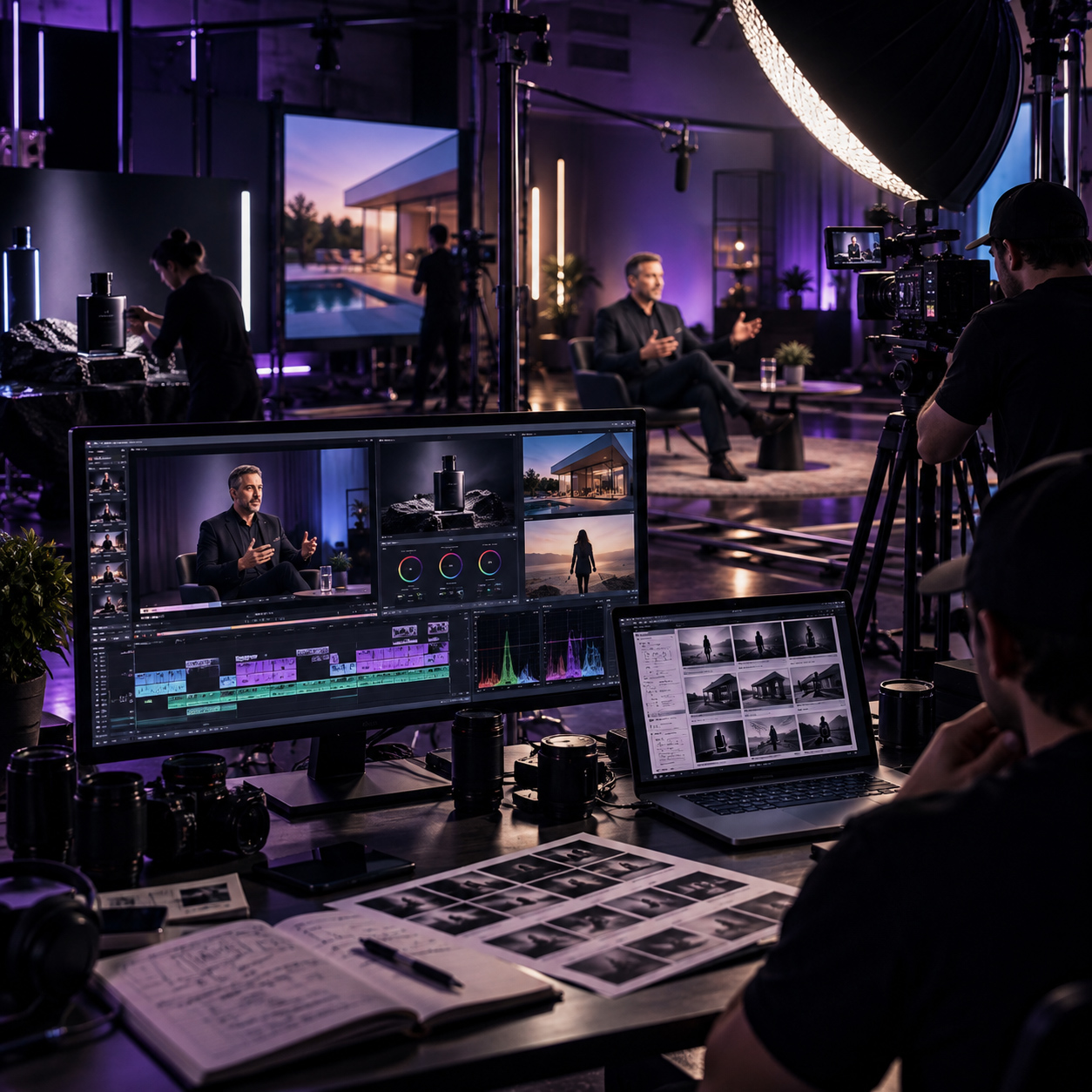
OUR VIDEOGRAPHY SOLUTIONS
Our Videography Solutions are structured around the real communication role the moving image must perform. Different projects require different combinations of storytelling, demonstration, performance, spatial experience, atmosphere, technical clarity, and commercial positioning, so the production approach is shaped around the subject, audience, platform, and intended result rather than a fixed service formula.
Depending on the project, that may mean a focused product film, a people-led brand story, an architectural or hospitality production, a campaign system, event coverage, or a broader commercial motion package. In every case, the objective remains the same: to create purposeful, professionally directed motion content that communicates clearly, performs in the right environment, and supports the wider brand or business objective.
- Commercial Product & E-Commerce Videography: Purpose-built motion content combining product demonstration, material behavior, functional detail, controlled movement, interaction, and commercial presentation to make products easier to understand, evaluate, trust, and experience across marketplaces, websites, launches, and digital sales environments.
-
Brand, Campaign & Editorial Films: Concept-driven productions connecting creative direction, narrative character, cinematography, performance, styling, environment, sound, pacing, and brand positioning into a distinctive moving-image language for campaigns, launches, advertising, editorial communication, and brand storytelling. -
Corporate, Leadership & People-Focused Videography: Professional moving-image communication for founders, leadership teams, employees, organizations, interviews, workplace culture, and branded people-focused narratives developed around credibility, message clarity, performance direction, audience perception, and communication purpose. -
Architecture, Interiors & Hospitality Films: Controlled spatial storytelling of buildings, interiors, hospitality environments, property, designed spaces, atmosphere, circulation, materials, and lived experience through deliberate camera movement, perspective, light, sound, pacing, and environmental detail. -
Food, Beverage & Lifestyle Videography: Directed motion content combining texture, preparation, interaction, styling, movement, atmosphere, context, sound, and sensory storytelling for restaurants, hospitality brands, consumer products, campaigns, social communication, menus, launches, and wider commercial presentation. -
Events, Launches & Brand Activations: Responsive on-location production structured to capture key moments, people, audience interaction, atmosphere, presentations, performances, environmental context, and brand presence while creating usable motion assets for campaigns, PR, social media, internal communication, recap films, and future promotion.
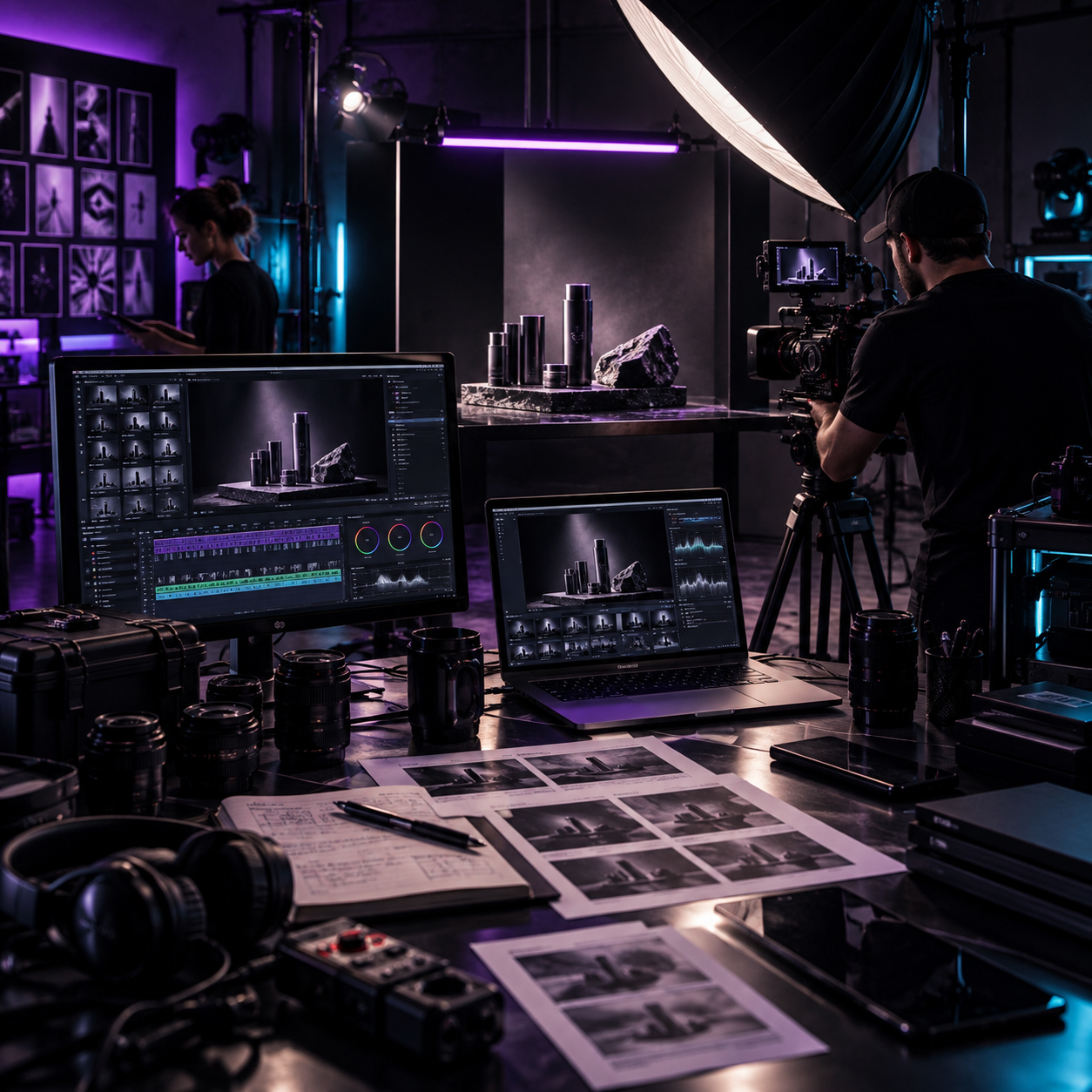
ADDITIONAL PROFESSIONAL SERVICES
Additional Professional Services extend the core Videography engagement where a project requires deeper preparation, specialist coordination, more complex production conditions, or broader commercial application. These services are introduced selectively—only when they strengthen creative direction, production control, technical execution, narrative clarity, or the long-term usefulness of the final motion assets.
Depending on the approved scope, support may include pre-production development, scripting, storyboards, talent and styling coordination, location logistics, specialist crew, advanced post-production, platform adaptation, licensing, and delivery planning. The objective is not to add complexity for its own sake, but to ensure that every additional production layer has a clear reason to exist and contributes directly to the quality, usability, and commercial performance of the finished work.
- Creative Direction & Pre-Production: Development of concepts, treatments, visual references, narrative direction, production logic, shot priorities, scheduling, and practical planning before cameras begin recording.
-
Script, Storyboard & Shot Architecture: Development of scripts, interview frameworks, storyboards, shot lists, sequence logic, coverage requirements, demonstrations, and editorial structure where the project requires a more controlled narrative foundation. -
Talent, Styling & Specialist Coordination: Coordination of casting, presenters, performers, wardrobe, grooming, styling, art direction, assistants, sound specialists, lighting support, and other production roles required by the approved creative direction. -
Location Scouting, Permissions & Production Logistics: Evaluation and coordination of locations, access requirements, permits, schedules, travel, environmental conditions, equipment movement, crew logistics, weather considerations, and contingency planning for controlled on-location production. -
Studio, Crew & Equipment Capability: Production structured around the appropriate cameras, lenses, lighting, stabilization, monitoring, sound equipment, motion-control tools, production crew, and specialist support selected according to the real requirements of each project. -
Editing, Color, Sound & Motion Finishing: Professional development through editing, narrative construction, pacing, color grading, audio cleanup, sound design, music integration, captions, typography, motion graphics, compositing, and final quality control while preserving the approved creative direction. -
Multi-Format Versioning & Platform Adaptation: Preparation of approved motion assets for websites, campaigns, e-commerce, Amazon, advertising, social platforms, presentations, events, vertical and horizontal formats, cutdowns, captions, and platform-specific outputs without reducing adaptation to simple resizing or cropping. -
Commercial Usage, Music & Licensing Support: Clear definition of intended usage, channels, territories, duration, talent conditions, music requirements, third-party assets, media applications, and applicable licensing conditions so approved commercial use remains transparent within the project agreement.
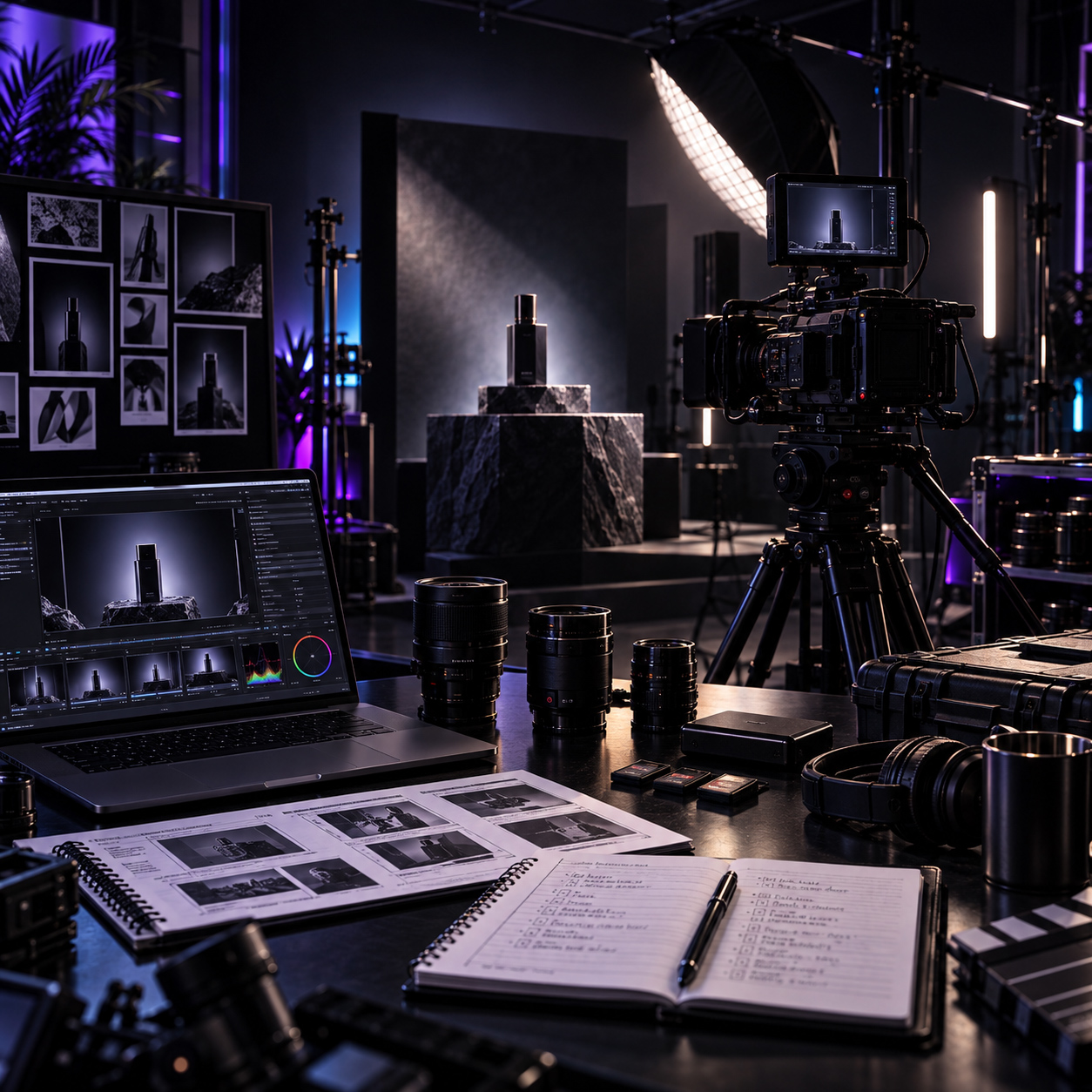
OUR PRODUCTION STANDARD
Every Videography project receives the production structure appropriate to its purpose, but the professional standard remains consistent. The scope may change—from a focused product film or interview to a multi-location campaign, architectural production, or long-term content system—but every engagement is developed around clear creative intent, narrative control, technical precision, production discipline, and the way the finished motion content must ultimately perform.
The objective is not to apply unnecessary layers to every project. It is to identify which creative, production, editorial, technical, and delivery responsibilities are genuinely required, then coordinate them as one connected system so the final work remains coherent, commercially appropriate, and professionally resolved from first direction to final master.
- Creative Direction & Narrative Control: Every project is guided by a defined motion objective connecting subject, audience, message, visual language, camera behavior, performance, sound, pacing, environment, and intended communication before and during production.
- Integrated Production & Specialist Coordination: Cinematography, lighting, sound, styling, talent, assistance, direction, post-production, and supporting disciplines are coordinated only where the project genuinely requires them, keeping the production complete without making it unnecessarily complex.
- Tailored Production Scale: Studio sessions, controlled product films, interviews, on-location shoots, multi-camera productions, complex environments, and multi-stage engagements are structured around the real logistical, narrative, creative, technical, and commercial requirements of the project.
- Editorial, Sound & Finishing Standard: Editing, pacing, color, sound, graphics, continuity, and final finishing are developed as parts of one connected motion language, ensuring the production remains coherent from recorded material through final master.
- Clear Usage, Music & Licensing: Video usage, commercial applications, agreed channels, territories, duration, talent conditions, music, third-party assets, deliverable formats, and licensing conditions are defined clearly so that production scope and future motion use remain commercially transparent.
- Delivery, Archive & Motion Continuity: Final masters and approved derivatives are organized for the required platforms and formats, with the motion foundation structured to support future campaigns, new versions, additional cutdowns, updated content, expanded platforms, and long-term brand continuity.
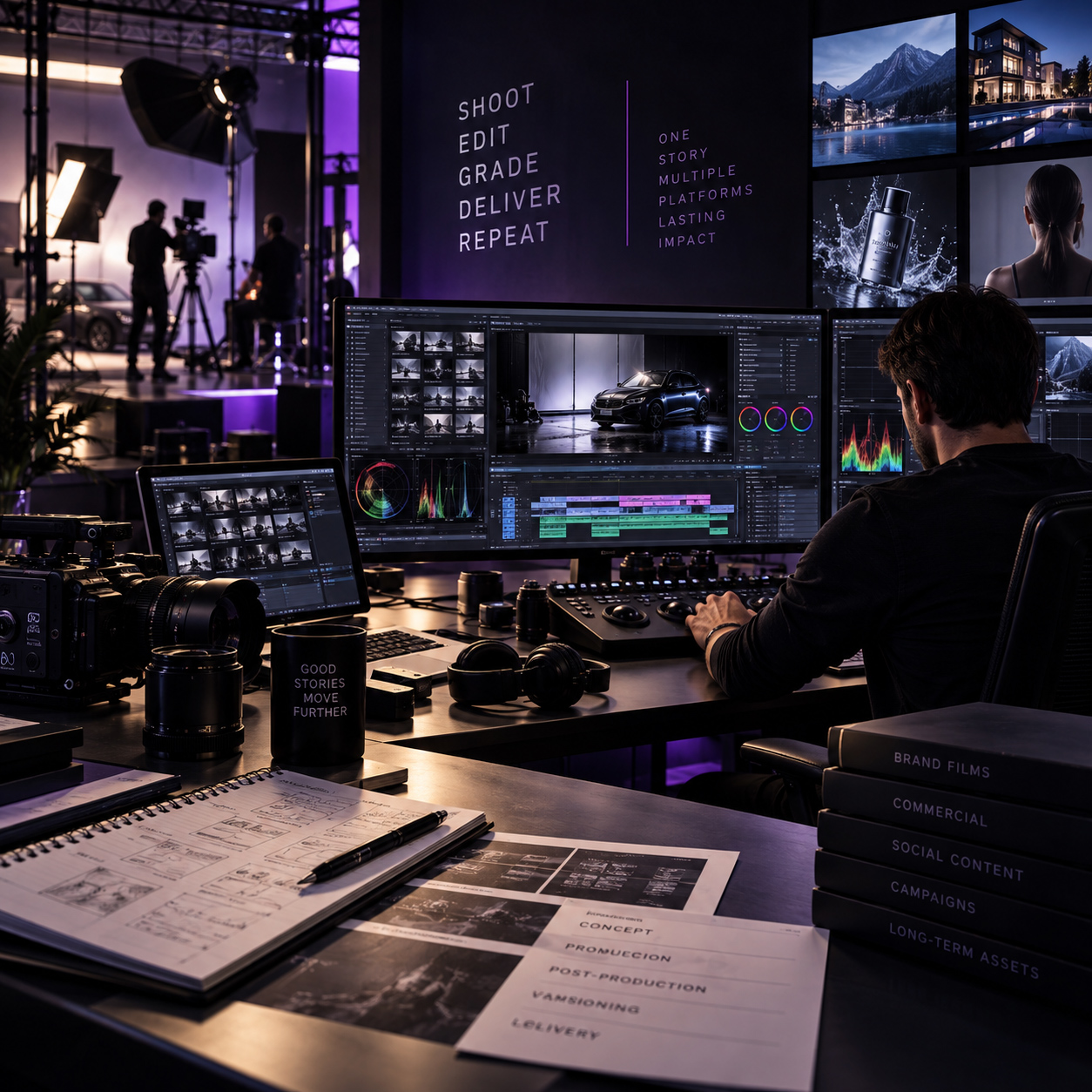
Every Videography engagement is scaled around what the project genuinely needs. Some assignments require one carefully controlled production and one resolved master film; others demand broader creative direction, specialist coordination, multiple locations, performance direction, dedicated sound, advanced post-production, extensive versioning, and a larger family of motion assets.
In every case, the objective remains the same: to preserve narrative clarity, creative intent, technical consistency, production control, and commercial relevance while giving the project the structure, flexibility, and professional depth required to perform confidently beyond the original release.
WE DO NOT BUILD VIDEOGRAPHY AROUND A PRESET CINEMATIC FORMULA.
WE BUILD THE RIGHT MOTION SYSTEM AROUND WHAT THE STORY, AUDIENCE, BRAND, PRODUCTION CONDITIONS, AND FINAL USE ACTUALLY REQUIRE.
FROM FIRST OBJECTIVE TO FINAL MOTION DELIVERY
Our Videography Production Process
From First Brief To Final Delivery, Every Stage Is Built To Protect The Purpose Of The Film—So The Production Remains Creatively Distinctive, Technically Controlled, Commercially Useful, And Ready To Continue Working Beyond The Original Release.
A professional Videography project begins long before the camera records its first frame. The process connects project objectives, audience, narrative requirements, creative direction, production conditions, cinematography, sound, performance, post-production, review, technical delivery, and future content needs within one coordinated workflow.
The exact production path depends on the subject, location, scale, narrative complexity, intended platforms, required specialists, licensing conditions, and level of post-production. A focused product film may require a compact controlled setup, while a campaign, hospitality production, architectural film, interview series, or multi-location brand project may involve significantly deeper planning, crew coordination, sound requirements, talent, logistics, and version development.
Every stage is designed to keep the work purposeful, reviewable, technically controlled, commercially appropriate, and narratively coherent—from the first conversation through production, editing, approval, delivery, and future motion use.

Initial Consultation & Project Fit
We begin by defining what needs to be communicated, why the video is required, who must experience it, where it will be used, and what level of production the project genuinely needs.
Subject type, audience, message, intended platforms, campaign requirements, production locations, approximate duration, content variations, deadlines, existing brand standards, available materials, technical requirements, and logistical constraints are reviewed before the production direction is confirmed.
This stage establishes the appropriate Videography scope, production model, creative responsibility, technical requirements, and level of engagement before unnecessary complexity or cost is introduced.

Proposal, Agreement, 50% Advance Payment & Production Activation
Once the requirements are understood, a written proposal defines the scope, production structure, deliverables, estimated schedule, locations, included services, review rounds, client responsibilities, usage terms, licensing conditions, optional production layers, and commercial terms.
After approval of the agreement, the initial 50% advance payment activates the project, reserves the required production period, and allows pre-production, scheduling, specialist coordination, and creative development to begin.
Any specialist requirements—such as talent, locations, travel, permits, additional crew, specialist equipment, styling, props, voice-over, music licensing, or complex production logistics—are identified and confirmed according to the approved scope.

Creative Brief, Narrative Direction & Production Architecture
Before production begins, the communication objective is translated into a clear moving-image direction.
We define the narrative character, message hierarchy, visual language, shot families, camera behavior, pacing direction, performance requirements, sound character, environment, references, platform priorities, and the individual roles different sequences must perform.
Depending on the project, this may develop through treatments, scripts, story structures, storyboards, visual references, shot architecture, interview frameworks, demonstration logic, or sequence planning.
Rather than approaching filming as an open-ended collection of attractive footage, we establish enough structure to give the production direction while leaving appropriate space for real performance, environmental discovery, spontaneous moments, and creative decisions on set.

Pre-Production, Logistics & Production Preparation
The approved creative direction is converted into practical production requirements.
Depending on the project, this can include location scouting, scheduling, call sheets, crew coordination, cinematography planning, camera movement, lighting design, sound planning, talent preparation, wardrobe, styling, props, product preparation, set requirements, access permissions, weather considerations, travel, equipment coordination, and contingency planning.
The objective is simple: remove avoidable uncertainty before filming begins so production time can focus on performance, cinematography, sound, timing, continuity, storytelling, and creative execution.
Pre-production protects both the creative ambition and the practical reality of the shoot.

Videography Production, Direction & Controlled Motion Capture
During filming, creative direction, cinematography, performance, sound, lighting, movement, and technical execution operate together.
Camera position, lens choice, framing, exposure, focus, stabilization, movement, shot duration, coverage, subject direction, environmental conditions, continuity, sound quality, and performance are monitored against the approved production objective.
Where appropriate, recorded material is reviewed during production so the direction can be refined while the subject, location, crew, equipment, lighting conditions, and performance opportunities are still available.
The camera records motion—but the production system determines whether that motion carries meaning, continuity, and enough editorial value to build the finished film.

Editing, Story Construction & Sequence Development
After production, the recorded material is reviewed, organized, selected, and developed into the first coherent editorial structure.
Editing may include selecting performances and takes, constructing sequence order, controlling timing and pacing, developing transitions, balancing visual information, integrating interviews or dialogue, shaping narrative progression, building product demonstrations, synchronizing sound, and determining how individual shots function together.
The objective is not simply to shorten footage. It is to determine what the audience sees, when they see it, how long information remains available, where emotion enters, when energy changes, and how separate moments become one understandable experience.
This is where footage becomes a film.

Color, Sound Design, Motion Graphics & Final Finishing
Once the editorial structure is approved for finishing, the production moves into the stage where its complete visual and sonic world is refined.
Depending on scope, finishing may include color grading, tonal balancing, exposure matching, audio cleanup, dialogue treatment, sound design, music integration, titles, captions, typography, motion graphics, visual effects, compositing, stabilization refinement, cleanup, graphics integration, and detailed visual finishing.
The objective is not artificial polish for its own sake. It is to protect continuity, atmosphere, clarity, visual character, sonic consistency, brand alignment, and technical quality across the complete production.
The strongest finishing becomes almost invisible—the audience experiences one coherent film rather than noticing separate layers of post-production.

Client Review, Refinement & Final QA
The developed film moves through the agreed review process so that final refinements can be confirmed before release.
Feedback is consolidated within the included review rounds and evaluated according to the approved creative direction, project scope, narrative structure, pacing, messaging, visual continuity, sound, graphics, and intended use.
Before final delivery, the production is checked for editing consistency, color behavior, audio levels, graphics, captions, framing, output requirements, resolution, aspect ratio, compression, naming, platform suitability, and technical integrity.
This final QA protects the standard of the complete production—not only whether individual shots look good.

Final Approval, 50% Balance Payment, Licensing & Master Delivery
After final approval, the remaining 50% balance payment is completed before release of the final production assets.
Approved masters are then prepared and delivered according to the agreed scope. Depending on the project, this may include master films, web-ready versions, campaign formats, presentation files, e-commerce assets, social versions, captioned outputs, platform-specific exports, or other approved deliverables.
Usage rights and licensing are supplied according to the agreement and intended commercial application, providing both client and studio with a clear record of how the finished motion work may be used.
This stage closes the original production while establishing a controlled foundation for any approved extensions that follow.

Multi-Format Versioning & Motion Asset Continuity
Where the project requires broader communication support, the original production can extend beyond the primary master film.
The approved motion foundation may support alternative edits, short-form cutdowns, vertical versions, square formats, campaign derivatives, social assets, website motion, Amazon and e-commerce sequences, presentation content, captions, alternate openings and endings, event formats, platform-specific adaptations, and future communication requirements.
This is not simply resizing or cropping the same film. Each format may require different timing, framing, information density, opening logic, caption behavior, visual hierarchy, and editorial emphasis to perform properly in its intended environment.
One production can therefore generate substantially greater communication value without recreating the entire creative and production system every time a new channel appears.

Footage Organization, Master Assets & Future Production Readiness
A completed film is only one part of the production value. Depending on the agreed scope, approved footage, selected sequences, masters, audio elements, graphics, project outputs, and reusable motion material can be structured so future development does not begin from an uncontrolled collection of files.
Clear organization helps preserve what was filmed, which material was approved, what can be reused, where additional versions may be developed, and which creative or technical decisions belong to the established production system.
For productions designed around future continuity, this creates a more reliable foundation for campaign extensions, new cutdowns, updated products, additional markets, seasonal communication, future edits, and evolving platform requirements.
The goal is not simply to store footage. It is to preserve usable motion value.

Long-Term Videography Partnership
A completed film does not have to remain an isolated production.
For brands, organizations, properties, product ranges, campaigns, and teams requiring ongoing moving-image consistency, the established Videography direction can become the foundation for future shoots, new campaigns, product launches, additional locations, recurring interviews, seasonal productions, team updates, motion libraries, advertising extensions, and expanding communication needs.
Instead of reinventing the visual and narrative approach for every production, future motion content can develop from an established understanding of camera language, framing, movement, lighting, color, sound character, pacing, performance direction, brand behavior, technical standards, and delivery requirements.
The Videography system can later expand into additional product or service films, campaign productions, seasonal content, new locations and environments, executive and team communication, e-commerce extensions, editorial and documentary content, social and advertising adaptations, event films, platform-specific versions, and expanded long-term motion libraries.
Long-term collaboration does not mean repeating the same film. It means preserving enough creative understanding and production continuity for every new film to move the brand forward without rebuilding its motion language from zero.
Every Videography engagement is built to move from clear intention to controlled execution, final approval, and usable long-term motion value. The process protects the creative direction while giving each stage enough structure, flexibility, and technical discipline to respond intelligently as the production develops.
What changes from project to project is the scale, complexity, and combination of required production layers. What remains constant is the commitment to narrative clarity, professional control, technical consistency, and purposeful delivery—so every finished film arrives fully resolved and ready for the role it was created to perform.
From First Brief To Final Delivery, Every Stage Is Built To Protect The Purpose Of The Film—
So The Videography Remains Creatively Distinctive, Narratively Coherent, Technically Controlled, Commercially Useful, And Ready To Continue Working Beyond The Original Production.
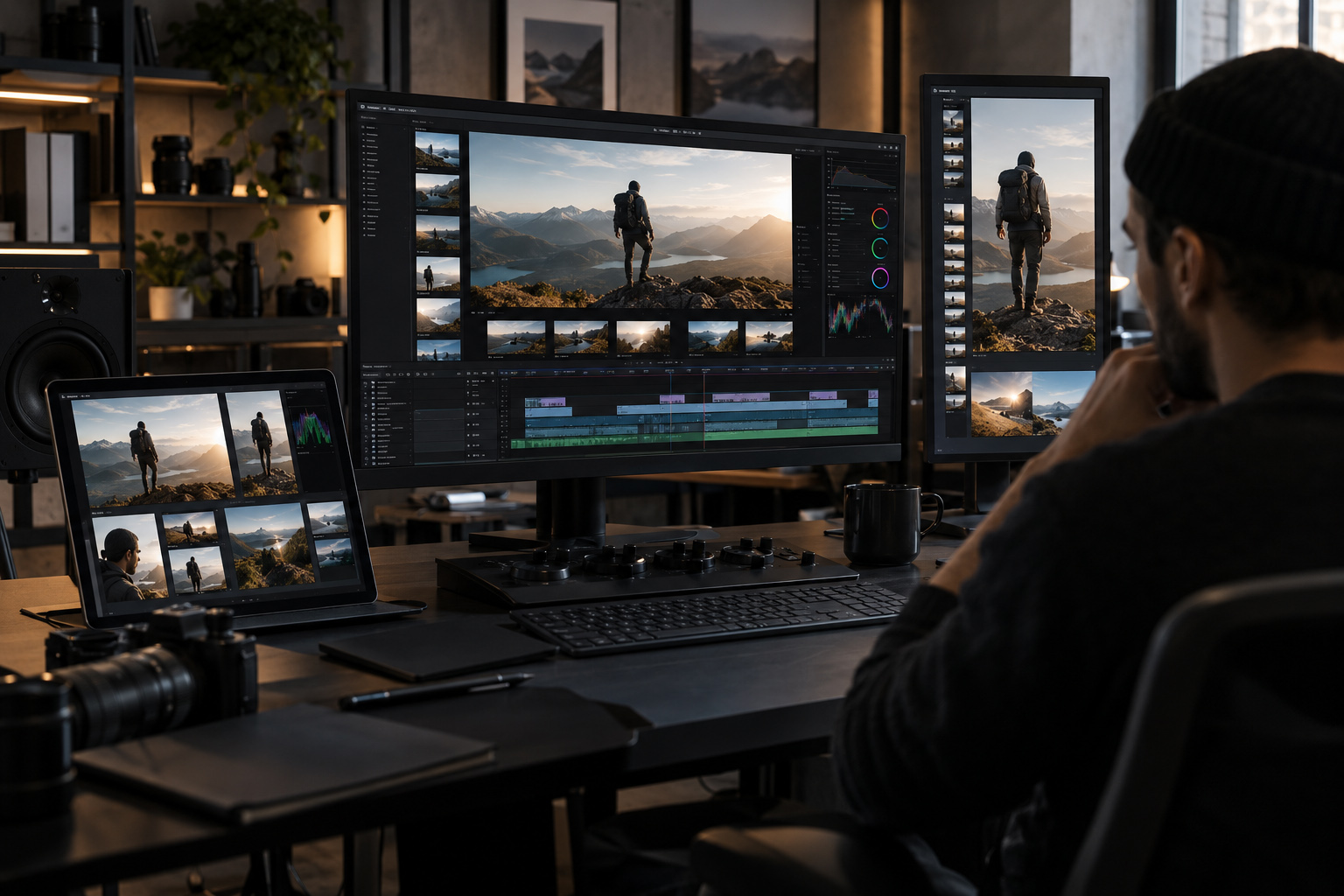
PLATFORM ADAPTATION · VERSIONING · MULTI-FORMAT DELIVERY
A Strong Production Should Not End In One Format—It Should Adapt Intelligently Across Every Approved Platform.
A contemporary video rarely lives in only one place. The same production may need to function as a widescreen website film, vertical social asset, square campaign unit, short-form cutdown, captioned marketplace video, presentation sequence, advertising variation, or platform-specific version with entirely different viewing conditions. One master film can provide the foundation, but it cannot simply be forced unchanged into every environment.
Adaptation requires editorial judgment. Composition may need to be reconsidered for a vertical frame. Information may need to appear earlier in a short-form version. Captions can affect visual hierarchy. A social cut may require different pacing from a presentation film, while e-commerce content may prioritize function and clarity over atmosphere. The creative direction remains connected, but the execution responds to how each audience will actually encounter the work.
That is the difference between simple resizing and a genuine multi-format production system. Strong versioning protects the original idea while allowing it to behave appropriately in different contexts. One production can therefore expand across platforms without becoming visually fragmented, functionally compromised, or reduced to a collection of careless crops.
WHEN VERSIONING, FORMAT ADAPTATION, AND PLATFORM-SPECIFIC DELIVERY ARE BUILT INTO THE PRODUCTION LOGIC,
VIDEOGRAPHY BECOMES A SCALABLE CONTENT SYSTEM—CAPABLE OF CARRYING ONE STRONG CREATIVE DIRECTION ACROSS MULTIPLE SCREENS, FORMATS, AND AUDIENCE TOUCHPOINTS WITHOUT LOSING ITS VALUE.
MOTION IDENTITY · BRAND VOICE · RECOGNITION ACROSS TIME
Building Motion That Becomes Part Of
How A Brand Speaks, Moves, And Is Remembered.
“People May Encounter Individual Videos Only Once. What They Begin To Remember Is The Consistent Character Behind Them.”
A brand can become recognizable before its logo appears. The cadence of a presenter, the way a camera approaches a subject, the pace of an edit, the restraint of a transition, the texture of sound, the relationship between voice and image, and even the amount of space given to a moment can gradually form a recognizable moving-image character of their own. None of those elements need to be identical from film to film. What matters is that they feel as though they belong to the same point of view.
That becomes increasingly important when video is produced regularly rather than as one isolated campaign. Founder communication, product launches, educational content, social series, interviews, commercial films, internal communication, and branded storytelling may serve completely different purposes, yet each can reinforce how the brand speaks, how confidently it presents itself, and what kind of relationship it builds with the audience over time.
Consistency in motion therefore does not mean repeating the same shot, edit, music, or format. It means protecting enough underlying logic that new work remains recognizable while still responding to different stories. Framing behavior, editorial rhythm, graphic restraint, sonic character, performance direction, visual tone, and communication style can evolve without losing the identity that connects them. That balance allows Videography to remain fresh without becoming visually anonymous from one production to the next.
Over time, this creates something more valuable than a collection of successful videos. It creates familiarity. Audiences begin to recognize not only what the brand says, but how it tends to say it—giving every new piece of motion content a stronger foundation of continuity, credibility, and expectation before the message itself has even finished unfolding.
ONE VIDEO CAN DELIVER A MESSAGE. A CONNECTED MOTION LANGUAGE CAN BUILD RECOGNITION ACROSS TIME.
THE STRONGEST VIDEO IDENTITIES ARE NOT BUILT BY REPEATING THE SAME FILM—THEY ARE BUILT THROUGH A CONSISTENT STANDARD OF VOICE, MOVEMENT, RHYTHM, SOUND, DIRECTION, AND VISUAL CHARACTER THAT ALLOWS EVERY NEW STORY TO FEEL DISTINCTLY PART OF THE SAME BRAND.
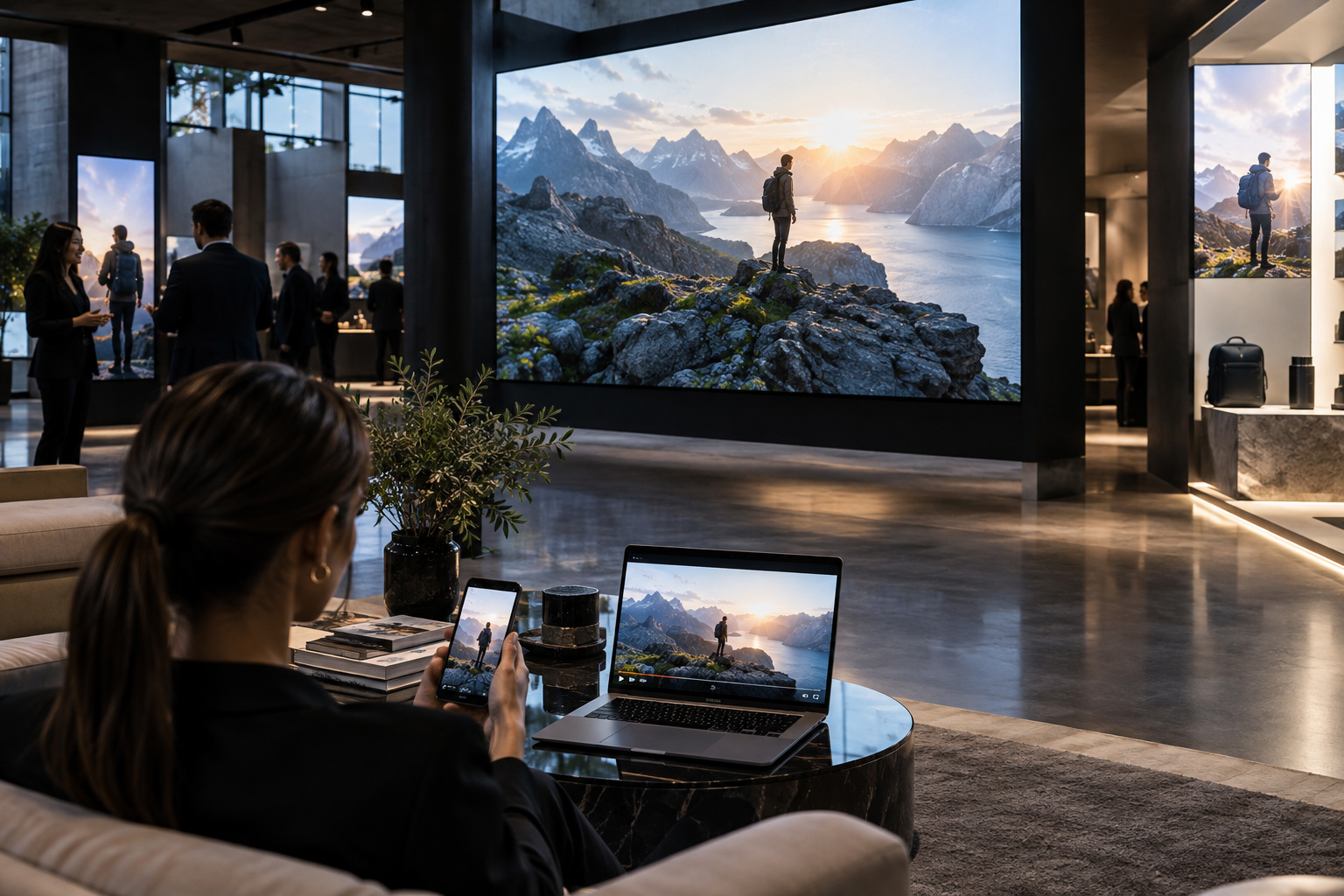
CONTENT ECOSYSTEMS · LONG-TERM VALUE · MOTION ASSET EXPANSION
The Strongest Video Work Does Not End At Delivery—It Continues Creating Value Across The Broader Communication System.
The commercial life of a production does not have to end when the master film is approved. A well-planned shoot can create far more than one finished deliverable: hero films, campaign cutdowns, product sequences, social assets, website motion, launch materials, presentation content, event visuals, e-commerce footage, internal communication, and reusable visual material capable of supporting future brand activity.
That value depends on decisions made much earlier. Coverage strategy, shot diversity, resolution, framing flexibility, rights, file organization, versioning logic, archive structure, and the quality of the master material all determine whether footage remains genuinely useful after its first release or becomes difficult to reuse once the original campaign has passed.
This is where professional Videography becomes an asset system rather than a single production event. The strongest projects leave behind more than a film—they create a controlled library of motion value that can continue supporting communication across new platforms, audiences, campaigns, products, and business requirements without requiring the visual foundation to be rebuilt from zero every time.
WHEN VIDEO IS DEVELOPED AS A LONG-TERM COMMUNICATION ASSET RATHER THAN A SINGLE DELIVERABLE,
VIDEOGRAPHY CONTINUES WORKING FAR BEYOND THE ORIGINAL FILM—EXPANDING INTO A REUSABLE CONTENT SYSTEM THAT STRENGTHENS CAMPAIGNS, SUPPORTS PLATFORMS, AND PRESERVES MOTION VALUE ACROSS THE ENTIRE BRAND ECOSYSTEM.
From First Intention To Long-Term Motion Value, Every Stage Of Professional Videography Adds A Different Layer Of Meaning, Control, And Communication Strength.
Professional Videography is not one isolated act of recording, and its professional value cannot be measured only by what happens on the production day. It is a connected moving-image discipline in which creative intention, pre-production thinking, technical preparation, cinematography, direction, performance, sound, editing, finishing, adaptation, and delivery continually influence one another. A weakness in one stage can limit everything that follows; a strong decision made early can continue protecting quality all the way to the final asset.
What appears effortless in the finished film is therefore rarely effortless in its construction. It is the result of many specialist decisions becoming invisible at exactly the right moment—so the audience experiences clarity instead of process, emotion instead of technique, and a coherent story instead of the complexity required to create it. The strongest production systems protect that continuity from the first idea to the last version, while leaving enough flexibility for the work to evolve across formats, platforms, campaigns, and future communication needs.
THINK THE FILM. BUILD THE PRODUCTION. MOVE THE CAMERA. DIRECT THE STORY. FINISH THE WORLD.
ADAPT THE SYSTEM. EXTEND THE VALUE. THAT IS HOW PROFESSIONAL VIDEOGRAPHY MOVES BEYOND CAPTURE AND BECOMES A COMPLETE MOTION DISCIPLINE.
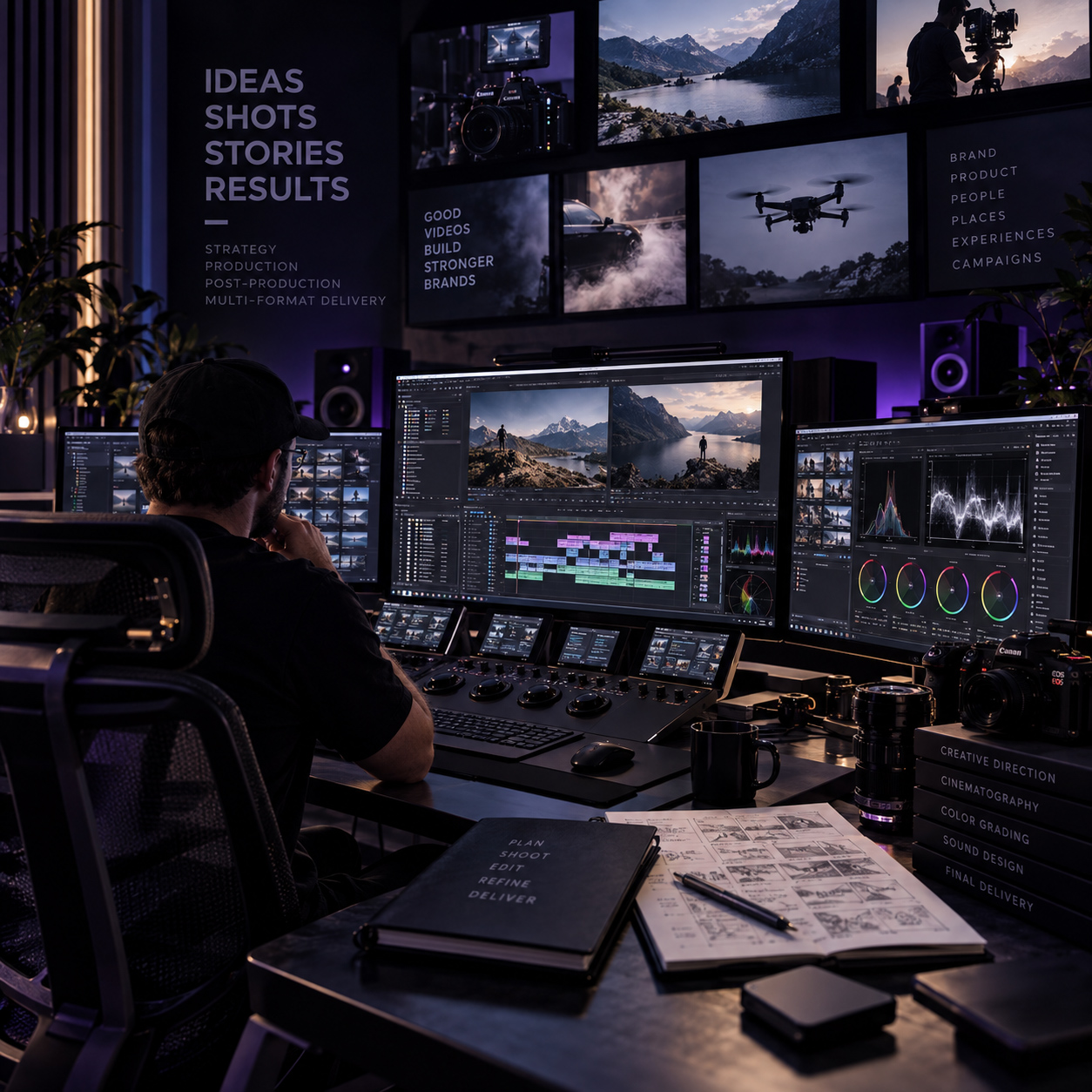
FROM CREATIVE DIRECTION TO LONG-TERM CONTENT VALUE · VIDEOGRAPHY BUILT TO COMMUNICATE, DIFFERENTIATE, AND PERFORM
Ready To Create Video Content
That Turns What Your Brand
Needs To Communicate Into
Stronger Engagement, Clearer Perception, And Long-Term Motion Value?
Whether you need a focused product video, a commercial campaign, architectural and hospitality Videography, corporate communication, branded social content, or a broader multi-format production system, Infinity Design Studio develops each Videography engagement around what the content genuinely needs to communicate, where it must perform, and how the audience needs to experience it. Every project begins by defining the subject, audience, communication objective, narrative role, production conditions, intended platforms, and the environments in which the final video must create value.
From concept development, planning, creative direction, cinematography, lighting, sound, performance, and controlled production to editing, finishing, adaptation, and final delivery, the work is developed as one connected motion system rather than a sequence of isolated production stages. We do not force different projects into one generic video formula. The production direction is built around what must be revealed, how attention should move, what should be felt or understood, and how each shot must contribute to the wider communication objective—so the result feels strategically clear, visually refined, technically resolved, narratively coherent, and appropriate to the brand behind it.
The result is not simply a finished video. It is a professionally developed motion asset system designed to continue working beyond the original production—supporting campaigns, launches, websites, e-commerce, presentations, advertising, social media, internal communication, event environments, and future brand applications. When creative direction, production discipline, editorial structure, technical consistency, and multi-format delivery are developed together, the value of the work extends far beyond one final film, preserving the quality, recognition, and communication strength established from the beginning.
LET’S CREATE VIDEOGRAPHY THAT MAKES THE RIGHT MESSAGE CLEARER, THE BRAND MORE DISTINCT, AND EVERY MOTION ASSET MORE VALUABLE WHERE IT MATTERS MOST.
Trusted By Leading Brands

What Our Clients Say About Us?
Trusted by global brands and visionary entrepreneurs — hear what they say about working with Infinity Design Studio.

Filip is a very enthusiastic designer, proactively looking for various solutions and flexible in terms ofworking and communication. I am very pleased with the final design and our teamwork!

JaanP
LUCIDKITCHEN
I NEED MORE THAN 5 STARS TO RATE FILIP. His relentless commitment and creativity made thisproject a dream come true. Highly recommended!

Wong.Jameson
UNO DOGGO
Worked perfectly together and carried out extremely quickly with corrections and changes.

MarceQ
BRAUEREI 2572
We needed a new label for our maple syrup. From start to finish, Filip was right on top of the design, anychanges we requested, and was extremely good at communicating. We loved his style and highly recommend working with him!

The Gateway Farm
THE GATEWAY FARM
Excellent professional, quick service. We recommend working with him!

Moltres
BROMELIFE
EXCELLENT!!! Filip is the best designer and even the best contractor I have ever worked with. Hecreated an awesome design and worked with me tirelessly from its greatness to its perfection. Now I havethe most gorgeous packaging on the market, and all my competitors are screwed. Hooray :-)!

Jakub.Novotny7
COPPER GEMZ
Filip was wonderful to work with! As a first-timer in product packaging design, I just asked for eye-catching packaging. He exceeded all of our expectations, and we highly recommend working with Filip – you won’t be disappointed!

Fatime.Perazic
TRIDENT POSEIDON
“Filip is an extremely talented designer. He was a pleasure to work with throughout this process. In addition to being very responsive, he was able to take a general idea and turn it into something we truly loved. Highly recommend!”

Jrossd
ECOMMDISTRIBUTION, ASHBROOK OUTDOORS
This designer’s professionalism and creativity are truly commendable. We’re delighted with his work andhighly recommend collaborating with him. His talent and dedication consistently deliver outstandingresults.

Harmouch.Fk
NUTRIVEG LAB
I really enjoyed working with Filip. He is very hardworking, and the service is truly excellent!

AromapetD
AROMAPET
Filip has done excellent work for our project! He’s quick and delivers great designs. Very attentive, very easy to work with, listens to and understands what I am trying to get done immediately. Thanks! Happy to work with him again!

This designer is AMAZING! I can’t believe how easy it was to work with him on all the changes we madeto our box. He was so positive and encouraging, with great design ability! Highly recommended!

XoginaU
Dr. P RX
Tell Us What You’re Building.
Share what you already know—what you are creating, changing, improving, launching, or trying to solve. We’ll use that context to understand the project and determine the right next step.
You do not need a perfect brief to begin. Clear context is enough.
We’ll Review Your Enquiry And Get Back To You Within 24 Hours.
PROFESSIONAL VIDEOGRAPHY PACKAGES · MOTION PRODUCTION SYSTEMS · MULTI-FORMAT DELIVERY
Videography Packages Built Around What Your Story, Production, And Final Motion Assets Actually Need To Achieve
One Videography Discipline.
Multiple Levels Of Creative Direction, Production Depth, And Post-Production.
Professional Videography Pricing Built Around Your Objective, Platforms, And Final Use.
FROM FOCUSED PROFESSIONAL PRODUCTIONS TO COMPLETE MULTI-FORMAT VIDEO SYSTEMS.
Professional Videography should not cost more simply because a finished film is longer—and it should never be compressed into an inadequate production scope simply to fit a predefined package. The real level of investment depends on what the video must communicate, how the story must be produced, how many creative and technical variables must be controlled, and how extensively the resulting motion assets need to perform after the original production is complete.
A concise product film, founder story, hospitality sequence, architectural production, commercial campaign, multi-location shoot, or long-term branded content system can require fundamentally different levels of concept development, treatment, scripting, shot planning, direction, cinematography, lighting, sound, talent, location coordination, production time, editing, color grading, motion graphics, music, versioning, licensing, and final delivery. A thirty-second film can therefore demand considerably more production responsibility than a much longer but structurally simpler piece of content.
Each package is structured around real production depth rather than arbitrary runtime or output count alone. As the engagement expands, the service can move from one focused production into a broader motion system containing multiple scenes, locations, subjects, campaign narratives, format variations, social cut-downs, platform-specific versions, advanced finishing, supporting content, and reusable footage capable of extending the value of the original shoot.
The objective is simple: give clients enough structure to understand what they are investing in, enough flexibility to select the production level the project genuinely requires, and enough commercial transparency to understand which decisions materially affect scope before they become expensive surprises later. The package defines a professional starting framework; the project itself determines the production system required to achieve the right result.
THE SCALE, DURATION, AND COMPLEXITY OF THE PRODUCTION MAY CHANGE —
THE STANDARD OF CREATIVE DIRECTION, PRODUCTION CONTROL, EDITORIAL PRECISION, TECHNICAL FINISHING, AND PROFESSIONAL DELIVERY DOES NOT.

One Videography Pricing Hub.
Multiple Levels Of Creative Direction, Production Scale, Post-Production, And Investment.
Videography Services Built Around Purpose, Story, Complexity, Platforms, Deliverables, And Commercial Objectives.
One Videography Pricing Hub. Multiple Levels Of Production Depth. One Consistent Standard Of Creative Direction, Scope Clarity, Technical Precision, Commercial Transparency, And Final Motion Quality.
START PREMIUM
“A Professional Foundation For A Powerful And Engaging Brand Film.”
3.400 EUR / Project
Who this package is for:
Brands that need a focused, professional video for a single purpose — ideal for a short Product Video, Corporate Video Message, or one-location Promotional Film.
Includes:
- Creative consult and script-outline (goals, audience, key message)
- Studio or single on-location shoot, up to 2 hours (single setup)
- 4K capture with professional lighting and sound recording
- One hero edit 30–45 s (licensed music)
- Up to 3 branded thumbnails/titles + captions
- Two revision rounds (timing, transitions, color trims)
Key Benefits:
A polished, on-brand film with minimal complexity.
Why this investment pays off:
Focused scope, expert crew, and streamlined post-production ensure fast approvals and immediate usability across multiple channels.
Ideal for:
Product Videos, executive messages, promotional teasers, and venue highlights.
Start strong with studio-grade motion.
→ Request your quote and present with confidence!
GROWTH PREMIUM
“Optimization That Sells – More Views, More Conversions.”
6.900 EUR / Project
Who this package is for:
Teams ready to expand impact with richer coverage, multiple camera angles, and platform-specific content tailored for web, social media, and presentations.
Includes:
- Detailed shot plan and story beats (props/wardrobe guidance)
- Up to 3 hours on set (studio or one location)
- 4K/6K capture: wide, mid, details; movement shots where relevant
- One master edit 45–60 s + 2 social cuts (15 s and 9:16)
- Color correction + basic sound mix; subtitle/caption file
- Three revision rounds
Key Benefits:
Stronger Brand Storytelling and multi-format delivery that increases audience engagement.
Why this investment pays off:
Maximizes content value from a single production day through strategic content repurposing.
Ideal for:
E-Commerce Campaigns, hospitality marketing, product launches, corporate promotions, and PR campaigns.
Accelerate results with films that convince.
→ Choose this package and scale with confidence!
BRAND SYSTEM PACK
“Consistency Across Multi-Category Needs – A Visual Language For Every Line.”
11.800 EUR / Project
Who this package is for:
Brands managing multiple products, services, or locations that require unified Video Branding Standards and repeatable
content systems.
Includes:
- Cohesive Brand Video Guidelines (typography, framing, color, pacing, titles)
- Coverage for up to three sets/locations (same region/routing permitting)
- Per-set delivery: one edit 30–45 s + 8–10 key stills/thumbnail
- Social kit (ratios, hooks, end-cards)
- Four revision rounds
Key Benefits:
Builds a recognizable and scalable Video Identity System across your portfolio.
Why this investment pays off:
One investment connects multiple campaigns under a repeatable Video Content Framework.
Ideal for:
Retail brands, hospitality groups, real-estate portfolios, and multi-location businesses.
Don’t create isolated videos — build a signature motion identity.
→ Invest in a system that delivers measurable results!
FULL LAUNCH PACK SYSTEM
“From Idea To Go-Live – Everything You Need For A Successful Start.”
16.500 EUR / Project
Who this package is for:
Clients launching a flagship product, location, or campaign who require premium Video Production Services and stakeholder-ready deliverables.
Includes:
- Full pre-production (script, storyboard, schedule, permits/logistics)
- Up to 5 hours on set (single complex site or two nearby sets)
- 4K/6K capture; option for golden-hour/low-light (weather permitting)
- One master film 60–75 s + 2 social cuts (15 s & 9:16)
- Color grading, motion graphics (basic titles/supers), sound design
- Five revision rounds Local requirements vary; documentation and delivery align accordingly.
Key Benefits:
Covers the complete production journey from concept to launch-ready assets.
Why this investment pays off:
Combines planning, filming, and post-production into one streamlined Video Production Workflow.
Ideal for:
Hospitality launches, corporate campaigns, collection reveals, showrooms, and destination marketing.
Your launch deserves a cinematic reveal.
→ Start with a coordinated, launch-ready package!
SIGNATURE VISUAL PRESENCE
“A Landmark Identity That Elevates Brand And Place.”
24.500 EUR / Project
Who this package is for:
Established clients seeking a comprehensive Video Brand Identity across all communication touchpoints — including flagship campaigns, editorial assets, brand films, and long-term Video Content Libraries.
Includes:
- Premium Motion Branding System for up to five themes or locations
- High-end brand film 75–90 s + 3 social cut-downs
- Multi-language caption files on request; thumbnails/key art set
- Presentation kit: trailers, boards, executive PDF link sheet
- Six revision rounds
Key Benefits:
Delivers a consistent and premium Visual Brand Presence across websites, campaigns, social media, presentations, and digital advertising.
Why this investment pays off:
A single, unified solution replaces multiple vendors while accelerating stakeholder alignment, media readiness, and content production efficiency.
Ideal for:
Flagship brands, tourism organizations, corporate communications teams, editorial campaigns, hospitality groups, and premium product portfolios.
Create motion narratives that define your brand.
→ Invest in recognition without compromise!
CUSTOM ENTERPRISE ENGAGEMENT
“No Limits – Transforming Your Vision Into Meaningful Results.”
Price: Upon request
Who this package is for:
Organizations requiring tailored, multi-phase Video Production Programs — including multi-site rollouts, ongoing content creation, corporate communication systems, and large-scale marketing ecosystems.
Includes:
- Fully personalized scope and schedule (multi-team, multi-region)
- Studio and on-location Commercial Videography, Corporate Video Production, Product Videos, Architectural Videography, and event coverage
- Advanced post-production pipeline including editing, Color Grading, Motion Graphics, visual effects, and audio enhancement
- Ongoing optimization, seasonal content refreshes, and content calendar planning
- Full confidentiality, NDA support, and controlled content governance (if required)
Key Benefits:
Unlimited in scope, geography, content volume, and production complexity.
Why this investment pays off:
Enables enterprise-scale content production without compromising quality, speed, consistency, compliance, or brand standards across teams and markets.
Ideal for:
Global brands, hospitality chains, corporate video networks, government institutions, retail groups, and international marketing teams.
Never settle for templates.
→ Contact us and create a solution that exists only in your vision.