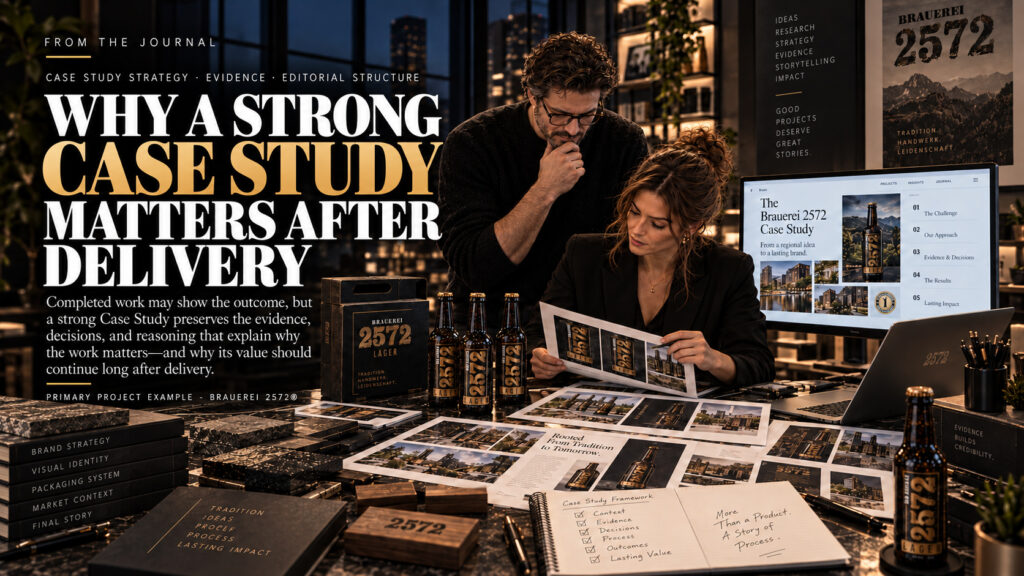


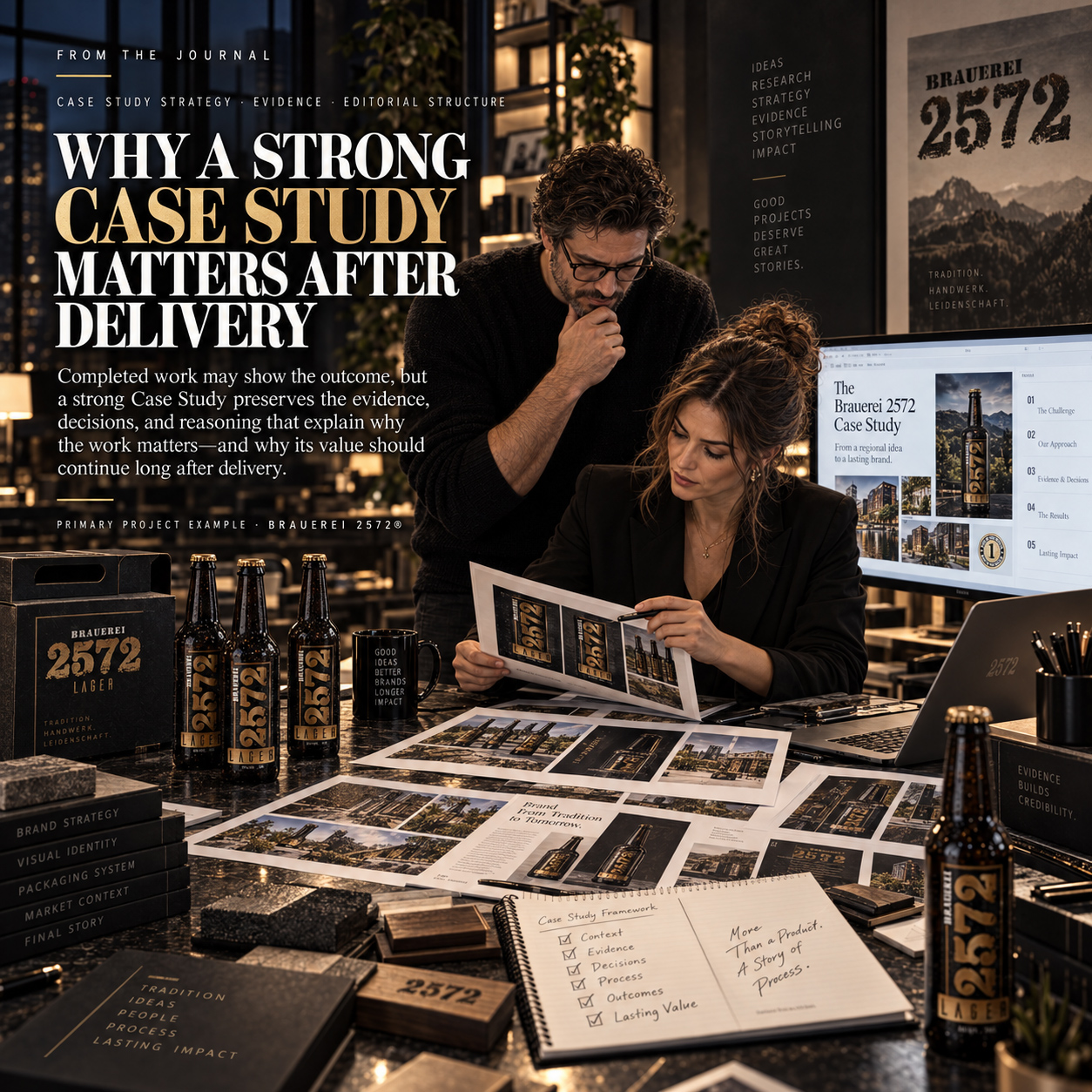
WHEN THE WORK IS FINISHED BUT ITS VALUE IS NOT
A Finished Project Shows The Result. A Strong Case Study Reveals What Made It Matter.
The final outcome may be the most visible part of a project, but it is rarely the part that explains its full professional value.
A completed project is easy to reduce to what can be seen: a finished identity, a packaging system, a digital product, a campaign, a building, a photograph, or a final presentation.
But the visible result is only where the work ends.
It does not automatically reveal what problem had to be solved, what constraints shaped the direction, which alternatives were rejected, why particular decisions were made, what evidence supported them, or what changed between the first idea and the final outcome.
That deeper layer is where much of the project’s professional intelligence lives.
A strong Case Study preserves it.
It connects the final result back to the context that created it—showing how research became direction, how direction became decisions, how decisions survived development, and how the completed work ultimately answered the original challenge.
This matters because finished work is often evaluated by people who were never present during the project itself.
A prospective client may see the design but not the strategic problem behind it. A stakeholder may see the outcome but not the trade-offs required to reach it. A future collaborator may inherit the final files without understanding which decisions were critical and which were flexible.
Without context, sophisticated work can appear deceptively simple.
And when the thinking disappears, part of the project’s value disappears with it.
The purpose of a professional Case Study is therefore not to make ordinary work sound extraordinary. It is to make the real difficulty, reasoning, evidence, process, and value already contained in the work easier to understand.
That is the difference between displaying an outcome and documenting a project.
THE FINAL RESULT PROVES THAT SOMETHING WAS CREATED.
A STRONG CASE STUDY EXPLAINS WHAT HAD TO BE UNDERSTOOD, DECIDED, DEVELOPED, AND PROVEN FOR THAT RESULT TO EXIST.
FROM FINISHED WORK TO PRESERVED PROJECT INTELLIGENCE
What A Case Study Must Preserve Before Project Value Can Travel Further
Context. Decision Logic. Evidence. Editorial Structure. Long-Term Value.
A Case Study becomes useful when it preserves more than chronology.
The objective is not to document every meeting, sketch, revision, or file. It is to identify the parts of the project that help another person understand what mattered and why.
That begins with Context.
Every project exists inside conditions: a market, audience, business objective, technical limitation, existing brand, cultural reference, operational reality, or specific problem that created the need for change.
Without context, the final solution has nothing meaningful to answer.
Decision Logic explains what happened between the challenge and the result.
Why was one direction developed while another was abandoned? Why was information reorganized? Why did one material, interaction, visual system, or structural approach make more sense than another?
Those decisions reveal professional judgment—the part of the project a final image can rarely communicate alone.
Evidence determines what can credibly be said.
Research, development material, comparisons, prototypes, photography, implementation records, measurable outcomes, client input, or documented project changes can all support the story—but only when they genuinely belong to the work.
A Case Study should never manufacture significance. It should make existing significance visible.
Editorial Structure turns those separate materials into an understandable argument.
Raw process is not automatically a story.
The reader needs hierarchy: what happened first, what changed the direction, which evidence matters, where the important decision occurred, what the final solution resolved, and why the outcome deserves attention.
Finally, Long-Term Value determines what happens after publication.
When the project is documented properly, it stops functioning only as something completed in the past. It can support future client conversations, presentations, professional education, internal knowledge, media, business development, and better understanding of the people behind the work.
These five dimensions form the framework for what follows:
01 — The Outcome Cannot Explain Itself
What disappears when only the finished work remains.
02 — The Most Valuable Work Is Often Invisible
Why judgment, alternatives, constraints, and decisions deserve to remain visible.
03 — Evidence Before Storytelling
How credible proof determines what the project can responsibly claim.
04 — Structure Creates Meaning
Why collecting material is not enough—and how editorial architecture turns evidence into understanding.
05 — Completed Work Can Have A Second Life
How a resolved project becomes lasting professional knowledge rather than a closed archive.
Together, they move the discussion away from a simple question—
“Does the final project look impressive?”
—and toward the one that matters more:
“Can someone who was never inside the project understand what made the work difficult, intelligent, credible, and valuable?”
A STRONG CASE STUDY DOES NOT ADD VALUE TO A PROJECT THAT WAS NEVER THERE.
IT PRESERVES, ORGANIZES, AND COMMUNICATES THE VALUE THE PROJECT HAS ALREADY EARNED.
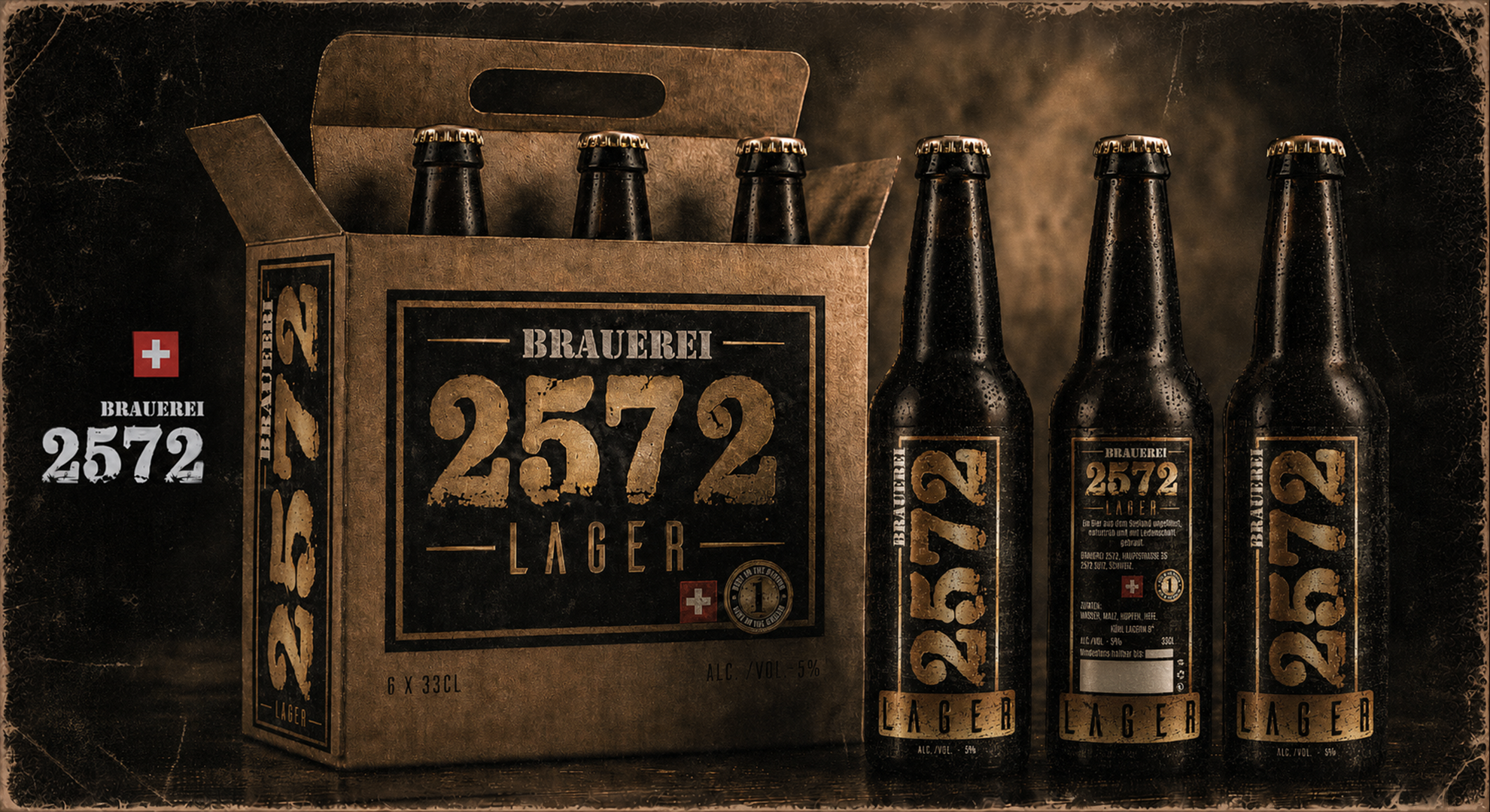
Brauerei 2572® — One Finished Packaging System. A Much Larger Story Behind It.
WHY THIS EXAMPLE MATTERS
At first glance, Brauerei 2572® can be understood through its finished bottles and packaging system.
But the completed identity alone does not explain the full project.
Behind the final presentation sit the evolution of the label architecture, hierarchy, typography, material thinking, product-family differentiation, production considerations, visual refinement, and the decisions required to transform an initial direction into one coherent packaging system.
This makes Brauerei 2572® a useful primary example for the article—not because every Case Study should look like it, but because it demonstrates the central argument clearly:
the finished object shows the outcome; the preserved development reveals the thinking that gave the outcome meaning.
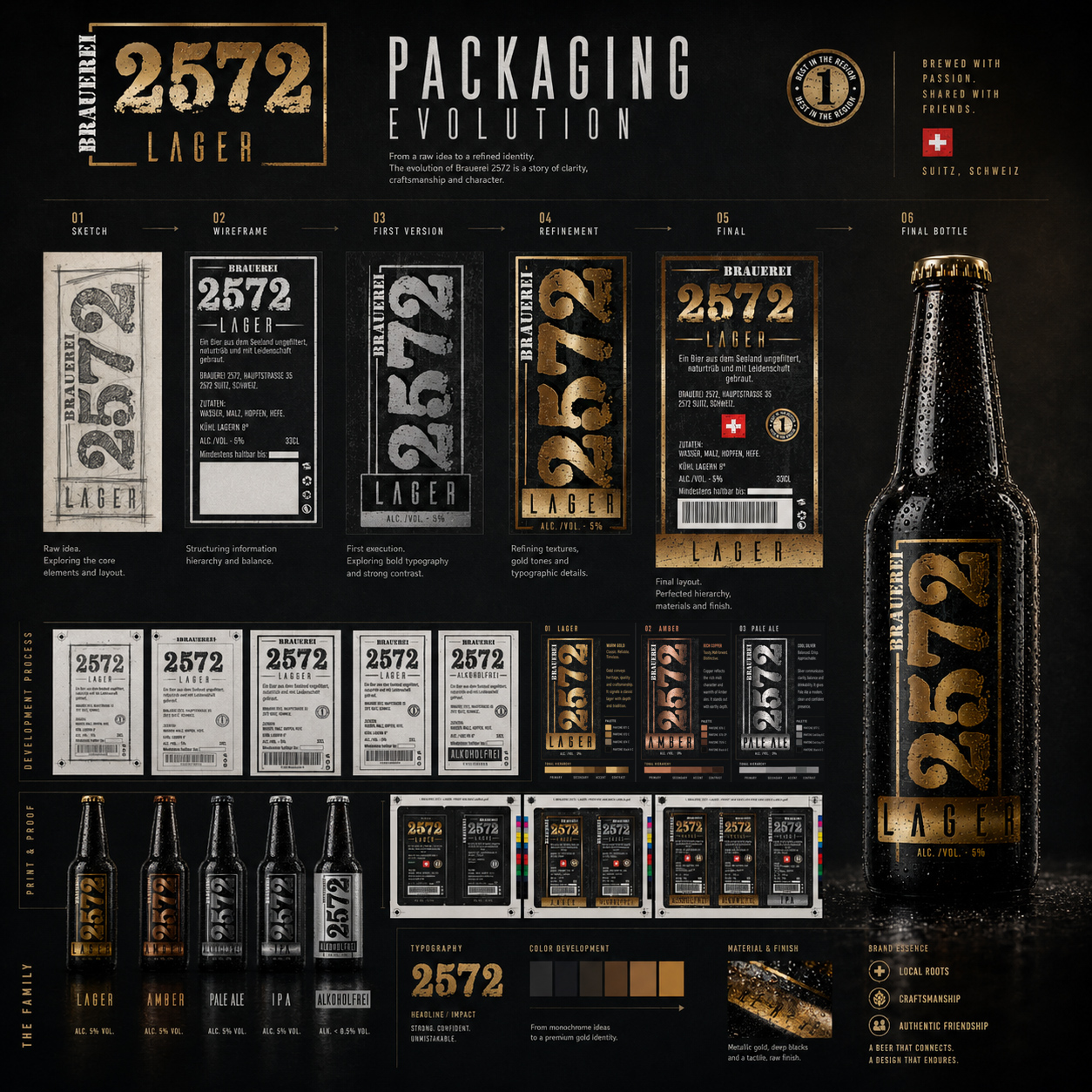
PROJECT OVERVIEW — Brauerei 2572® Packaging Evolution From Early Exploration To A Resolved Packaging System.
The development sequence preserves the relationship between exploration, structural decisions, refinement, production thinking, and final execution—revealing professional value that the finished bottle alone cannot communicate.
01 —
CONTEXT BEFORE CONCLUSION
WHY IT MATTERS
A finished project can show what was delivered. It rarely explains everything that made the result worth delivering.
The visible outcome is only the last layer of a much longer process: the original condition, the problem that needed to be solved, the constraints that shaped the work, the alternatives that were rejected, and the decisions that moved the project forward.
Without that context, even strong work can become surprisingly easy to underestimate.
A viewer sees a bottle, interface, identity, space, campaign, or final presentation. What they do not automatically see is why that solution exists in that form.
This is where a strong Case Study becomes more than documentation.
It reconstructs the professional logic behind the finished work so the audience can understand not only what changed, but why the change mattered.
Context gives the outcome meaning.
It establishes the starting point, defines the challenge, identifies what was at stake, and creates the reference against which every later decision can be understood.
Without context, the result can be admired. With context, it can be evaluated.
OUTCOME WITHOUT CONTEXT
When The Final Work Is Visible But The Reason Behind It Is Missing
A finished presentation may look complete while communicating very little about the project itself.
The audience sees polished photography, final packaging, interfaces, layouts, or campaign assets—but has no reliable way to understand the original problem, the strategic direction, the constraints, or the reasoning that produced them.
The issue is not the quality of the work.
It is the absence of a professional frame of reference.
Without one, important decisions collapse into appearance.
Research becomes invisible.
Iteration disappears.
Constraints look accidental.
Strategic choices become decoration.
The final result is asked to explain an entire project by itself.
And it cannot.
WHEN A FINISHED PROJECT IS PRESENTED AS AN OUTCOME WITHOUT ITS ORIGIN
WHY THIS EXAMPLE MATTERS
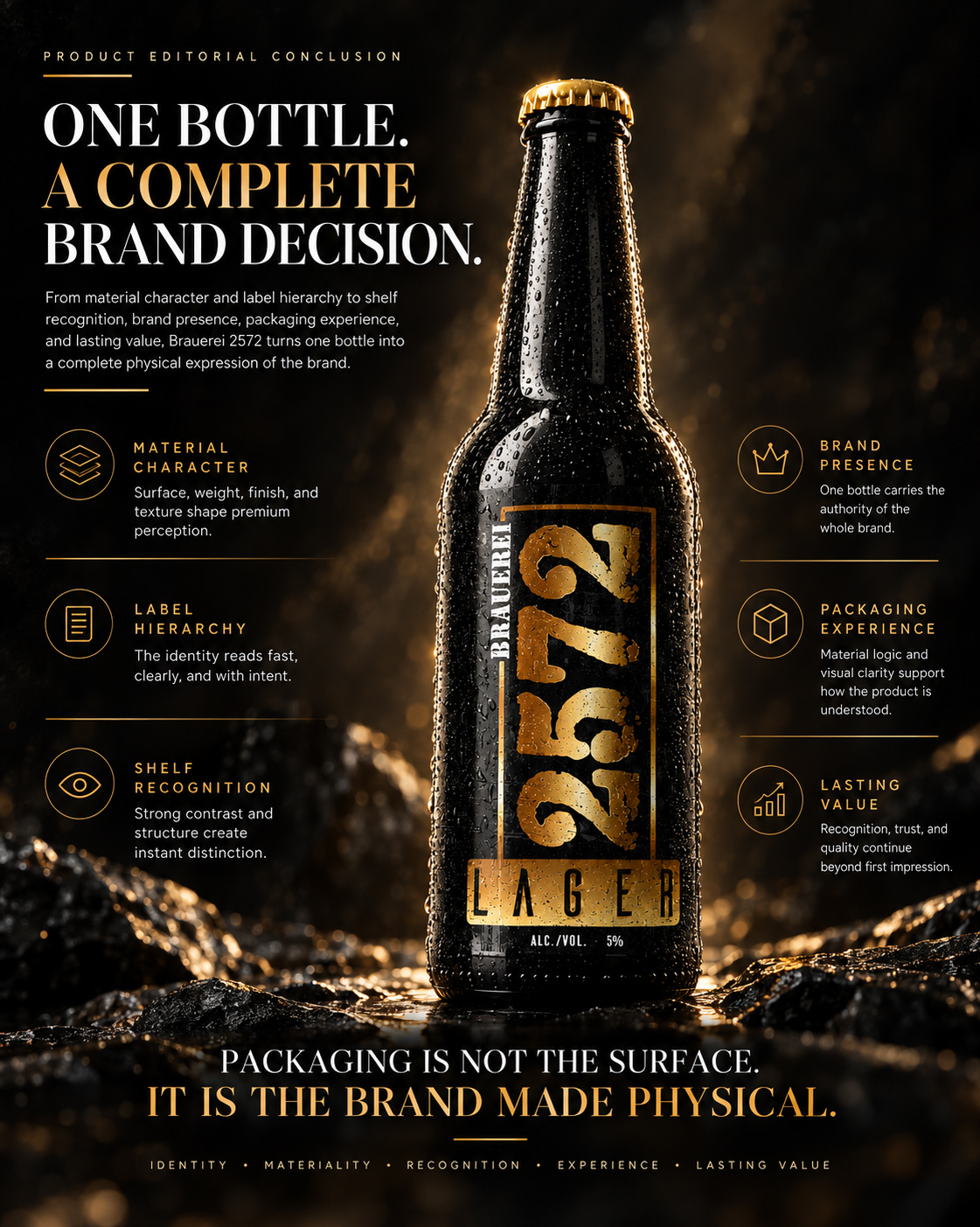
Brauerei 2572® can be presented simply as a finished premium beer packaging system.
That would show the label, bottle family, production finish, and final visual identity—but it would leave the reader with only the last frame of the project.
What would remain invisible is the relationship between regional heritage, packaging hierarchy, product differentiation, material choices, production requirements, and the development of one coherent family across multiple beer variants.
The work would still look finished.
The thinking that gives the finished work meaning would largely disappear.
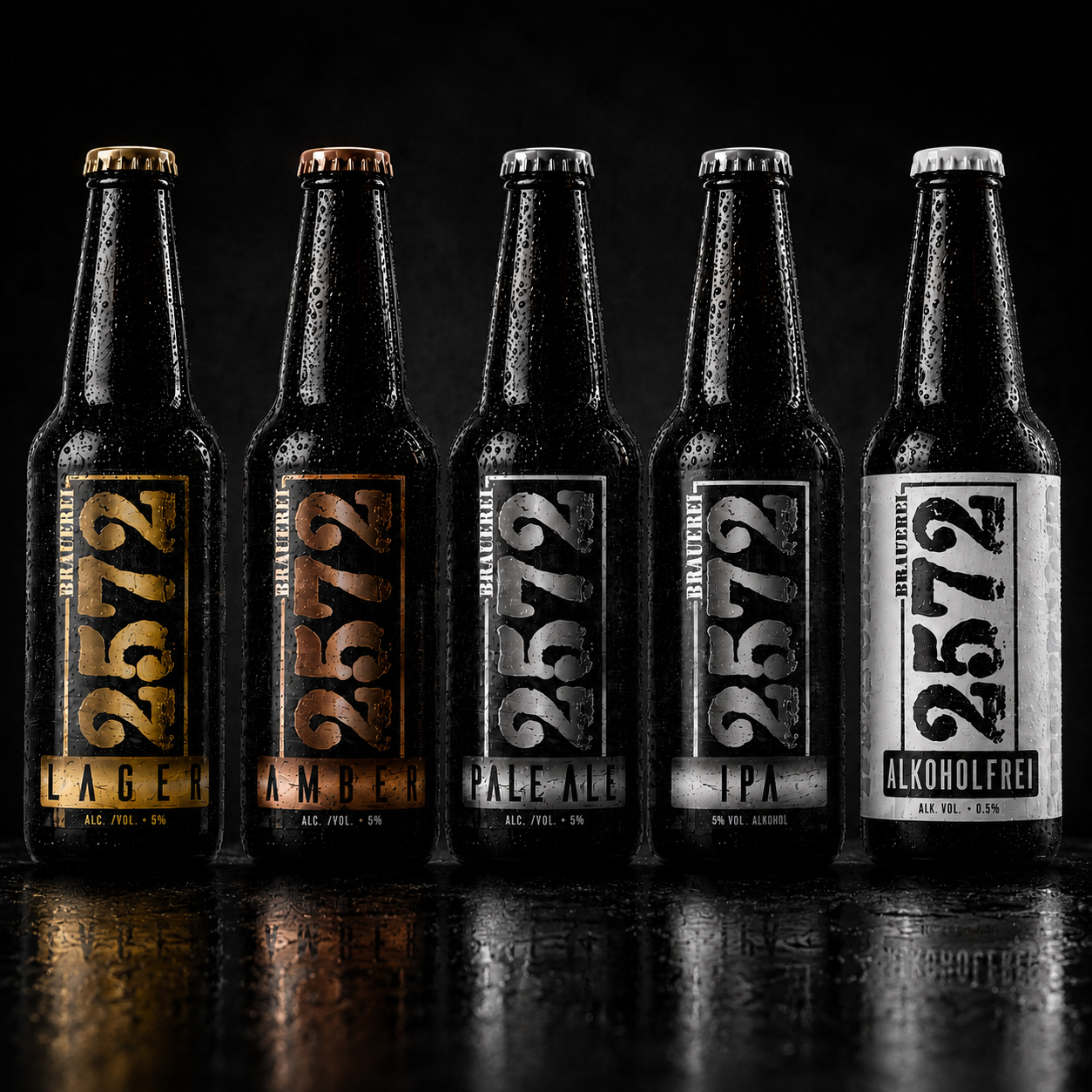
FINAL OUTCOME ONLY — The Product Family Shows What Was Delivered, Not What Made It Coherent
The completed Brauerei 2572® range proves that a recognizable packaging system exists. By itself, it cannot explain the context, constraints, material decisions, or professional reasoning that created it.
WHAT
GETS LOST
A portfolio image can prove that something was completed.
It cannot, by itself, explain:
What existed before?
What problem required intervention?
Which conditions shaped the solution?
Which decisions changed the direction?
What evidence supports the final result?
When those questions remain unanswered, the audience must invent the missing story for itself.
That weakens professional understanding—even when the finished work is excellent.
The final result may communicate quality, polish, and confidence, but it does not automatically reveal the reasoning, constraints, or decisions that gave the work its direction or the evidence that made those choices credible.
Without that context, professional value becomes harder to evaluate because the audience can see what was delivered, but not what had to be understood, tested, or resolved to make that outcome possible.
CASE STUDY
DIRECTION
MAKE THE STARTING POINT VISIBLE BEFORE ASKING THE AUDIENCE TO VALUE THE OUTCOME
A strong Case Study establishes the project’s frame before presenting its final answer.
For Brauerei 2572®, that means connecting the visible packaging system to the conditions that produced it:
Origin → Challenge → Context → Strategic Direction → Development → Final System
The purpose is not to document every conversation or every draft.
It is to preserve the information required to understand why the project moved in the direction it did.
The reader should be able to see the difference between what was inherited, what was questioned, what was developed, and what ultimately became part of the finished work.
Context transforms a final image from an isolated object into the conclusion of a professional process.
WHEN THE FINAL RESULT CAN BE TRACED BACK TO THE MATERIAL DECISIONS THAT SHAPED IT
WHY THIS EXAMPLE MATTERS
Brauerei 2572® becomes more valuable as a Case Study when the finished packaging is connected to the material system that gives it physical character.
Paper, metallic finishes, texture, color, varnish, label construction, and glass are not decorative afterthoughts. They are professional decisions that determine how the identity behaves in production and across the complete product family.
Preserving those relationships allows the audience to understand how visual intent became a physical brand experience.
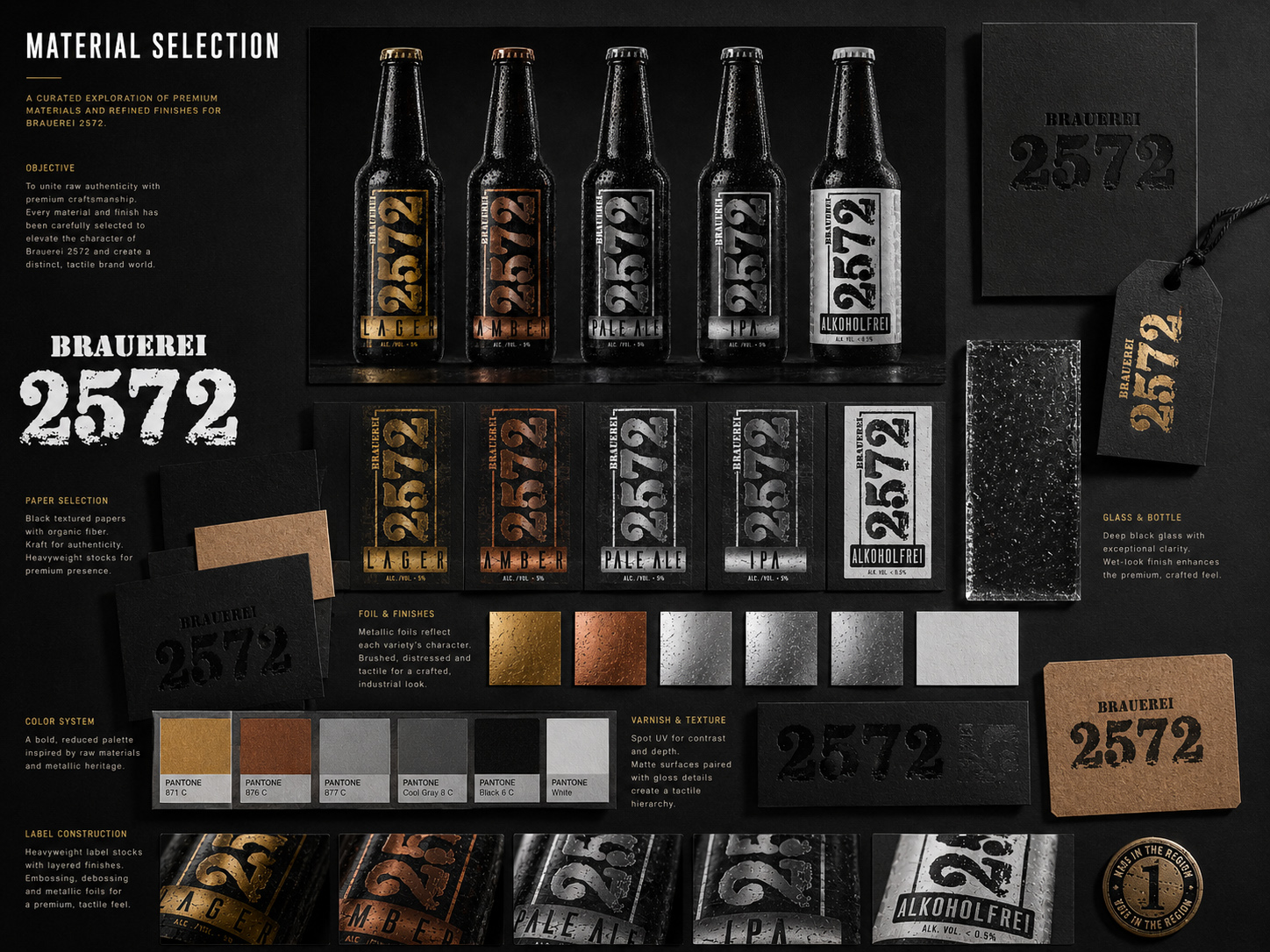
PROJECT EVIDENCE — 01
Brauerei 2572® — How Material Decisions Turn A Visual Identity Into A Physical Brand Experience
The finished packaging becomes more meaningful when the reader can see the material decisions behind it—paper, metallic finishes, texture, color, varnish, label construction, and the relationship between each expression in the product family.
The bottle is no longer presented as an isolated finished object.
It becomes the physical consequence of a deliberately constructed system—and the visible result of everything that came before it.
MATERIAL CHOICES DO NOT DECORATE THE FINAL RESULT.
THEY HELP EXPLAIN WHY THE RESULT FEELS THE WAY IT DOES.
A strong Case Study makes those decisions visible, connecting visual identity with the materials, finishes, and production choices that carry it into the real world.
What appears effortless at the end becomes understandable as a sequence of deliberate professional judgments.
THE FINAL RESULT SHOWS WHAT THE BRAND BECAME.
THE EVIDENCE REVEALS WHAT MADE THAT RESULT POSSIBLE.
02 —
WHAT A STRONG CASE STUDY PRESERVES
WHY IT MATTERS
A finished project can preserve the appearance of the outcome while losing much of the intelligence that produced it.
The final image may show what succeeded. It rarely explains which constraints shaped the work, which alternatives were rejected, which decisions changed direction, or which details required the greatest professional judgment.
That distinction matters because a strong Case Study is not simply a record of what was delivered.
It preserves enough project context, evidence, decisions, and reasoning for another person to understand how the result became possible.
This does not mean documenting everything.
Raw files, unused concepts, notes, revisions, references, prototypes, production material, and final assets only become useful when their relationship is clear.
A strong Case Study identifies what deserves to remain visible.
It preserves the moments that explain why the project changed, what the decisions protected, and how the final outcome earned its form.
OUTCOME WITHOUT CONTEXT
The Finished Work Becomes The Entire Record Of The Project
A strong final presentation can still leave important questions unanswered.
Beautiful photography, polished mockups, finished packaging, or a complete digital product can establish quality immediately.
But when the presentation begins and ends with the outcome, the audience must infer the work behind it.
They cannot clearly see what problem existed before the solution.
They cannot distinguish an intentional decision from an aesthetic preference.
They cannot understand which parts required research, testing, refinement, production knowledge, or strategic judgment.
The project may still look impressive.
But its professional value becomes harder to evaluate because too much of the reasoning has disappeared.
This is not a failure of the final design.
It is a failure of the record surrounding it.
When A Strong Product Family Is Visible — But The System Behind It Is Not
WHY THIS EXAMPLE MATTERS
Brauerei 2572® can be understood immediately as a coherent finished packaging family.
Lager, Amber, Pale Ale, IPA, and Alkoholfrei share enough structure to appear related while remaining individually recognizable.
But the finished bottles alone do not explain how that consistency was created.
They do not reveal the hierarchy, material decisions, color differentiation, label architecture, production considerations, or refinement required to transform separate variants into one recognizable system.
The result proves that a system exists.
The Case Study must preserve enough evidence to explain how that system was built.
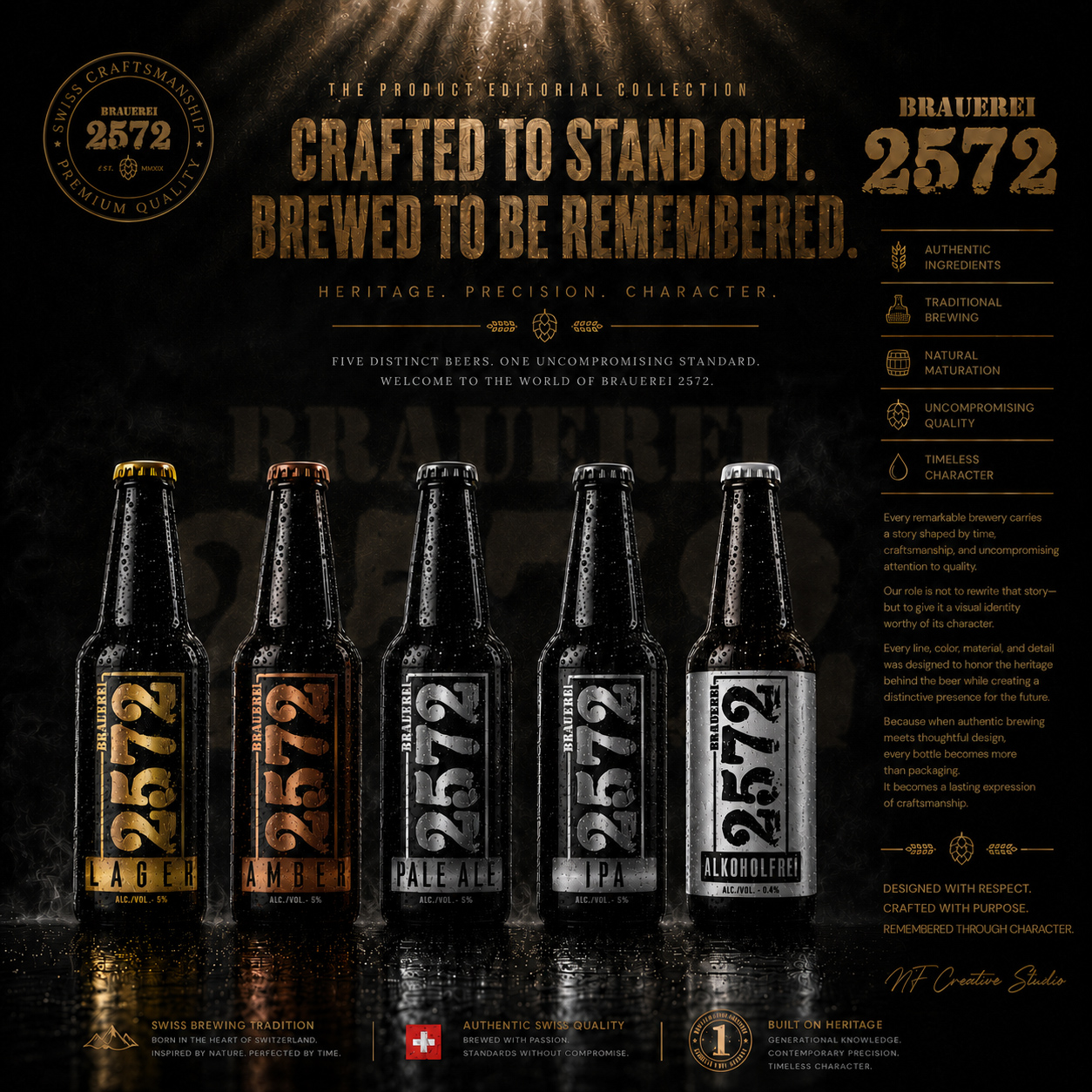
OUTCOME-ONLY RECORD
A Complete Product Family Can Show What Was Achieved Without Revealing The Decisions That Made The System Coherent.
The finished collection communicates consistency, differentiation, and shelf presence—but by itself, it cannot show the professional reasoning that connects those qualities.
WHAT
GETS LOST
WHEN THE ARCHIVE STOPS AT THE FINAL RESULT
When only finished work remains visible, decision history collapses into appearance.
Research becomes invisible.
Alternatives disappear.
Material choices look inevitable.
Refinement is compressed into one polished image.
Production knowledge is separated from design intent.
And choices that may have required significant professional judgment can appear effortless or arbitrary.
What also disappears is the chain of reasoning that allows another person to understand why the final direction was appropriate, which constraints shaped it, and which decisions carried the most professional weight. Without that context, the outcome can still look complete while the deeper value of the work becomes difficult to evaluate.
A Case Study restores those relationships.
CASE STUDY
DIRECTION
PRESERVE THE DECISIONS THAT EXPLAIN THE OUTCOME
The objective is not to publish every stage.
It is to identify the evidence that helps the reader understand the project more intelligently.
A useful Case Study record may preserve:
Context → Constraints → Exploration → Decisions → Refinement → Production → Outcome → Learning
Each stage should exist because it answers a meaningful question.
What was being solved?
What changed?
Why was one direction stronger than another?
Which decisions affected the wider system?
What had to survive production?
What does the final result prove?
The Case Study becomes stronger when evidence is selected according to meaning, not volume.
PROJECT EVIDENCE
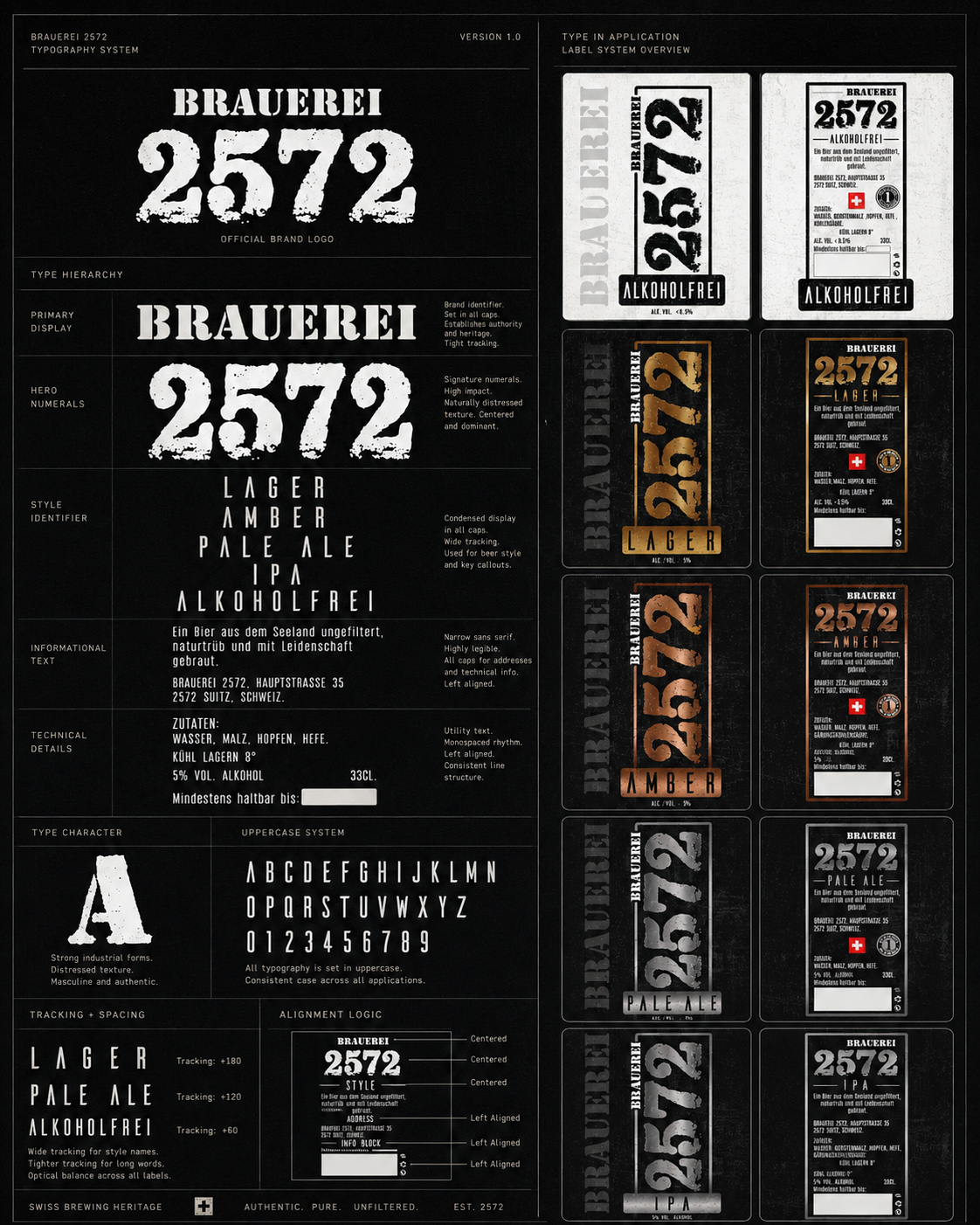
BRAUEREI 2572® — THE FINISHED PACKAGING AS A SYSTEM, NOT AN ISOLATED OBJECT
Brauerei 2572® becomes more useful as a Case Study when the final packaging is connected to the architecture that governs the complete family.
The relationship between front and back labels, product hierarchy, variant differentiation, technical information, recurring structure, and visual consistency reveals that the finished bottles are not independent compositions.
They are expressions of one coordinated packaging system.
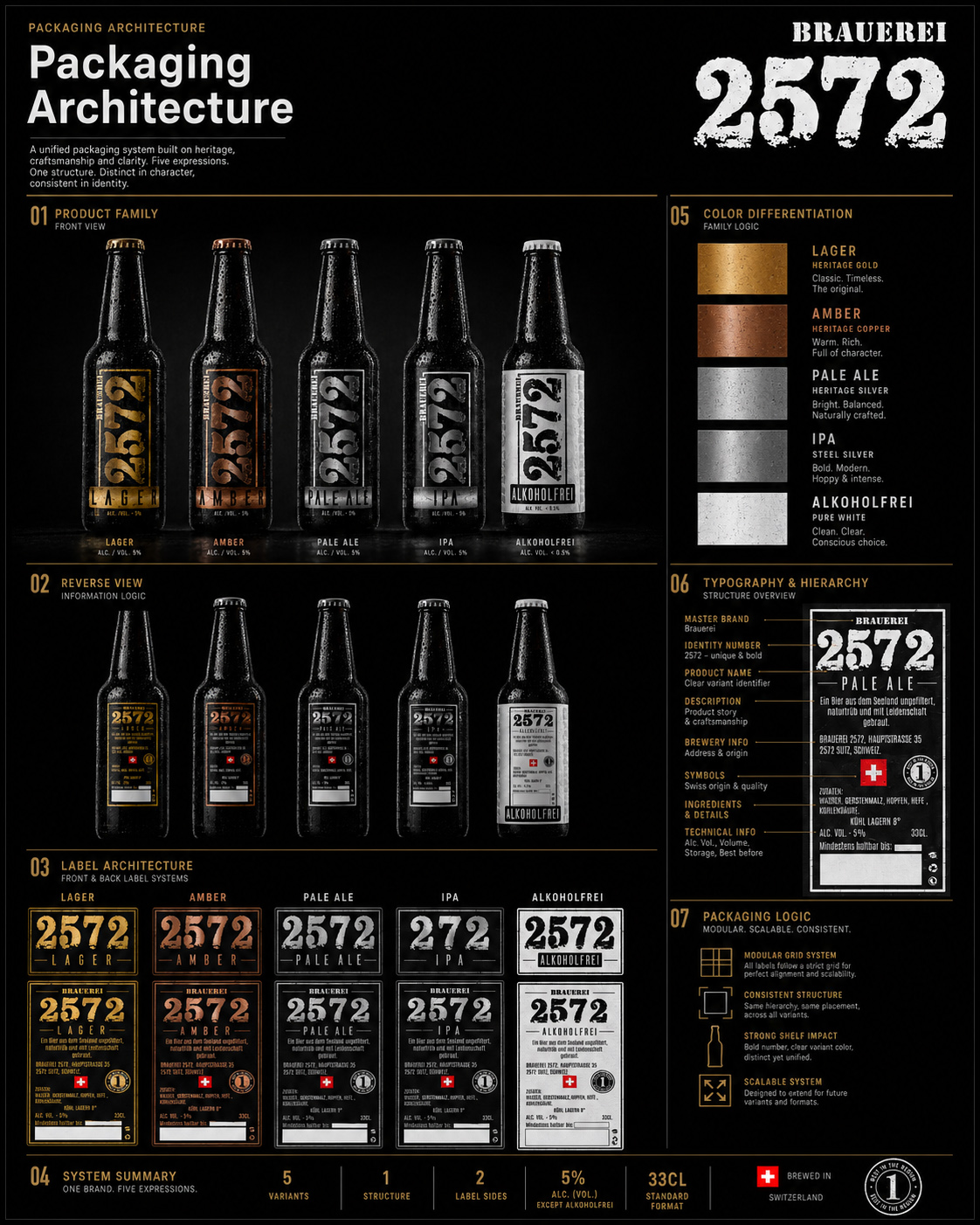
PROJECT EVIDENCE — 01
SYSTEM ARCHITECTURE — One Brand Structure Preserved Across Five Product Expressions
The packaging architecture makes the underlying system visible: shared hierarchy, recurring information logic, controlled variation, and scalable relationships across the complete Brauerei 2572® family.
The final result becomes easier to understand because the reader can see what remains constant, what changes, and why both are necessary.
When Project Evidence Preserves More Than Form
A strong Case Study should also retain the decisions that may disappear completely once production is finished.
Color is one example.
In the completed product family, the differences between Lager, Amber, Pale Ale, IPA, and Alkoholfrei appear natural.
The Case Study can show that those differences were not arbitrary decoration.
They form part of a deliberate recognition system in which shared structure creates unity while controlled variation creates distinction.
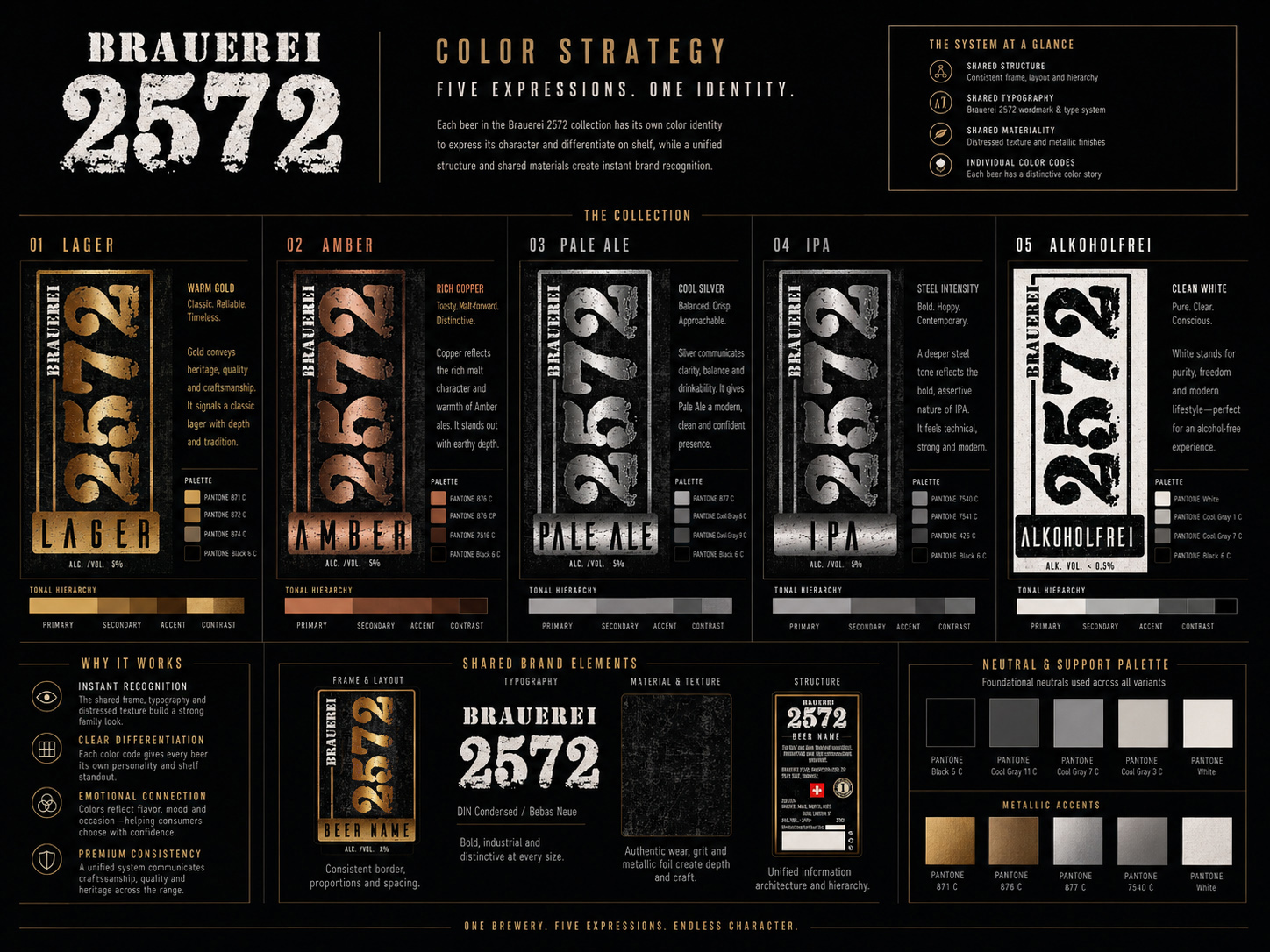
PROJECT EVIDENCE — 02
COLOR STRATEGY — Five Expressions Connected Through One Recognizable Identity
The preserved palette reveals how individual product character can develop without breaking the larger brand system.
Gold, copper, silver, steel, and white become more than surface treatments.
They operate as structured visual evidence of hierarchy, differentiation, and brand continuity.
PRESERVED PROJECT INTELLIGENCE
The Strongest Case Studies Preserve Relationships — Not Just Assets
The value of project evidence does not come from the number of files that survive.
It comes from preserving the relationships between them.
The final bottle connects to the packaging architecture.
The architecture connects to hierarchy.
Hierarchy connects to differentiation.
Differentiation connects to material and color decisions.
Those decisions connect back to the original objective.
That is what transforms documentation into professional knowledge.
A STRONG CASE STUDY DOES NOT PRESERVE EVERYTHING THAT HAPPENED.
IT PRESERVES THE EVIDENCE REQUIRED TO UNDERSTAND WHY THE FINAL RESULT BECAME WHAT IT IS.
03 —
EVIDENCE BEFORE STORYTELLING
WHY IT MATTERS
A Case Study becomes stronger when its evidence is selected with purpose, not simply collected.
Projects may leave behind sketches, material tests, production files, rejected directions, photographs, technical references, and final assets.
Showing all of them does not automatically explain the work.
The reader still needs to understand what each piece proves and why it matters.
Strong Case Study storytelling therefore begins with evidence.
A material test can explain physical character.
A production file can prove technical resolution.
A rejected direction can reveal professional judgment.
A finished application can demonstrate the consequence.
The objective is not to document every stage.
It is to preserve the evidence that makes the project’s decisions, development, and final value easier to understand.
THE STRONGEST PROJECT STORY IS NOT THE ONE WITH THE MOST MATERIAL. IT IS THE ONE IN WHICH EVERY PIECE OF EVIDENCE HAS A PURPOSE.
OUTCOME WITHOUT CONTEXT
WHEN MORE PROJECT MATERIAL CREATES MORE VOLUME — BUT NOT MORE UNDERSTANDING
A Case Study can contain excellent imagery and still feel unclear.
The problem appears when sketches, mockups, details, production files, and finished work are presented without hierarchy.
The reader can see that work happened.
But they cannot clearly distinguish:
what influenced the direction,
what changed,
what required judgment,
and what ultimately proved the decision.
Evidence without interpretation becomes an archive.
A strong Case Study turns that archive into professional meaning.
WHEN BEAUTIFUL DETAIL IS VISIBLE — BUT ITS PURPOSE IS NOT
WHY THIS EXAMPLE MATTERS
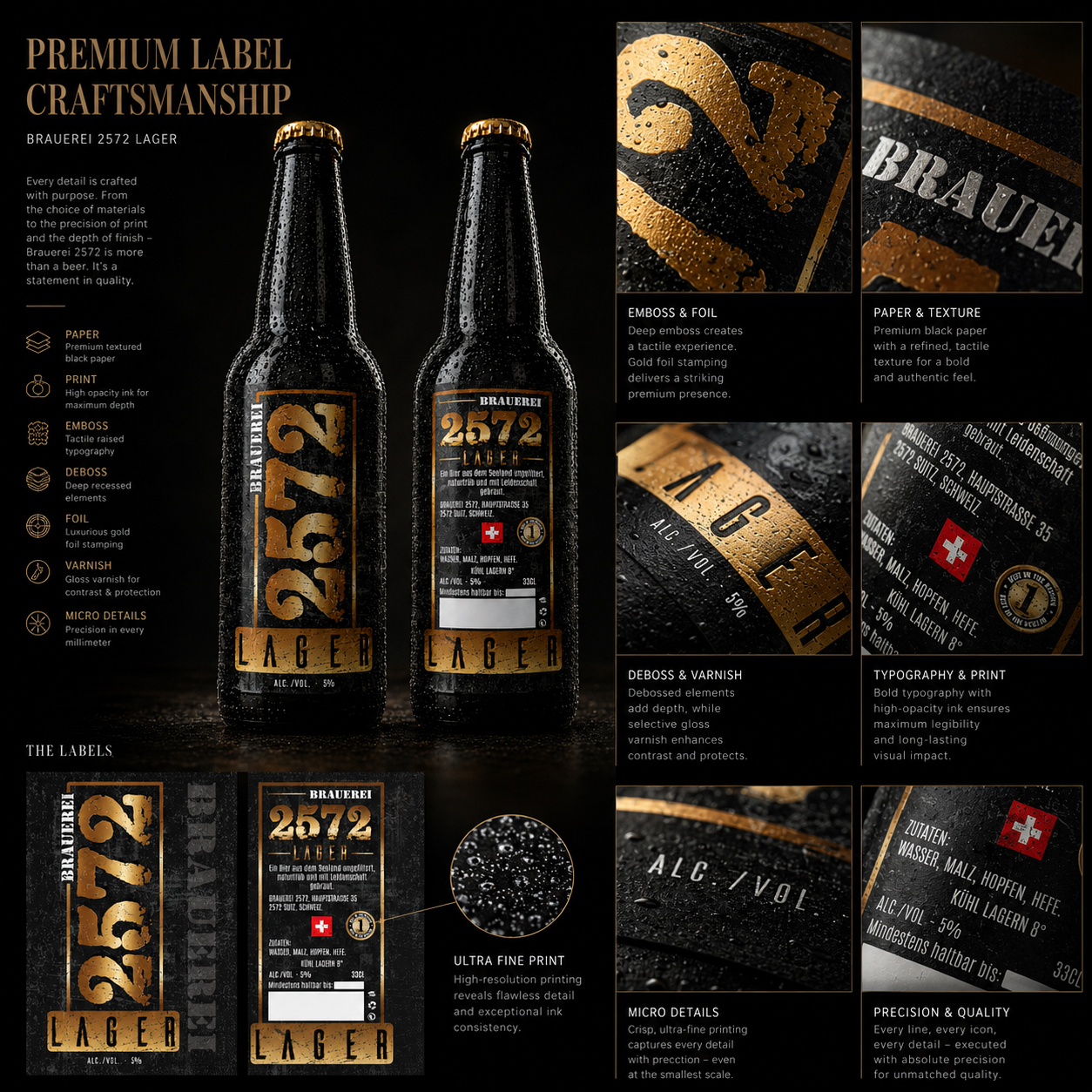
Brauerei 2572® contains material and finishing decisions that contribute directly to the character of the final packaging.
Paper, texture, foil, varnish, print quality, and fine label detail become more useful as evidence when the reader can understand what those decisions contribute to the finished result.
The detail is no longer shown simply because it looks premium.
It begins to explain how the visual identity became a physical product.
EVIDENCE WITHOUT INTERPRETATION
Material Detail Can Demonstrate Quality Without Explaining The Professional Decisions Behind It
Beautiful craftsmanship proves that a high level of execution exists.
A Case Study must go further and connect that execution to material choice, visual character, production intent, and the final brand experience.
WHAT
GETS LOST
WHEN PROJECT MATERIAL IS SHOWN WITHOUT A CLEAR ROLE
The reader may see:
material tests,
label details,
technical files,
production references,
and finished photography—
without understanding which question each one answers.
The work remains visible.
The reasoning becomes significantly harder to follow.
CASE STUDY
DIRECTION
BUILD A SEQUENCE OF PROOF — NOT A COLLECTION OF FILES
Every important asset should help answer a project question.
A useful sequence may be:
Question → Evidence → Decision → Consequence → Proof
The sequence does not need to contain everything.
It needs to preserve enough information for the reader to understand why the project moved forward in the direction it did.
That is what turns documentation into a Case Study.
WHEN TECHNICAL EVIDENCE EXPLAINS WHAT THE FINISHED IMAGE CANNOT
WHY THIS EXAMPLE MATTERS
The final Brauerei 2572® label communicates the visual result.
Production material reveals another layer: how that result was prepared to survive real execution.
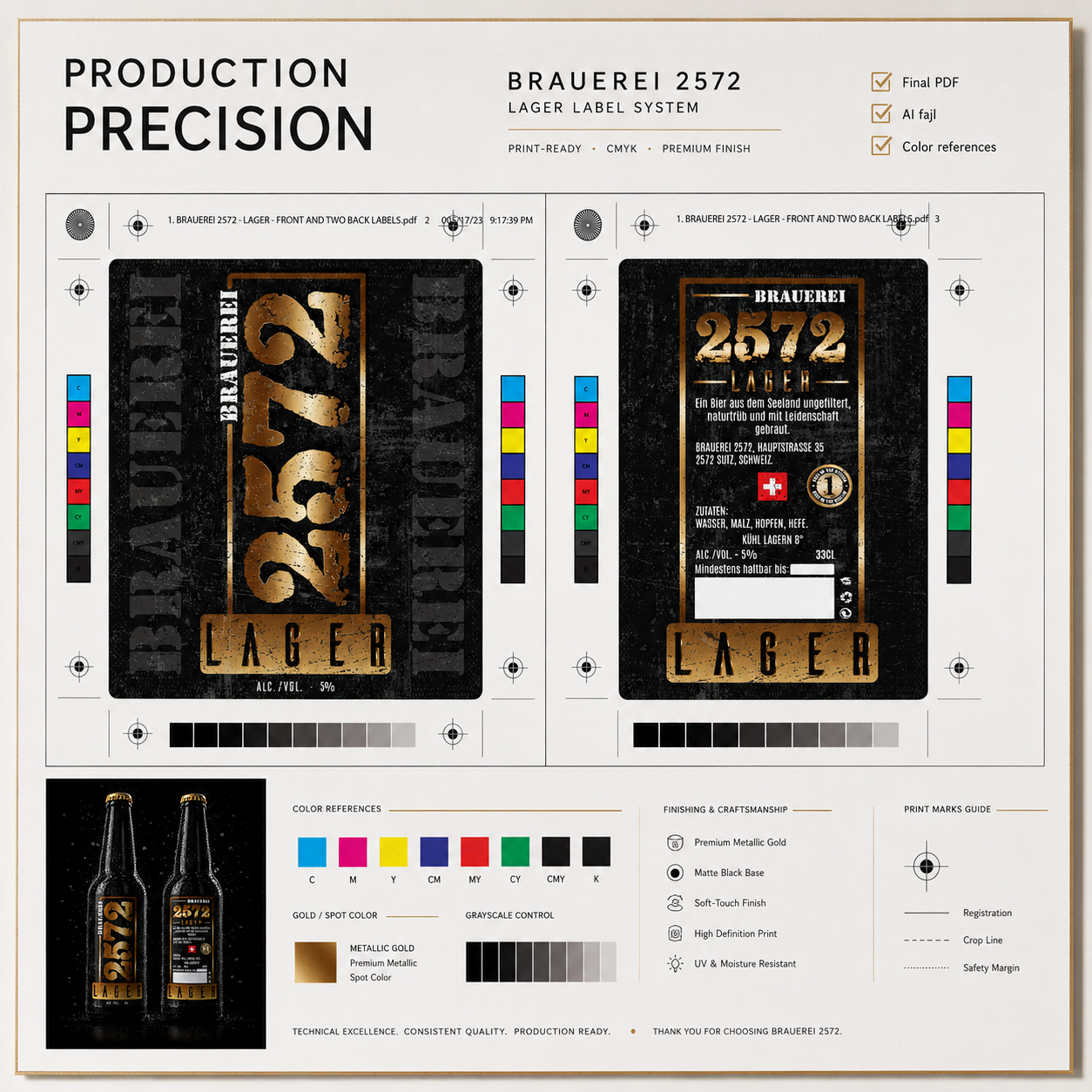
Color references, print preparation, registration, production accuracy, and finishing control demonstrate that design intent continued beyond appearance.
They connect creative direction with technical delivery.
PROJECT EVIDENCE — 01
PRODUCTION EVIDENCE — The Final Design Supported By The Technical Decisions Required To Produce It
Production evidence shows that the finished packaging was not only visually resolved.
It was translated into controlled specifications capable of preserving hierarchy, color, detail, and material character in production.
The final image shows what was achieved.
The technical evidence helps explain how that result became achievable.
PRESERVED PROJECT INTELLIGENCE
The Value Is In The Relationship Between The Evidence
Material detail explains physical character.
Production evidence explains technical control.
The finished packaging proves the result.
A strong Case Study connects those layers so the reader can follow how intent became execution and execution became outcome.
EVIDENCE DOES NOT NEED TO SHOW EVERYTHING.
IT NEEDS TO SHOW ENOUGH TO MAKE THE PROJECT’S VALUE UNDERSTANDABLE.
WHEN A CHANGED PRODUCT CONDITION REVEALS WHICH DECISIONS REALLY MATTER
WHY THIS EXAMPLE MATTERS
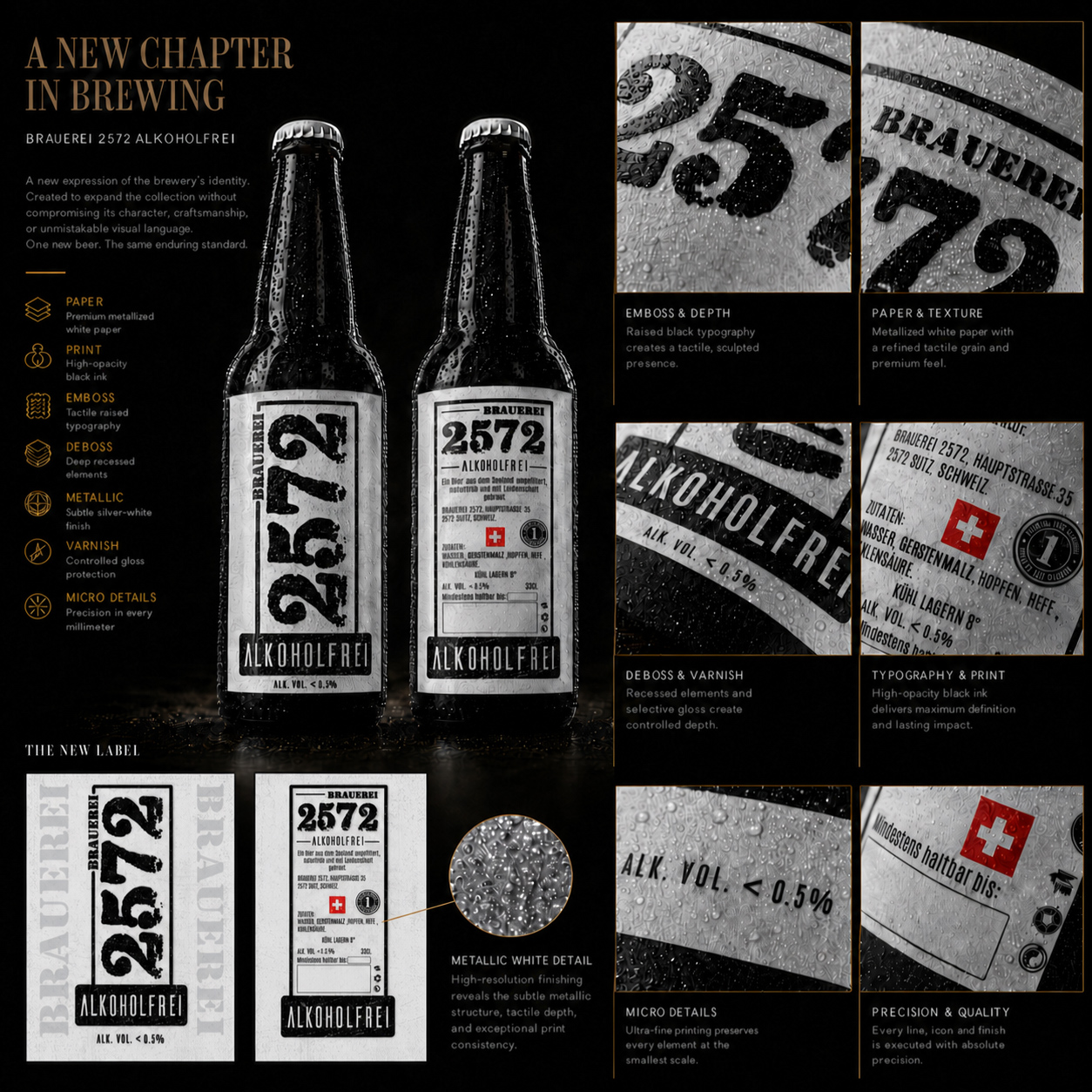
Brauerei 2572® Alkoholfrei introduces a significantly different product condition while remaining part of the same established packaging family.
That makes it useful as comparative project evidence.
The metallic white surface, black typography, revised contrast, and alcohol-free designation visibly change the expression.
At the same time, the underlying hierarchy, proportions, naming logic, and recognizable 2572 structure remain controlled.
The value of this evidence is not simply that the new variant looks related.
It shows which decisions were deliberately preserved, which were deliberately changed, and how both choices supported the final result.
PROJECT EVIDENCE — 02
VARIANT EVIDENCE — A Changed Product Condition Made The Decision Logic Visible
The Alkoholfrei edition shows how a Case Study can preserve more than the appearance of a finished variant.
Its material treatment, contrast, typography, hierarchy, and product designation reveal where the system required continuity and where the new condition required adaptation.
The white metallic finish and black graphic language create clear differentiation.
The retained structure explains why that differentiation still belongs to the same project.
Together, those relationships make the design decision easier to understand and professionally assess.
PRESERVED DECISION LOGIC
The Strongest Evidence Shows Not Only What Changed — But Why The Change Was Necessary
One image can prove a finished result.
A stronger Case Study preserves the relationship between condition, decision, adaptation, and outcome.
The Alkoholfrei variant becomes valuable evidence because the reader can see both sides of the decision:
what needed to remain recognizable and what needed to change for the new product condition to work.
That is the difference between documenting another design and preserving the professional reasoning behind it.
EVIDENCE BECOMES VALUABLE WHEN IT SHOWS NOT ONLY WHAT CHANGED, BUT WHY THAT CHANGE WAS NECESSARY—AND WHAT HAD TO REMAIN TRUE.
04 —
WHY DIFFERENT PROJECTS NEED DIFFERENT TYPES OF PROOF
WHY IT MATTERS
A strong Case Study does not become credible by showing more material.
It becomes credible by showing the evidence that matters to the type of project being evaluated.
A packaging redesign, a cultural identity, a digital product, and a premium beauty brand do not create value in the same way.
Their evidence should not be identical either.
For packaging, the critical proof may be hierarchy, differentiation, production logic, or functional communication.
For a culturally rooted identity, it may be research, symbolism, interpretation, and the relationship between heritage and contemporary expression.
For a digital product, static screens are not enough. The evidence must reveal behavior, interaction, structure, and continuity across the experience.
For a premium identity, the question may be whether visual decisions create recognition, trust, character, and desirability across multiple touchpoints.
The editorial structure can remain disciplined.
The proof must change with the question the project needs to answer.
OUTCOME WITHOUT CONTEXT
WHEN EVERY PROJECT IS ASKED TO PROVE VALUE IN THE SAME WAY
A uniform presentation can make very different projects appear deceptively similar.
A polished final image may demonstrate craft.
It does not automatically reveal what kind of professional problem was solved.
Packaging can become a gallery of attractive mockups.
Digital work can become a collection of screens.
A culturally informed identity can be reduced to surface aesthetics.
A premium brand can appear desirable without explaining how that perception was constructed.
The problem is not visual consistency.
It is evidence selected by format instead of meaning.
When that happens, the Case Study may look coherent while failing to prove what actually made each project valuable.
WHEN FOUR DIFFERENT PROJECTS REQUIRE FOUR DIFFERENT KINDS OF EVIDENCE
WHY THIS EXAMPLE MATTERS
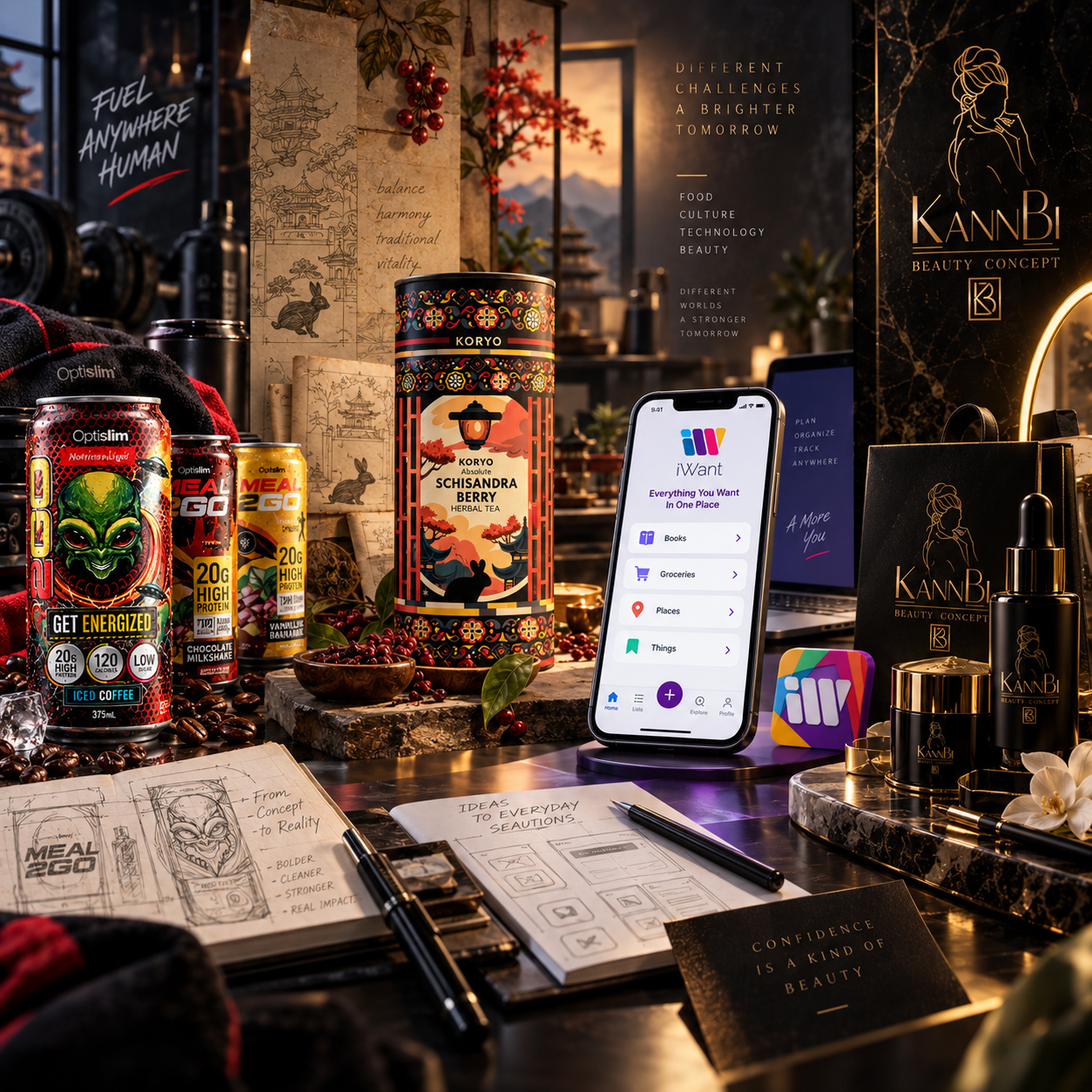
MEAL 2 GO®, KORYO®, iWant®, and KannBi Beauty Concept® all contain strong finished work.
But the most useful evidence inside each project answers a different question.
MEAL 2 GO® must explain how communication, hierarchy, product differentiation, and packaging logic make the product easier to understand.
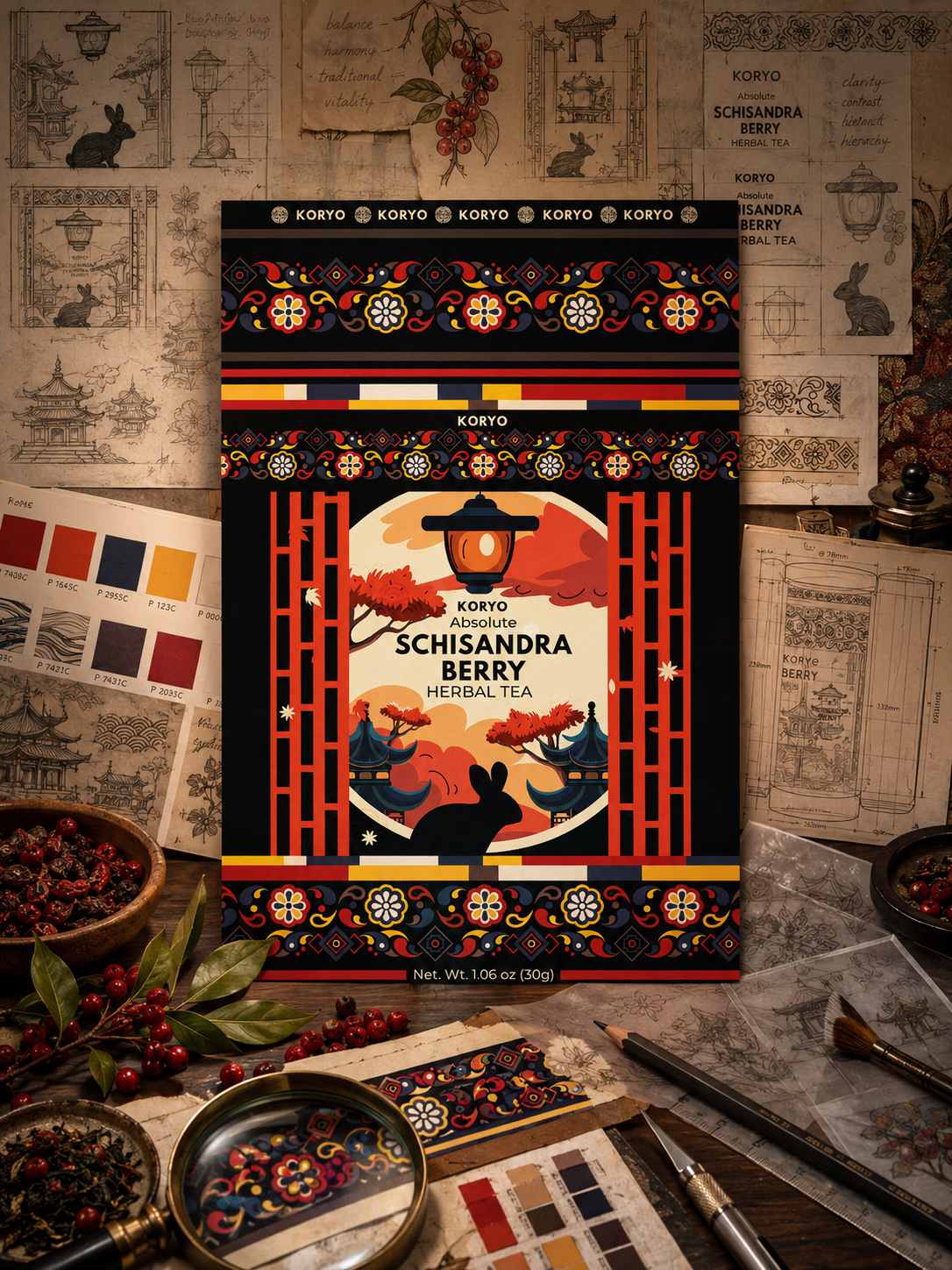
KORYO® must preserve the cultural references, interpretation, symbolism, and editorial reasoning that give the identity its depth.
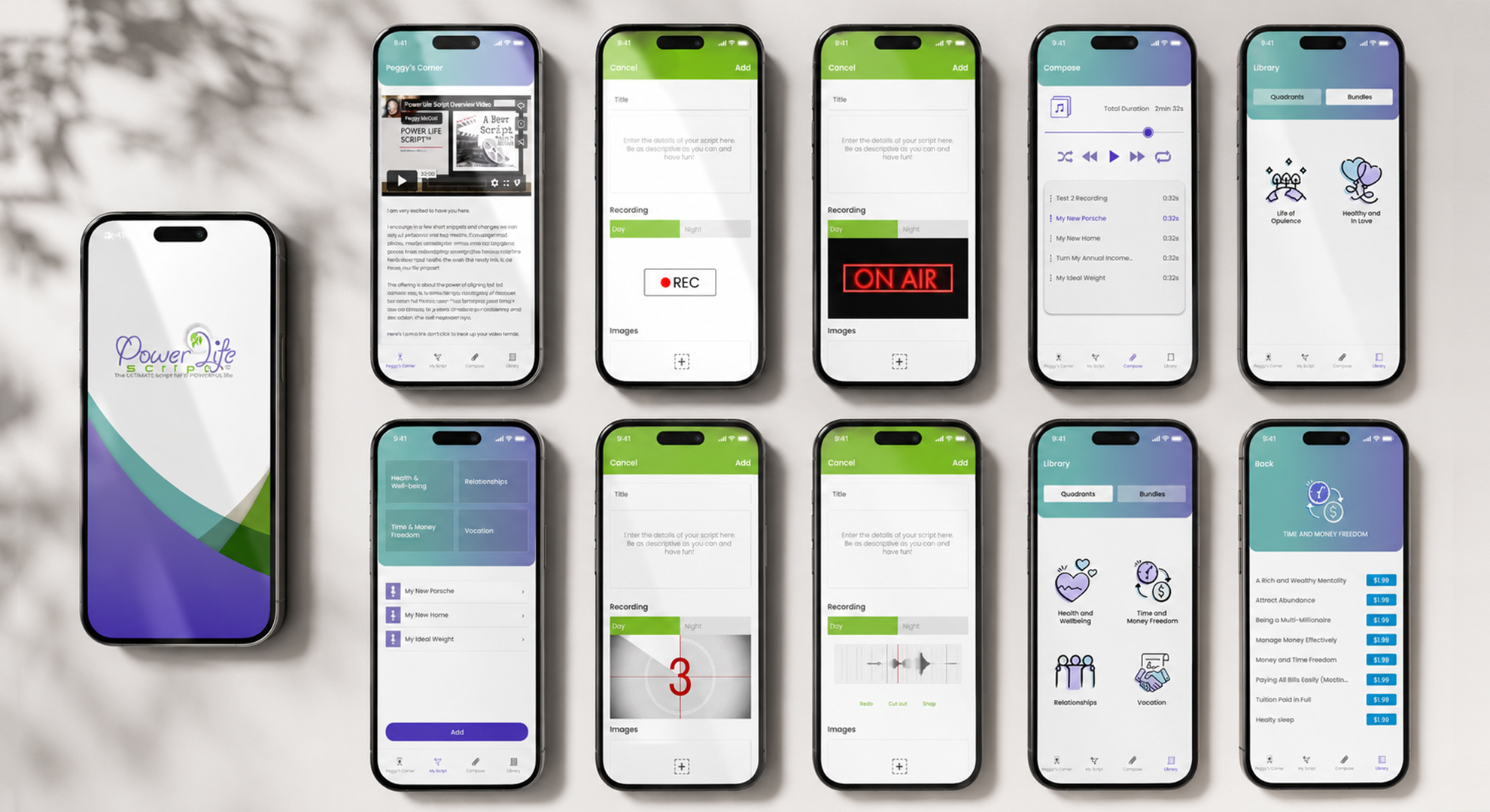
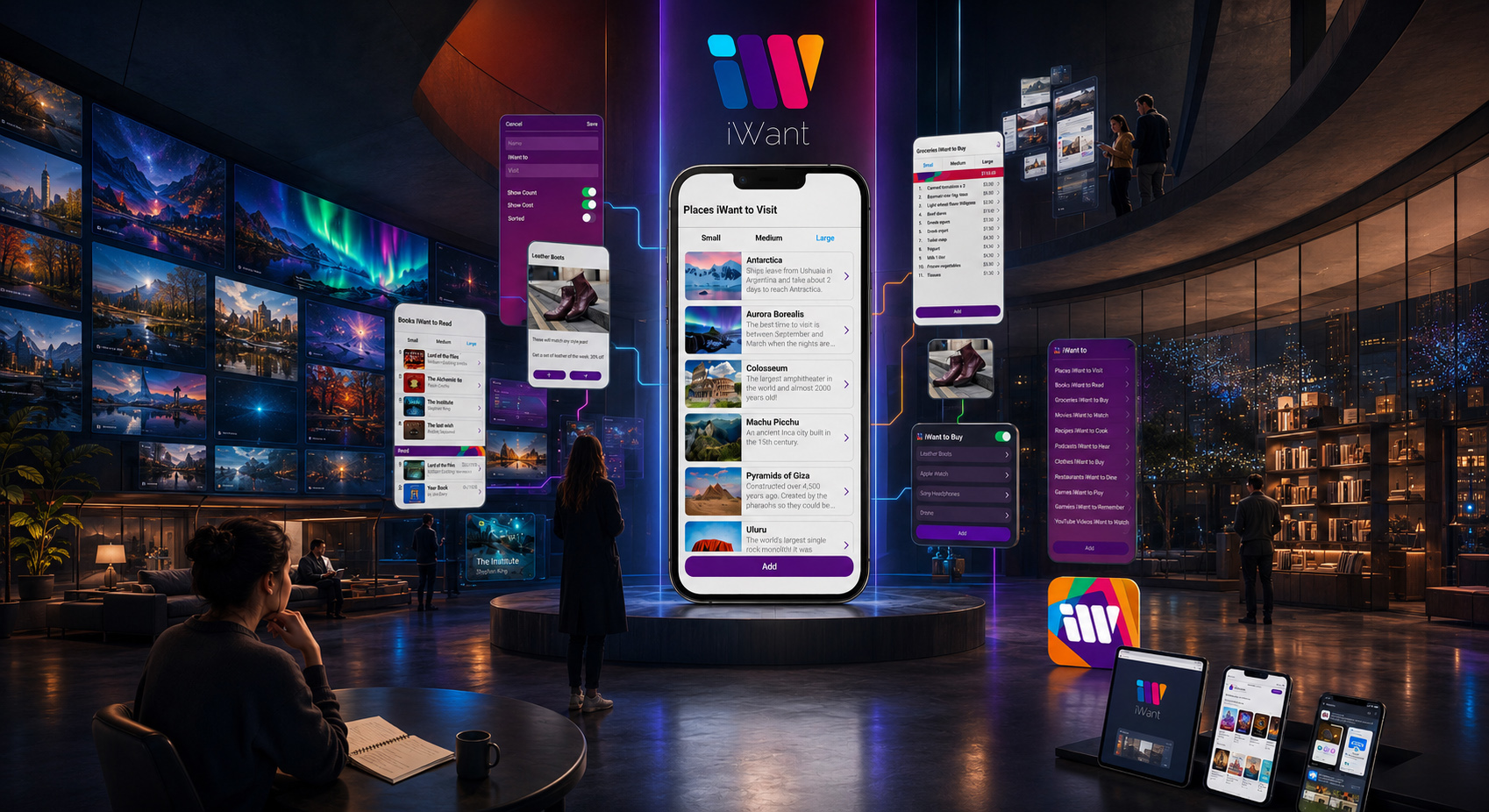
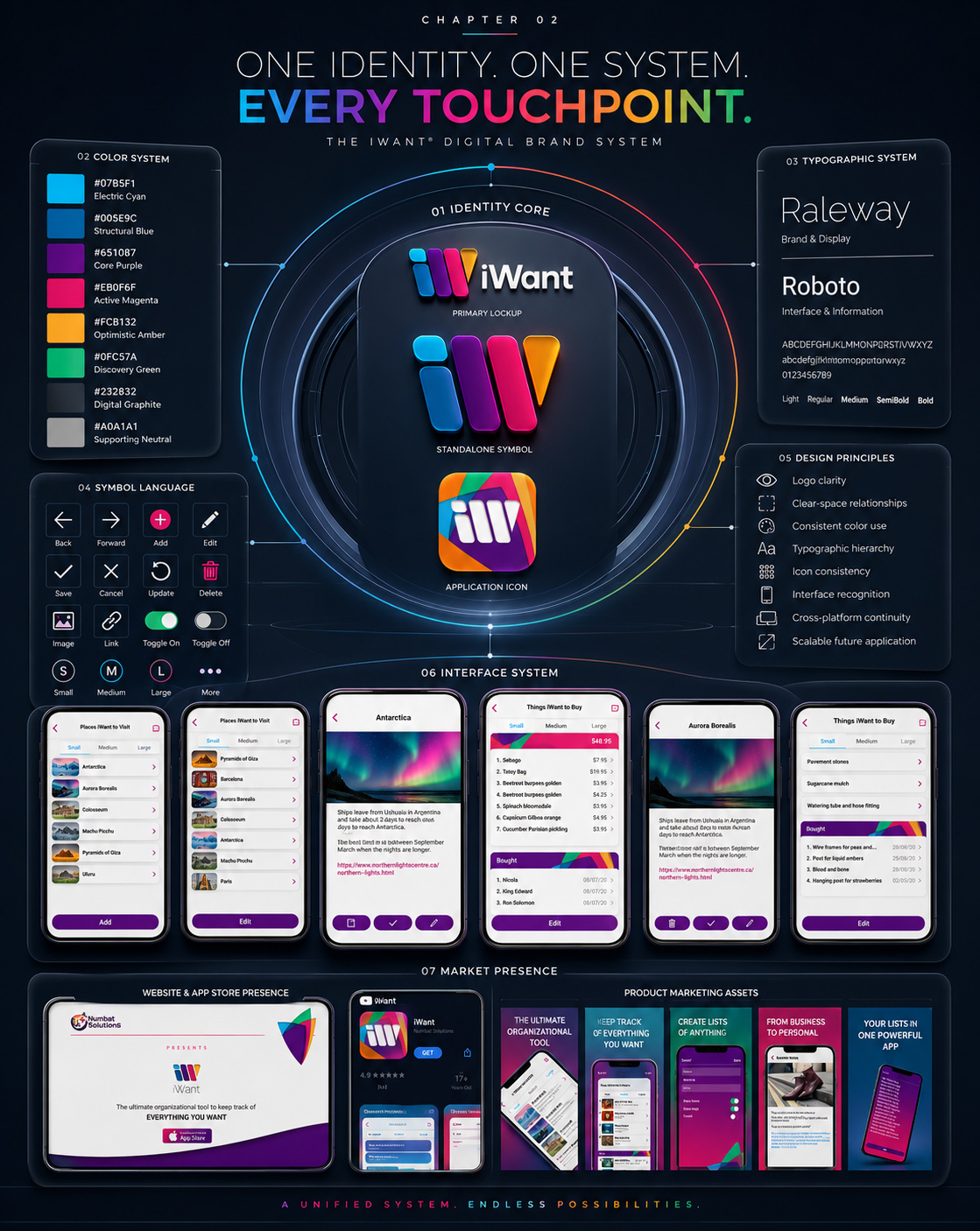
iWant® must demonstrate how identity moves into a functioning digital environment through interface structure, user flows, states, and interaction.
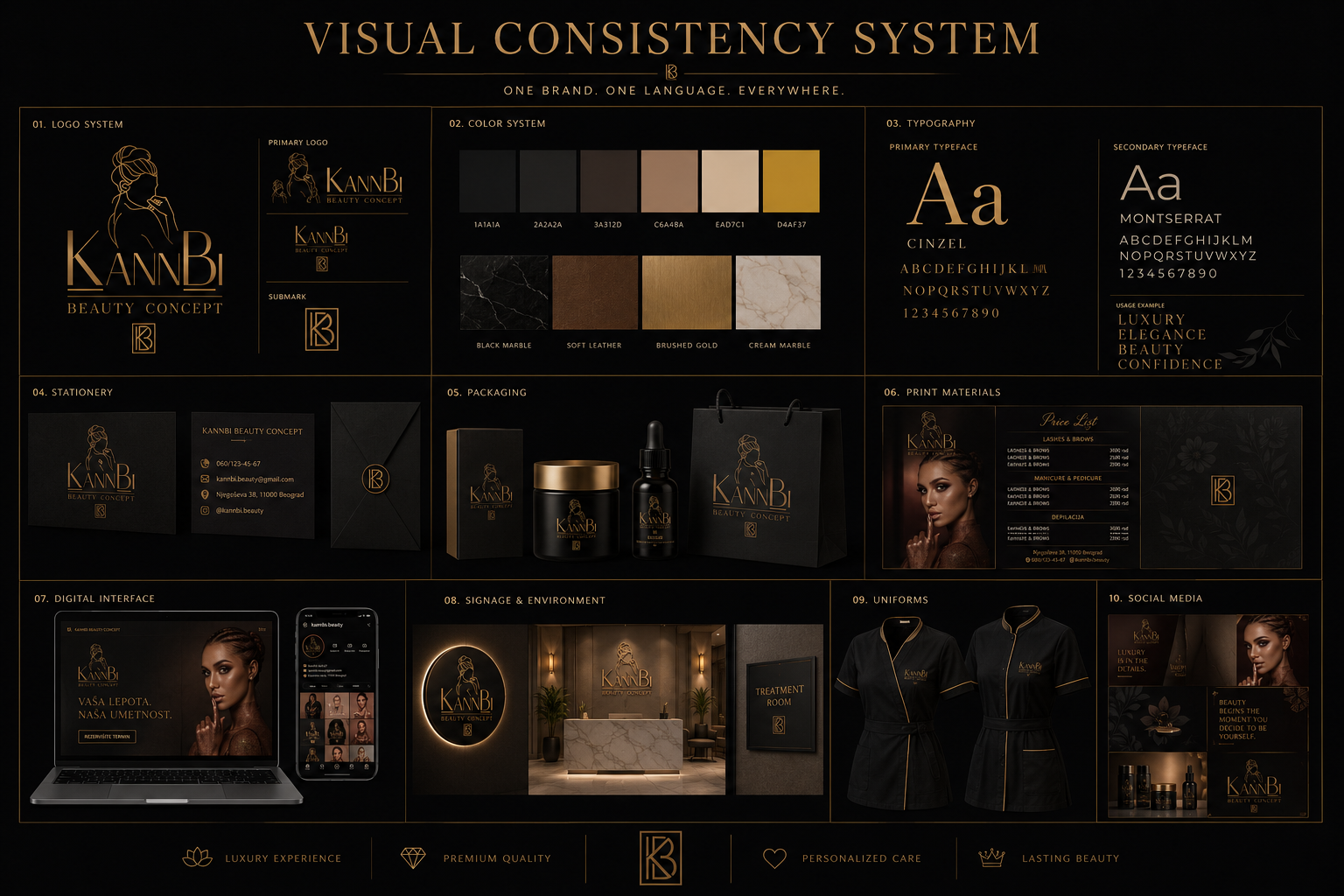
KannBi Beauty Concept® must show how visual language creates premium perception, consistency, recognition, and trust across the wider brand experience.
The projects are different.
The standard of proof should be equally rigorous—but never mechanically identical.
EVIDENCE WITHOUT A UNIVERSAL FORMULA
Different Projects Require Different Proof — But The Same Standard Of Clarity
The strongest evidence changes with the problem the project was created to solve.
A professional Case Study selects and interprets the proof that makes each project’s specific value understandable—without forcing fundamentally different disciplines into the same narrative structure.
WHAT
GETS LOST
WHEN THE SAME EVIDENCE MODEL IS FORCED ONTO EVERY PROJECT
Different projects lose different kinds of intelligence.
For MEAL 2 GO®, the risk is losing the functional reasoning behind communication and packaging clarity.
For KORYO®, it is losing the cultural and conceptual framework behind the visual language.
For iWant®, it is reducing a working digital system to isolated interface images.
For KannBi Beauty Concept®, it is showing beauty without explaining how identity creates perception, trust, and desirability.
A strong Case Study therefore has to adapt its evidence model to the project itself. The proof that matters in one discipline may be irrelevant in another, and forcing the same structure across every project can flatten the very differences that make each body of work professionally valuable.
More documentation does not solve that problem.
Relevant documentation does.
CASE STUDY
DIRECTION
MATCH THE EVIDENCE TO THE VALUE BEING EVALUATED
A professional Case Study should begin with a simple question:
What does the audience need to understand in order to evaluate this project intelligently?
That determines what deserves to remain visible.
Functional Communication → hierarchy, information logic, differentiation, packaging behavior.
Cultural Meaning → research, references, interpretation, symbolism, narrative development.
Digital Experience → architecture, interaction, states, flows, connected screens.
Brand Perception → identity, applications, consistency, recognition, trust, desirability.
The Case Study format remains coherent because the editorial discipline is consistent.
The content remains credible because the evidence is specific to the project.
PROJECT EVIDENCE — 01
MEAL 2 GO® — FUNCTIONAL PROOF
When Packaging Must Explain What The Product Is Before It Can Persuade Someone To Choose It
For MEAL 2 GO®, the strongest evidence is not simply the finished package.
The useful proof connects information hierarchy, product communication, variant logic, visual differentiation, and production-ready execution.
That evidence allows the reader to understand how design moved beyond appearance and helped make the product easier to recognize, interpret, and use.

PROJECT EVIDENCE — 02
KORYO® — CULTURAL & NARRATIVE PROOF
When The Meaning Behind The Identity Is As Important As The Identity Itself
KORYO® requires a different kind of evidence.
The finished identity becomes more valuable when its visual decisions can be traced back to cultural context, symbolic references, interpretation, and the construction of a contemporary premium world.
Here, evidence does not merely prove that the design is refined.
It explains why the design carries meaning.
PROJECT EVIDENCE — 03
iWant® — DIGITAL PRODUCT PROOF
When A Finished Interface Cannot Explain The Experience By Itself
A digital product cannot be evaluated through one polished screen.
For iWant®, meaningful evidence must reveal how brand identity, interface hierarchy, navigation, interaction, and connected states work as one experience.
The evidence moves the Case Study from “this is what the interface looks like” toward a stronger question:
How does the product actually behave?
PROJECT EVIDENCE — 04
KANNBI BEAUTY CONCEPT® — PERCEPTION PROOF
When The Design Must Create A Feeling Before The Audience Can Measure It
KannBi Beauty Concept® proves another kind of value.
The relevant evidence lies in how identity, typography, color, applications, imagery, and presentation work together to create a coherent premium perception.
A finished logo can show style.
A broader brand system explains how that style becomes recognition, trust, character, and desirability.
PROOF SHOULD FOLLOW THE PROJECT
A Strong Case Study Uses One Editorial Discipline Without Forcing Every Project Into One Evidentiary Formula
The structure can remain consistent.
The questions cannot.
MEAL 2 GO® needs to prove functional clarity.
KORYO® needs to preserve cultural meaning and interpretation.
iWant® needs to reveal digital behavior and interaction.
KannBi Beauty Concept® needs to demonstrate brand perception across a system.
That difference is not inconsistency.
It is editorial judgment.
THE STRONGEST CASE STUDY DOES NOT ASK EVERY PROJECT TO PRODUCE THE SAME EVIDENCE.
IT IDENTIFIES THE EVIDENCE THAT MAKES THAT PARTICULAR PROJECT’S VALUE POSSIBLE TO UNDERSTAND.
05 —
COMPLETED WORK CAN HAVE A SECOND LIFE
WHY IT MATTERS
A project may be finished while its professional value is still far from exhausted.
The decisions, evidence, systems, and outcomes created during the work can continue to support business development, client trust, internal knowledge, presentations, publishing, and future decision-making.
But that value does not survive automatically.
When the project exists only as scattered files or a few polished final images, much of what made the work useful becomes difficult to recover.
A strong Case Study changes that.
It turns completed work into a structured professional asset that can be understood, referenced, shared, and reused long after delivery.
DELIVERY ENDS THE PROJECT. IT DOES NOT HAVE TO END THE VALUE THE PROJECT CREATED.
VALUE LOST AFTER DELIVERY
WHEN STRONG WORK BECOMES DIFFICULT TO USE AGAIN
Many completed projects remain technically archived but professionally inactive.
The final files exist.
The images exist.
The presentation may still exist somewhere.
But the relationship between problem, decisions, evidence, development, and result has disappeared.
Months later, somebody needs the project for a proposal, presentation, publication, internal review, or client conversation.
The work must be reconstructed.
Context has to be remembered.
Decisions have to be explained again.
Important evidence may no longer be easy to find.
The project still has value.
Its value has simply become difficult to access.
WHEN A COMPLETED PROJECT CAN BE REOPENED WITHOUT LOSING ITS MEANING
WHY THIS EXAMPLE MATTERS
KORYO® is no longer being designed. The project already has a finished physical result.
Its continuing value comes from the connection between the final object, archived decisions, selected process material, final presentation, and the Case Study that preserves their relationship.
When those layers remain connected, the project does not need to be reconstructed from memory when it is revisited.
The archive preserves more than what was produced.
It preserves the knowledge required to understand why the project became what it became.
THE PROJECT IS FINISHED — BUT ITS KNOWLEDGE IS STILL WORKING.

PRESERVED PROJECT INTELLIGENCE
A Finished Project Becomes More Valuable When Its Decisions Remain Available After Delivery
The physical result proves that the project was completed.
The Case Study preserves the reasoning, evidence, development, and decisions that the final result alone cannot carry forward.
Together, they turn completed work from a static outcome into a professional reference that can be understood, revisited, presented, and used again.
DELIVERY ENDS THE PROJECT.
PRESERVED KNOWLEDGE EXTENDS ITS VALUE.
WHAT
GETS LOST
WHEN THE PROJECT IS SAVED — BUT ITS MEANING IS NOT
A folder can preserve files without preserving professional knowledge.
Without structure:
decisions become detached from outcomes.
Evidence becomes difficult to interpret.
Process loses sequence.
Lessons disappear into memory.
The final result remains visible while the intelligence behind it becomes increasingly expensive to reconstruct.
This is where documentation and understanding begin to separate. The files may still exist, but the relationships between challenge, decision, development, evidence, and outcome become harder to recover with confidence. Future teams are left with material, but not necessarily with the context required to use it well.
A Case Study prevents that separation.
CASE STUDY
DIRECTION
PRESERVE THE PROJECT SO IT CAN CONTINUE TO WORK
The objective is not to keep every file forever.
It is to preserve the relationships that remain useful:
Context → Decision → Evidence → Development → Outcome → Learning → Reuse
A strong Case Study creates a reliable point of re-entry.
A future reader should be able to understand:
What was the project trying to solve?
Which decisions mattered most?
What evidence supports those decisions?
What was ultimately achieved?
What can this work prove in a different professional conversation?
That is where documentation becomes reusable professional intelligence.
WHEN ONE PROJECT CAN SUPPORT MORE THAN ONE FUTURE CONVERSATION
WHY THIS EXAMPLE MATTERS
The same completed work can carry different kinds of value depending on what a future audience needs to understand.
A prospective client may need proof of capability.
A collaborator may need process clarity.
A presentation may need a concise decision narrative.
An internal team may need the reasoning behind an earlier choice.
A publication may need a deeper editorial story.
The project does not need five different histories.
It needs one reliable body of evidence that can be interpreted appropriately for five different contexts.
PROJECT EVIDENCE — 01
BRAUEREI 2572® — KNOWLEDGE THAT REMAINS USEFUL
When A Finished Packaging Project Becomes More Than A Portfolio Image
Brauerei 2572® can continue to communicate value because the finished packaging is connected to material decisions, hierarchy, production logic, differentiation, and development evidence.
That preserved context allows the project to support more than visual presentation.
It can demonstrate packaging strategy, system thinking, production awareness, and the reasoning behind a complete product family.
PROJECT EVIDENCE — 02
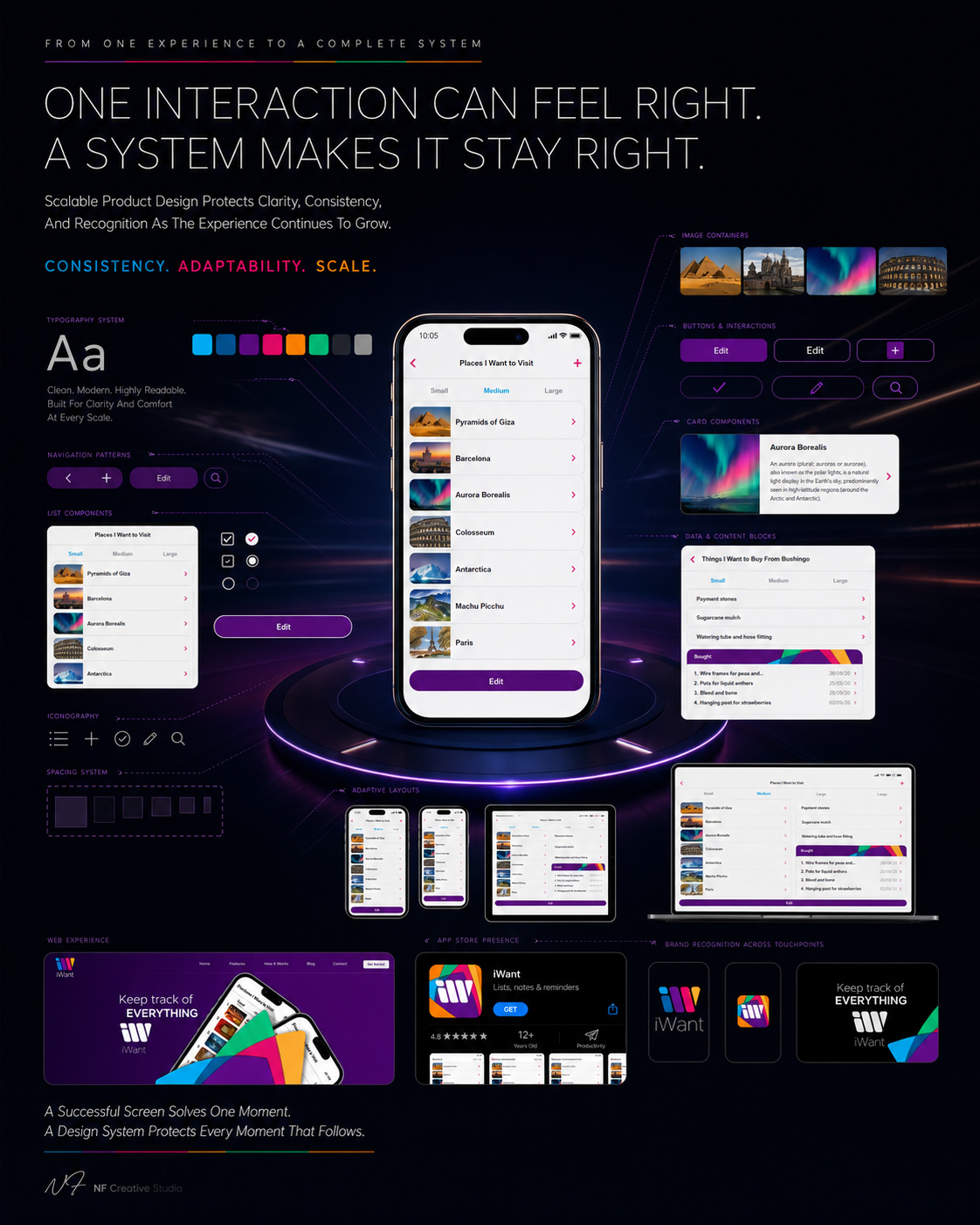
iWant® — A DIGITAL SYSTEM THAT CAN BE READ BEYOND THE SCREEN
When Product Design Becomes Evidence Of A Larger System
The value of iWant® extends beyond individual interface screens.
Preserved together, information architecture, components, navigation, interface relationships, identity, and market-facing applications explain how the digital product operates as one connected system.
The Case Study therefore becomes useful not only as UI presentation, but as evidence of product thinking, scalability, consistency, and digital experience design.
PROJECT EVIDENCE — 03
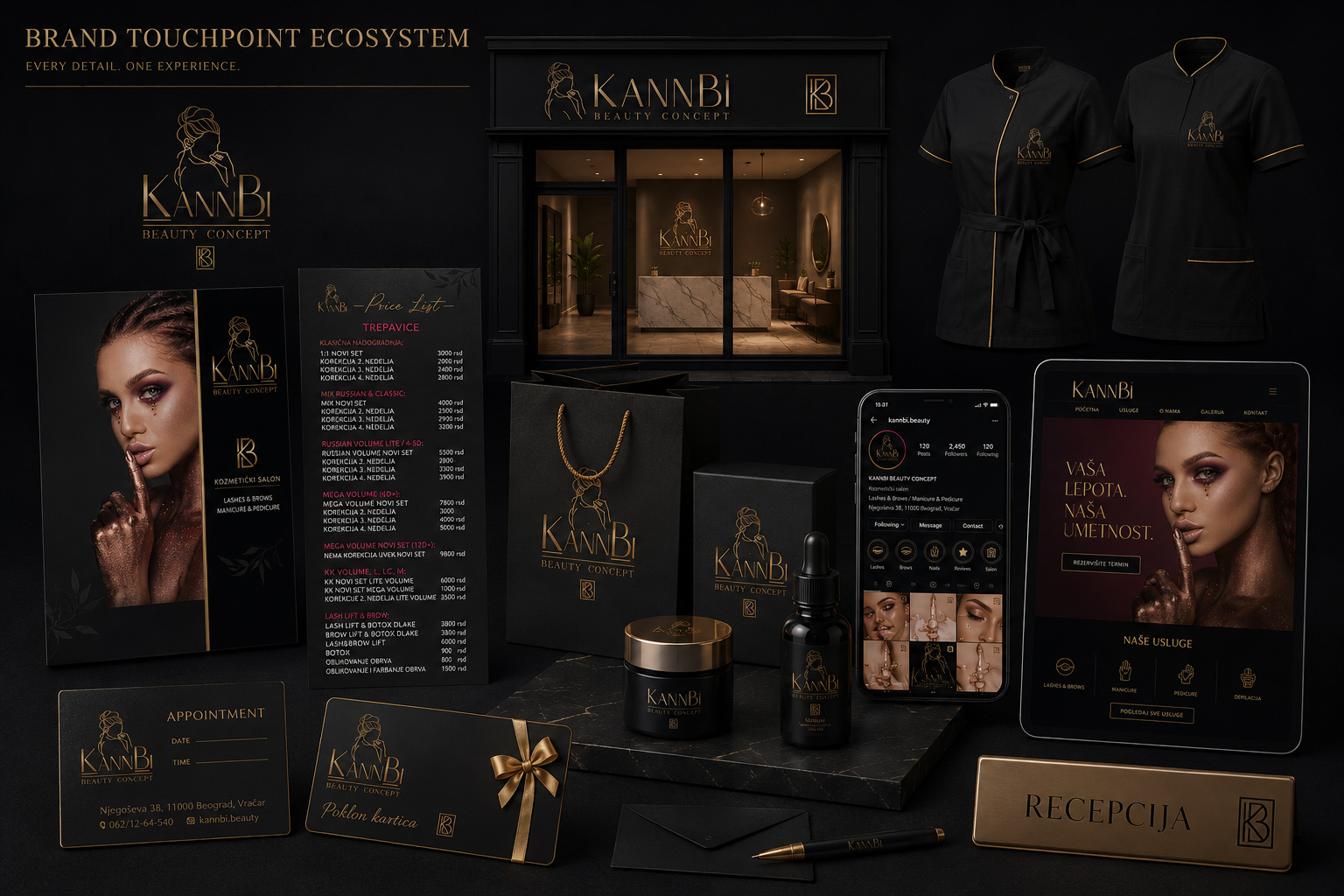
KANNBI BEAUTY CONCEPT® — A BRAND THAT CONTINUES ACROSS TOUCHPOINTS
When Identity Becomes Useful Because It Can Travel
KannBi Beauty Concept® demonstrates how a preserved brand system can extend beyond the original identity presentation.
Typography, color, imagery, environment, packaging, digital presence, print materials, uniforms, and client touchpoints continue the same premium character in different conditions.
The value lies not in repeating one visual treatment.
It lies in preserving enough structure for the brand to remain recognizable while adapting to new applications.
PROJECT EVIDENCE — 04
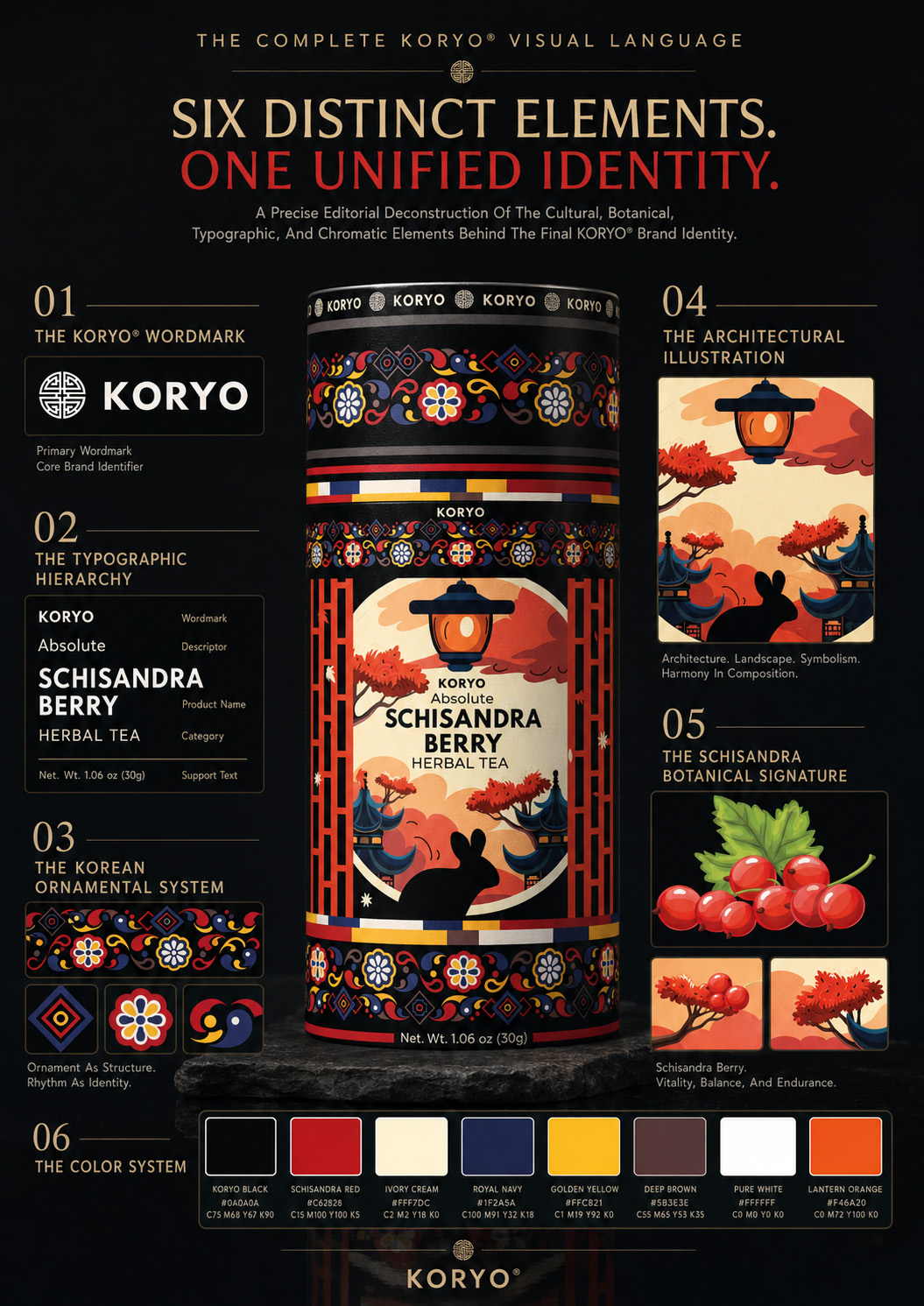
KORYO® — PRESERVED MEANING SUPPORTS FUTURE INTERPRETATION
When Context Makes A Finished Identity Easier To Revisit
KORYO® preserves more than a final package.
Its cultural references, botanical source, ornamental system, architecture, color logic, and physical form remain connected to the finished identity.
That preserved relationship makes future interpretation stronger because new applications can begin from understood meaning rather than visual imitation.
FROM ARCHIVE TO ACTIVE VALUE
A CASE STUDY SHOULD MAKE COMPLETED WORK EASIER TO USE — NOT MERELY EASIER TO REMEMBER
The strongest project archive does more than preserve history.
It makes the work available for future professional use.
A proposal can draw from it.
A presentation can reference it.
A new team can learn from it.
A publication can expand it.
A future client can evaluate it.
A new project can begin with stronger knowledge because an earlier one was documented properly.
That is the difference between storing completed work and preserving professional value.
WHEN COMPLETED WORK BECOMES A RESOURCE FOR WHAT COMES NEXT
WHY THIS EXAMPLE MATTERS
A strong Case Study does not preserve a project simply to document the past.
It connects the finished result, project knowledge, selected evidence, presentation material, and reusable assets so the value created during the original work remains accessible afterward.
That changes what completion means.
Instead of leaving behind disconnected files, the project becomes a structured professional resource that can support communication, reference, adaptation, and future opportunity.
The work is finished.
Its value does not have to be.

VALUE BEYOND DELIVERY
A Completed Project Can Continue Working When Its Knowledge Is Preserved As A System
The archive protects what happened.
The Case Study explains why it mattered.
Together, they allow finished work to move beyond one delivery and remain useful across brand communication, presentations, future development, new applications, and professional decision-making.
This is where documentation becomes more than a record.
It becomes continuity, memory, and reusable value.
GOOD WORK SHOULD NOT DISAPPEAR INTO AN ARCHIVE.
IT SHOULD BECOME A FOUNDATION FOR WHAT COMES NEXT.
LONG-TERM PROJECT VALUE
The Strongest Case Studies Keep Completed Work Professionally Available
A finished project belongs to a moment in time.
Its knowledge does not have to.
When context, evidence, decisions, systems, and outcomes remain connected, the project becomes easier to understand later—and easier to use for a new purpose.
That is why a Case Study is not simply a retrospective document.
It is infrastructure for the future value of completed work.
COMPLETED WORK DOES NOT HAVE TO STOP CREATING VALUE WHEN THE PROJECT ENDS.
A STRONG CASE STUDY PRESERVES ENOUGH CONTEXT, EVIDENCE, AND PROFESSIONAL INTELLIGENCE FOR THAT WORK TO REMAIN UNDERSTANDABLE, CREDIBLE, REUSABLE, AND VALUABLE LONG AFTER DELIVERY.
FROM STRONG DECISIONS TO LASTING PROJECT VALUE
A Good Project Keeps Its Value When The Thinking Behind It Survives Delivery
Strong work does not lose value because the original decision was weak. It loses value when the reasoning, technical meaning, responsibility, implementation logic, and accumulated knowledge fail to survive the journey from decision to delivery.
A professional project therefore needs more than a good beginning.
It needs decisions that can be understood after they are approved.
Technical requirements that can be interpreted without guesswork.
Handoffs that transfer project state—not simply files.
Implementation changes that are reviewed before convenience becomes direction.
And continuity that preserves enough knowledge for future work to begin from what the project has already learned.
These are different responsibilities.
But they protect the same thing:
the integrity of the project as more people, systems, constraints, and time begin to shape it.
A strong decision creates direction.
Technical translation makes that direction actionable.
A controlled handoff keeps responsibility legible.
Implementation review allows reality to change the project without quietly redefining it.
And continuity ensures that delivery does not erase the intelligence accumulated along the way.
The result is not a project that never changes.
It is a project that can change without losing the meaning behind its decisions.
PROJECT VALUE IS NOT PROTECTED BY PREVENTING CHANGE.
IT IS PROTECTED BY MAKING SURE THAT CHANGE NEVER SEPARATES THE RESULT FROM THE REASONING THAT MADE IT VALUABLE.
THE FIVE CONDITIONS OF PROJECT CONTINUITY
A project remains professionally coherent when the logic behind important decisions survives every transition that follows.
Decision establishes what should remain true.
Technical Translation converts intent into requirements others can act on.
Handoff transfers responsibility without forcing interpretation from zero.
Implementation evaluates real-world change before it becomes permanent.
Continuity preserves the final state and the knowledge needed to use it later.
Taken together, these five conditions turn professional support from reactive problem solving into a system for protecting meaning across the life of a project.
A PROJECT MAY PASS THROUGH MANY HANDS.
ITS LOGIC SHOULD NOT HAVE TO BE REBUILT EACH TIME.
FROM PROJECT DECISIONS TO PROFESSIONAL CONTINUITY
Key Takeaways
A practical framework for protecting project value when decisions must survive technical interpretation, responsibility changes, real-world implementation, and future reuse.
The five principles explored in this article point toward one larger idea:
professional continuity exists when important knowledge remains understandable enough for the next qualified person to act without reconstructing the project from fragments.
These principles can support new projects, complex revisions, multi-party delivery, supplier coordination, implementation review, retained technical support, and future project re-entry.
01 —
DECISION
BEFORE
ACTION
A strong project decision should explain more than what was approved.
It should preserve why the direction exists, which conditions it protects, where flexibility remains possible, and what kind of change requires renewed review before implementation moves forward.
A decision that survives only in somebody’s memory becomes weaker every time responsibility moves from one person onward.
Strong decisions remain useful because their reasoning can travel with them.
02 —
TRANSLATION
BEFORE
USE
Professional intent must become technical information another qualified person can understand and use.
Requirements, tolerances, dependencies, exclusions, and review triggers should make the approved direction actionable without forcing others to guess what matters most.
More information does not automatically create more clarity.
Technical translation succeeds when the original intent remains legible inside practical requirements.
03 —
PROJECT STATE
BEFORE FILE
TRANSFER
A handoff should communicate more than documents.
The receiving person needs to understand the current approved state, open issues, accepted deviations, responsibilities, dependencies, and next required action.
Without that context, technically complete files can still produce an incomplete transfer.
A professional handoff moves responsibility without losing project meaning.
04 —
REVIEW
BEFORE
ADAPTATION
Reality will introduce constraints that were not visible at the beginning.
Materials change. Suppliers change. Dimensions conflict. Production reveals new conditions.
The objective is not to prevent adaptation.
It is to understand the consequence before the adaptation becomes part of the delivered result.
A controlled project changes deliberately—not accidentally.
05 —
CONTINUITY BEFORE KNOWLEDGE DISAPPEARS
Delivery should not erase what the project has learned.
Final state, decision history, accepted deviations, technical references, dependencies, and future review conditions should remain recoverable after the original team has moved on.
Storage preserves files.
Professional continuity preserves context.
The next decision should begin with what the project already knows—not with another reconstruction of its past.
THE STRONGEST PROJECT IS NOT THE ONE THAT NEVER CHANGES.
IT IS THE ONE WHOSE DECISIONS, ROLES, TECHNICAL LOGIC, AND KNOWLEDGE REMAIN CLEAR ENOUGH TO SURVIVE CHANGE WITHOUT LOSING THEIR PURPOSE.
FROM FINISHED WORK TO LASTING PROFESSIONAL VALUE
A Strong Case Study Turns A Completed Project Into Knowledge People Can Understand, Evaluate, And Use Again
The strongest Case Studies do more than present a polished result. They preserve the context, decisions, evidence, reasoning, and relationships that explain why that result has value.
A finished project can show what was delivered.
It cannot always show what had to be understood before the work began, which alternatives were considered, why particular decisions were made, what evidence supported them, or how separate parts of the project became one coherent result.
That is where the Case Study becomes more than presentation.
Across the five sections explored in this article, the same principle keeps returning: project value becomes stronger when the intelligence behind the result remains visible.
Context makes the original challenge understandable.
Decision logic explains why one direction was chosen over another.
Evidence gives professional claims something concrete to stand on.
Editorial structure connects separate materials into a coherent argument.
And long-term preservation allows the project to remain useful after delivery is complete.
These responsibilities are different.
But none of them is strongest in isolation.
Context without decision logic becomes background.
Decision logic without evidence becomes assertion.
Evidence without interpretation becomes documentation.
Structure without project-specific reasoning becomes a template.
And finished work without preserved knowledge may remain visually impressive while becoming increasingly difficult to understand, reuse, or evaluate over time.
A professional Case Study therefore does not make a project appear more complicated.
It makes its value more legible.
It allows another person to understand not only what exists, but what mattered, what changed, what was proven, and why the final result deserves attention.
THE FINAL RESULT SHOWS WHAT WAS DELIVERED.
THE CASE STUDY PRESERVES THE INTELLIGENCE THAT MADE IT POSSIBLE.
THE FIVE DIMENSIONS OF A CASE STUDY THAT CONTINUES TO CREATE VALUE
Context defines the problem. Decision Logic explains the response. Evidence supports the claims. Editorial Structure turns material into understanding. Long-Term Value keeps that understanding useful after delivery.
Considered together, these five dimensions transform completed work into professional proof that can be understood, revisited, presented, shared, and used again without reconstructing the project from the beginning.
A PORTFOLIO IMAGE MAY SHOW THAT GOOD WORK EXISTS.
A STRONG CASE STUDY EXPLAINS WHY THAT WORK MATTERS — AND PRESERVES THAT VALUE FOR WHAT COMES NEXT.
WHEN A PROJECT NO LONGER DEPENDS ON THE PEOPLE WHO REMEMBER IT
WHY THIS EXAMPLE MATTERS
Professional continuity becomes visible when completed work can still be understood after the original conversation has ended.
The result exists in reality.
The final state is documented.
The reasoning required for future judgment remains recoverable.
At that point, knowledge has stopped being personal memory and become part of the project itself.

CONTINUITY BEYOND DELIVERY
A Completed Project Creates Greater Long-Term Value When Its Final State And Decision Logic Remain Available For Whatever Comes Next
Delivery closes the original scope.
It should not close access to the knowledge that made the result possible.
The strongest professional support leaves behind more than an answer. It leaves behind a project that still knows why it became what it is.