Manifestations of Memory

MUSIC OF THE CHAINS: Manifestations of Memory Architectural Competition

COMPANY - MANIFESTATIONS OF MEMORY (MUSIC OF THE CHAINS)

Client

University of North Carolina
at Charlotte – School of
Architecture

Info

Industry: Architecture

Market: USA (Nashville, Tennessee) – International Recognition

Project Type: Architectural Competition, Conceptual
Memorial Design

Products

Music of the Chains – Award-
Winning Design by Filip Narančić &
Katarina Radinović

Slavery shaped American history, leaving behind a painful legacy that must never be forgotten. Music of the Chains, an award-winning architectural design by Filip Narancic and Katarina Radinovic , tells the story of resilience and cultural endurance.

This project is more than a memorial, it is an interactive experience that combines sound, movement, and historical symbolism to represent the journey of enslaved African Americans.

Music as Resistance – A symbol of unity and defiance, music was a medium of expression for enslaved people.
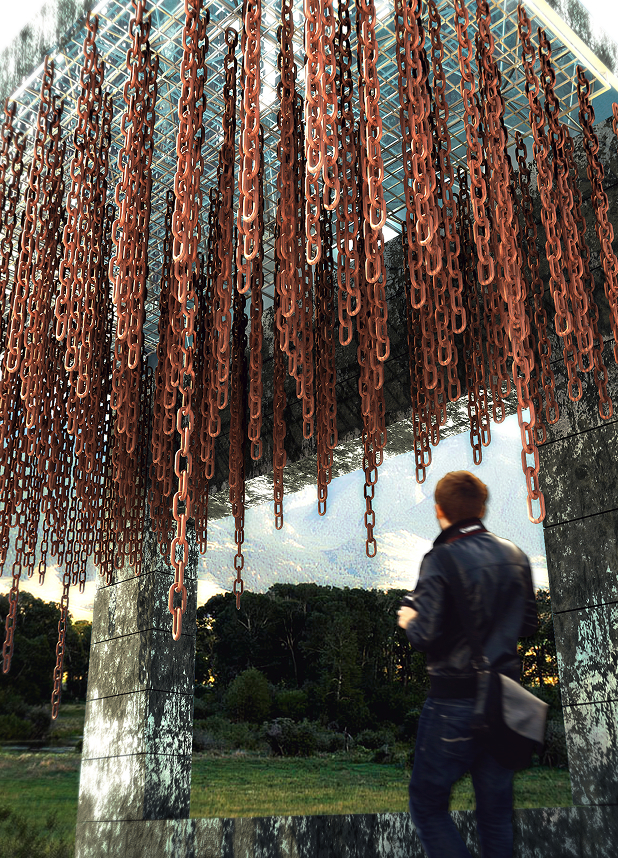
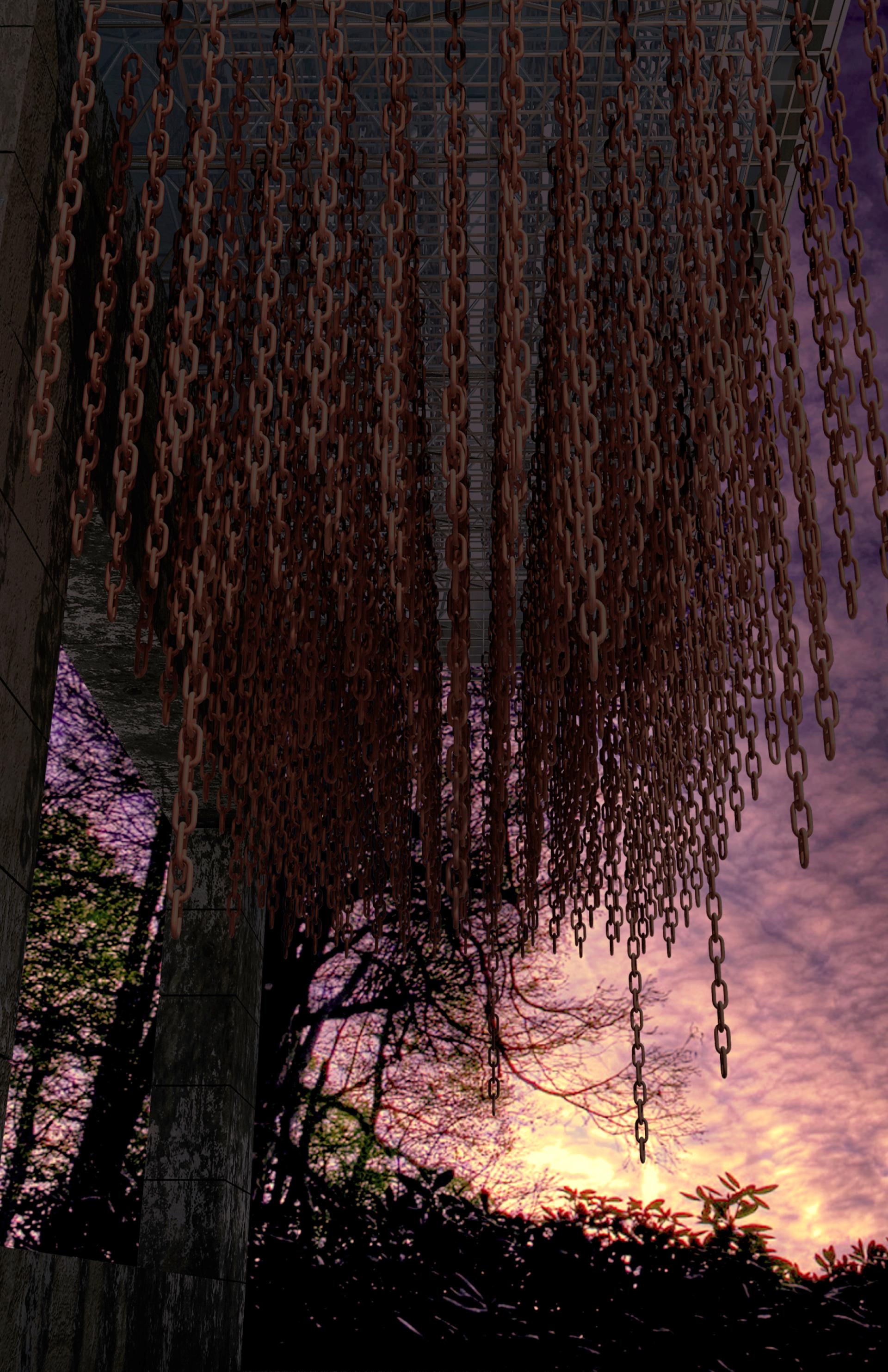
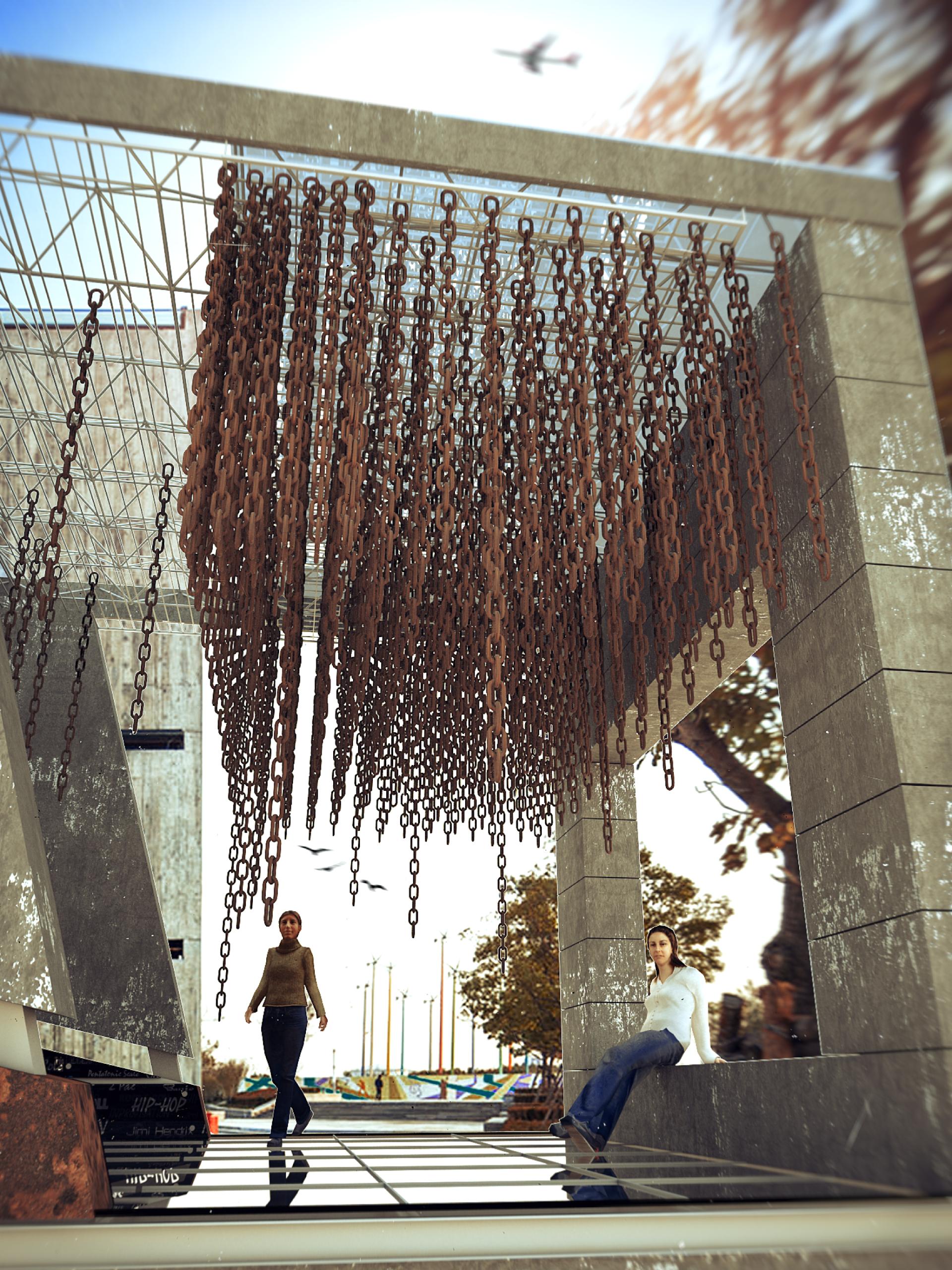
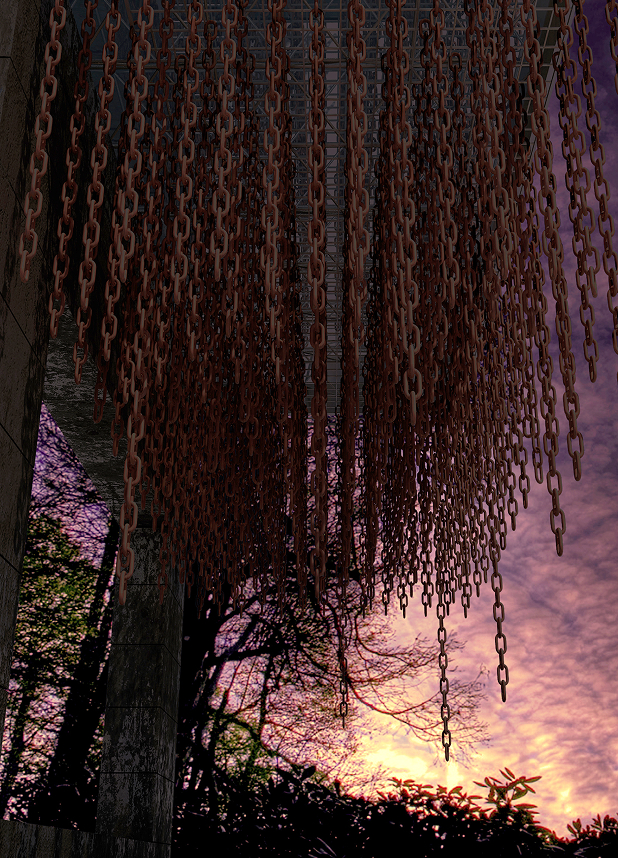
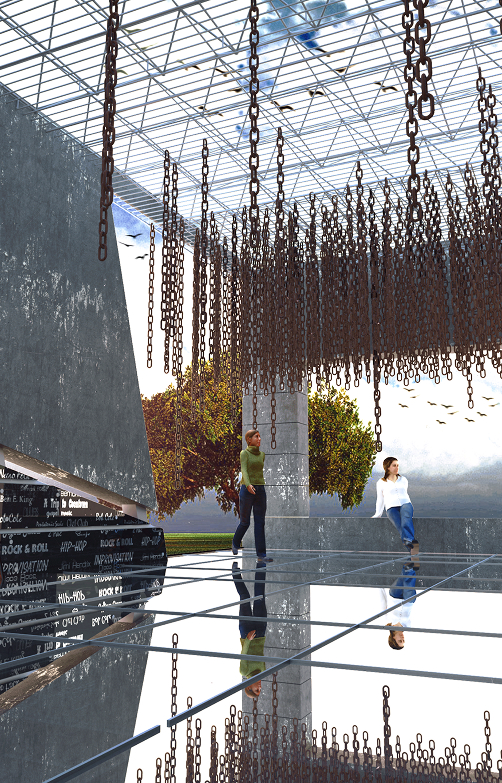
Chains as a Reminder – Representing oppression and stolen freedom, the chains move with the wind and touch, creating an eerie soundscape of “chained music.”
A Standalone Urban Element – A powerful architectural form that immerses visitors in the experience of history.

A Design That Tells a Story:

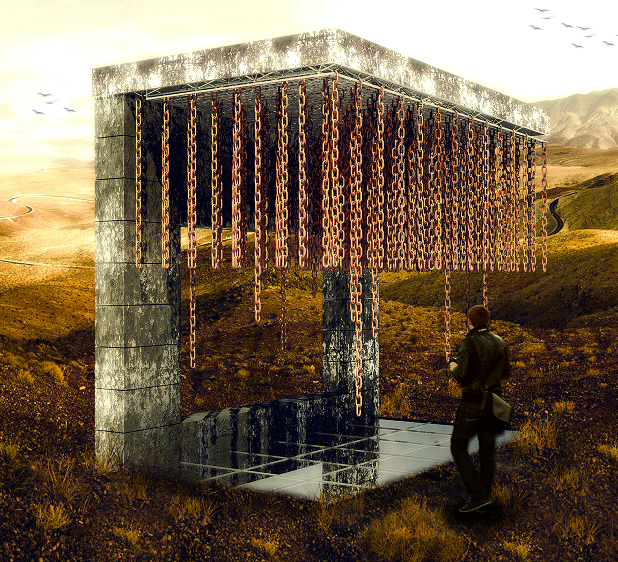
The architecture of this memorial is not just a structure – it is a visual and emotional narrative . The combination of raw materials, hanging chains, and spatial composition creates a powerful impression, allowing visitors to feel the weight of history . Each element is carefully chosen to symbolize the past while honoring the resilience of African American culture over time.

A Memorial as an Interactive Experience:

Unlike static monuments, Music of the Chains uses movement, sound, and space to actively engage visitors with the symbolism of slavery and freedom . While traditional memorials often serve as passive reminders, this project creates a dynamic dialogue between space, history, and the individual , offering a deeply immersive and thought-provoking experience.

Adaptability to Urban and Cultural Contexts:

The structure is designed to be implemented in various urban environments, museums, and public spaces worldwide . Its flexible design allows for adaptation through different materials, dimensions, and interactive elements , expanding its impact and fostering global cultural connections . This approach ensures that Music of the Chains remains relevant and inspiring , regardless of location.

The Challenge:

Design Challenges and Solutions

1. Capturing the Weight of History:

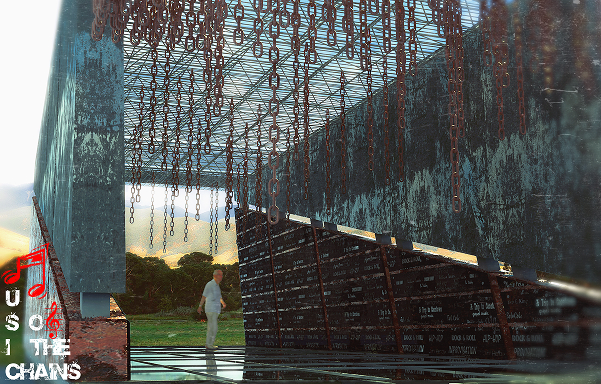
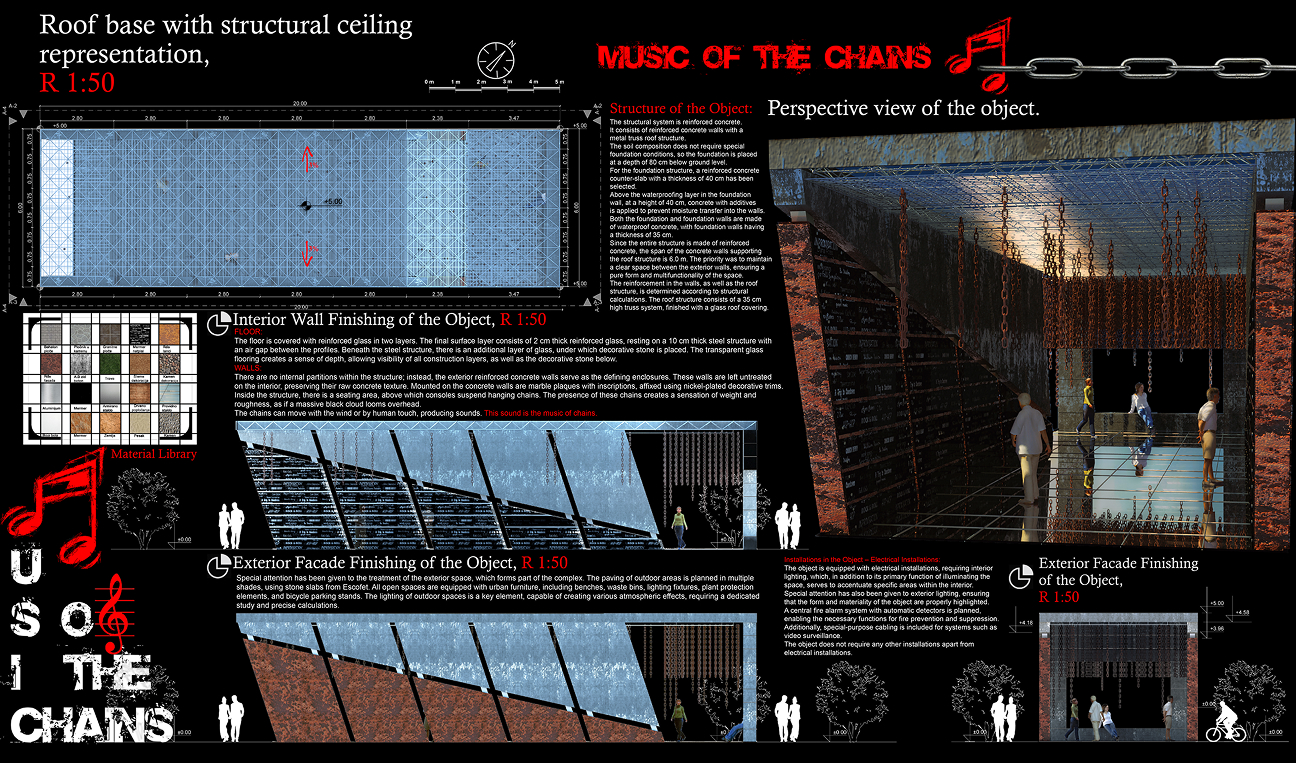
The primary challenge was creating a structure that conveys both oppression and resilience . The solution was a massive cantilevered form , symbolizing the burden of slavery . The hanging chains move freely , reinforcing the contrast between captivity and freedom .

2. Integrating Sensory Engagement:

Traditional memorials are static, but Music of the Chains is interactive . The chains create sound , making the visitor’s presence an active part of the experience. This transforms the memorial from an object of observation into a space of reflection and participation .

3. Selecting the Right Location:

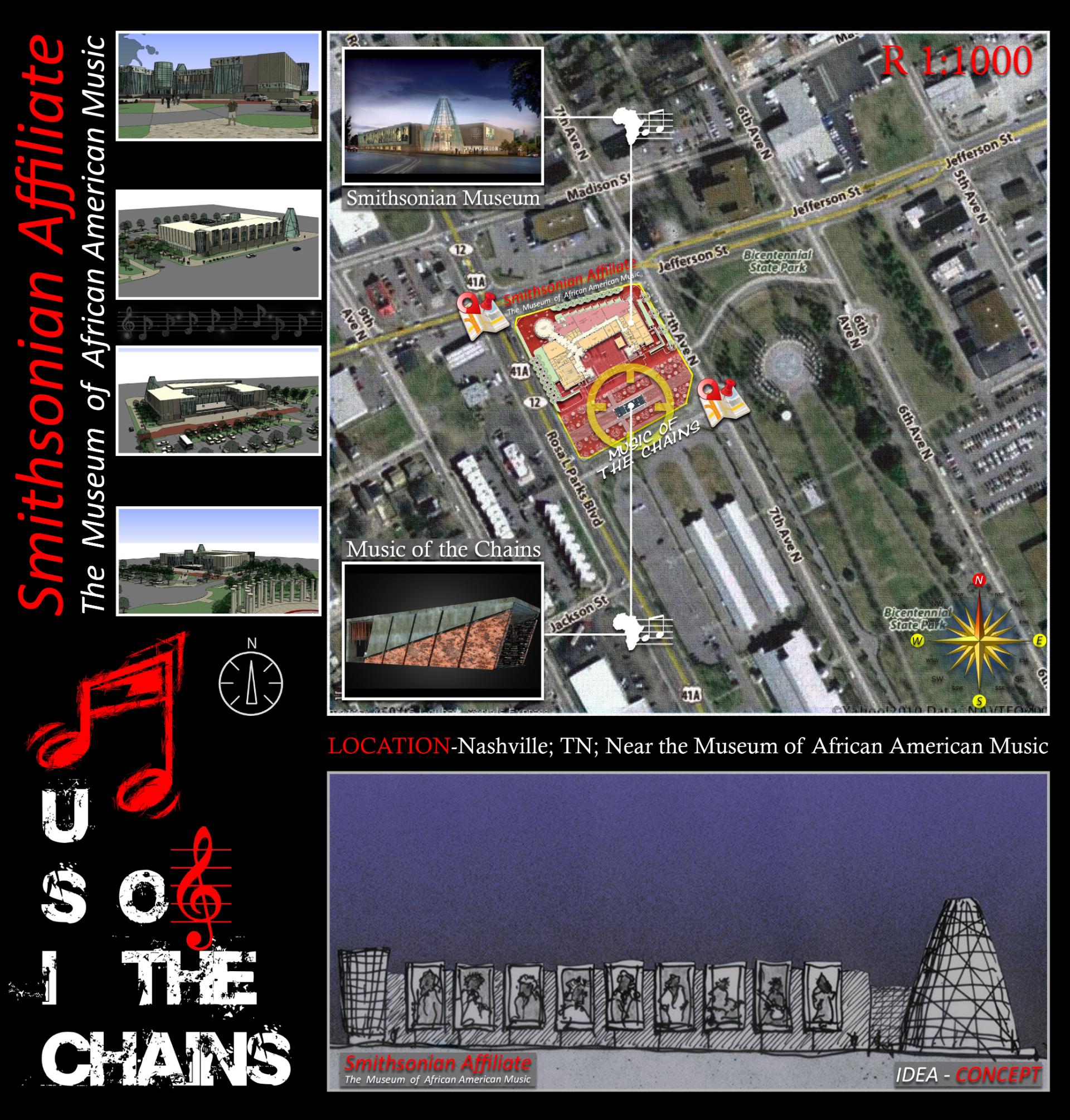
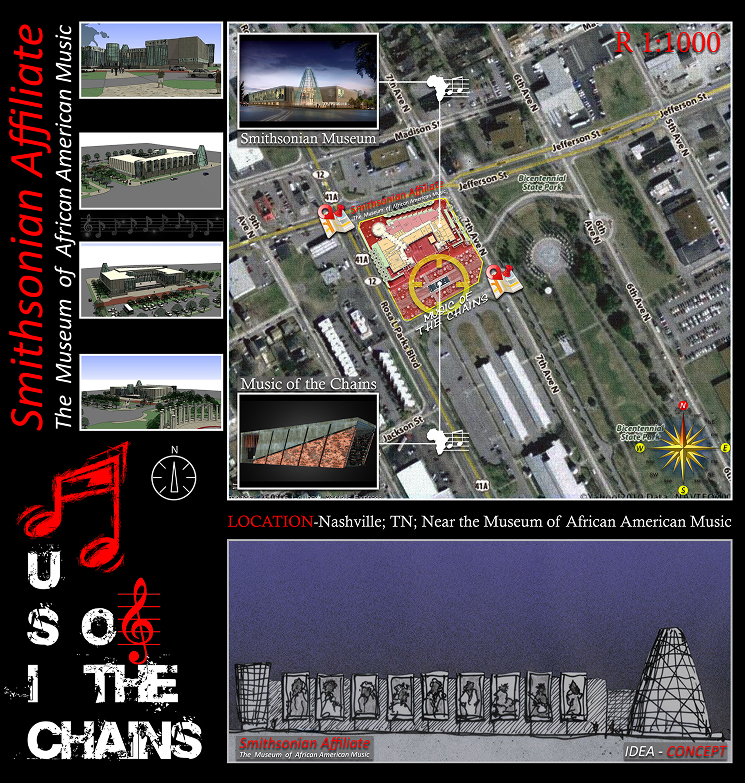
Nashville, Tennessee , near the Museum of African American Music , was chosen as the ideal site for the memorial due to its historical significance and cultural connection to African American music .

4. Merging Symbolism with Functionality:

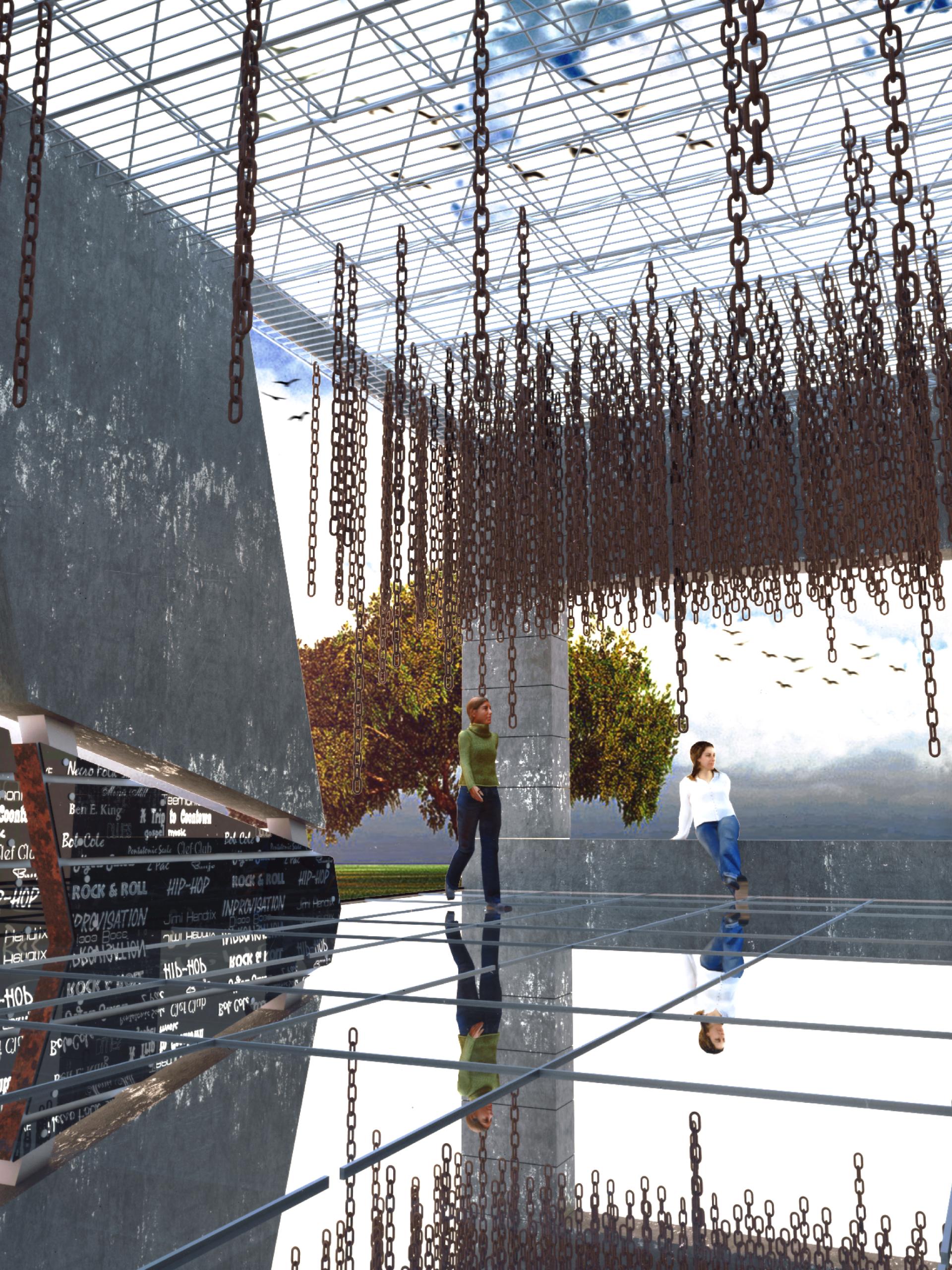
The structure is designed for public engagement , offering a seating area beneath the chains, encouraging discussion, remembrance, and education . The positioning and height of the structure ensure a strong presence in an urban setting while allowing accessibility .


Design Strategy:

Design Strategy: A Memorial Through Sound and Space

Architectural Expression:

The contrast between the rigid concrete structure and the fluid, moving chains embodies the duality of oppression and resistance.

Cultural Relevance:

Inspired by African American spirituals, blues, and jazz , the design integrates sound as a form of storytelling.

Dynamic Experience:

Unlike static memorials, this installation changes with the environment, responding to wind, movement, and human interaction.

Minimalist Yet Powerful Aesthetic:

By stripping away unnecessary elements, the focus remains on chains and space, maximizing emotional impact.

Results:

Execution and Impact

Public Interaction – Visitors engage with the memorial by walking beneath the chains, experiencing the psychological weight of oppression.
Cultural & Educational Significance – The project raises awareness about slavery’s impact and the enduring strength of African American heritage.
A Living Memorial – The sound of chains clinking in the wind echoes the voices of the past, ensuring that history is never forgotten.

Conclusion:

Architectural Memory
and Cultural Preservation

Music of the Chains proves that architecture can be more than a structure —it can be a voice for history. This award-winning design stands as a testament to resilience, culture, and the enduring power of memory.

Memorialization through architecture must not be passive —it must evoke emotion, provoke thought, and engage the audience in an active experience.

A Competition-Winning Project that Redefines the Role of Memorials in Contemporary Society.

Contact Infinity Design Studio for architectural and conceptual projects that challenge the limits of storytelling through space.

CASE STUDY in CASE STUDY

REDEFINING MEMORIALIZATION THROUGH ARCHITECTURAL EXPRESSION

Slavery shaped American history, leaving behind a painful legacy that must never be forgotten. Music of the Chains, an award-winning architectural design by Filip Narancic and Katarina Radinovic, tells the story of resilience and cultural endurance.

This project is more than a memorial; it is an interactive experience that combines sound, movement, and historical symbolism to represent the journey of enslaved African Americans.

• Competition: Manifestations of Memory – A Competition as a Memorial to American Slavery.
• Organizer: University of North Carolina at Charlotte, School of Architecture.
• Winning Design: Music of the Chains – Filip Narancic and Katarina Radinovic.
• Sponsors: United Nations (UN), National Organization for Minority Architects, UNC Charlotte Institute for Art and Architecture, Department of African Studies, etc.

Introduction:

Historical Context and the Importance of Memorialization

American history is marked by the period of slavery, which shaped the nation’s society, culture, and economy . Even though slavery was officially abolished more than 140 years ago, its effects still resonate today.

The goal of this competition was to create a memorial that not only reminds people of the past but also actively engages visitors through experience, emotion, and interaction. Among 98 submitted designs from around the world, Music of the Chains was recognized as the project that most powerfully conveys the story of American slaves through architecture, sound, and movement.

Introduction:

ey Challenges and Redesign Approach

After being selected as one of the TOP 6 finalists, the competition jury provided an opportunity for the selected projects to be further developed and refined.
The main challenges in the redesign process included:

  • How to preserve the powerful symbolism while enhancing the memorial’s functionality?
  • How to create an interactive experience that conveys the weight of history through architectural elements?
  • How to integrate the memorial into the urban fabric of a modern American city and ensure its long-term impact?
  • Our response to these challenges was a complete redefinition of the concept through a dynamic and emotionally charged architectural language.


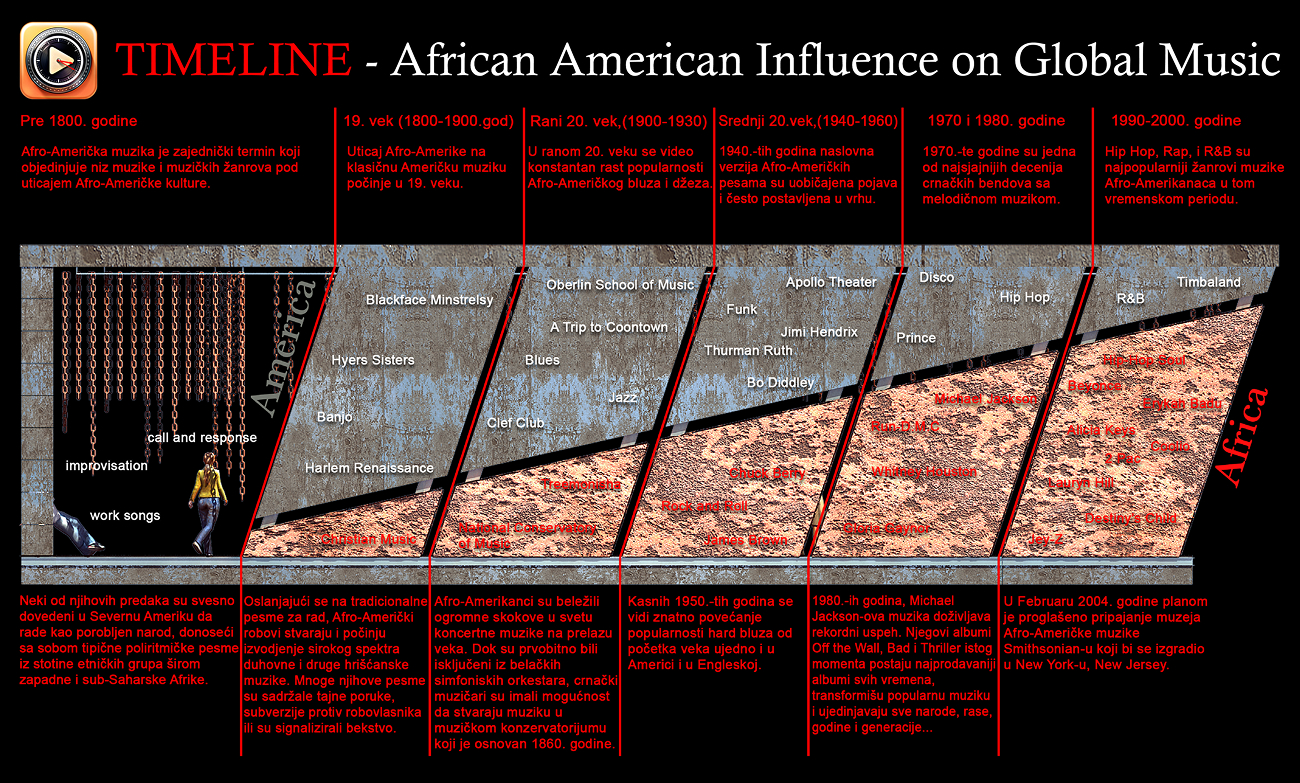
Historical Development of African American Music:

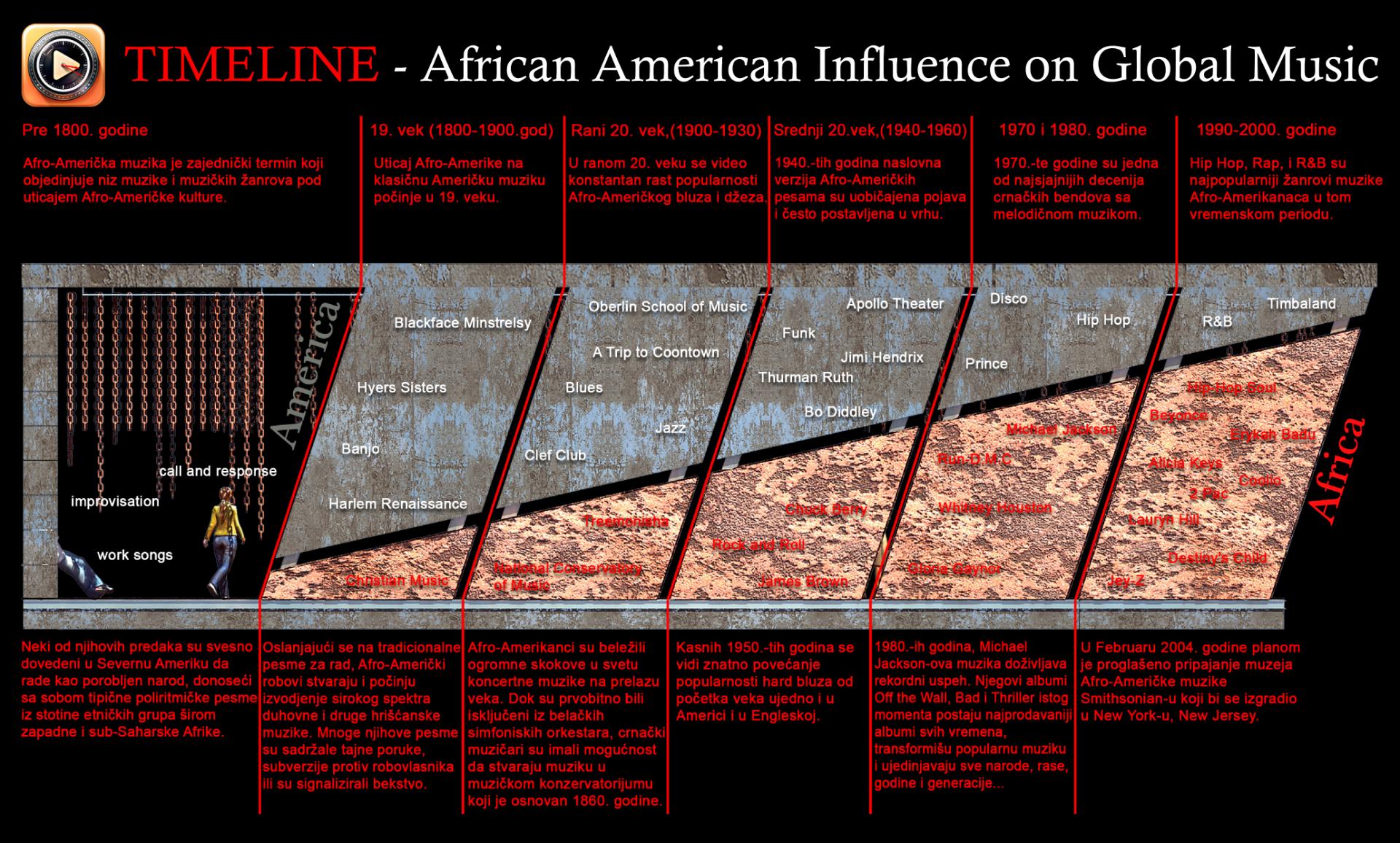
The timeline of African American music highlights the strong influence this music has had throughout history, as well as in today’s modern generation. The preservation of their cultural heritage can be traced through time . Today, African Americans have become an integral part of classical music . A brief overview of African American history provides the best explanation of their enduring musical legacy.


The contribution of African Americans to the history of music in the United States began with the arrival of the first Black people on American soil in 1619. Although Africans who were sold into slavery had their rights taken away and were placed in chains, they still carried with them memories of their rich musical traditions and ancestral dances.

They remembered the importance of music in everyday life in West Africa, where almost every activity was accompanied by music. Special types of music were designated for festivals, known as ‘customs’ in Africa, and these traditional practices were preserved in the New World.

Design Strategy:

Design Strategy: Architecture as an Emotional Experience

The Music of the Chains memorial is based on three key concepts:

A) The Weight of the Past – The Symbolism of Chains:

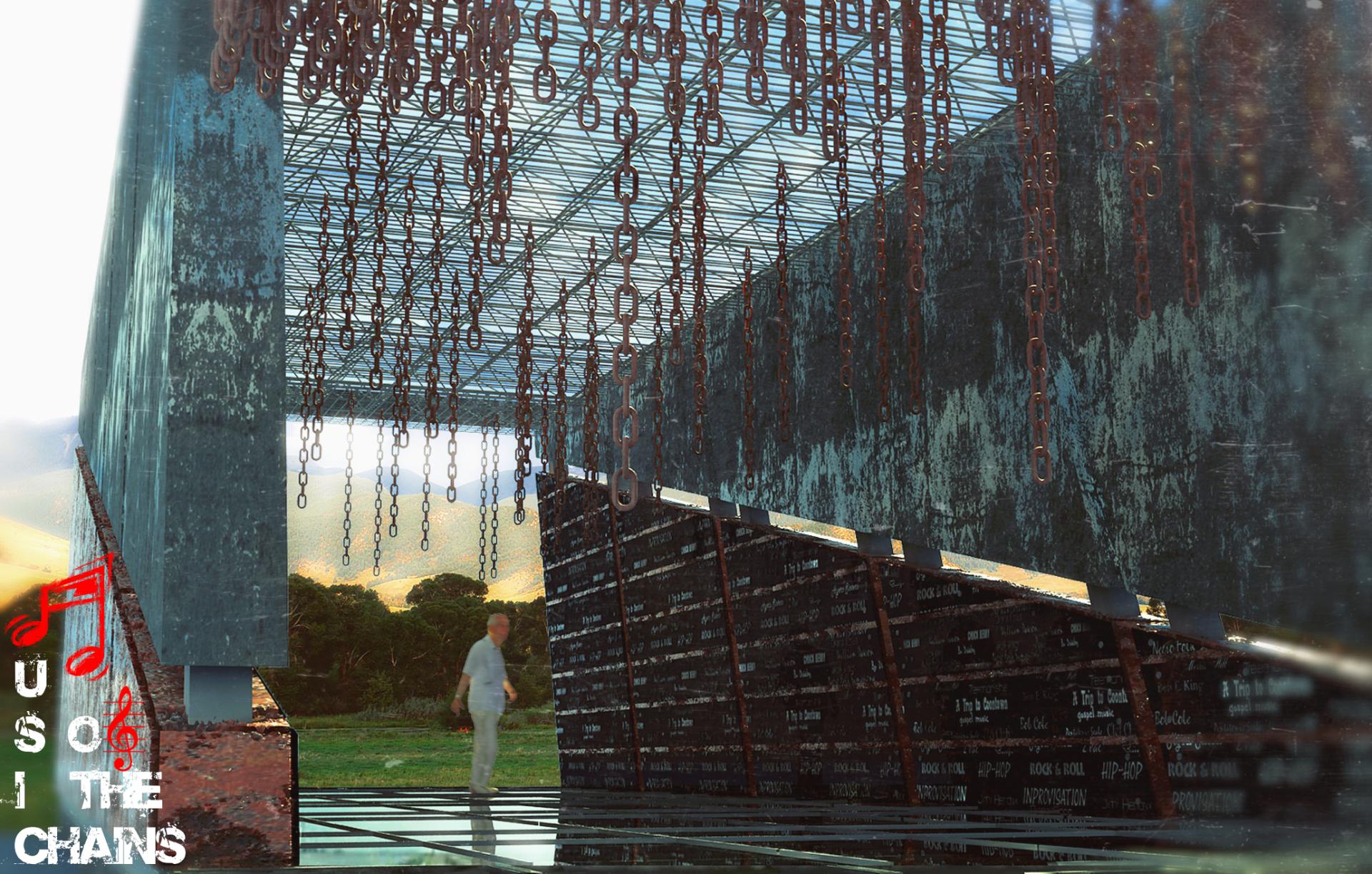
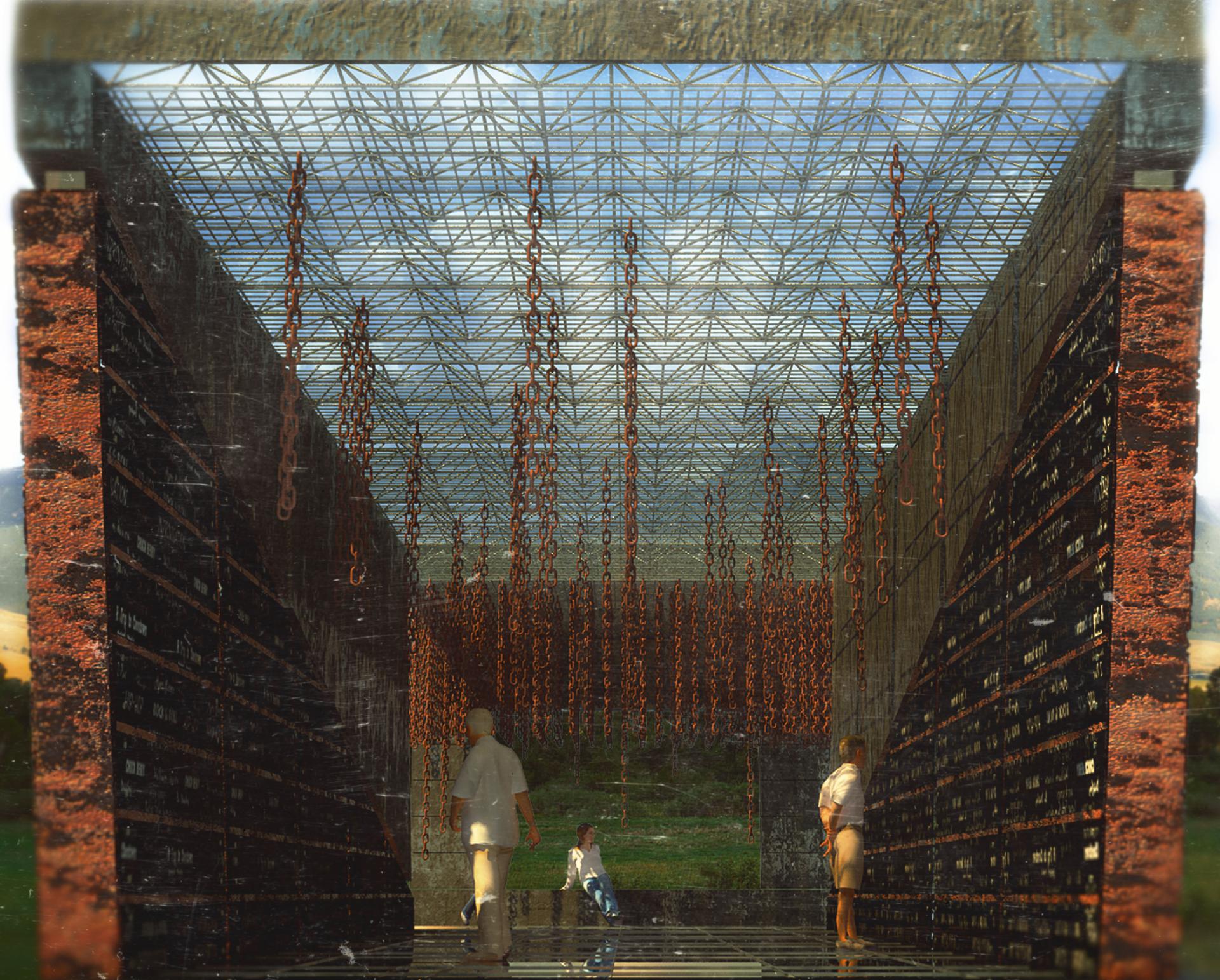
  • The main visual and conceptual element of the memorial is the hanging chains , symbolizing slavery and stolen freedom.
  • Visitors standing beneath the chains experience a sense of heaviness, as if a dark cloud is looming over them, evoking oppression and suffering.
  • The chains are not static – they move with the wind and human touch, creating a sound that metaphorically represents the “music of chains” – the one voice that could never be taken away from the enslaved.

C) Interactive Space – The Voice of the Past Through Sound:

  • The chains are not fixed – visitors can touch them, triggering an auditory experience.
  • This sound becomes a subconscious melody of remembrance , merging architecture, art, and history into one powerful experience.

B) Timeline of Liberation:

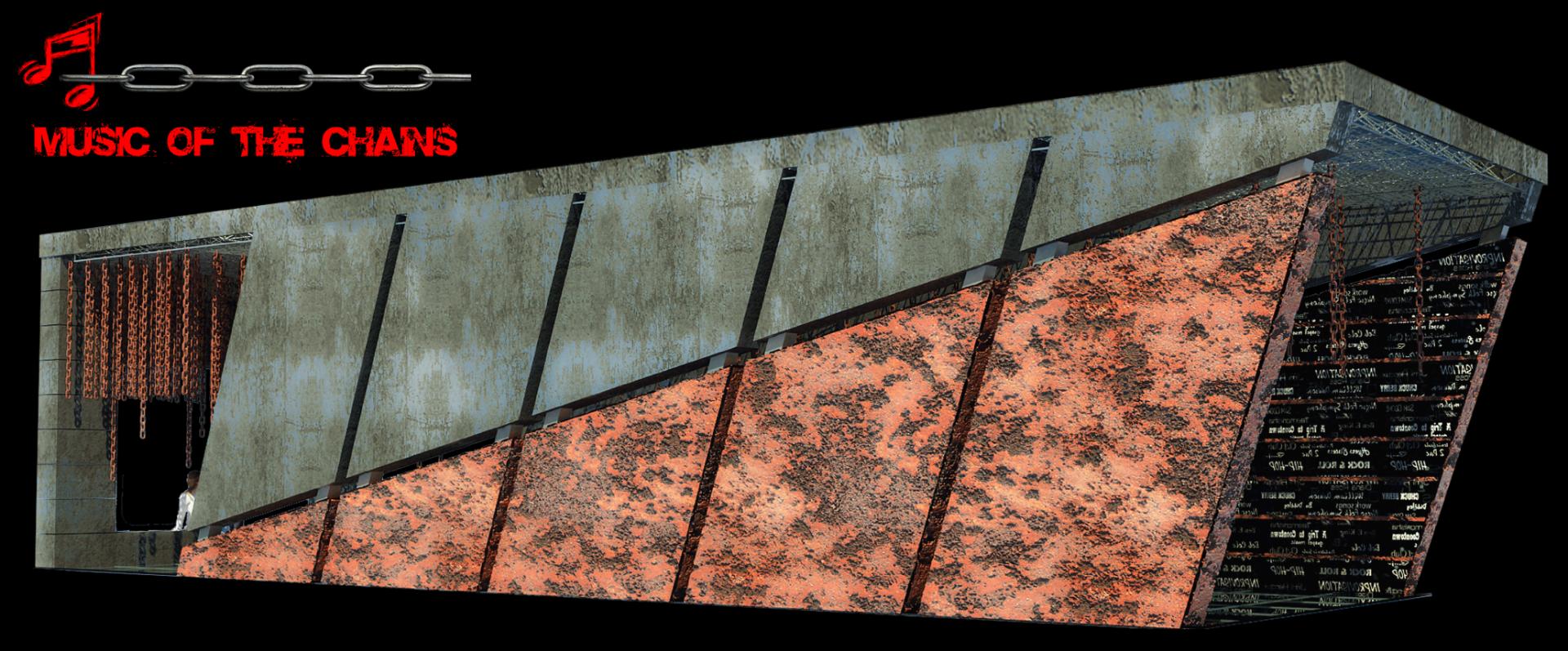
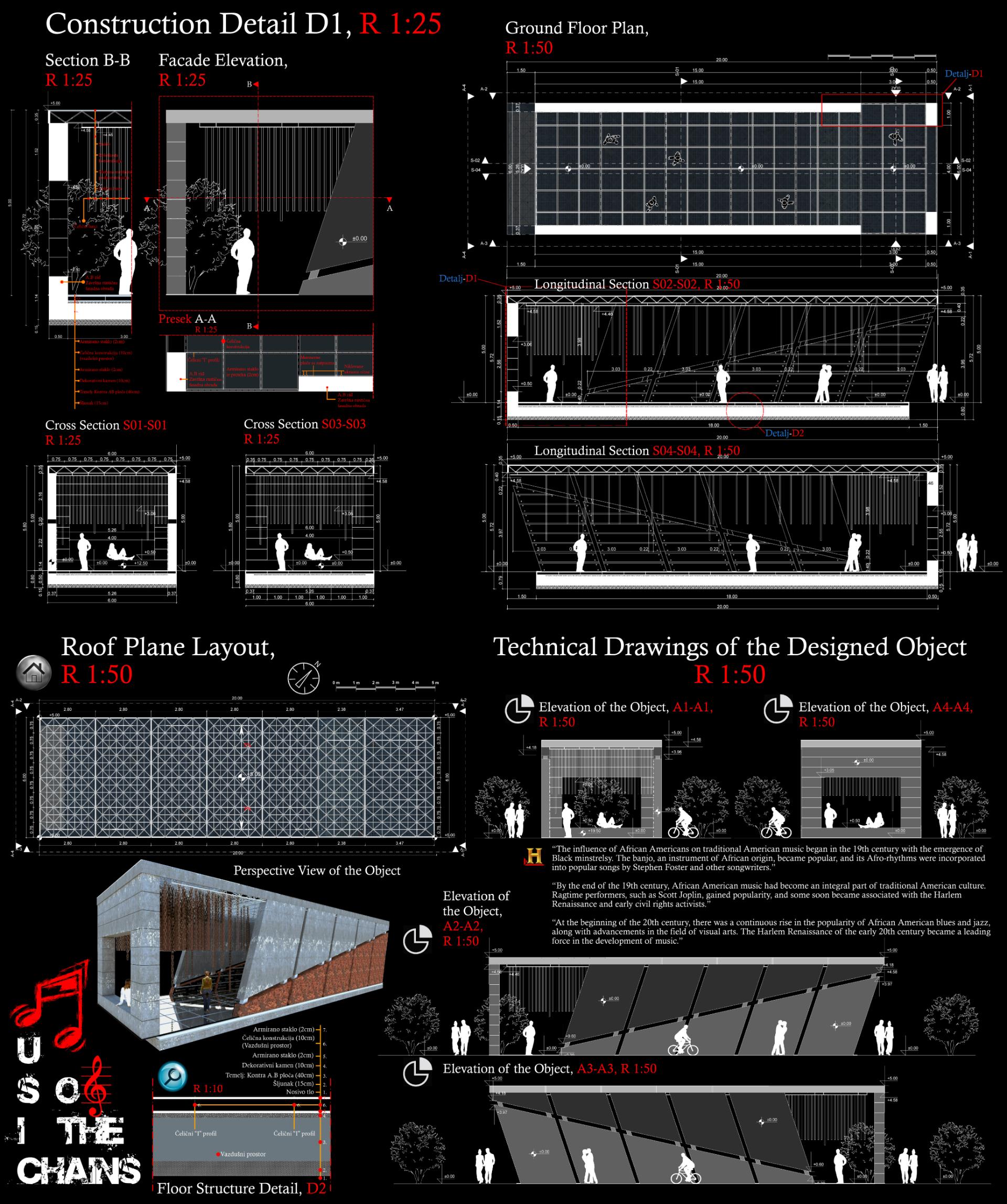
  • Gradual reduction in the number of chains throughout the space represents the journey of African Americans toward freedom .
  • The walls are divided into two contrasting sections:
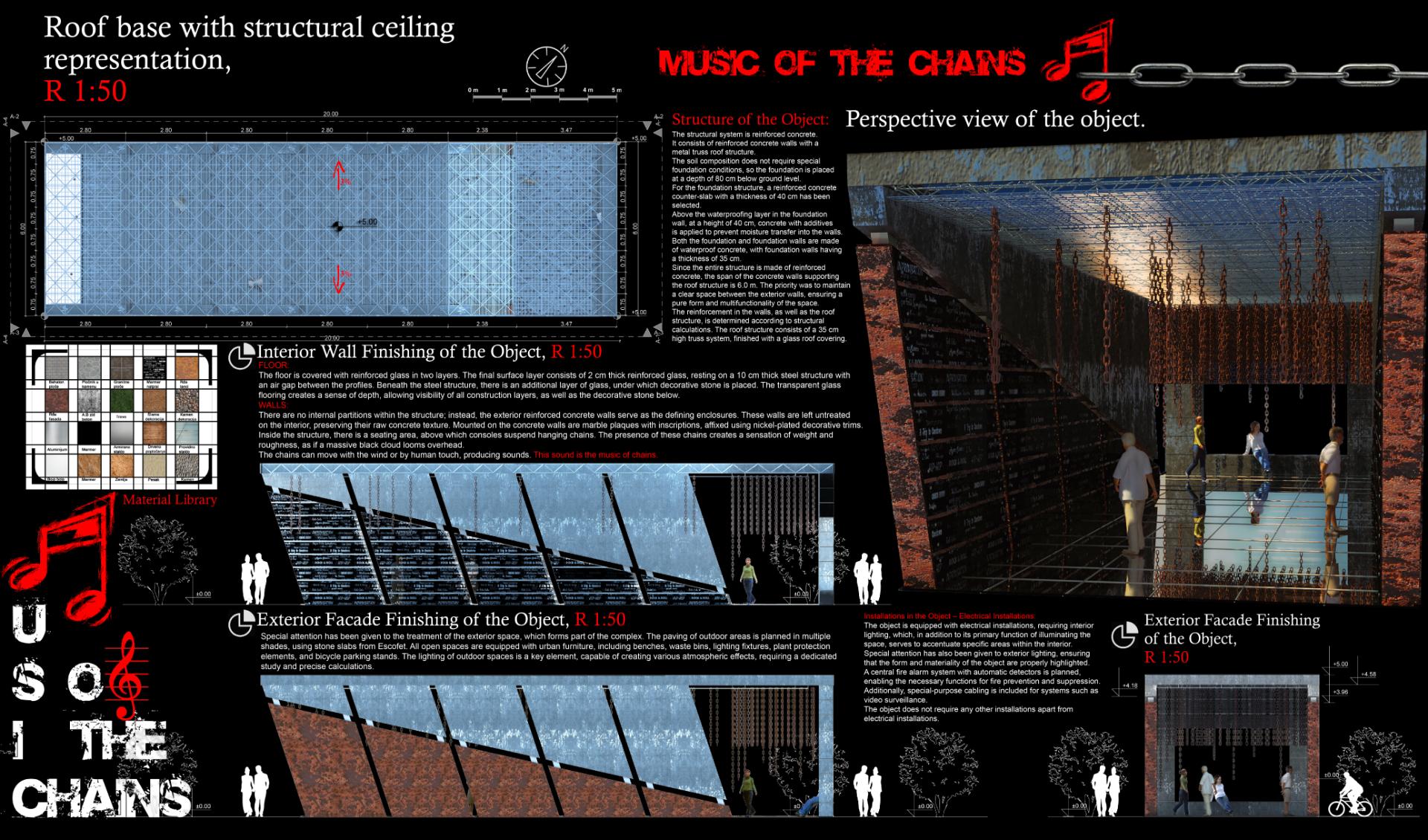
  • Lower section – rough, dark, raw texture, symbolizing struggle, pain, and the land of origin.
  • Upper section – smooth, lighter surface, representing North America and a new beginning.
  • The inner walls feature key dates, names, and events in African American musical history.

The chosen location for this installation is Nashville, Tennessee . This site was selected because it represents a significant cultural area, where in 2012 , the National Museum of African American Music (NMAAM) was established.

The National Museum of African American Music will be the first institution of its kind , housing all forms of African American musical contributions under one roof. Jazz, gospel, hip-hop, rock & roll, blues, house music, rhythm & blues , and many other forms of musical expression will come together in a shared space dedicated to exploring the vast influence of African American music .

Since music is the central theme of this installation, placing it at this location creates an integration that completes the narrative , making it a meaningful addition to the cultural and historical significance of the site.

Location:

Museum of African American Music, Nashville, Tennessee

  • Nashville was chosen as the ideal location for the memorial due to its historical significance and the upcoming opening of the Museum of African American Music .
  • This museum gathers all musical genres of the African American community – jazz, gospel, hip-hop, blues, rock & roll, rhythm & blues .
  • By placing the memorial at this site, it completes the narrative of African American culture and its role in U.S. history .

Execution:

Final Execution and Impact on the Architectural Community

After winning first place, the design team was invited to the U.S. for a one-month residency, presenting the project at universities and symposiums.

Music of the Chains was evaluated by leading experts in architecture, art, and history, including members of the competition jury:
Bryan Bell – Professor at Yale University, recipient of the American Institute of Architects Award
James Counts Early – Director of Smithsonian Institute’s Cultural Heritage Policy
Brian Ambroziak – Architecture professor at University of Tennessee
• Harvey B. Gantt – Architect, former mayor of Charlotte, NC
Dr. Richard Powell – Leading professor of African Art at Duke University

The professional community recognized the innovative and emotional power of the project, highlighting it as the first architectural memorial that actively engages visitors through interaction and sound.

Geographical Characteristics

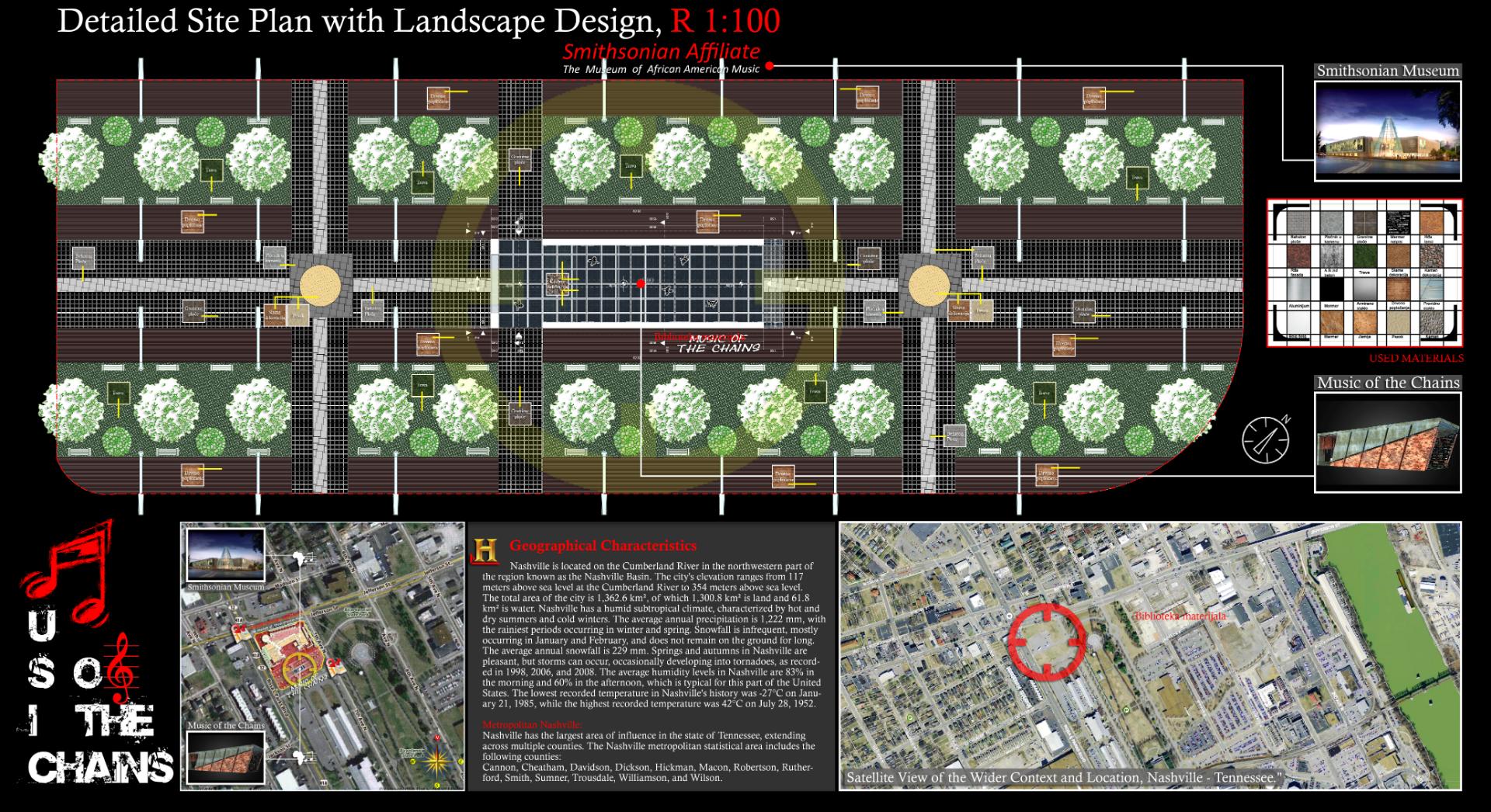
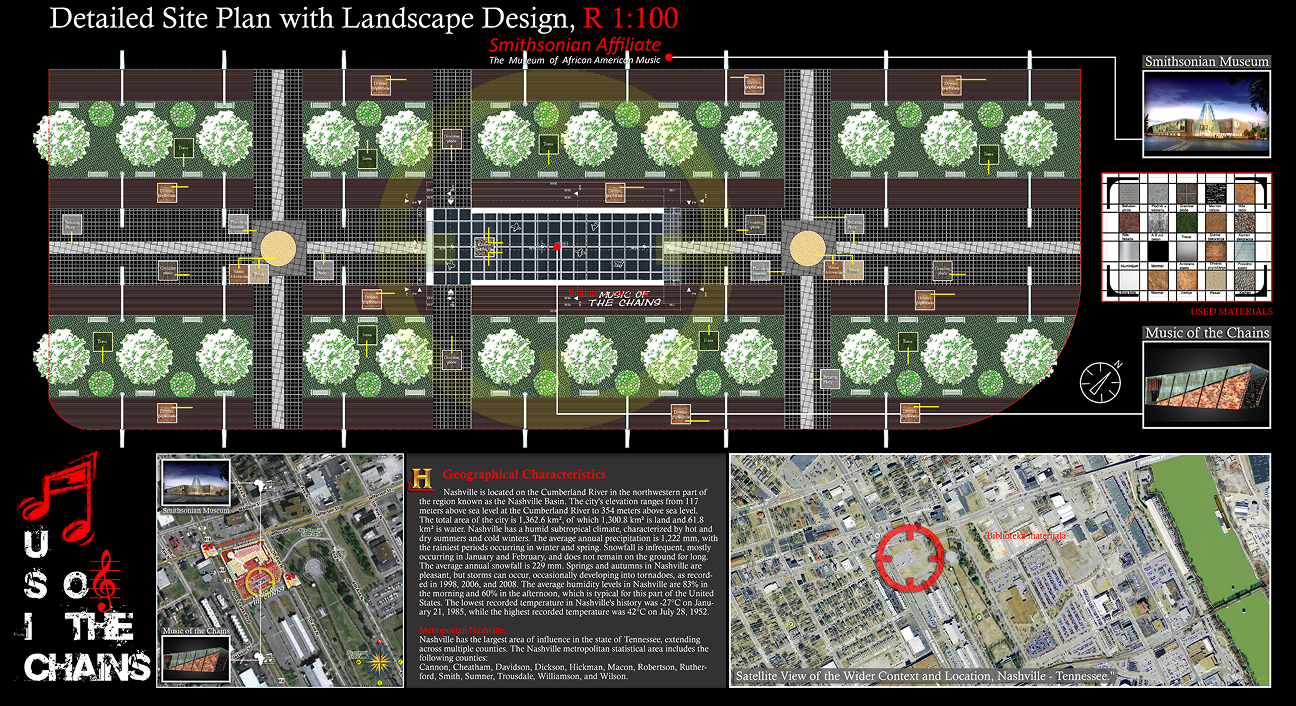
Nashville is located on the Cumberland River in the northwestern part of the region known as the Nashville Basin. The city’s elevation ranges from 117 meters above sea level at the Cumberland River to 354 meters above sea level.

The total area of the city is 1,362.6 km² , of which 1,300.8 km² is land and 61.8 km² is water. Nashville has a humid subtropical climate, characterized by hot and dry summers and cold winters . The average annual precipitation is 1,222 mm , with the rainiest periods occurring in winter and spring . Snowfall is infrequent, mostly occurring in January and February , and does not remain on the ground for long.

The average annual snowfall is 229 mm. Springs and autumns in Nashville are pleasant, but storms can occur, occasionally developing into tornadoes, as recorded in 1998, 2006, and 2008. The average humidity levels in Nashville are 83% in the morning and 60% in the afternoon, which is typical for this part of the United States. The lowest recorded temperature in Nashville’s history was -27°C on January 21, 1985, while the highest recorded temperature was 42°C on July 28, 1952.

Metropolitan Nashville:

Nashville has the largest area of influence in the state of Tennessee , extending across multiple counties . The Nashville metropolitan statistical area includes the following counties:

Cannon, Cheatham, Davidson, Dickson, Hickman, Macon, Robertson, Rutherford, Smith, Sumner, Trousdale, Williamson, and Wilson.

MUSIC OF THE CHAINS

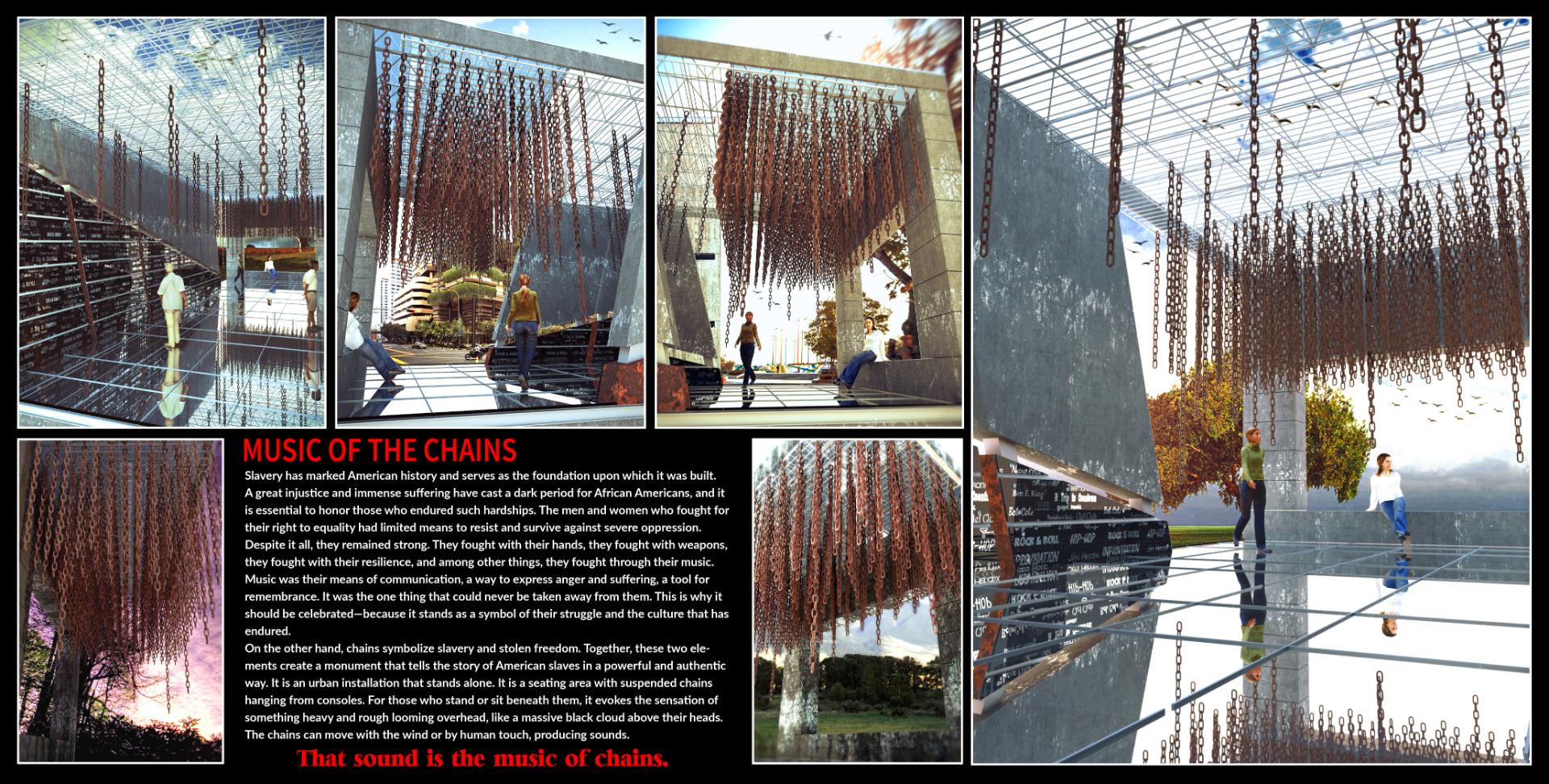
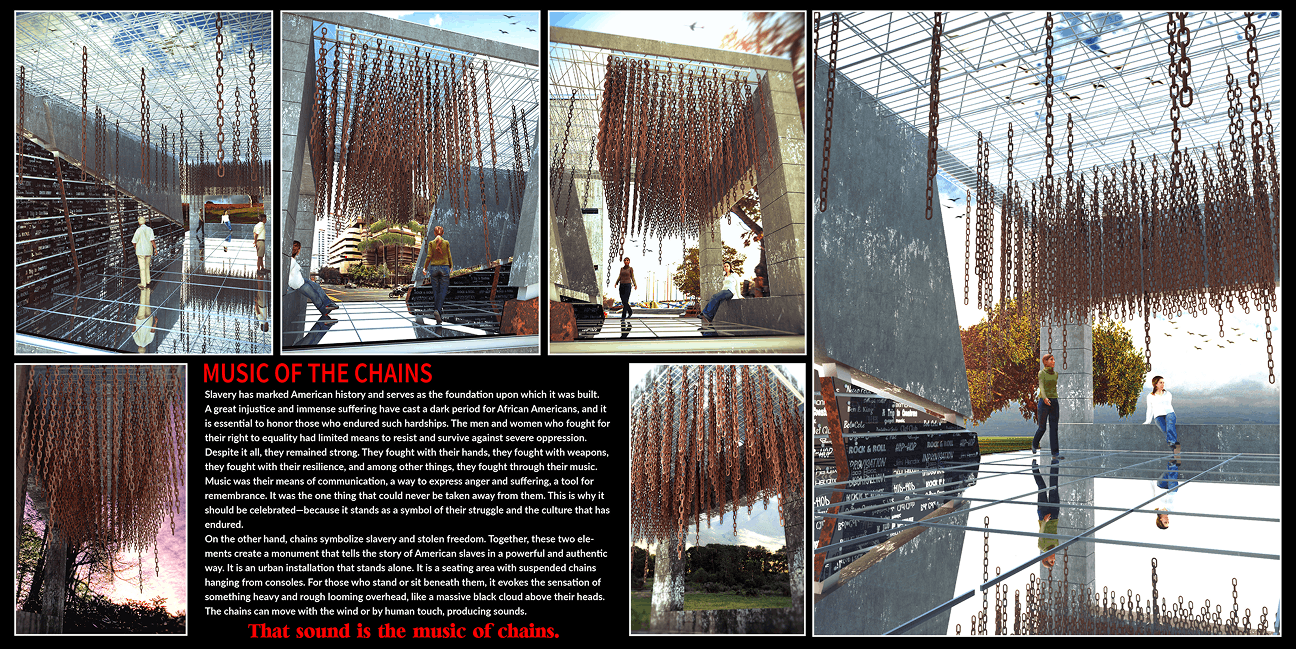
Slavery has marked American history and serves as the foundation upon which it was built.

A great injustice and immense suffering have cast a dark period for African Americans, and it is essential to honor those who endured such hardships. The men and women who fought for their right to equality had limited means to resist and survive against severe oppression.

Despite it all, they remained strong. They fought with their hands, they fought with weapons , they fought with their resilience, and among other things, they fought through their music. Music was their means of communication, a way to express anger and suffering, a tool for remembrance. It was the one thing that could never be taken away from them. This is why it should be celebrated —because it stands as a symbol of their struggle and the culture that has endured.

On the other hand, chains symbolize slavery and stolen freedom. Together, these two elements create a monument that tells the story of American slaves in a powerful and authentic way . It is an urban installation that stands alone. It is a seating area with suspended chains hanging from consoles. For those who stand or sit beneath them, it evokes the sensation of something heavy and rough looming overhead, like a massive black cloud above their heads.

The chains can move with the wind or by human touch, producing sounds.

That sound is the MUSIC OF CHAINS.

Conclusion:

A Memorial That Transcends Space and Time

  • Music of the Chains is not just an architectural installation – it is an experience that transforms perception and understanding of history.
  • By using architecture as a storytelling medium , this project illustrates the weight of the past through a visual, tactile, and auditory experience .
  • This award is not only a recognition of the design team’s excellence but also proof that architecture has the power to create change in the collective consciousness of society.
  • Music of the Chains remains a symbol of freedom, resistance , and the transformative power of art to turn space into a story that echoes through generations .

Contact Infinity Design Studio for architectural and conceptual projects that challenge the limits of storytelling through space .

IMPACT & METRICS

Increase in Public Awareness

0 %

The symbolic concept of the memorial and its powerful narrative significantly boosted public interest and engagement across local and international architecture forums.

Visitors at Public Exhibition

+ 0

The project attracted a substantial number of visitors during its exhibition phase, including architects, students, media, and cultural organizations.

More Academic Citations

0 x

The competition entry received notable academic attention, being cited in architecture and urban memory studies three times more than average entries.

Higher Jury Scoring for Conceptual Impact

0 %

The poetic symbolism and emotional depth of the design led to a significantly higher score in the conceptual evaluation segment.

Awarded First Place in International Competition

# 0

Out of numerous international entries, “Music of the Chains” was selected as the winning concept for its originality, message, and spatial execution.

Improved Emotional Engagement in Post-Presentation Surveys

0 %

Follow-up surveys conducted among exhibition visitors showed that 71% of respondents felt a stronger emotional connection and lasting impression due to the immersive narrative and spatial symbolism of the memorial design.

Proud Clients

The Team Behind the Project - Led by Creative Director

The Team Behind the Project:
Every Infinity Design Studio project is personally led and directed by Filip Narančić – Founder & Creative Director.

With a unique blend of creativity, strategy, and precision, Filip ensures that each project delivers premium quality, timeless design, and measurable impact.

Infinity Design Studio operates with a boutique approach, where every detail is carefully crafted, and each solution is tailored to the client’s vision and market demands. By combining multidisciplinary expertise with hands-on leadership, the studio transforms every project into a distinctive brand experience.

Filip Narančić

Founder & CEO – Infinity Design Studio

SPECIALIZED IN:

Architecture and Urbanism
Interior Design
Graphic Design and Professional Photography
Video Production and Drone Filming
Website and Mobile App Design
3D Modeling and Rendering

Short biography

Born on June 24, 1982, in Valjevo, Filip Narančić turned his passion for architecture and design into a thriving career.
He graduated from the Faculty of Technical Sciences in Novi Sad, Department of Architecture and Urbanism. During his studies, he launched a pilot project that later evolved into today’s Infinity Design Studio.

Testimonials

Explore More Stunning Work

The Mountain Soul Sangria – Sangria on the GO! required a visually engaging can design that appeals to young and
Healthy Paw needed to create eye-catching and functional packaging for their All-In-One Daily Chew premium soft supplement that clearly communicates
The goal was to create a luxurious and authoritative logo for Regal Goods, a premium e-commerce brand founded by a

Let’s Create a Premium Design Experience

Infinity Design Studio is ready to turn your ideas into powerful results. Share your vision with us and let’s begin building something extraordinary together.

We’ll get back to you within 24 hours.

Personal Information
Please provide your basic contact information so we can connect with you quickly and start shaping your project experience with precision and care.
Project Details
Please provide your basic contact information so we can connect with you quickly and start shaping your project experience with precision and care.
Budget & Timeline
Indicate your preferred budget range and project timeline so we can align our creative process with your expectations and deliver optimal results.
Final Note
Feel free to share any additional notes or preferences — every detail helps us tailor a truly premium experience for your brand.

Subscribe to Our Newsletter